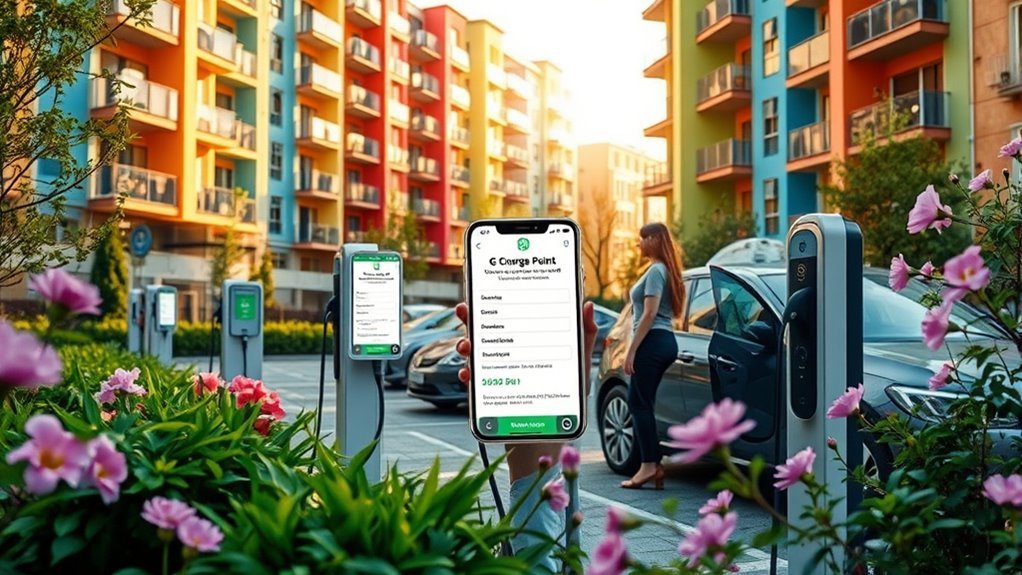
To request an EV charging point in shared parking, first, get permission from your landlord or property management. Assess installation feasibility with a certified installer and understand local policies. Engage local authorities by presenting community interest and support, and be aware of potential government grants that can cover installation costs. Communicate openly with stakeholders about the benefits of EV chargers. You’ll find more useful steps to navigate challenges and explore alternatives ahead.
Why EV Chargers Matter in Shared Parking
As the demand for electric vehicles (EVs) surges, installing EV chargers in shared parking becomes essential for enhancing convenience and sustainability.
With projections indicating that EVs will account for 36% of new car sales in the UK by 2030, having accessible charging points in residential areas is vital.
This not only meets the evolving needs of current EV owners but also prepares for a future where electric vehicles dominate the market.
Essential Steps for Requesting Your EV Charging Point
To request your EV charging point, you’ll first need to obtain the necessary permissions from your freeholder or property management.
If you’re renting, engage your landlord early in the process as their approval is essential.
Next, assess the installation feasibility by discussing technical details with your chosen installer and considering infrastructure compatibility.
Obtain Necessary Permissions
Before you install an EV charger in your flat, securing the necessary permissions is crucial. Start by contacting your building’s freeholder, property management company, or residents association to gain consent.
Be aware of the legal implications; you may need a “deed of variation” or “licence to alter” to formalize permissions for shared spaces. Familiarize yourself with local policies and installation guidelines, as permissions from local highways and planning authorities could also be required.
Engaging in discussions about the benefits of EV chargers, including potential government grants that can cover up to 75% of installation costs, can greatly ease the approval process.
Verify all stakeholders are on board to facilitate a smooth installation.
Engage Your Landlord
Engaging your landlord about installing an EV charging point is essential for a successful request. Here are three key steps to take:
- Highlight Landlord Benefits: Explain the potential cost savings and increased property value due to government grants covering up to 75% of installation costs, capped at £350.
- Provide Technical Details: Offer information from a certified installer about the installation process, emphasizing minimal disruption to the property and the growing demand for EV charging solutions.
- Encourage Communication: Foster open dialogue with your landlord and the building’s management, as their approval is vital for moving forward.
Assess Installation Feasibility
Evaluating the feasibility of installing an EV charging point in your flat involves several important steps that guarantee a smooth process.
First, check if you have a designated parking space, as chargers typically require private access.
Next, obtain official permission from your freeholder or property management company, a vital step before any planning.
Engage with your building’s residents’ association to discuss the benefits, as collective support can ease approval.
Assess technical aspects like the electricity meter’s location and cable runs, as these factors may present installation challenges and affect costs.
If approved, collaborate with an OZEV-approved installer to confirm compliance with legal requirements and verify the building’s electrical capacity for the installation.
How to Engage Your Local Authority for Support
To effectively engage your local authority for support, start by understanding their policies regarding EV charging installations.
Prepare the required documentation, including evidence of demand from residents, to strengthen your case.
Clear communication and persistence will be key as you navigate the process.
Understand Local Policies
When seeking to install EV charge points in flats, understanding local policies is essential for effectively engaging your local authority.
Start by familiarizing yourself with local regulations, as they dictate installation processes. Here are three steps to help you navigate this landscape:
- Gather Community Interest: Organize meetings to discuss the need for charge points, showcasing collective demand.
- Submit a Petition: Compile resident requests to present a strong case to your local council, emphasizing community interest.
- Monitor Funding Opportunities: Stay updated on government initiatives like the On-Street Residential Chargepoint Scheme (ORCS), which allocates funds for developing charging infrastructure.
Engaging with these local policies can fast-track your request and promote a sustainable future for your community.
Prepare Required Documentation
Engaging your local authority for support in installing EV charge points requires thorough preparation of documentation.
Start by gathering evidence of demand from residents, as many councils need community interest to justify installations. Prepare necessary documentation, including a petition signed by residents supporting the charge points, as this strengthens your case.
Familiarize yourself with local policies, particularly the On-Street Residential Chargepoint Scheme (ORCS), which can offer funding for installations.
Contact your local council to understand their specific documentation requirements and processes for submitting requests.
When discussing with officials, highlight the benefits of charge points, like increased property value and improved convenience for residents, to bolster your supporting evidence and encourage their support.
Building Community Support for Your Petition
Building community support for your petition is essential, as a united front can substantially influence local authorities’ decisions regarding EV charger installations. Engaging your neighbors fosters community engagement and strengthens your petition strategies.
Building community support is crucial for influencing local authorities on EV charger installations and enhancing petition effectiveness.
Here are three ways to build support:
- Collect Signatures: Gather signatures and feedback from residents to demonstrate interest, making your case more compelling to local councils.
- Highlight Benefits: Explain how EV chargers can increase property value and offer convenience, persuading others to join your efforts.
- Utilize Platforms: Leverage local council platforms or social media groups to organize community meetings, enhancing collective action towards your petition.
Keep track of local charging infrastructure developments and government funding opportunities, as these can reinforce your petition by showcasing available support and resources for installation.
A cohesive community effort can be the key to securing an EV charging point for everyone’s benefit.
Required Permissions and Approvals for Installation
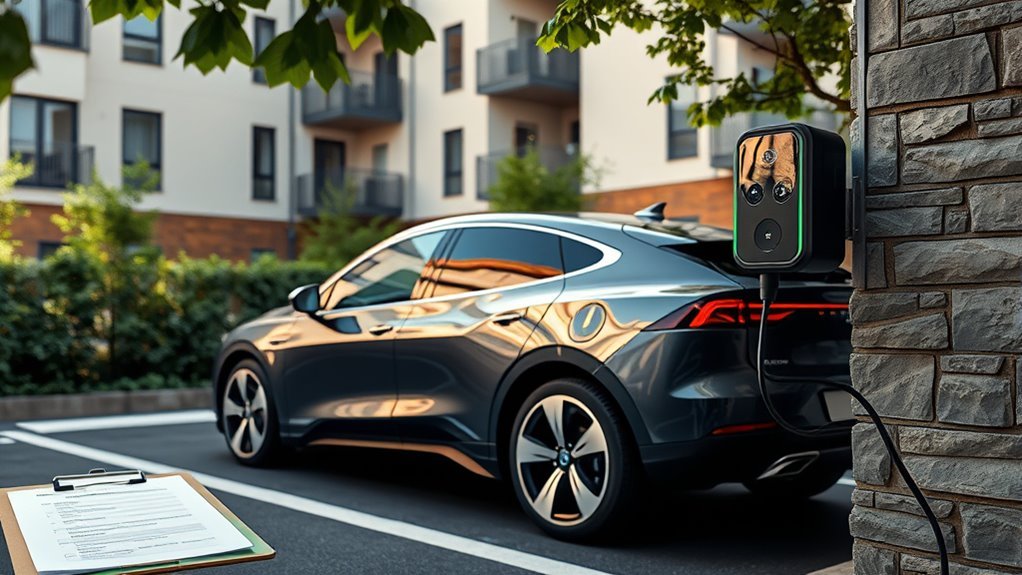
Securing the necessary permissions and approvals for installing an EV charger in a flat with shared parking is a critical step in the process. You’ll first need to obtain official permission from the freeholder or property management company, typically through a “deed of variation” or “license to alter.”
If you’re renting, your landlord must approve your request and liaise with the freeholder.
Additionally, your installation must comply with local policies, requiring consent from local highways and planning authorities, especially for cross-pavement charging solutions.
You’ll face installation challenges if the building’s electrical capacity isn’t compatible, so make sure you get Distribution Network Operator (DNO) approval for the additional load.
Finally, if cabling crosses shared or public land, third-party permissions are essential.
Clear communication with all involved parties will help you navigate these regulatory hurdles effectively, liberating your charging journey.
Government Grants for Installation Costs
Government grants can considerably reduce the financial burden of installing EV chargers in flats, covering up to 75% of your costs, with a maximum reimbursement of £350 per chargepoint.
Both tenants and flat owners with dedicated off-street parking can access this funding option, provided they haven’t previously installed a chargepoint.
Here are three key points to take into account when preparing your grant application:
- Landlord Grants: If you’re a landlord, you can apply for up to £30,000 for installing EV charging infrastructure based on the number of parking bays.
- Local Authority Support: Local authorities can access the On-Street Residential Chargepoint Scheme (ORCS) for funds up to £13,000 per installation.
- Compliance Necessary: Make sure you obtain the required permissions from local highways and planning authorities to qualify for these grants.
Tips for Communicating With Your Property Manager
As you consider the financial support available for installing EV chargers, it’s crucial to effectively communicate with your property manager about your intentions.
Start by clearly outlining the charging station benefits, such as increased property value and the potential to attract future tenants. Present information about government grants that cover up to 75% of installation costs, addressing any financial concerns they might have.
Highlight the advantages of EV chargers, including boosted property value and government grants covering up to 75% of installation costs.
Emphasize the convenience of individual charging stations, ensuring privacy and clarity for residents. This enhances satisfaction and could improve resident engagement strategies.
Prepare to discuss the installation process, highlighting that an approved installer will manage permissions and compliance, making it easier for property management.
Lastly, encourage group discussions among residents to showcase collective interest in EV charging solutions. This united front increases the likelihood of approval and demonstrates that the initiative aligns with the community’s needs.
Addressing Practical Challenges of Installing EV Chargers
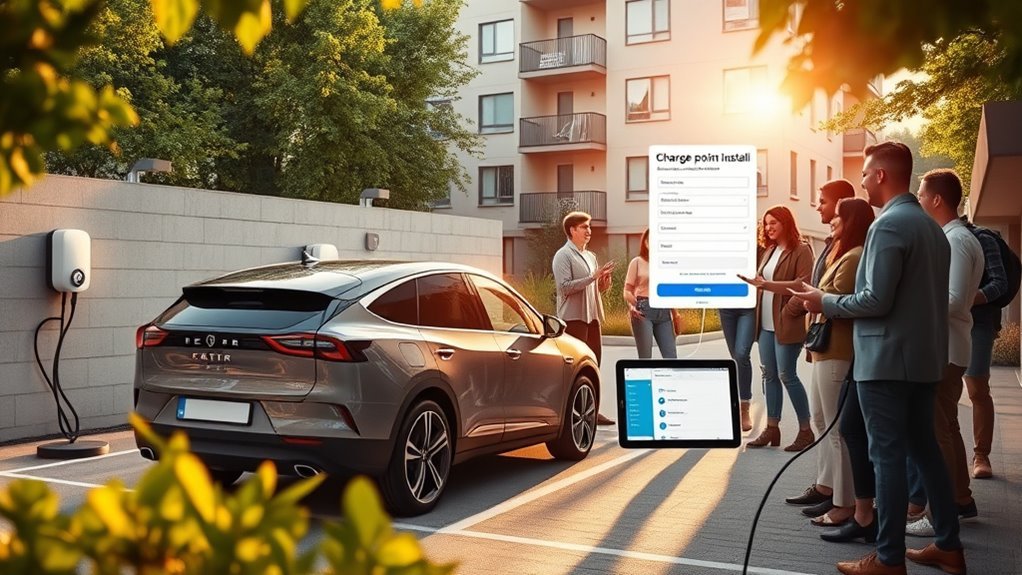
When considering the installation of EV chargers, you’ll need to factor in both the cost and the necessary permissions.
The location of your parking space can greatly influence installation expenses, while securing approval from the Distribution Network Operator is essential to accommodate the increased electrical load.
Engaging with your building’s management early on can help navigate these logistical hurdles effectively.
Installation Cost Considerations
Installing an EV charger in a flat can present several cost considerations that vary widely based on specific circumstances. Here are three key factors you should keep in mind:
- Distance from the Electricity Meter: Longer cable runs can complicate installation challenges, raising both costs and complexity.
- Connectivity Needs: If your parking space is underground, you might need Wi-Fi or 4G/5G solutions, adding to the overall expense.
- DNO Approval: Securing approval from the Distribution Network Operator is essential. This step guarantees your building’s power supply can support the additional load, potentially increasing both time and costs.
Utilizing government grants can help offset up to 75% of installation costs, easing the financial burden of establishing charging infrastructure in shared parking.
Permission and Approval Process
Maneuvering the permission and approval process for installing an EV charger in a flat can be complex, especially when shared parking is involved.
First, you’ll need to secure permission from the freeholder, property management company, or residents’ association, often necessitating legal agreements that address cable management on shared or public land.
If you’re a renter, your landlord’s consent is essential, as they’ll need to liaise with the building’s management.
Approval from the Distribution Network Operator (DNO) is also critical to guarantee the power supply can handle the additional load.
Depending on your situation, you might’ve to engage local authorities for on-street charging solutions, which requires compliance with local regulations.
Proper planning can help navigate these challenges.
Alternative Charging Solutions If Home Installation Isn’t Possible
Although home installation of EV chargers may not be feasible for everyone, several alternative charging solutions are available for those living in flats or shared accommodations.
Here are some options to evaluate:
- Public Charging Networks: With over 30,000 public chargers expected by the end of Q1 2022, exploring nearby charging stations can be a practical solution.
- Workplace Solutions: Check if your employer offers charging facilities. Many companies are installing chargers for employee use, making it a convenient option while you’re at work.
- Peer-to-Peer Charging: Think about joining a peer-to-peer charging network. This allows you to access nearby home chargers shared by other EV owners, providing additional charging opportunities within walking distance.
Staying Updated on Local Charging Developments
As you navigate the evolving landscape of EV charging options, staying updated on local developments is essential for enhancing access to charging infrastructure in your area.
Subscribing to local news outlets and newsletters from your council will keep you informed about new public charging installations and initiatives.
Engaging in community forums can also provide valuable insights and connect you with fellow residents who share your interest in EV charging.
Frequently Asked Questions
What Types of EV Chargers Are Suitable for Shared Parking?
For shared parking, you should consider fast chargers with solar integration. These systems provide efficient charging while harnessing renewable energy, minimizing costs and environmental impact, making them ideal for communal living and encouraging sustainable practices.
How Long Does the Installation Process Typically Take?
The installation timeline generally ranges from a few days to several weeks, depending on installation factors like site preparation, electrical upgrades, and coordination with management. You should plan accordingly to guarantee a smooth process.
Are There Any Costs Associated With the Petition Process?
Steering through the petition process is like charting a course through uncharted waters. You might encounter petition costs and installation fees, so be prepared for potential expenses as you seek your charging solution in shared spaces.
Can I Request Multiple Charging Points for Our Community?
Yes, you can request multiple charging points for your community. Engage with neighbors to assess demand and demonstrate the need for shared resources, ensuring a collective approach that supports sustainable transportation solutions for everyone involved.
What Happens if My Request Is Denied?
If your request’s denied, explore alternative options like community funding or private installations. You can initiate an appeal process, gathering support from neighbors to strengthen your case and advocate for necessary charging infrastructure together.
Conclusion
As EV adoption continues to rise, it’s essential for residents in shared parking to advocate for charging solutions. With over 400,000 electric vehicles registered in the UK as of 2023, the demand for accessible charging points is growing rapidly. By following the outlined steps, engaging your local authority, and rallying community support, you can successfully request an EV charging point. Don’t miss the opportunity to enhance your property’s value and sustainability while accommodating the electric future.







Leave a Reply