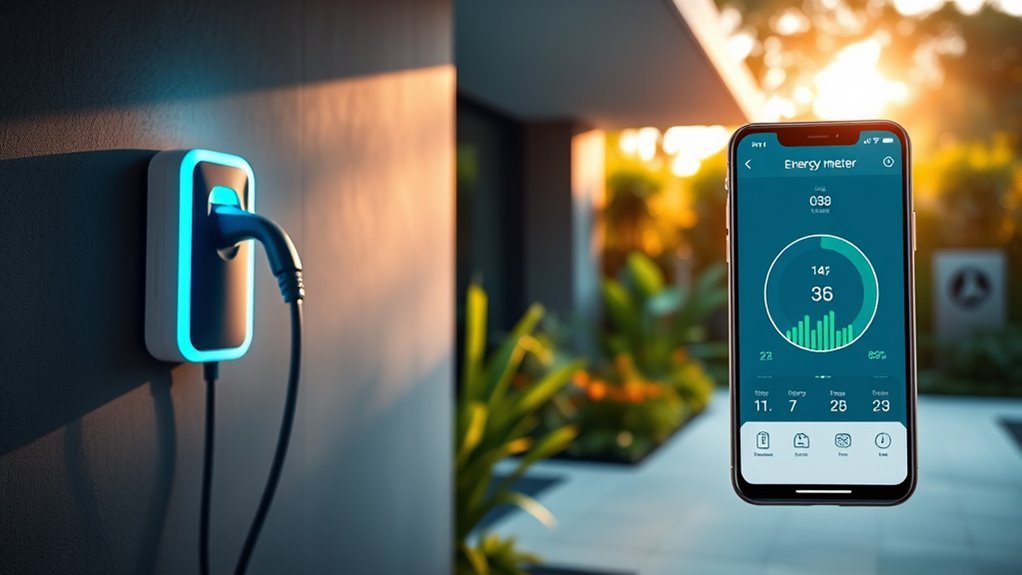
Dynamic load balancing for home EV chargers intelligently manages electricity distribution in real-time. It adjusts power supply based on your household’s energy demands, preventing overloads and minimizing hazards. This system enhances energy efficiency while charging your electric vehicle, ensuring reliable performance even with multiple high-power devices in use. By utilizing smart metering and advanced algorithms, it optimizes your charging experience. Continue exploring to discover more about its benefits and the best systems available.
What Is Dynamic Load Balancing in Home EV Charging?
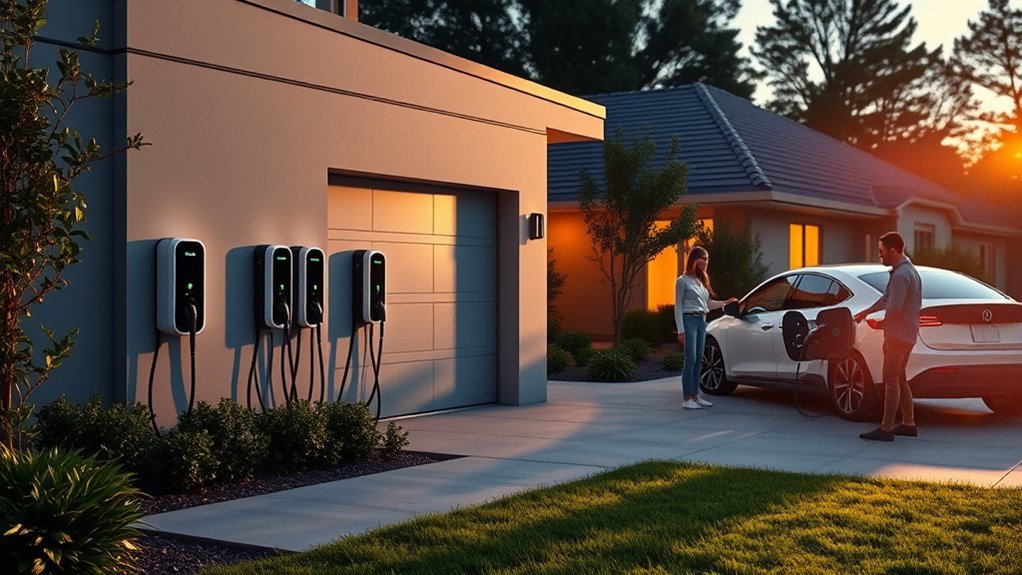
Dynamic load balancing in home EV charging is an essential technology that manages electricity distribution to prevent overloads, particularly when multiple high-power devices are in use. It employs real-time monitoring to assess the entire household’s electrical load, ensuring your EV charger operates within safe limits. This approach minimizes risks like tripping circuit breakers or electrical hazards, giving you peace of mind.
By optimizing the charging load, dynamic load balancing enhances energy efficiency, allowing your electric vehicle to charge while other appliances run smoothly. It automatically allocates available electrical capacity, ensuring a seamless charging experience in homes with multiple high-demand devices.
Implementing this system not only safeguards your electrical infrastructure but can also lead to significant cost savings. By avoiding peak electricity rates and maximizing existing resources, you liberate your energy consumption, making your home smarter and your EV charging more efficient.
Comparing Static and Dynamic Load Balancing for EV Charging
While static load balancing may seem adequate for certain predictable energy needs, it falls short in dynamic environments where energy demands fluctuate frequently. Static challenges arise when you rely on predetermined schedules, risking overloads during unexpected surges in energy use.
In contrast, dynamic load balancing continuously monitors your home’s electrical load, adjusting power distribution in real-time. This adaptability not only enhances efficiency but also prevents overloads, making it essential for households with multiple high-power devices, like electric vehicles (EVs).
Dynamic advantages come into play as electric vehicle adoption rises, allowing you to manage the fluctuating energy demands of several chargers simultaneously. By optimizing energy usage, dynamic systems can lead to significant cost savings, effectively maneuvering peak electricity rates that static systems struggle with.
Ultimately, embracing dynamic load balancing empowers you to guarantee safety, reliability, and efficiency in your home energy consumption.
How to Implement Dynamic Load Balancing for Your EV Charger
To successfully implement dynamic load balancing for your EV charger, begin by evaluating your household’s electricity consumption patterns and pinpointing peak usage times that could lead to overloads.
Conduct a thorough load assessment to understand your current energy demands and identify potential constraints.
Invest in a smart EV charging station with dynamic load balancing capabilities, like the WISSENERGY WB20 or BESEN BS20, which can adjust power allocation in real time.
Utilize smart metering technology for continuous consumption monitoring; this allows the system to make immediate adjustments based on real-time data.
Ascertain your electrical infrastructure can support the added complexity; consulting a professional electrician may be necessary for an accurate evaluation.
Finally, consider your future energy needs, such as additional EVs or high-power appliances, when choosing your dynamic load balancing system to guarantee scalability and efficiency in your energy management strategy.
Why Should You Care About Dynamic Load Balancing for Home Safety?
Dynamic load balancing is essential for preventing electrical overloads in your home.
By continuously monitoring and adjusting power distribution, it enhances charging safety and minimizes risks like circuit breaker trips and overheating.
This technology guarantees your household can safely accommodate multiple high-power devices, protecting both your home and its electrical infrastructure.
Preventing Electrical Overloads
As electric vehicle (EV) adoption surges, ensuring your home’s electrical system remains safe becomes increasingly essential.
Dynamic load balancing is key to effective load management, continuously monitoring your home’s electrical load during EV charging. By adjusting charging power to fit your available capacity, it prevents electrical overloads that could trip circuit breakers or create hazards.
This technology is particularly crucial for homes with limited electrical capacity, helping to maintain consistent voltage levels and minimizing power surge risks. Plus, it enhances circuit protection, safeguarding both your electrical system and appliances from potential damage.
Ultimately, implementing dynamic load balancing not only promotes safety but can also lead to significant cost savings by avoiding peak electricity rates and reducing energy waste.
Enhancing Charging Safety
Ensuring the safety of your home while charging your electric vehicle is paramount, especially as reliance on high-power devices increases.
Dynamic load balancing enhances safety by:
- Preventing Overloads: It continuously monitors your home’s electrical load, ensuring charging efficiency without exceeding capacity.
- Minimizing Power Surges: By adjusting power delivery in real-time, it maintains stable voltage levels, reducing the risk of damaging appliances or creating hazards.
- Reducing Fire Risks: This system notably lowers the chances of circuit breaker trips and electrical fires, especially in homes with multiple high-demand devices.
Benefits of Dynamic Load Balancing for Electric Vehicle Charging
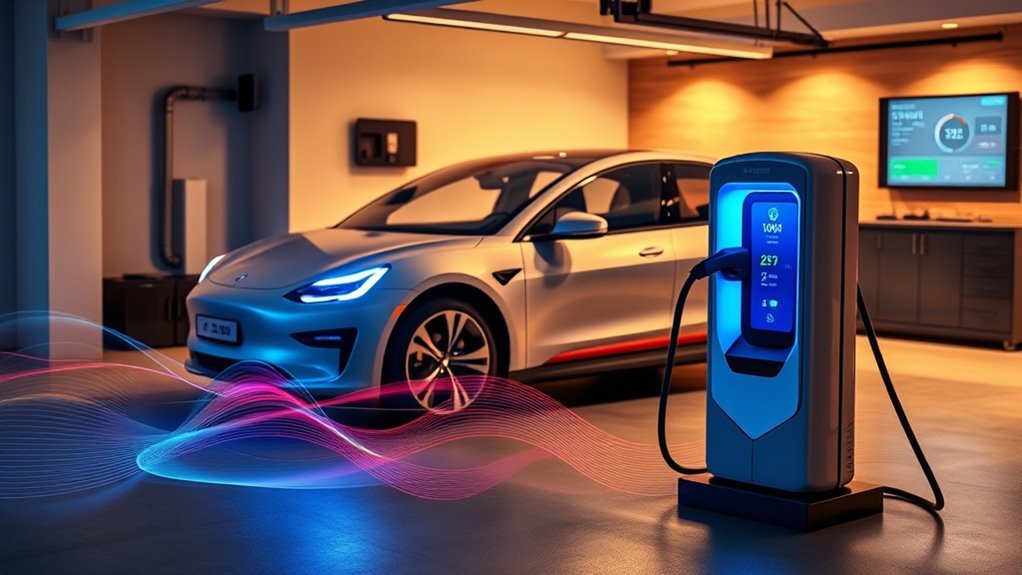
Efficiency in electric vehicle (EV) charging hinges on the ability to manage power distribution effectively, and dynamic load balancing excels in this regard. By continuously monitoring your household energy consumption, it prevents electrical overloads, enhancing safety and ensuring a secure charging environment.
| Benefit | Description |
|---|---|
| Energy Optimization | Maximizes charging efficiency while using power. |
| Cost Efficiency | Reduces energy waste and avoids peak rates. |
| Safety Enhancement | Lowers risks of circuit breaker trips. |
| Simultaneous Device Charging | Allows multiple high-power devices to operate. |
| Alleviates Range Anxiety | Provides consistent access to charging resources. |
Dynamic load balancing leads to significant cost savings and optimized energy use, enabling you to charge your EV without straining your electrical system. This way, you can enjoy the freedom of reliable charging without worry.
Choosing the Right Dynamic Load Balancing System
When selecting a dynamic load balancing system for your home EV charger, it’s crucial to assess your household’s electricity consumption and energy needs.
Start by analyzing your current and future requirements to guarantee the system can adapt. Here are three key factors to take into account:
- System Compatibility: Confirm the load balancing system works seamlessly with your existing EV charger and other high-power devices, like air conditioners and washing machines.
- Installation Requirements: Evaluate the installation process. Some systems may need professional setup, while others allow for DIY installation, impacting your budget.
- Long-term Budget: Weigh upfront costs against potential energy savings. A more efficient system may have a higher initial price but could save you money in the long run.
Top Dynamic Load Balancing EV Chargers to Consider
For homeowners looking to enhance their electric vehicle (EV) charging experience, several top dynamic load balancing EV chargers can meet diverse needs.
The WISSENERGY WB20 EV Charging Station stands out with power options of 3.6KW, 7.2KW, 11KW, and 22KW, supporting various charging requirements while guaranteeing efficient energy distribution.
The WISSENERGY WB20 EV Charging Station offers versatile power options, ensuring efficient energy distribution for all charging needs.
Additionally, the BESEN BS20 EV Charging Station is compatible with 99% of electric vehicles and holds safety certifications like CE, FCC, and UL for reliable operation.
Both chargers boast advanced charging features, including app control and RFID card swiping, which enhance usability and monitoring.
Their dynamic load balancing capabilities guarantee peak power distribution based on your household’s real-time energy usage, preventing overloads.
When selecting one of these top EV chargers, consider maximum power output, safety features, and compatibility with your existing electrical systems to achieve the best performance and convenience for your EV charging needs.
Future Trends in Dynamic Load Balancing for EV Charging
As electric vehicle adoption surges, dynamic load balancing for EV charging is poised for significant advancements. Here are three key trends shaping the future:
- Machine Learning Integration: Algorithms will analyze usage patterns and demand forecasts, optimizing energy allocation for charging based on real-time data.
- Smart Grid Technologies: Enhanced communication between EVs, chargers, and home systems will enable dynamic adjustments to charging schedules, preventing grid overloads as the number of charging stations increases.
- Renewable Energy Management: The integration of solar and wind power into charging solutions will improve sustainability, allowing dynamic load balancing systems to adapt to variable energy sources.
Additionally, the rise of vehicle-to-grid (V2G) technology will enable EVs to contribute energy back to the grid during peak demand, enhancing overall grid stability.
These innovations promise to revolutionize how we approach EV charging, making it more efficient and sustainable.
Frequently Asked Questions
What Is Dynamic Load Balancing EV Charger?
Dynamic load balancing for EV chargers is smart charging technology that optimizes energy usage in your home. It adjusts power distribution in real-time, ensuring efficient charging while preventing overloads and maintaining safety throughout your electrical system.
What Does Load Balancing Mean on an EV Charger?
“Don’t put all your eggs in one basket.” Load balancing on an EV charger means optimizing power distribution for charging efficiency, ensuring your charger operates smoothly while other devices function, preventing overloads and enhancing safety.
What Is Load Balancing in Simple Terms?
Load balancing, in simple terms, is energy distribution among devices. It optimizes power management, ensuring efficiency and preventing overloads, allowing you to charge your electric vehicle while using other appliances without issues.
What Is the Meaning of Dynamic Load Balancing?
Dynamic load balancing means using adaptive management techniques to optimize power distribution in real-time. It guarantees efficient energy use by dynamically adjusting loads, preventing overloads, and enhancing safety while maximizing the performance of your electrical systems.
Conclusion
To summarize, dynamic load balancing optimizes your home EV charging experience by distributing power efficiently, enhancing safety, and reducing costs. Did you know that implementing dynamic load balancing can save you up to 30% on your energy bills? By choosing the right system, you not only improve charging efficiency but also future-proof your home for increased electric vehicle adoption. Embracing this technology now positions you at the forefront of sustainable energy solutions for your household.







Leave a Reply