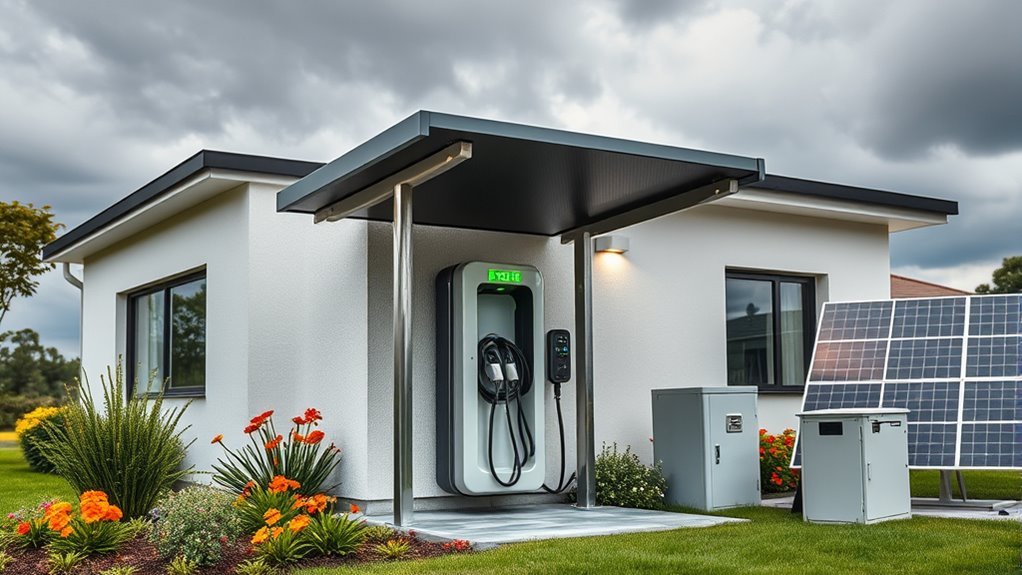
To protect your EV charging equipment from UK weather, choose chargers with at least an IP54 rating for dust and water resistance. Guarantee professional installation to comply with safety regulations. Regularly inspect cables and seals, especially after storms, to prevent moisture ingress. Maintain cleanliness and schedule yearly safety inspections. Stay informed about safe charging practices during extreme weather events. Discover more essential strategies to extend the life and safety of your EV charging station.
Understanding the Importance of Weatherproofing Your EV Charger
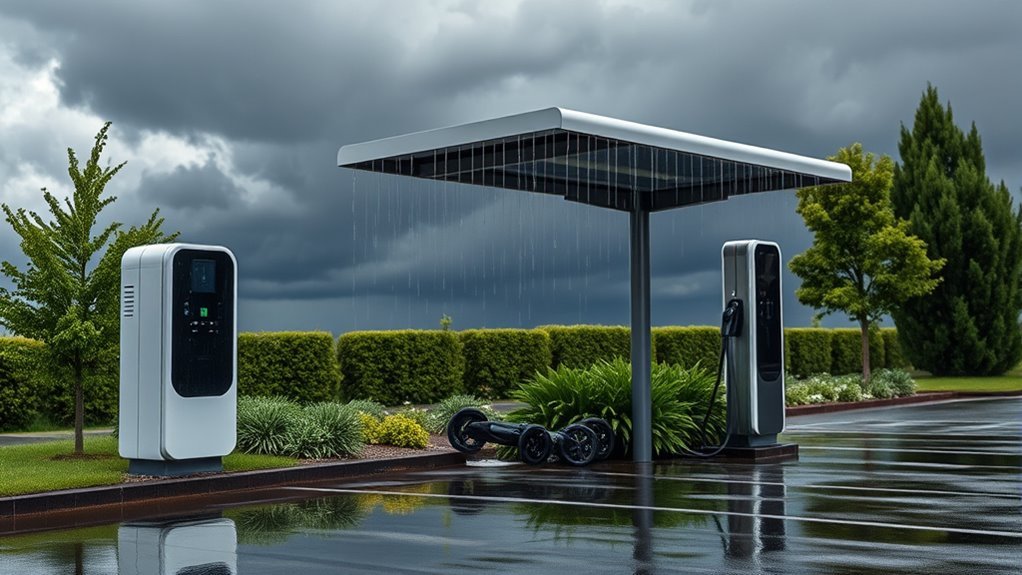
When you install an EV charger outdoors, understanding the importance of weatherproofing is vital to guarantee its longevity and functionality. Charger durability hinges on its ability to withstand various environmental factors, such as rain, snow, and dust.
Most chargers, with an IP rating of at least IP54, are designed to resist these elements, but proper installation and maintenance are essential. Opting for professionally fitted home EV chargers ensures they can handle typical British weather conditions, allowing for uninterrupted charging.
Regular inspections of the charger’s casing and seals help maintain their integrity, providing continued protection against adverse weather. Additionally, choosing reputable brands like Tesla, Rolec, and Zappi, known for their use of durable materials, enhances your charger’s weather resistance.
Finally, installing surge protection devices can safeguard your equipment from extreme weather events, guaranteeing its long-term functionality in outdoor settings.
Essential Features of Weatherproof EV Chargers
Weatherproof EV chargers incorporate specific features that enhance their resilience against environmental challenges.
Weatherproof EV chargers are designed to withstand environmental challenges, ensuring reliable performance in any weather condition.
When selecting a charger, you should consider the following essential attributes:
- IP54 Rating or Higher: This guarantees protection against rain and dust, allowing safe operation in diverse weather conditions.
- Durable Materials: Leading brands like Tesla and Rolec use robust materials that withstand outdoor elements, increasing the charger’s longevity.
- Watertight Seals: Professionally installed chargers come equipped with watertight seals at connection points to prevent water ingress, guaranteeing reliable functionality during rain.
- Secure Connection Activation: Chargers activate only when a secure connection is detected, providing an added layer of safety against electrical faults in wet conditions.
Step-by-Step Guide to Installing Weatherproof EV Chargers in UK Homes
When installing weatherproof EV chargers in your UK home, start by selecting a charger with an appropriate IP rating, preferably IP54 or higher, to guarantee it withstands outdoor conditions.
Next, prioritize installation safety by hiring a certified professional who adheres to local regulations and maintains proper earthing and circuit protection.
This combination of careful selection and professional installation will help safeguard your charging equipment against the elements.
Choosing The Right Charger
Selecting the right EV charger for outdoor use is essential for guaranteeing ideal performance and safety. When choosing a charger, consider these key factors:
- IP Rating: Guarantee it has at least an IP54 rating for protection against dust and rain.
- Certification: Look for chargers compliant with UK safety standards like UKCA and CE.
- Brand Reputation: Opt for reputable brands like Tesla, Rolec, or Zappi, known for durable, weatherproof materials.
- Regular Maintenance: Inspect the charger and cables regularly for wear, guaranteeing watertight seals at connection points are intact.
Installation Safety Guidelines
Installing a weatherproof EV charger in your home requires careful planning and adherence to safety guidelines to guarantee peak performance and protect against potential hazards.
First, verify the charger meets UK safety regulations by confirming it has UKCA, CE, or OZEV approval. Choose a charger with at least an IP54 rating for effective rain and dust protection.
Install it on a dedicated circuit with its own breaker to minimize risks of electrical overloads. Always use certified professionals for installation to guarantee proper earthing and circuit protection, especially for high-capacity setups like 22kW AC chargers.
Regularly inspect the charger and cables for wear, and schedule annual electrical safety inspections to maintain compliance with installation best practices and charger safety standards.
Regular Maintenance Tips to Protect Your Charger From the Elements
To guarantee your EV charger remains functional and safe, regularly inspect cables for wear and damage.
Cleaning the charger exterior helps prevent dirt buildup that can compromise performance, while checking seals and connections after storms is vital for preventing moisture ingress.
Implementing these maintenance tips will enhance the longevity and reliability of your charging equipment.
Inspect Cables Regularly
Regularly inspecting your EV charging cables is essential for maintaining safety and performance. Focus on cable integrity during these checks, especially after adverse weather conditions like heavy rain or storms.
A thorough visual inspection at least once a month can help you identify signs of fraying, discoloration, or unusual wear, preventing potential hazards.
- Check for any visible damage or exposed wires.
- Confirm connectors are secure and free from moisture.
- Look for signs of wear, particularly at stress points.
- Use weatherproof cables rated IP54 or higher for enhanced protection.
Clean Charger Exteriors
Maintaining the exterior of your EV charger is just as important as inspecting cables for wear and tear. Use effective cleaning techniques, like wiping down the charger with a damp cloth, to remove dirt and debris that can affect performance.
Regularly inspect charger materials for signs of wear, such as discoloration or corrosion, especially at connection points. Avoid high-pressure washing methods; they can compromise protective seals and lead to water ingress.
After adverse weather, check for damage to your charger’s exterior and verify its weatherproof integrity.
Finally, schedule annual electrical safety inspections by a qualified electrician to confirm compliance with UK safety standards and maintain peak functionality.
Prioritize these steps to enhance your charger’s longevity and reliability.
Check Seals and Connections
As weather conditions can greatly impact your EV charger’s performance, checking the seals and connections is vital for maintaining its integrity.
Regular inspections help guarantee seal integrity and connection durability, preventing issues before they start.
- Inspect seals for wear or damage, especially after heavy rainfall or storms.
- Look for discoloration or fraying on charging cables, indicating moisture exposure.
- Clean the charger’s exterior with a damp cloth to remove debris without risking seal wear.
- Schedule annual inspections with a certified electrician for thorough assessments.
Choosing the Best Location for Your EV Charging Station
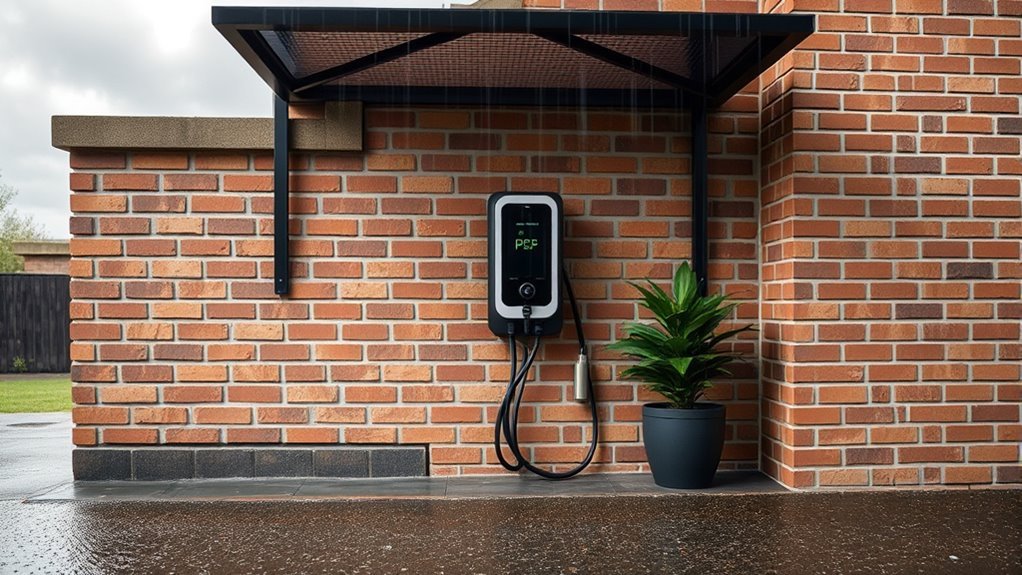
How do you guarantee your EV charging station is both functional and safe?
Begin with careful site selection, confirming the location is easily accessible and close to your home’s electrical supply. This proximity enhances efficiency, making charging seamless.
Prioritize environmental considerations by choosing a spot with good drainage to avoid water accumulation, which can jeopardize the charger and its connections.
Select an area sheltered from extreme weather conditions—strong winds and heavy snowfall can greatly impact the longevity of your equipment.
Install the station elevated above the average flood level to protect against localized flooding and debris.
Finally, confirm compliance with local regulations, maintaining the recommended distance from combustible materials and providing proper ventilation.
What Makes a Certified EV Charger Weatherproof?
To guarantee your EV charger can withstand the elements, it must meet specific standards that define its weatherproof capabilities. Certified EV chargers typically have a minimum IP rating of IP54, ensuring protection against dust and water spray from any direction.
Ensure your EV charger is weatherproof by selecting models with a minimum IP54 rating for optimal dust and water protection.
Leading brands like Tesla, Rolec, and Zappi prioritize charger durability by employing durable materials and watertight seals to prevent water ingress at connection points.
Key features that make a charger weatherproof include:
- Protective components that prevent water contact with electrical parts
- Surge protection to guard against power spikes from harsh weather
- Compliance with UK safety standards, such as BS7671
- Robust designs that maintain functionality during rain or snow
Ensuring Safety During Weather Events: Charging Tips and Precautions
While charging your electric vehicle (EV) during inclement weather can be safe, it’s essential to follow specific precautions to mitigate risks.
Modern chargers are designed for weather resilience, but avoid using standard 3-pin chargers outdoors in the rain unless absolutely necessary. Make sure that plugs and sockets remain dry to maintain charging safety.
In extreme conditions, like thunderstorms, refrain from plugging or unplugging chargers to prevent electrical hazards from power surges and lightning. Regularly inspect your charging equipment for wear and utilize protective measures, such as surge protectors, to enhance safety during severe weather.
Additionally, using dedicated circuits for your home EV charger isolates it from other household appliances, reducing overload risks during storms.
Frequently Asked Questions
How Do I Protect My EV Charger From the Rain?
To protect your EV charger from rain, install rainproof enclosures and guarantee you use waterproof connectors. Regularly inspect for damage, keeping the charging area dry, and avoid charging during heavy rainfall to maintain functionality.
Do I Need a Surge Protection Device for My EV Charger in the UK?
Yes, you need a surge protection device for your EV charger in the UK. It enhances electrical safety, safeguarding your investment from costly damage during voltage spikes, ensuring reliable charging and peace of mind.
What Is the 80 20 Rule EV Charging?
The 80/20 rule means you charge your EV to 80% for ideal charging efficiency and cost savings. This practice enhances battery lifespan, reduces charging time, and guarantees you avoid range anxiety during your journeys.
Can I Leave My EV Charging Cable Outside?
You can leave your EV charging cable outside, but it’s not wise. Instead, use weatherproof covers and proper cable storage to shield it from elements, prolonging its lifespan and ensuring reliable charging whenever you need.
Conclusion
In the ever-changing British weather, protecting your EV charging equipment is vital to guarantee longevity and efficiency. By implementing the best practices outlined, you’re not just safeguarding your investment; you’re preparing your charger to weather the storm—both literally and figuratively. With the right features, location, and maintenance, your EV charger can stand tall against the elements, making sure you stay powered up and ready to hit the road, no matter what Mother Nature throws your way.






Leave a Reply