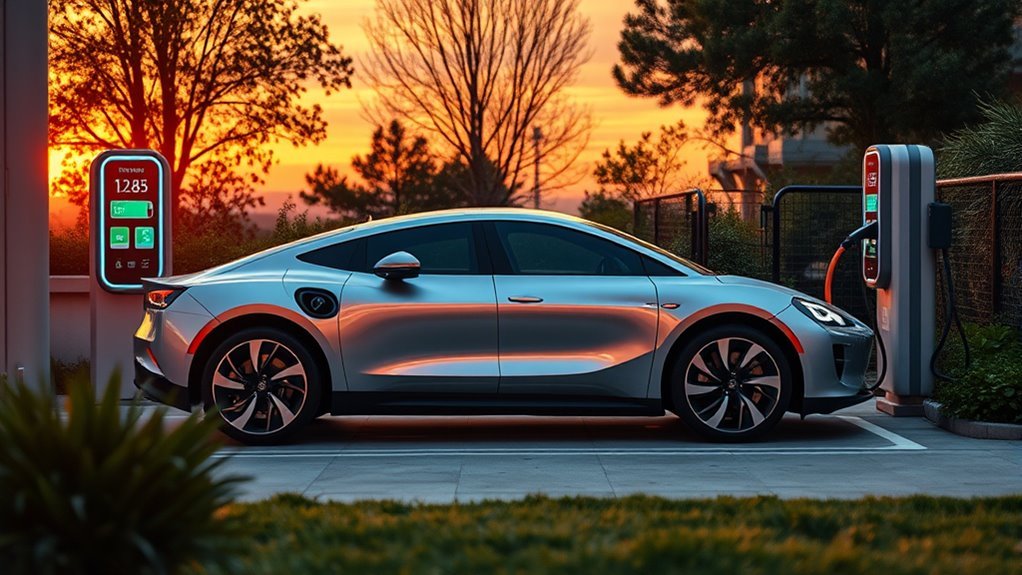
Charging your EV battery to 100% can harm its longevity, especially if you have an NMC battery, as it accelerates capacity loss by 20-30%. In contrast, LFP batteries can handle full charges without significant damage. To optimize battery life, it’s best to maintain a charge between 20-80% for daily use. For long trips, charging to 100% might be necessary, but it shouldn’t be routine. Understanding your battery’s chemistry is essential for maximizing performance and lifespan.
What You Need to Know About LFP and NMC Battery Chemistry
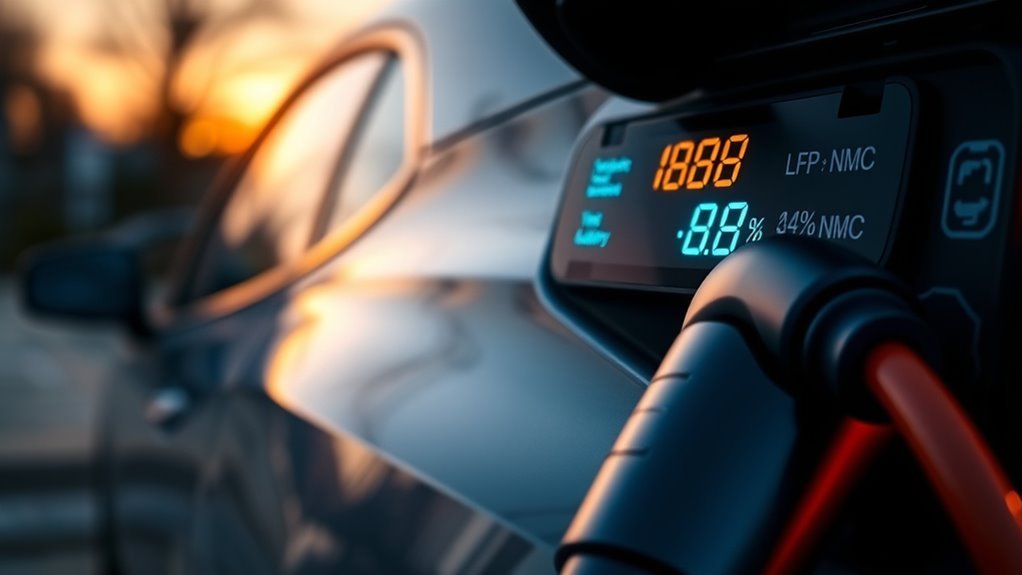
When choosing between LFP and NMC battery chemistries for electric vehicles, it’s vital to understand their differences in charging practices and longevity.
LFP (lithium iron phosphate) batteries excel in battery performance, allowing you to charge them to 100% regularly without significant degradation. This makes them an excellent choice for standard-range EVs like Tesla’s RWD variants.
LFP batteries allow for regular 100% charging without significant degradation, making them ideal for standard-range electric vehicles.
In contrast, NMC (nickel manganese cobalt) batteries require more caution; maintaining a charge between 80-90% is ideal for daily use, as frequent full charges can accelerate degradation by 20-30%. Additionally, in high-temperature conditions, it’s essential to limit NMC charging to 90% to combat accelerated calendar aging.
While NMC offers higher energy density, LFP batteries provide a larger cycle life, emphasizing the importance of selecting the right chemistry based on your driving habits and environmental conditions.
Understanding these chemistry differences can help you maximize your EV’s longevity.
Impact of Charging to 100% on Battery Longevity?
Charging your electric vehicle (EV) to 100% might seem convenient, but it can greatly impact battery longevity, especially for NMC batteries.
Regularly charging these batteries to full capacity accelerates battery degradation, often leading to a 20-30% faster deterioration rate if you frequently exceed a 90% state-of-charge (SoC).
While LFP batteries can handle full charges without significant damage, NMC batteries aren’t as resilient. Consistently hitting the 100% mark can cause gradual capacity loss over time, affecting overall battery health.
To optimize longevity, aim to keep your battery charge between 20% and 80%. This range minimizes stress on the cells and prolongs battery life.
Modern battery management systems (BMS) do help regulate charging conditions, but adhering to the 20-80% guideline remains essential to mitigate the risks associated with high charging frequency.
Daily and Long Trip EV Battery Charging Best Practices
Maintaining ideal battery health requires a strategic approach to charging, especially for daily use and long trips.
For daily charging, keep your EV’s battery level between 20-80%. This range helps prevent accelerated degradation, particularly for NMC batteries, while LFP batteries can be charged to 100% occasionally without significant risk.
When preparing for longer trips, you might need to charge to 100% for sufficient range, but avoid doing this regularly. Instead, charge as needed, which can also reduce overall charging time.
For winter travel, reaching full charge provides a safety buffer against reduced performance in cold temperatures.
How Battery Management Systems Enhance EV Battery Health
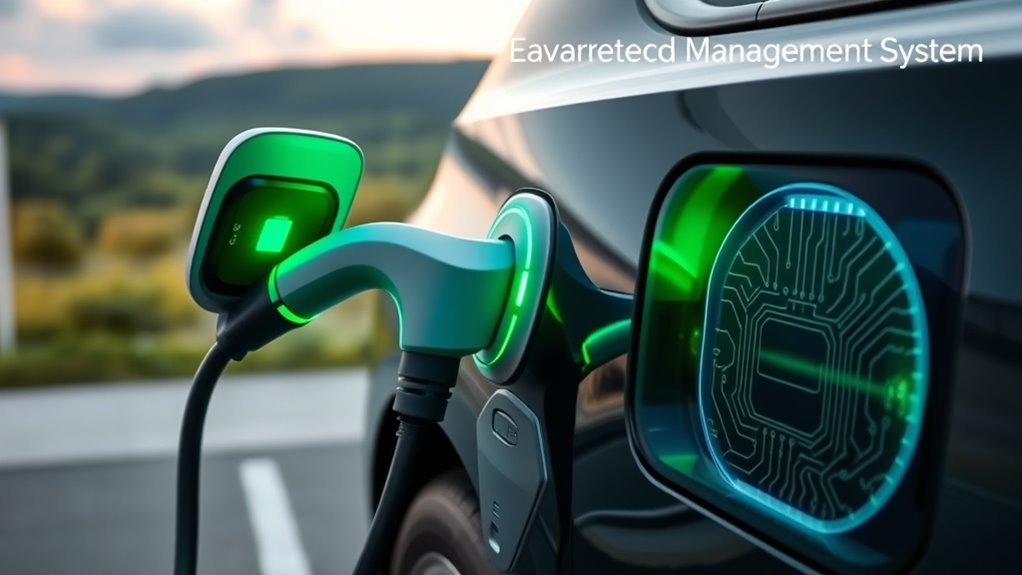
Although many EV owners may not realize it, Battery Management Systems (BMS) play an essential role in enhancing the longevity and performance of electric vehicle batteries. By utilizing advanced BMS features, you can greatly improve your battery’s health and efficiency.
- Regulates charging: BMS prevents overcharging and overheating, reducing wear and prolonging battery life.
- Optimizes charging algorithms: It balances fast and slow charging methods, ensuring a safer approach to maintain battery integrity.
- Monitors temperature: Thermal management features minimize damage caused by extreme heat during charging.
Incorporating buffer zones in the battery’s state of charge (SoC) protects against excessive voltage levels, particularly when charging to 100%.
Regular software updates for the BMS can also enhance battery health management, allowing you to benefit from the latest optimizations.
Common Misconceptions About Fast Charging and Battery Temperature Effects?
Many misconceptions surround fast charging and its effects on battery temperature. Many believe fast charging inevitably damages EV batteries, but that’s a fast charging myth. Data shows no significant range degradation between fast and slow charging when managed properly.
While high temperatures can accelerate battery damage—especially at high states of charge (SoC)—modern battery management systems (BMS) effectively mitigate these risks. It’s essential to avoid prolonged heat exposure during charging, particularly in warmer climates.
Manufacturers often recommend limiting regular charging to 80-90% for NMC batteries to minimize degradation. Proper thermal management and pack design play a far more vital role in battery longevity than charging speed alone.
Frequently Asked Questions
Is It Okay to Charge EV to 100% Occasionally?
Yes, it’s okay to charge your EV to 100% occasionally. Just be mindful of your charging habits, as frequent full charges can affect battery longevity, especially for NMC batteries. Balance is key for ideal performance.
Is It Better to Charge EV to 80 or 100?
Charging your EV to 80% is like nurturing a delicate flower; it promotes a longer battery lifespan. While 100% occasionally suits long trips, consistent 80% charging habits keep your battery healthy and thriving.
Is Charging to 100% Bad for the Battery?
Charging to 100% isn’t inherently bad for your battery, but regular full charges can shorten battery lifespan. Adjust your charging habits to maintain a level between 50-80% for ideal health and longevity.
How Long Can I Keep My EV at 100%?
You can keep your EV at 100% for short bursts, like a fleeting summer sunset. For ideal battery maintenance, aim for regular charge cycle frequency between 80-90%. Avoid prolonged full charges to preserve battery health.
Conclusion
In conclusion, while charging your EV battery to 100% isn’t the villain it’s often painted to be, moderation is key. Embracing a balanced approach—like opting for partial charges and avoiding frequent top-offs—can help extend your battery’s lifespan. By understanding your battery’s chemistry and respecting its limits, you’re not just protecting your investment; you’re also ensuring a smoother, more efficient ride. So, charge wisely, and let your EV thrive on the road ahead.







Leave a Reply