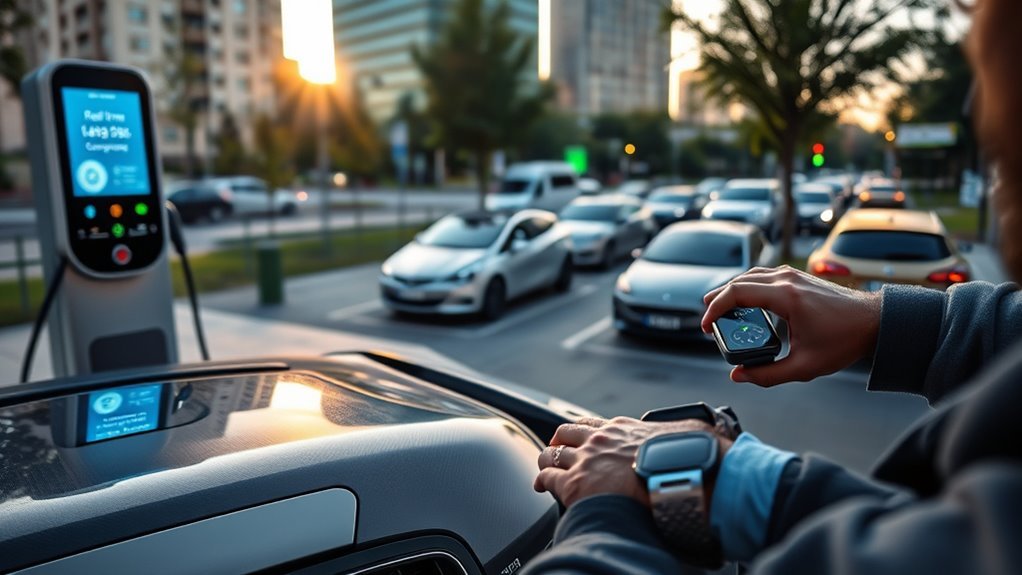
To avoid queues at public EV chargers, time your visits during off-peak hours like early mornings or late evenings. Use charging apps for real-time availability, route planning, and finding less crowded stations with multiple connectors. Always follow proper etiquette by promptly removing your vehicle once charged and communicating with other drivers. With the right timing, tech, and manners, you can streamline your charging experience and discover even more tips to enhance your journey.
Why Timing Matters for Avoiding Queues at EV Chargers
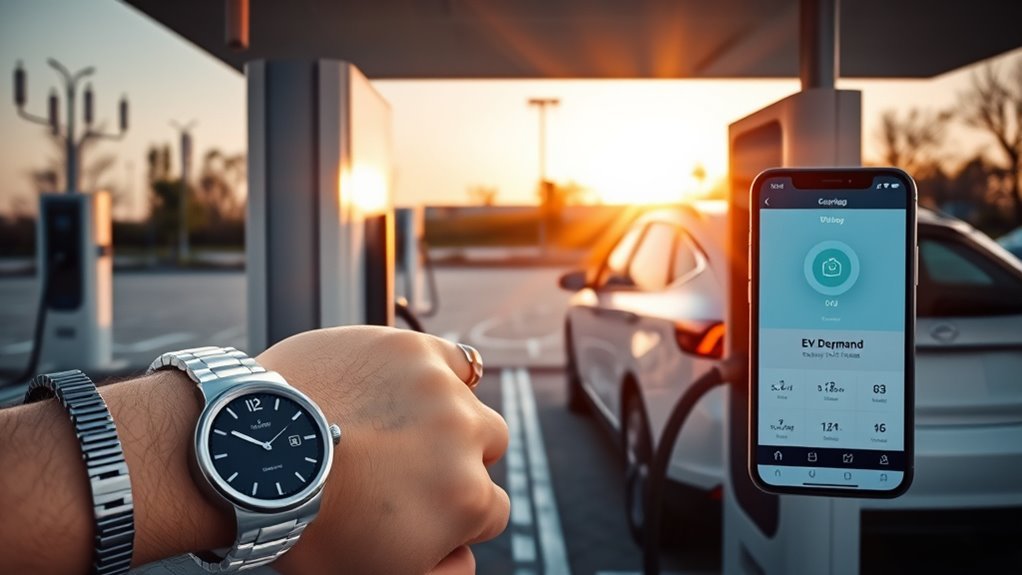
When you plan your charging sessions wisely, you can considerably reduce the chances of waiting in line at public EV chargers.
Charging during off-peak hours, like early mornings or late evenings, lets you dodge the crowds typically seen during peak hours.
With a 38% increase in operational charge points in the UK, timing is more essential than ever; more EVs on the road mean longer queues.
How to Use Charging Apps for Real-Time Availability
When you’re out and about, using charging apps can make a world of difference in finding available stations.
With real-time updates and route planning features, you can easily navigate to the most reliable charging spots without wasting time.
Plus, a user-friendly interface guarantees you get the information you need quickly, keeping your charging experience smooth and efficient.
Real-Time Station Updates
How can you make the most of your charging stops and avoid unnecessary delays? By leveraging charging apps like Chargemap, you can access real-time notifications about station availability. This empowers you to plan effectively, ensuring you’re not left waiting.
Use charging station mapping features to locate spots with multiple working connectors, increasing your chances of a quick charge. Plus, user-generated reviews can guide you to less crowded stations.
Take advantage of waitlist functionalities; they’ll alert you when a spot opens up, minimizing downtime. Stay informed about peak charging times through the app, allowing you to schedule your stops during off-peak hours.
This approach not only saves time but also enhances your overall charging experience.
Route Planning Features
Using charging apps like Chargemap can greatly enhance your journey by simplifying route planning and ensuring you always have access to available charging stations.
By leveraging the app’s route optimization features, you can pinpoint multiple charging spots along your route, boosting your charging efficiency. With access to over 700,000 compatible charging points across Europe, you can filter results based on connector types, helping you find the best available options.
Pay attention to user reviews and ratings to identify stations with minimal queues. Additionally, plan your stops during off-peak hours by evaluating typical usage patterns within the app. This way, you’ll dodge the crowds and keep your travels smooth and liberating.
User-Friendly Interface Design
Charging apps like Chargemap not only streamline your route planning but also feature user-friendly interfaces that make accessing real-time availability a breeze.
With intuitive app design, you can easily check the status of charging stations and plan your stops effectively. Utilize waitlist features to get notifications when a station opens up, so you can spend less time waiting.
Immerse yourself in user reviews for insights on stations with higher availability, improving your overall user experience. Pre-loading your payment methods minimizes transaction delays, ensuring a smoother process at the station.
Plus, regularly monitoring charging station statuses helps you avoid peak hours, letting you charge during off-peak times for a more liberating, hassle-free experience.
How to Select the Best Charging Station for Your Needs
Wondering which charging station will best meet your needs? Start by considering charging station types with at least six working connectors. This way, you’ll minimize wait times and increase your chances of finding an available charger.
Use the Chargemap route planner to check connector compatibility and availability, allowing you to adjust your charging stops as necessary.
Look for stations in areas with nearby amenities like parks or cafes; this makes waiting more enjoyable. To optimize your charging experience, prioritize non-peak times, such as early mornings or late evenings, when queues are shorter and charging speeds are faster.
Finally, verify that the charging points match your vehicle’s power requirements. Selecting the right charger will prevent unnecessary delays and make your journey smoother, liberating you from the stress of long waits and inefficient charging.
Best Practices for EV Charging Etiquette at Public Stations
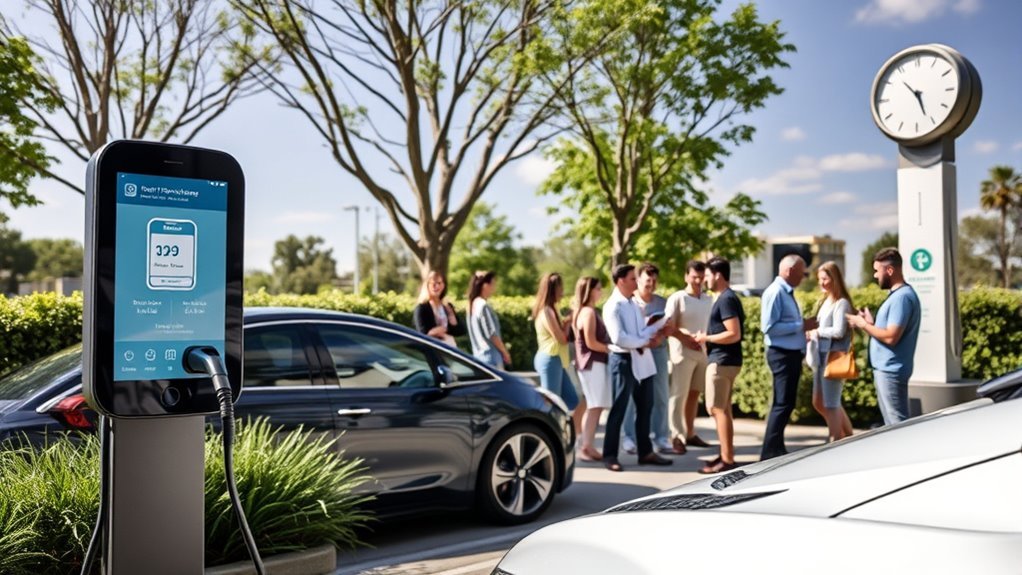
When you’re charging your EV at a public station, timely vehicle removal is essential for keeping the flow smooth.
Make it a habit to communicate your expected charging completion time, so others can plan accordingly.
Timely Vehicle Removal
Although it might be tempting to linger at a public EV charging station once your vehicle’s battery hits 80%, doing so can hinder fellow drivers who are also in need of a charge.
To guarantee a smooth flow at busy locations, promptly remove your vehicle after charging. Use apps or set reminders to monitor your charging duration, so you’re ready to move as soon as you’re sufficiently charged.
Many stations provide estimated completion times—keep an eye on those. Remember, idle fees can kick in after 5-10 minutes, adding another incentive for prompt vehicle removal.
Clear Communication Practices
Timely vehicle removal sets the stage for smooth interactions at public EV charging stations, but clear communication takes the experience to the next level.
Use communication tools like charging network apps to update others on your charging status or report occupied stations. Consider leaving a note on your dashboard about your expected charging time; it helps manage expectations and fosters positive driver interactions.
Engage with fellow drivers about charging durations and queue dynamics, creating a cooperative atmosphere. Always ask for permission before unplugging another vehicle, as this respect prevents conflicts.
Finally, be courteous and offer help to those who may be struggling; a supportive community enhances everyone’s charging experience and liberates us all from unnecessary frustration.
What’s the Difference Between Rapid, Fast, and Standard Charging?
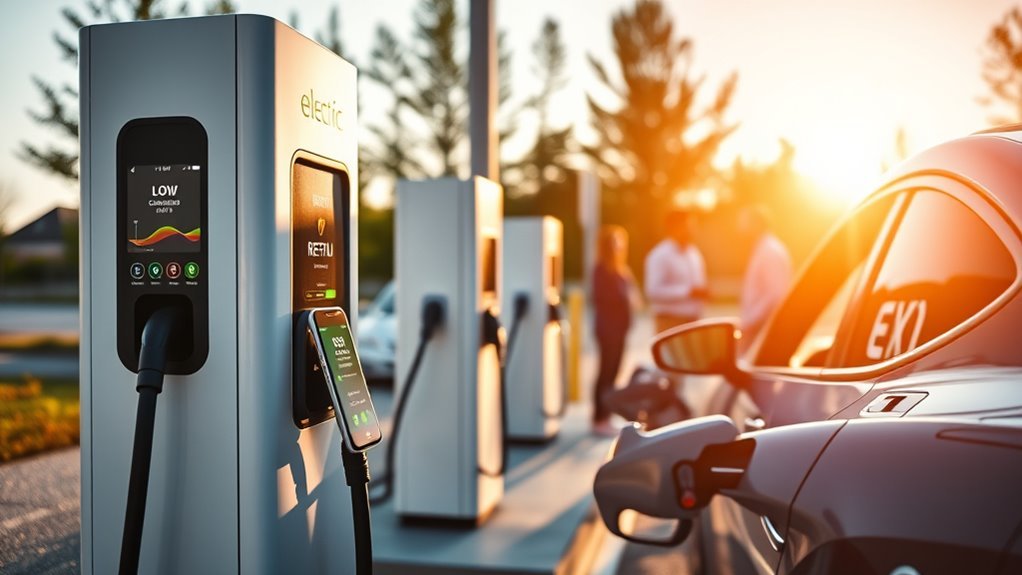
Understanding the differences between rapid, fast, and standard charging can greatly enhance your EV charging experience.
Rapid charging is your go-to for quick stops, taking just 15-30 minutes to get your vehicle from 20% to 80%. This is perfect for those on the move, especially with over 16,000 rapid chargers in the UK.
Fast charging, on the other hand, requires 30-60 minutes, offering a practical balance of charging speeds and accessibility.
Finally, standard charging, at 2-4 hours, is ideal for overnight sessions at home or during long stays.
Keep in mind that charging speeds slow as you approach 80%, making it wise to unplug when you hit that mark.
How to Plan Your Charging Stops Efficiently
When you’re planning your charging stops, a little strategy goes a long way in minimizing wait times and optimizing your EV experience.
Start by using the Chargemap route planner to locate charging stations with multiple connectors, focusing on those with at least six working options. This guarantees you have a better chance of finding an available spot.
Efficiency tips include checking the Chargemap app for real-time availability and user reviews before arriving. Charge your vehicle during off-peak hours—early mornings or late evenings—to dodge long queues.
Keep your battery level between 20% and 80% to avoid slower charging rates that come with very low or very high levels.
Finally, always identify alternative charging stations nearby. This flexibility in your charging strategies not only reduces stress but also enhances your overall EV journey, empowering you to travel further with confidence.
What to Do in Emergency Charging Situations?
Planning your charging stops can help you avoid long waits, but sometimes emergencies arise, and you find yourself in a tight spot. If your battery drops below 5%, you’ll receive priority access at charging stations, so assess your situation quickly.
Clear driver communication is key; if you’re fully charged, don’t linger. Wait no more than 10 minutes before contacting the vehicle owner to free up the space.
In emergencies, utilize charging network apps to report occupied stations or seek customer service assistance. Avoid unplugging someone else’s vehicle without permission, as this can lead to conflict and damage.
Stay calm and courteous; respectful communication often resolves issues more efficiently. Remember, we’re all maneuvering through this shift together, and a little kindness can go a long way in emergency charging situations.
Stay informed and proactive to keep the flow of energy—and goodwill—moving smoothly.
Common Mistakes to Avoid at Charging Stations
While charging your electric vehicle might seem straightforward, several common mistakes can lead to frustration and delays at charging stations. One major error is using charging bays as regular parking spots. Only EVs actively charging should occupy these areas to keep access open for others.
Pay attention to your charging habits and unplug once your vehicle reaches 80% charge; further charging takes longer and can congest stations. Additionally, be mindful of peak times like early mornings and late evenings to avoid long queues.
Monitor your charging habits and unplug at 80% to prevent congestion, especially during peak hours.
Using apps like Chargemap can help you check real-time availability, steering you clear of already occupied chargers.
Finally, always respect charging etiquette—don’t unplug another driver’s vehicle, as that’s a significant etiquette violation that can spark conflicts.
How to Maintain Your EV Battery Levels for Smooth Charging
To maintain your EV battery levels for smooth charging, it’s essential to keep your battery between 20% and 80%. Charging from 80% to 100% takes about 40% longer than charging from 20% to 80%, so aim for that sweet spot.
Avoid charging when your battery nears 0%, as this can lead to slower speeds and range anxiety.
Utilize apps like Chargemap to check the status and availability of charging stations, ensuring you plan your stops effectively.
Additionally, consider scheduling your charging sessions during cooler times—early mornings or late evenings—to boost charging efficiency.
Familiarize yourself with your EV model’s charging duration and curve; this knowledge helps you manage your charging times better and avoid overstaying at stations.
How Will Future Innovations Change EV Charging Etiquette?
As advancements in technology reshape the landscape of electric vehicle (EV) charging, etiquette at charging stations is set to evolve considerably.
By 2026, you can expect automated etiquette enforcement to be standard, using smart algorithms to optimize charging sessions. These innovations will include AI-powered coaching that helps you follow proper etiquette effortlessly.
Automated etiquette enforcement and AI coaching will make following charging protocols effortless by 2026.
With the rollout of universal charging protocols, confusion will decrease, making your charging experience smoother.
Dynamic pricing models may even incentivize you to promptly remove your vehicle once charged, ensuring efficient use of spaces.
Additionally, predictive maintenance powered by AI will enhance station reliability, meaning fewer downtimes and better availability for everyone.
Imagine the convenience of wireless and fully automated charging systems that eliminate wait times altogether.
As these innovations unfold, embracing new charging etiquette will empower you and fellow EV drivers to create a more harmonious and efficient charging environment.
Frequently Asked Questions
What Is the Etiquette for EV Charging Waiting?
When waiting to charge, practice charging courtesy by respecting the queue and others’ time. Show waiting patience by moving promptly once charged, and consider leaving a note about your charging duration to foster community cooperation.
What Is the 80 20 Rule for Electric Cars?
Did you know charging from 20% to 80% takes about 15-30 minutes? By adopting the 80/20 rule in your charging habits, you’ll reduce range anxiety and enhance battery longevity, optimizing your EV experience.
How to Queue for EV Chargers?
To effectively queue for EV chargers, manage your time by arriving early or late, utilize charging apps for real-time updates, and communicate with others about your charging duration to enhance overall queue management and efficiency.
How to Use Public EV Chargers for the First Time?
When using public EV chargers for the first time, check availability via apps, park correctly, and follow the charging process. Disconnect at 80% to help others, and always be courteous to fellow drivers.
Conclusion
By planning your charging sessions around peak times and using apps to find available stations, you can save time and frustration. Did you know that nearly 70% of EV drivers experience long wait times at public chargers? By practicing good etiquette and being mindful of your charging habits, you can help create a smoother experience for everyone. As EV technology evolves, staying informed will only enhance your charging journey. Embrace the future of driving—efficiently and courteously!






Leave a Reply