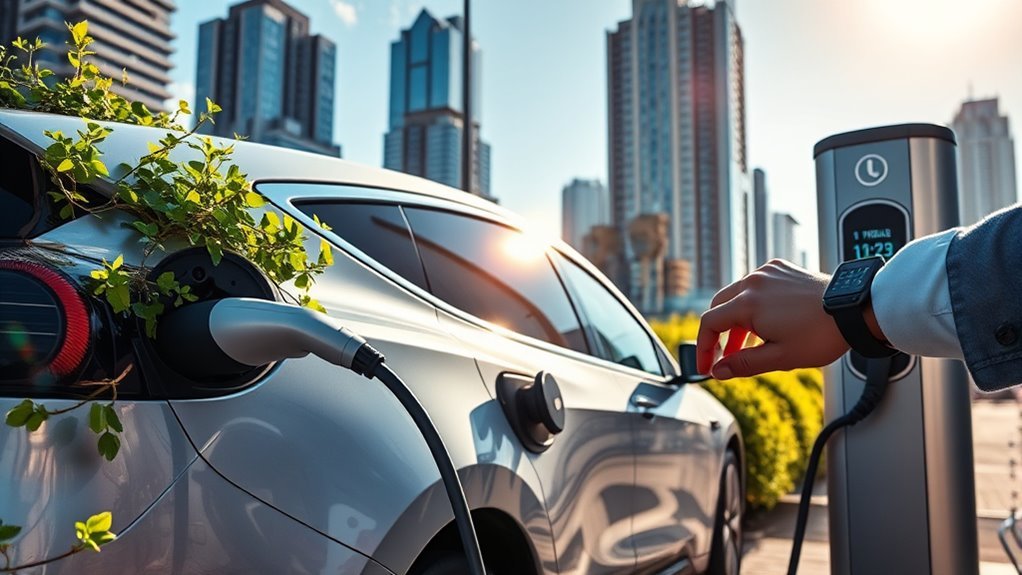
Charging an electric car varies widely based on the charger type and battery size. At home, a standard 3.6kW charger takes about 16 hours for a full charge, whereas a 7.4kW charger cuts that down to under 8 hours. Public DC fast chargers can add significant range in just 20-30 minutes. Factors like battery state and temperature also impact charging times. Want to know how to maximize efficiency and speed? There’s more to explore!
How Long Does It Take to Charge an Electric Car at Home?
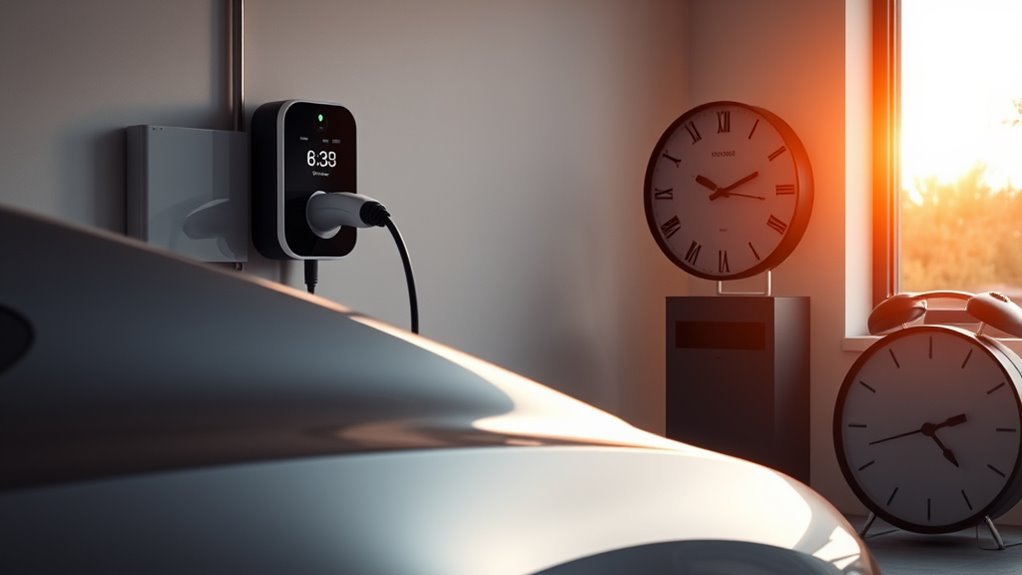
Have you ever wondered how long it takes to charge an electric car at home? The time varies based on your charger and battery capacity.
With a standard 3.6kW charger, you’re looking at around 16 hours to fully charge a 60kWh battery from empty. If efficiency’s your goal, a Level 2 home charger rated at 7.4kW can do it in just under 8 hours, perfect for overnight charging.
A standard 3.6kW charger takes about 16 hours for a full charge, while a 7.4kW Level 2 charger does it in under 8 hours.
For those with a rare 22kW charger, you can achieve a full charge in about 3 hours if your vehicle’s compatible.
Home charging isn’t just about speed; it’s also about convenience and cost-effectiveness. Charging overnight allows you to take advantage of lower electricity rates during off-peak hours.
However, keep in mind that actual charging time can change based on the battery’s current state, ambient temperature, and your vehicle’s onboard charging capabilities.
Embrace the freedom of electric driving!
Understanding Top-Up Charging for Daily Convenience
While you’re out running errands or at work, top-up charging can be a game changer for electric vehicle (EV) owners.
This convenient practice allows you to add charge during short stops at top-up locations like supermarkets and workplaces, maximizing your vehicle’s readiness throughout the day.
With public and workplace charging points typically offering power levels from 7 kW to 22 kW, you can gain anywhere from 10 to 60 miles of range added per hour—depending on your vehicle.
Public Charging Times: What to Expect
When you pull up to a public charging station, understanding what to expect regarding charging times can greatly enhance your EV experience.
Charging times vary markedly based on public charger types and their locations. Fast DC chargers, typically ranging from 50 kW to 350 kW, can power your vehicle from 20% to 80% in about 20-30 minutes, adding up to 100 miles of range.
Charging times differ significantly by charger type; fast DC chargers can boost your vehicle’s range by 100 miles in just 20-30 minutes.
On the other hand, Level 2 AC chargers, which provide 7-22 kW, yield only 20-40 miles of range per hour, making them more suitable for longer stays.
Before you plug in, check the charger’s power output. Knowing whether you’re using a fast charger or a slower one can help you plan your charging breaks effectively.
This way, you’ll feel empowered and in control of your EV journey, making the most out of every stop along the way.
What Influences Charging Speed for Electric Cars?
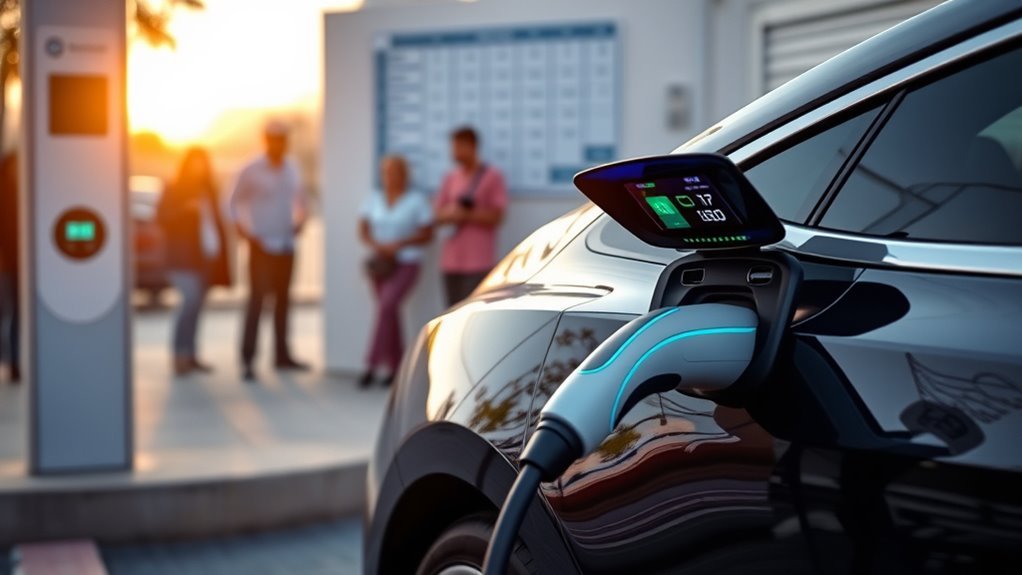
Understanding what influences charging speed for electric cars is essential for maximizing your EV experience. Several factors come into play, starting with the type of charging infrastructure you use.
Level 1 chargers are slow, providing just 1-2 kW, while Level 2 chargers can offer up to 22 kW, greatly speeding up the process. Direct Current Fast Charging (DCFC) stations are the fastest, often charging your car to 80% in 20-30 minutes.
Battery chemistry and capacity also affect charging times. Larger batteries, like a typical 60 kWh, take longer to charge, especially on lower power sources.
Additionally, the state of charge (SOC) impacts speed; charging is quicker at lower SOCs but slows as the battery nears full.
Environmental conditions can’t be ignored either—extreme temperatures may hinder performance and extend charging durations.
Understanding these factors empowers you to streamline your charging experience.
How Can You Maximize Charging Efficiency?
Maximizing charging efficiency can greatly enhance your electric vehicle (EV) experience and save you time and money.
Maximizing charging efficiency elevates your EV experience while saving both time and money.
By adopting smart charging strategies, you can guarantee your battery management is ideal and truly liberate yourself from long wait times.
- Use a Level 2 AC charger for faster charging (20-60 miles per hour).
- Precondition your battery and cabin, especially in extreme weather.
- Charge during off-peak hours for lower electricity rates.
- Keep your battery charge level between 20-80% for quicker, less wear-intensive charging.
- Utilize DC fast chargers for quick top-ups when you’re in a hurry.
Frequently Asked Questions
How Long Will It Take to Charge an Electric Car at a Charging Station?
Charging an electric car at a station can take anywhere from 20 minutes to several hours, depending on charging speeds and station availability. Consider your battery’s state and the charger type for ideal planning.
How Much Does a Full Charge Cost for an Electric Car?
Charging costs for your electric car can feel like a bargain hunt. Depending on electricity rates, you’ll spend between $5 to $15 for a full charge, especially if you’re charging at home during off-peak hours.
How Far Can an Electric Car Go on a Full Charge?
Your electric car’s range varies considerably; many models offer 150 to over 370 miles on a full charge. Understanding battery efficiency helps alleviate range anxiety, ensuring you enjoy the freedom of electric driving without worry.
What Happens if an Electric Car Runs Out of Charge?
When battery depletion brings your journey to a halt, you’ll need emergency solutions like a tow to a charging station. Regularly monitor your charge to avoid frustrating failures and keep your freedom on the road!
Conclusion
Charging your electric car can feel like a race against time, yet it’s often a simple matter of finding the right balance between speed and convenience. While home charging offers the comfort of overnight fills, public stations provide quick boosts on the go. Understanding the factors influencing charging speed empowers you to maximize efficiency. Ultimately, the journey of electric vehicle ownership reveals that patience can coexist with the thrill of innovation, making each charge a step toward a greener future.






Leave a Reply