You can pay for EV charging using several methods, each tailored for convenience. RFID cards allow quick access and work offline, while mobile apps offer real-time station updates and seamless in-app payments. Bank cards provide contactless payment options at many stations, but compatibility may vary. Additionally, Plug & Charge technology simplifies the process by automating authentication.
Quick Answer
- RFID cards – Tap and charge, works without mobile signal, single card for multiple networks.
- Mobile apps – Real-time station info, remote start/stop, payment stored in app.
- Bank cards – Contactless tap at compatible stations, no account needed, may incur extra fees.
- Plug & Charge – Vehicle authenticates automatically, billing linked to your account (emerging standard).
Understanding EV Charging Payments: An Overview
When you charge your electric vehicle (EV), understanding the payment options available can enhance your experience at charging stations.
Various payment methods cater to different preferences. You can use RFID cards, like Electrocards, for quick and reliable access without worrying about internet connectivity.
Mobile apps linked to your account offer a streamlined way to manage charging sessions. You can start, stop, and track activity right from your device.
For those not registered, ad-hoc payment methods using QR codes provide a convenient way to pay on the spot.
Looking ahead, Plug & Charge technology promises to revolutionize the process by automating authentication and billing directly through compatible vehicles, eliminating the need for physical cards or apps.
The Role of RFID Cards in EV Charging: How They Work
Understanding how RFID cards work in EV charging can greatly enhance your charging experience. RFID technology uses unique IDs to authenticate you at public charging stations with a simple tap, streamlining the process. This convenience becomes essential when mobile signals are weak or unavailable, ensuring you can still access charging infrastructure without hassle.
One of the main benefits is that you won’t need multiple cards for various charge point operators (CPOs). A single RFID card can provide access to thousands of chargers across different charging networks. This makes it easier to find and use charging stations.
RFID authentication supports both prepaid and postpaid charging sessions, giving you flexibility in how you pay.
Comparing Payment Apps for EV Charging: Benefits and Drawbacks
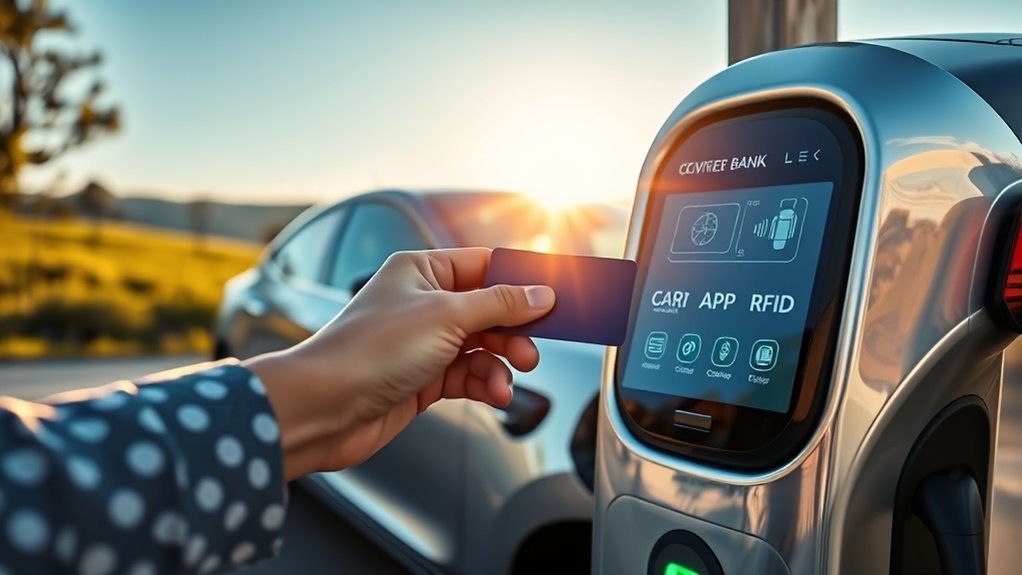
When comparing payment apps for EV charging, consider features like real-time updates on charging stations and stored payment options.
The efficiency of the payment process can vary, impacting your overall experience at the charging point.
Additionally, user accessibility plays an essential role, especially in areas with poor mobile signal where RFID cards may provide a more reliable alternative.
App Features Comparison
Maneuvering the landscape of payment apps for EV charging can feel overwhelming, especially with the variety of features they offer. Many apps enhance your user experience by allowing you to initiate and manage charging sessions, providing real-time updates on charger availability.
App features often include integrated payment options linked directly to your bank account or credit card, simplifying transactions. You’ll find valuable tools like session tracking and detailed usage reports, helping you manage expenses effectively.
However, these apps usually require account creation and may involve fees. They also depend on reliable mobile connectivity, which can be a drawback in areas with weak signals or when your device’s battery is low.
Payment Process Efficiency
As you explore payment apps for EV charging, you’ll quickly discover that payment efficiency is a key factor in your overall charging experience.
Here’s what to take into account:
- Transaction Speed: Apps can streamline payments, reducing wait times during peak hours.
- Payment Authentication: Many apps let you start and stop charging remotely, enhancing convenience.
- Real-Time Updates: Get notifications and manage charging sessions directly from your linked bank cards.
- Usage Reports: In-app billing provides insights into your charging habits, helping you optimize expenses.
But be aware of potential app glitches and the need for a stable mobile signal, which can impact efficiency. Having an RFID card as a backup can ensure reliable payment authentication when needed.
User Accessibility Considerations
While evaluating payment apps for EV charging, it’s essential to consider user accessibility, as this can greatly influence your experience. Different user demographics have varying payment preferences, and accessibility features can bridge the digital divide.
For instance, while payment apps streamline the process with in-app session management, they can alienate those less familiar with technology. Intuitive interface design enhances user experience, making it easier for everyone.
RFID cards offer a reliable fallback when apps fail, ensuring you’re never stranded. Meanwhile, contactless bank cards can be convenient, but they often lack the benefits of dedicated apps.
Ultimately, choosing the right payment method depends on your unique needs and comfort with technology.
Using Your Bank Card at Charging Stations: A Quick Guide
Using your bank card at charging stations offers a convenient payment option, but you need to verify compatibility with the specific network.
Most stations allow you to tap your card for payment, but some may charge additional fees compared to other methods.
Understanding the security measures in place can also help you feel more confident while charging.
Payment Options Overview
Many public charging stations now accept contactless bank card payments, making it easier to charge without managing separate accounts or RFID cards.
Here’s a quick overview of key points:
- Tap and Go: Simply tap your bank card on the terminal to start charging.
- User Preferences: Choose this option if you prefer not using mobile apps or RFID cards.
- Network Compatibility: Not all stations accept direct bank card payments, so check ahead.
- Cost Considerations: You might face extra fees compared to membership plans, so evaluate your options for cost-effectiveness.
Stay informed and choose the payment method that best aligns with your needs.
Compatibility With Charging Stations
As you explore options for charging your electric vehicle, understanding compatibility with charging stations is vital. Many public stations in the UK now support direct bank card payments, streamlining your charging experience.
However, not all stations offer this payment method. Some older models may require an RFID card or mobile app. UK regulations require that chargers with 50 kW or above have contactless payment capabilities, enhancing accessibility for drivers like you.
Charging networks such as BP Pulse and InstaVolt facilitate direct payments, allowing you to bypass account registration. Familiarizing yourself with specific providers’ policies is important, as station compatibility and payment options can vary greatly.
Stay informed to maximize your EV charging experience.
Security Measures In Place
When you’re ready to charge your electric vehicle, understanding the security measures for using your bank card can provide peace of mind.
Here are some key security protocols to ensure transaction safety:
- Contactless Payments: Always use stations that support contactless payments, minimizing the need to enter your card details.
- PCI DSS Compliance: Look for charging stations with terminals that adhere to the Payment Card Industry Data Security Standard, safeguarding your information.
- Dynamic QR Codes: Utilize providers that generate unique QR codes for each transaction, offering an extra layer of security.
- Monitor Transactions: Regularly check your bank statements and enable transaction alerts for real-time notifications on charges.
These measures help protect your financial information while you charge.
Maximizing Convenience With In-App Payments
How can you streamline your EV charging experience? In-app payments through apps like Electroverse revolutionize how you manage charging sessions. By linking your account to a valid payment method, you gain control right from your smartphone. You can start or stop charging anytime, enhancing your user experience.
Here’s a quick overview of in-app payment features:
| Feature | Benefit |
|---|---|
| Instant Session Control | Start/stop charging with ease |
| Payment Security | Secure transactions guaranteed |
| Compatibility Check | Verify station compatibility |
| Quick Billing | Charges within 24 hours |
With regular app updates informed by user feedback, the app continues to enhance its functionality. Remember, while in-app payments provide convenience, carry an RFID card as a backup in areas with weak mobile signals. Embrace the freedom of modern EV charging.
Understanding Plug & Charge: Simplifying the Charging Experience
Ever wondered how Plug & Charge technology can transform your EV charging experience? This innovative system simplifies the process by allowing your compatible electric vehicle to charge without manual authentication.
Here are some key benefits you’ll enjoy:
- Automatic Initiation: Just plug in and start charging—no cards or apps needed.
- Seamless Billing: Charges go directly to your account, thanks to integrated vehicle identification.
- Standardization: Based on ISO 15118, it ensures smooth communication between your vehicle and the charging station.
- Enhanced User Adoption: With its hassle-free experience, more drivers are likely to embrace electric vehicles.
Common EV Charging Payment Issues and How to Fix Them
While navigating EV charging, you might encounter payment issues that disrupt your experience. Common problems include difficulty authenticating sessions due to poor mobile signal. In such cases, having a physical RFID card as a backup can make troubleshooting smoother.
App-based payments may also cause hiccups, like account setup delays or processing errors. Make sure your app is updated and payment methods are linked correctly. Additionally, some charging stations don’t accept contactless bank cards, so always carry an RFID card or maintain a registered account.
If you face unexpected charges or billing discrepancies, check your transaction history or reach out to customer support. Familiarizing yourself with the accepted payment methods at your frequently used stations and ensuring multiple options are available can help mitigate these issues.
User feedback is vital; share your experiences to improve the overall charging ecosystem.
Choosing the Best Payment Method for EV Charging
When it comes to choosing the best payment method for EV charging, understanding your options can greatly enhance your charging experience.
Your preferences should align with your lifestyle and needs. Here are some methods to consider:
Select a payment method for EV charging that fits seamlessly with your daily routine and preferences.
- RFID Cards: Quick and reliable, RFID cards like Electrocards simplify authentication, especially where mobile signals may falter.
- Mobile Apps: These provide real-time information, allowing you to manage sessions and track costs directly linked to your bank account.
- Contactless Payments: Ideal for those without prior accounts, this method simplifies transactions at many public charging stations.
- Plug & Charge: While emerging, this technology lets your vehicle handle payments automatically, enhancing user experience.
Future Trends in EV Charging Payments: What to Expect
As the electric vehicle (EV) market continues to grow, advancements in charging payment systems are set to transform how you interact with these services.
Emerging technologies like Plug & Charge will let your vehicle authenticate and pay for charging automatically, eliminating manual input. Mobile app integration is also improving, using GPS and Bluetooth to help you find charging stations effortlessly and initiate payments seamlessly.
With standards like the Open Charge Point Protocol (OCPP), payment processing will become more efficient, enhancing your overall experience. Future innovations may even enable vehicle-integrated payment solutions, allowing you to manage charging directly from your car’s infotainment system.
Regulatory changes, such as the AFIR mandate for contactless payment options, will further streamline access for unregistered EV drivers. These trends in payment innovation promise a more liberated, convenient way to charge your vehicle.
Frequently Asked Questions
How to use RFID card for EV charging?
To use your RFID card for EV charging, just tap it on the reader. This offers advantages like seamless access and no mobile dependency, but keep in mind that it may have limitations in certain areas.
What are the payment methods for EV chargers?
Payment options include RFID cards, mobile apps, contactless bank cards, and Plug & Charge technology. Each has its own benefits across different charging networks.
What is the payment method for EV charging?
For EV charging, you can use mobile payments through various charging networks. These networks offer seamless options like RFID cards and contactless transactions, giving you flexibility and convenience.
Do I need an RFID card for EV charging?
Do you really need an RFID card for EV charging? While it offers benefits like access to discounts and reliable backup, drawbacks include potential fees and limited usage. Evaluate your charging habits before deciding.
Conclusion
In the ever-evolving world of EV charging payments, you’ve got a wealth of options at your fingertips. Whether you prefer RFID cards, apps, or traditional bank cards, each method offers unique advantages to suit your lifestyle. With innovations like Plug & Charge making the process smoother than ever, you’ll wonder how you ever managed without them. As the landscape continues to shift, staying informed will ensure you always choose the best payment method for your charging needs.






Leave a Reply