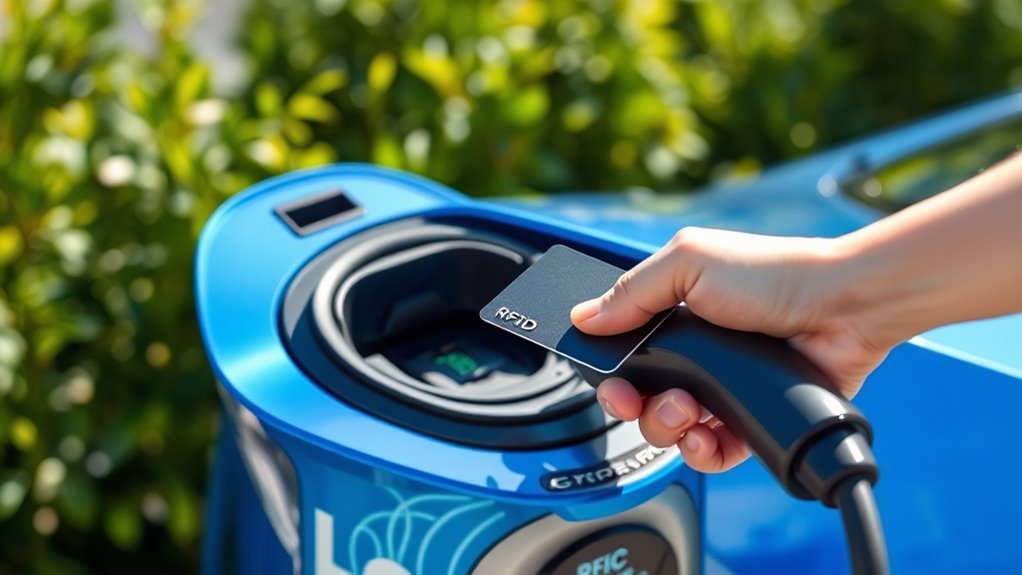
RFID technology in EV charging lets you access stations quickly and securely. Just register your RFID card with your account, plug in your vehicle, and tap the card to start charging. It simplifies the process, allowing you to charge without an app or internet connection. Plus, it enhances billing accuracy and tracks usage effectively. If you want to know more about the benefits and comparisons with other charging methods, keep going to uncover more insights.
What Is RFID Technology in EV Charging?
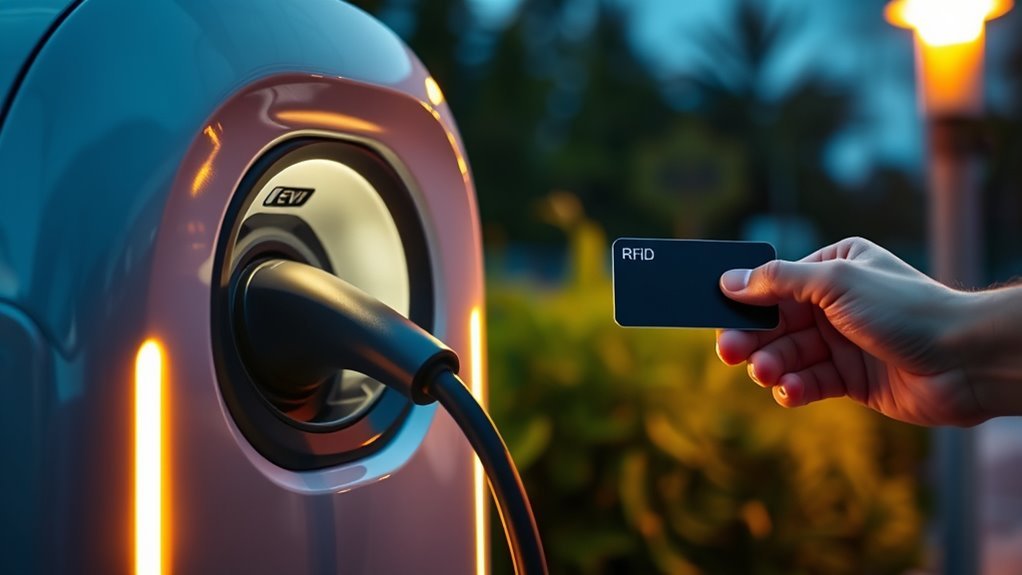
RFID technology in EV charging revolutionizes the way you interact with charging stations, allowing you to start a session simply by tapping your RFID card. At its core, RFID basics involve a microchip and antenna in your card that communicate with the charger, securely transmitting your user ID and payment info.
RFID technology transforms EV charging, enabling quick sessions with a simple tap of your card for secure access.
This seamless interaction eliminates the hassle of mobile apps or passwords, making your charging experience quicker and more efficient, especially in areas with poor mobile coverage.
RFID applications extend beyond convenience; they’re invaluable for tracking energy consumption and billing, especially for businesses and fleet management. Each RFID card is uniquely encoded, ensuring secure data transmission and protection against unauthorized access.
With RFID technology, you gain a sense of liberation, simplifying your electric vehicle charging experience while enhancing security and efficiency. Embrace this innovation and enjoy the freedom it brings to your EV journey.
How to Charge Your EV With RFID: a Step-By-Step Guide
Charging your electric vehicle (EV) with RFID is a straightforward process that enhances your experience at charging stations. Follow these steps to make the most of your charging session:
| Step | Action | Notes |
|---|---|---|
| 1 | Confirm compatibility | Confirm your EV works with the station. |
| 2 | Register your RFID card | Link it to your user account for access. |
| 3 | Plug in your EV | Connect your vehicle to the charger. |
| 4 | Tap your RFID card | Initiate the session by tapping the reader. |
After a successful tap, indicated by a beep or green light, your charging session begins. Remember to practice charging station etiquette by keeping your area tidy. Once done, tap your RFID card again to stop charging, confirming a smooth unplugging process. Check your user account for charging logs and costs to stay informed!
Benefits of RFID Cards for EV Charging
Using RFID cards for EV charging simplifies the entire process with just a quick tap, so you won’t need to rely on mobile apps or internet access.
Plus, the enhanced security features protect against unauthorized use, ensuring only registered users can access the charging stations.
This combination of convenience and safety makes RFID cards a smart choice for both personal and fleet charging needs.
Streamlined Charging Process
While maneuvering the world of electric vehicles, you’ll find that RFID cards considerably simplify the charging process.
These cards enhance your user experience and boost charging convenience through:
- Quick Tap Activation: No more fumbling with mobile apps or manual logins—just tap your RFID card to start charging.
- Offline Functionality: Enjoy seamless charging even in areas with poor mobile coverage, ensuring you’re never left stranded.
- Network Access: Gain quick access to multiple charging points across various networks, reducing the number of cards you need to carry.
Enhanced Security Features
With the convenience of RFID cards transforming the charging experience, it’s important to recognize their enhanced security features that protect users and their vehicles.
These cards utilize card encryption and unique encoding, preventing unauthorized access and cloning attempts. Each RFID card links directly to your user account, ensuring only you can initiate charging sessions and track usage accurately.
This technology operates offline, so you can charge your EV without internet connectivity, minimizing the risk of technical glitches. Additionally, RFID cards facilitate detailed tracking of your charging sessions, helping you monitor energy consumption and billing accuracy.
In commercial settings, they streamline access control, fostering a secure environment that promotes accountability for electric vehicle charging.
Comparing RFID and App-Based Charging: Which Is Right for You?
When choosing between RFID and app-based charging, speed and offline functionality are essential factors.
RFID offers quick access with just a tap, while app-based methods can slow you down with multiple steps.
If you’re often in areas with spotty connectivity, RFID might be the more reliable option for you.
Speed of Access
How quickly can you access an EV charging station when you’re in a hurry? If you’re aiming for maximum charging efficiency and user convenience, here’s what you need to take into account:
- Instant Access: RFID cards provide a simple tap to start charging, cutting down wait times considerably.
- Peak Performance: In busy areas, RFID systems activate faster than app-based solutions, reducing delays during high traffic.
- Offline Capability: RFID operates without internet, ensuring you can charge even in low connectivity zones or when your phone’s battery is low.
For frequent chargers, especially in regions with robust RFID infrastructure, using RFID cards enhances your experience.
Embrace the freedom of quick and reliable access to charging stations that fit your lifestyle!
Offline Functionality Benefits
Accessing EV charging stations quickly is just one part of the equation; the reliability of that access is equally important.
RFID charging cards shine in offline functionality, allowing you to start charging without needing an internet connection. This feature is perfect for areas with poor mobile coverage. Unlike app-based systems that depend on constant connectivity, RFID offers a dependable solution for quick access.
Real world applications show that tapping your card can initiate faster charging sessions, especially in busy locations. Plus, RFID enhances security by limiting access to registered users, reducing the risk of unauthorized use.
User experiences reveal that businesses and fleet operators appreciate uninterrupted charging, ensuring their vehicles stay powered up regardless of network availability.
Debunking Common Myths About RFID Cards for EV Charging
Although many people hold misconceptions about RFID cards for EV charging, understanding their true capabilities can enhance your charging experience.
Here are three common myths worth debunking:
- Myth of Obsolescence: RFID technology isn’t outdated; it’s a reliable method for secure access to EV chargers.
- Security Concerns: Contrary to popular belief, RFID cards use encrypted data transmission to protect against unauthorized access.
- Limited to Commercial Use: RFID isn’t just for businesses—residential users can also benefit, enjoying enhanced convenience and security.
Why Are RFID Cards Essential for Fleets and Public Charging Stations?
As fleets and public charging stations continue to grow in number and complexity, RFID cards have become essential tools for ensuring secure and efficient access to charging facilities. They provide controlled access, preventing unauthorized use and ensuring only designated vehicles charge.
| Benefit | Fleet Management | Public Charging Stations |
|---|---|---|
| Secure Access | Prevents unauthorized charging | Streamlines user identification |
| Charging Efficiency | Tracks energy consumption | Facilitates automatic billing |
| Quick Activation | Reduces wait times | Enhances user experience |
| Roaming Agreements | Simplifies multi-network access | Improves charging accessibility |
With RFID technology, you can easily track charging sessions, leading to accurate billing and detailed usage reports. This technology not only enhances operational insights but also liberates drivers from lengthy waits, allowing for a seamless charging experience across various locations.
Frequently Asked Questions
How to Use RFID for EV Charging?
To use RFID technology for EV charging, plug in your vehicle, tap your RFID card on the reader, and wait for a confirmation beep or green light. Tap again to end the session before unplugging.
What Is RFID on EV Chargers?
Think of RFID technology as a magic key for EV charging. It lets you gain access to charging stations effortlessly, ensuring quick, secure access without fumbling with apps or passwords—empowering your electric journey with seamless convenience.
How Does RFID Work for Dummies?
RFID technology uses a small chip and antenna to communicate wirelessly, allowing you to tap a card for access. It’s simple: the card identifies you, enabling secure transactions and various RFID applications, from payments to access control.
Do I Need a RFID to Charge With Be EV?
No, you don’t need an RFID to charge with Be EV. However, using one can streamline your experience, offering quick access and added benefits, enhancing your charging accessibility and liberating you from app navigation hassles.
Conclusion
So there you have it—RFID in EV charging isn’t just a fancy gadget for tech enthusiasts. It’s a ticket to effortless charging, as long as you don’t mind carrying a card instead of relying on the latest app that may or may not crash mid-charge. Remember, while you’re pondering whether to go old-school with RFID or join the app parade, just know that the future of charging is here, and it’s waiting for you—card in hand!






Leave a Reply