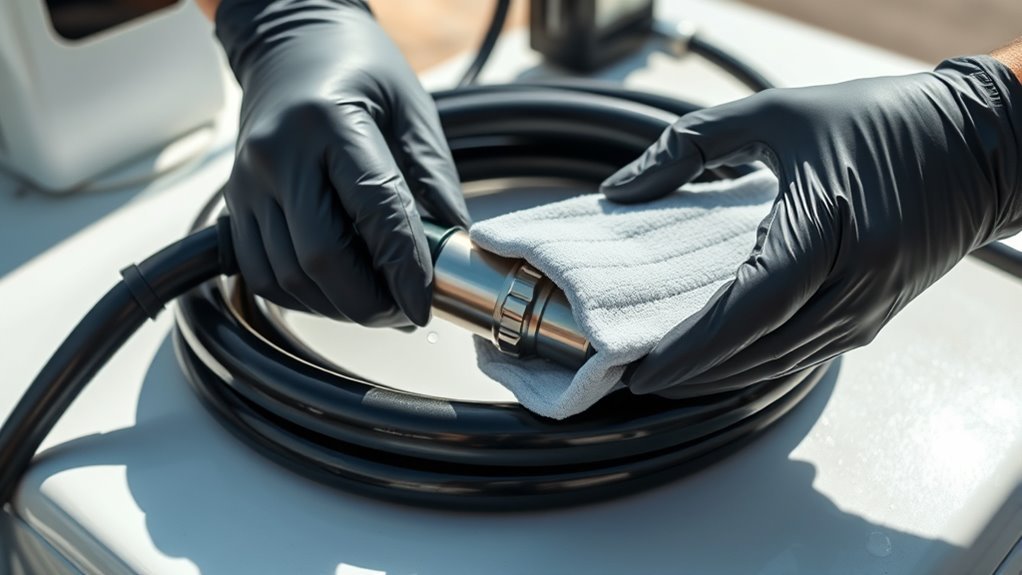
To clean your EV charging cable and connector safely, first, unplug the charger to prevent electric shock. Use a microfiber cloth lightly dampened with isopropanol to clean the connector, avoiding moisture on electrical contacts. Compressed air can help remove debris from ports. Always inspect for frayed wires, corrosion, or bent pins during cleaning. Proper storage techniques can also prolong the life of your cable. Discover more about maintenance and inspection techniques for peak performance.
The Importance of Cleaning Your EV Charging Cable
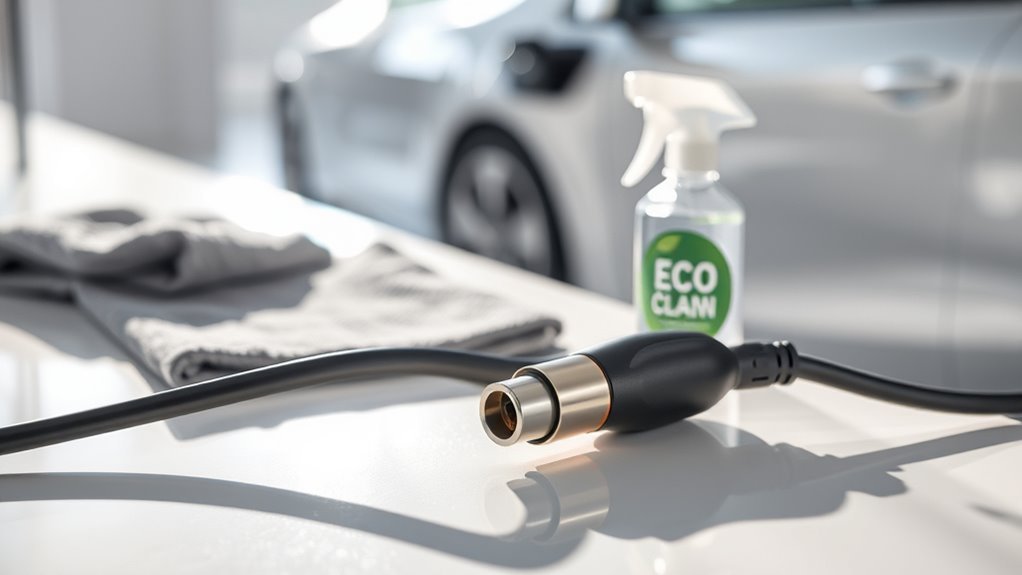
While you may not think about it often, cleaning your EV charging cable is vital for maintaining its efficiency and longevity. Regular cleaning helps prevent moisture accumulation and corrosion, which can lead to short circuits that affect your vehicle’s charging performance.
Dirt and debris can obstruct electrical connections, causing intermittent charging issues; thus, keeping the cable clean is essential for ensuring efficiency.
Utilizing manufacturer-recommended cleaning solutions, like isopropanol, along with soft cloths, effectively removes contaminants without damaging the materials.
Regular inspections and cleaning of the connector can also reveal early signs of wear or damage, allowing you to address problems before they escalate.
By committing to this routine, you contribute to the overall reliability of your electric vehicle’s charging system.
Prioritize cleanliness, and you’ll enhance your EV’s performance while extending the lifespan of your charging equipment.
Essential Tools for Safe Cleaning of Your Charging Equipment
To clean your EV charging equipment safely, you’ll need specific tools and cleaning solutions.
Use a microfiber cloth for gentle cleaning, isopropanol for the connector, and compressed air to remove debris.
Always guarantee the charger is unplugged before starting to avoid any electrical hazards.
Recommended Cleaning Solutions
When cleaning your EV charging cable, using the right solutions and tools is essential for maintaining its functionality and longevity.
Isopropanol (IPA solvent) is highly recommended for cleaning connectors, as it effectively removes dirt without leaving harmful residue. For application, use a soft microfiber cloth or cotton buds, guaranteeing a gentle touch to avoid scratching sensitive surfaces.
To keep your maintenance schedule on track, incorporate compressed air to blow out loose debris from the charging ports regularly.
Avoid strong cleaning agents and power washers, as these can damage connector materials.
Remember to turn off and unplug the charger before cleaning to ascertain safety and prevent electrical hazards during your cleaning frequency routine.
Necessary Cleaning Tools
Cleaning your EV charging cable effectively requires the right tools to guarantee a thorough and safe process.
Start with isopropanol (IPA) solvent and cotton buds to clean the connector without leaving residue or causing damage. For the CCS port and tight spaces, use compressed air to blow out debris.
A soft, non-abrasive cloth or sponge is essential for cleaning the external surfaces of the cable and plug, preventing scratches. Avoid harsh chemicals or pressure washers, as they can harm plastic and electrical components.
Always remember to unplug and power down the charger before cleaning to maintain safety. Regular maintenance, adhering to a cleaning frequency in your maintenance schedule, will keep your charging equipment in prime condition.
How to Clean Your Charging Connector in Simple Steps
To clean your charging connector effectively, you’ll need some essential supplies like isopropanol and cotton swabs.
Start by unplugging the charger and powering it down for safety.
Follow these simple steps to guarantee proper maintenance and peak performance of your EV charging equipment.
Essential Cleaning Supplies Needed
Before you start the cleaning process, it’s essential to gather the right supplies to guarantee your EV charging connector and cable are cleaned effectively and safely.
For ideal maintenance routines, you’ll need isopropanol (IPA), cotton swabs or Q-tips, and a soft microfiber cloth.
Use IPA sparingly on a cotton swab to gently clean the metal contacts of the connector, avoiding excessive pressure.
For the cable exterior, a slightly damp microfiber cloth with a mild cleaning solution will help remove dirt and grime without damaging the protective outer layer.
Remember to avoid harsh chemicals and abrasive materials that can scratch or degrade the plastic parts.
Regular cleaning frequency will keep your equipment in prime condition for safe use.
Step-By-Step Cleaning Process
Start by ensuring your safety; unplug the charging cable from both your vehicle and the power source.
Next, use a microfiber cloth or Q-tips lightly dampened with isopropanol (IPA solvent) to clean the connector and cable surfaces gently. This method preserves the integrity of the materials while enhancing charging efficiency.
Inspect the connector for any debris, and use compressed air to remove loose particles from the charging ports. Avoid harsh chemicals or pressure washers, as they can damage the plastic and electrical components.
Finally, allow the cleaned connector and cable to dry completely before reconnecting.
This careful cleaning process not only maintains your equipment but also reduces the environmental impact of your electric vehicle charging routine.
Proven Techniques to Keep Your Charging Cable Clean and Functional
Maintaining a clean and functional EV charging cable is essential for peak performance and longevity. To guarantee charging efficiency, start with preventive maintenance by inspecting the plug ends regularly for dirt, rust, or damage. Even minor debris can greatly hinder connectivity.
Always power down and unplug the charger before cleaning to avoid electrical hazards. Use isopropanol (IPA solvent) and cotton buds to gently clean the charging connector, making sure you remove all residue. This prevents interference with connectivity.
Additionally, utilize compressed air to blow out debris from connectors and ports, maintaining ideal contact. Avoid strong cleaners or pressure washers, as they can damage the connectors and wiring, leading to decreased performance or failure.
Common Mistakes to Avoid When Cleaning Your Charging Connector
Cleaning your EV charging connector requires careful attention to detail to avoid common pitfalls that can lead to damage or inefficiency.
First, always turn off and unplug the charger before cleaning to prevent electric shock or equipment damage. Avoid abrasive materials or harsh chemicals; these can scratch surfaces and degrade the connector’s integrity.
Don’t use a pressure washer or excessive force, as this can introduce moisture into electrical components or damage the cable. Ensure no moisture or cleaning solution enters the electrical contacts, as this could cause corrosion and malfunction.
Maintain a regular cleaning frequency by inspecting the connector for dirt or debris before each use. When cleaning, use a soft cloth or isopropanol on cotton swabs to gently remove contaminants.
Following these guidelines will enhance your connector maintenance and prolong the life of your charging equipment, ensuring it operates efficiently.
Inspecting Your Charging Equipment for Damage
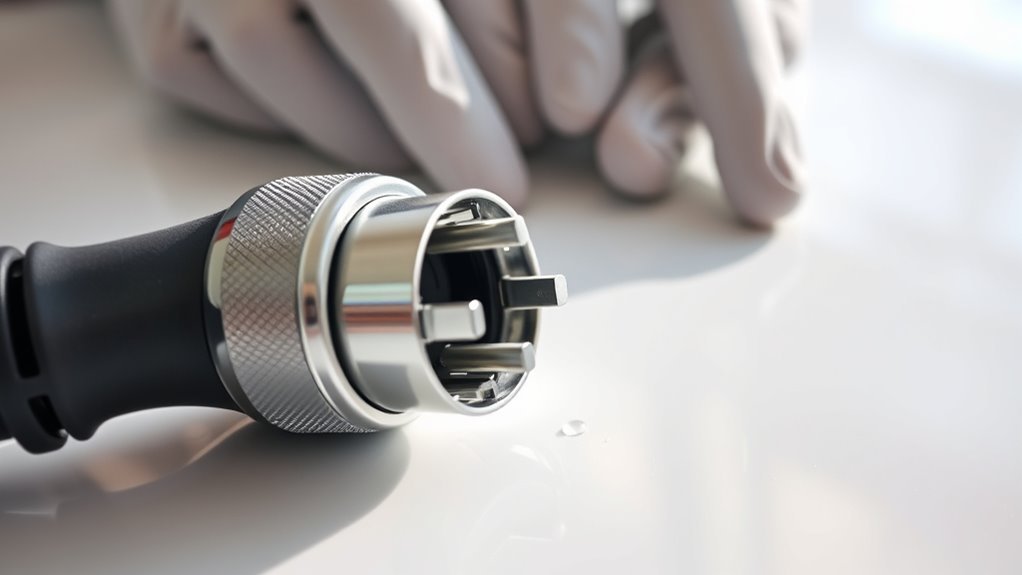
Before you plug in your EV for a charge, it’s essential to inspect your charging equipment for any signs of damage. Start by examining connectors and inspecting for wear on the cable. Look for frayed wires, bent pins, or corrosion that could obstruct the charging process.
Use a bright light to closely examine the connector ends, and check for hidden dirt or debris. Always make certain the cable’s outer layer is free from cracks or abrasions, as these can lead to safety hazards. Additionally, verify that the charging port on your vehicle is dry and clean to maintain a solid electrical connection.
Here’s a quick reference table to guide your inspection:
| Inspection Area | What to Look For | Action Needed |
|---|---|---|
| Charging Cable | Frayed wires, cracks | Replace if damaged |
| Connectors | Corrosion, bent pins | Clean or replace |
| Cable Outer Layer | Abrasions, cuts | Replace if damaged |
| Charging Port | Moisture, contaminants | Clean and dry |
Tips for Properly Storing Your EV Charging Cable
Proper storage of your EV charging cable is essential for ensuring its longevity and performance. Start by storing your cable in a cool, dry place to prevent degradation from extreme temperatures and moisture.
Implement effective cable organization using wall hooks or cable holders, keeping the cables off the floor to minimize tripping hazards and damage from heavy objects. When wrapping your cables, opt for large, loose loops instead of tight folds to maintain their integrity and prevent internal wire damage.
If you must store the cables outside, utilize waterproof covers or boxes to shield them from rain and moisture exposure. Regularly inspect the storage area to keep it clean and dust-free, which will help prolong the life of your charging cables.
Frequently Asked Questions
How Do You Clean EV Charging Cables?
To clean EV charging cables, use a soft cloth for exterior maintenance, and isopropyl alcohol on a cotton bud for connectors. Confirm the charger’s unplugged first; avoid moisture to maintain safe cleaning techniques.
What Is the Safest Way to Clean a Charging Port?
To safely clean a charging port, power down and unplug your device. Use a microfiber cloth for exterior maintenance, and apply isopropanol on cotton buds for deeper cleaning, avoiding moisture to prevent damage.
How to Clean a Dirty Charging Cable?
To clean a dirty charging cable, unplug it first. Use gentle dirt removal techniques with a soft cloth and mild cleaner. Regular charging cable maintenance keeps your equipment safe and functional, ensuring a smooth charging experience.
Can I Use WD-40 to Clean a Charging Port?
No, you shouldn’t use WD-40 for charging port maintenance. It can leave residue and attract dirt. Instead, opt for isopropyl alcohol as a cleaning solvent to maintain peak performance and protect your device.
Conclusion
Cleaning your EV charging cable and connector is vital for peak performance and longevity. Did you know that regular maintenance can extend the lifespan of your charging equipment by up to 30%? By following the proper cleaning techniques and avoiding common mistakes, you can guarantee your charging setup remains functional and efficient. Don’t underestimate the impact of a clean connector; it not only enhances charging speed but also prevents potential damage. Keep your equipment in top shape for a seamless charging experience.







Leave a Reply