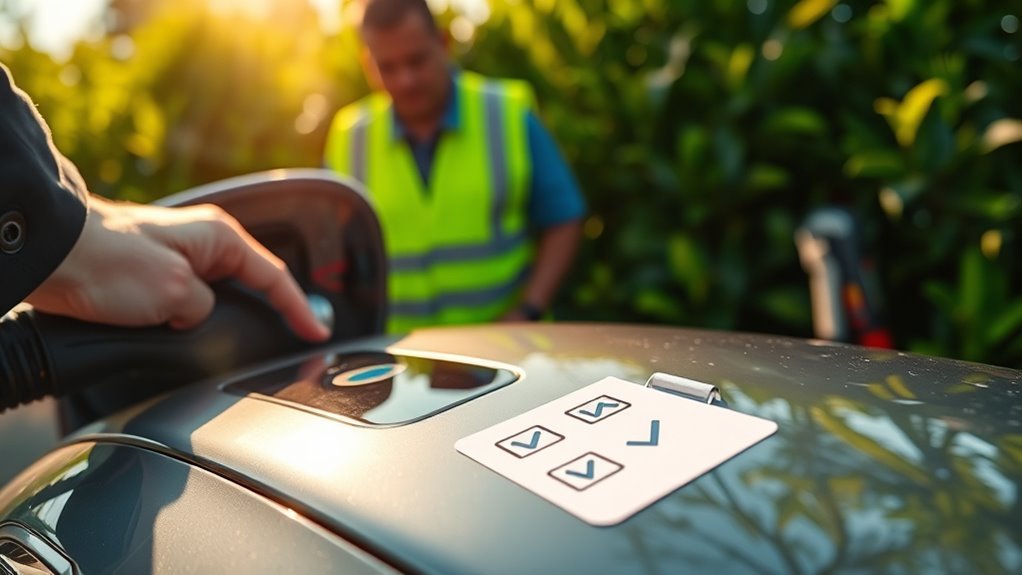
How often should you inspect and test your EV charger? Regular checks help you spot damaged cables, loose mounting, overheating, and other problems before they become serious. Whether you use a home wall charger or manage a public charging station, the right maintenance schedule depends on your equipment, how often you use it, and the manufacturer’s instructions.
Quick Answer
Check your EV charger’s cable, plug, casing, and status lights before each use. Perform a closer exterior inspection about once a month. Arrange professional electrical testing according to the manufacturer’s instructions, installation records, and local requirements. Stop using the charger and seek qualified help immediately if you notice damage, overheating, or repeated electrical faults.
Key Takeaways
- Inspect visible charger components before use, especially the cable and connector.
- A monthly exterior check helps identify wear, corrosion, loose mounting, and weather damage.
- There is no single professional electrical testing interval that applies to every charger.
- Electrical testing and internal servicing belong to appropriately qualified professionals.
- Repeated faults, exposed wiring, burning smells, or excessive heat require immediate attention.
- Keep maintenance records and follow the instructions for your specific charger model.
At a Glance
| Time Required | About 1–2 minutes before use; approximately 10 minutes for a closer monthly exterior check. |
| Difficulty | Easy for external checks. Professional qualifications are required for electrical testing and internal servicing. |
| Tools Needed | Good lighting, the charger manual, a suitable cleaning cloth, and a maintenance log. |
| Cost | Basic visual checks require no specialist equipment. Professional servicing costs vary by charger, location, and work required. |
Warning: Never open an EV charger, touch connector contacts, tighten electrical terminals, or test live wiring yourself unless you are qualified and authorized to perform that work. If you notice exposed conductors, smoke, a burning smell, or excessive heat, stop charging. Isolate the equipment only when it is safe to do so and arrange professional assistance.
Why Regular Inspections Are Crucial for EV Charger Maintenance
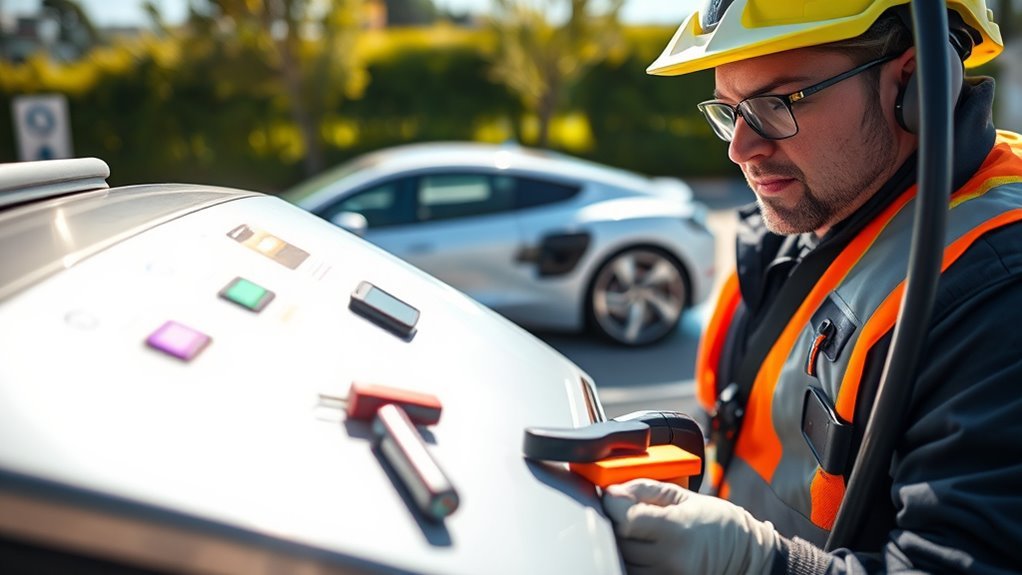
Regular inspections are an important part of EV charger maintenance. They help you identify visible damage before it affects charging or creates an electrical hazard.
A charging cable can become worn through repeated handling. Outdoor equipment may develop corrosion or weather-related damage. Mounting hardware can loosen, while debris may collect around the charger.
The simplest maintenance habit is to check the cable, connector, casing, and charger status before starting a charging session.
The U.S. Department of Energy’s charging infrastructure maintenance guidance identifies periodic component checks, proper cable storage, and keeping equipment clean as important maintenance activities.
These checks can reveal:
- Frayed cables or damaged insulation.
- Cracked connectors or charger casings.
- Loose mounting or visible corrosion.
- Unusual warning lights or repeated error messages.
- Blocked ventilation openings.
- Signs of excessive heat.
Regular inspection also helps you build a useful service history. Record any recurring problems, repairs, firmware changes, and professional test results.
A maintenance log can help a technician identify patterns rather than treating every fault as a separate problem.
How Often to Inspect Your EV Charger?
The correct inspection frequency depends on your charger model, installation, operating environment, and usage.
A home charger used once a day has different maintenance needs from a busy public charging station. Equipment exposed to rain, road salt, dust, or heavy use may need closer attention.
Use the following schedule as a practical starting point, then follow any more specific manufacturer instructions or applicable requirements.
| Frequency | Inspection | Who Should Perform It? |
|---|---|---|
| Before each use | Check cable, connector, casing, and warning indicators. | Owner or user |
| About monthly | Inspect accessible exterior components, mounting, weather protection, and cable storage. | Owner or site manager |
| Scheduled servicing | Perform the maintenance and testing specified for the equipment. Some commercial models require annual service checks. | Qualified electrician or approved technician |
| Periodic electrical inspection | Assess the installation and protective systems at the interval set by applicable requirements and the installation’s condition. | Qualified electrical professional |
| After damage or a serious fault | Investigate damage, overheating, repeated trips, or suspected water ingress before returning the charger to service. | Qualified professional |
For example, ChargePoint’s CT4000 maintenance instructions specify monthly checks for damage and yearly preventive maintenance. Other charger models may have different requirements.
Daily Visual Inspections
If you use your EV charger daily, make a quick visual inspection part of your charging routine.
Look for cracks, dents, scorch marks, or other visible damage. Check that the cable is not kinked, crushed, or trapped beneath a vehicle or garage door.
Make sure the connector is clean and dry and that the charger casing appears intact and securely mounted.
Check the status lights or display for unusual warnings. If the connector does not fit normally, do not force it into the vehicle.
| Inspection Focus | Action Required |
|---|---|
| Charger Exterior | Look for visible damage, corrosion, or signs of overheating. |
| Charging Cable and Plug | Check for cracks, fraying, sharp bends, and damaged insulation. |
| Charger Casing | Confirm that it appears intact and securely fixed. |
| Lights and Display | Check for unexpected warning lights or error messages. |
Do not use a charger with exposed wiring, broken insulation, or a damaged connector. Follow the manufacturer’s instructions for reporting the problem.
Monthly Component Checks
A closer monthly inspection helps you identify gradual wear that may be easy to miss during everyday charging.
Check accessible external components, including:
- Cables: Inspect the full visible length for wear, cuts, flattened sections, or damage near the strain relief.
- Connectors: Look for visible cracks, discoloration, corrosion, or trapped debris without touching the electrical contacts.
- Mounting: Check whether the charger appears stable and securely attached.
- Weather protection: Look for damaged covers, seals, or signs of water entering the enclosure.
- Ventilation: Remove loose debris from surrounding areas and keep any ventilation openings clear.
- Smart features: Check whether the app connects normally and whether the manufacturer reports any firmware updates or active faults.
Do not remove the charger cover to inspect the power supply or control board. Internal components should be checked only by a qualified person following the manufacturer’s service procedure.
Record any unusual findings, even when charging still works.
Annual and Periodic Professional Inspections
Professional servicing goes beyond the visual checks you can perform yourself.
Some commercial charging systems specify annual preventive maintenance. A technician may inspect electrical connections, protective devices, mounting, and other components listed in the service manual.
For a home charger, follow the maintenance instructions provided by the manufacturer and installer. Arrange additional inspection if you notice abnormal operation or changes to the electrical installation.
Do not assume every charger must undergo identical electrical tests every three to five years.
The appropriate interval depends on the equipment and installation. In the UK, for example, periodic inspection of the electrical installation follows the applicable requirements and the interval recommended in the inspection report.
Electrical Safety First explains that inspection intervals differ according to property type and that testing should be performed by electrically competent people.
Inspection After Damage or Unusual Events
Do not wait for your next scheduled inspection if something unusual happens.
Arrange appropriate checks after:
- A vehicle pulls or crushes the charging cable.
- The charger or connector suffers an impact.
- Floodwater or suspected water ingress affects the equipment.
- The circuit breaker or protective device trips repeatedly.
- Charging stops because of a persistent fault.
- The charger develops a burning smell or shows signs of excessive heat.
Keep affected equipment out of service until it has been assessed and cleared for use.
How to Perform a Safe EV Charger Visual Inspection
You can complete a basic exterior inspection without opening the charger or using electrical testing equipment.
- Stop the charging session. Disconnect the vehicle normally, following the vehicle and charger instructions.
- Inspect the cable. Look along its visible length for cuts, cracks, crushed areas, or damaged insulation.
- Check the connector. Look for visible damage, moisture, discoloration, or debris without touching the electrical contacts.
- Examine the casing and mounting. Check for cracks, corrosion, loose mounting, or signs of water ingress.
- Review the indicators. Check warning lights, displayed errors, or app notifications against the manufacturer’s troubleshooting guide.
- Record the result. Note any damage or recurring problem. Do not use equipment that appears unsafe.
Pro Tip: Photograph your charger when it is new or after a professional service. A reference photo can make it easier to notice changes in the casing, cable, mounting, or connector over time.
This procedure is a visual condition check, not an electrical safety test. It cannot confirm that internal wiring or protective devices are functioning correctly.
What Signs Indicate Your EV Charger Needs Testing?
Changes in charging performance can signal a problem, but not every slowdown means the charger is defective.
Pay attention to the following warning signs:
- Unexpected charging-speed changes: A significant reduction may indicate a charger fault, supply issue, or vehicle-related charging limit.
- Exterior damage: Cracks, exposed wiring, broken connectors, or damaged insulation require prompt attention.
- Frequent error messages: Repeated grounding, temperature, or hardware faults need investigation.
- Excessive heat: Unusual heat, melting, discoloration, or a burning smell may indicate a serious problem.
- Repeated protective-device trips: A breaker or fault-protection device that trips repeatedly may indicate an electrical fault.
- Intermittent charging: Sessions that repeatedly stop or disconnect without a clear explanation should be investigated.
Tesla’s Wall Connector fault-code documentation identifies separate warnings for ground faults, high ground resistance, excessive temperature, communication problems, and supply-voltage issues.
Why Slow Charging Does Not Always Mean a Fault
Before assuming the charger has failed, check the information available in your vehicle and charging app.
Charging power may decrease because:
- The battery is cold or hot.
- The battery is approaching its charge limit.
- The vehicle has a lower charging-current setting.
- The charger is sharing available power with other equipment.
- A scheduled charging setting is active.
- The charger has reduced output to control temperature.
If charging remains unusually slow after checking these factors, consult the equipment instructions or arrange professional diagnostics.
Essential Testing Procedures for EV Chargers
Professional EV charger testing helps confirm that the equipment and its electrical installation remain suitable for continued use.
The exact procedure depends on the charger model, protection design, installation, and applicable electrical requirements.
Visual inspection identifies visible problems. Electrical testing checks safety functions and installation conditions that cannot be confirmed by looking at the charger alone.
Protective Earth Continuity Testing
Where applicable, a qualified electrician checks the continuity of the protective-earth connection.
This helps identify problems with the intended grounding path. It is different from measuring voltage and must be performed using the correct procedure and equipment.
Fault Protection and Tripping-Time Tests
Depending on the installation, the technician may test residual-current protection, ground-fault protection, or other protective devices.
These tests help determine whether the protection operates as intended.
Some equipment includes built-in fault detection or self-testing. The manufacturer’s instructions determine which additional checks are appropriate.
Insulation Resistance Testing
Where required, insulation resistance testing helps identify unwanted electrical leakage through damaged or deteriorated insulation.
Testing must account for connected electronic equipment. Applying an unsuitable test voltage can damage sensitive charger components.
Only a qualified person should select and perform the appropriate procedure.
Earth Fault Loop Impedance and Voltage Checks
Where relevant, a technician may assess the fault path and supply characteristics to confirm that the electrical installation meets its protection requirements.
Touch-voltage and other measurements may also be needed for particular installations or protective arrangements.
Not every charging system requires the same set of tests.
Functional and Communication Testing
Professional testing may also include:
- Checking charging operation with appropriate test equipment.
- Confirming that status lights and fault indicators work correctly.
- Checking authorized electrical connections against manufacturer specifications.
- Verifying temperature monitoring and other safety functions where supported.
- Checking network communication, load management, and firmware status.
Commercial operators should retain the resulting reports as part of their maintenance records.
Top Problems Found During EV Charger Inspections
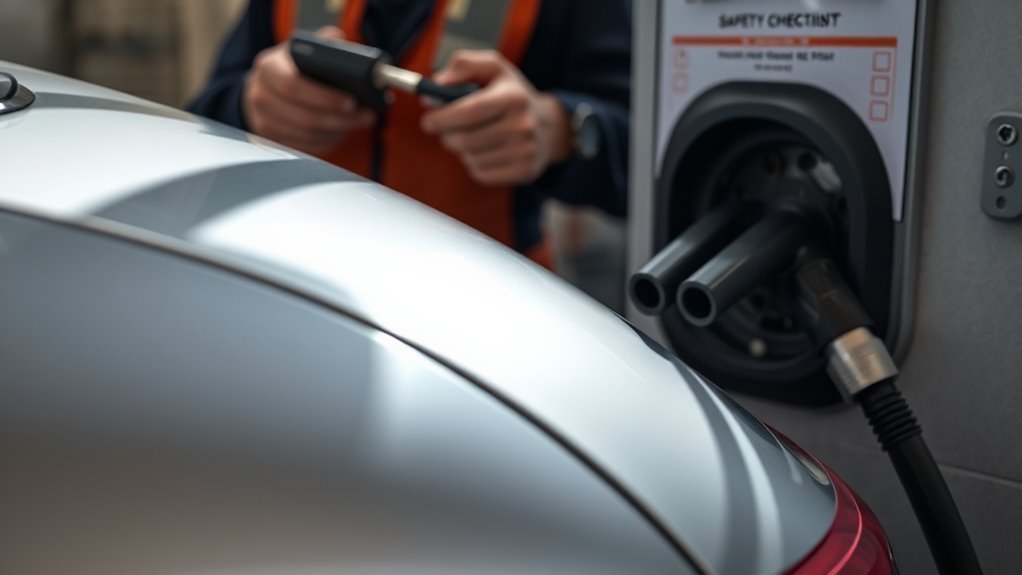
Routine inspections can uncover problems that affect charging reliability and electrical safety.
Common issues include:
- External damage: Cracked casings, damaged mounting points, or broken connector housings.
- Exposed wiring: Damaged insulation that may create an electrical shock or fire hazard.
- Slow charging: Reduced output caused by charger faults, power management, supply problems, or vehicle settings.
- Frequent error messages: Repeated hardware, grounding, temperature, or communication warnings.
- Corrosion: Deterioration around exposed components or damaged enclosures.
- Loose connections: Problems within the electrical installation that require professional inspection.
- Software problems: Failed communication, outdated firmware, or network-related errors.
Not every issue requires replacing the entire charger. Depending on the diagnosis, the solution may involve a manufacturer-approved repair, replacement cable, software correction, or electrical installation work.
What to Do If Your EV Charger Fails an Inspection
If you discover a fault, the safest next step depends on its severity.
| Problem | Recommended Action |
|---|---|
| Damaged cable or connector | Stop using it and arrange manufacturer-approved repair or replacement. |
| Burning smell, smoke, or excessive heat | Stop charging immediately. Do not touch damaged or overheating equipment. Seek qualified help; contact emergency services if there is fire or immediate danger. |
| Repeated breaker or fault-protection trips | Do not repeatedly reset the device and continue charging. Arrange electrical inspection. |
| Network or app issue | Follow the manufacturer’s approved troubleshooting procedure. |
| Suspected water ingress | Keep the charger out of service until a qualified professional assesses it. |
| Loose mounting | Avoid stressing the equipment and arrange inspection or repair. |
Warning: Do not bypass grounding, protective devices, thermal protection, or other safety systems to keep a faulty charger operating.
Why You Should Consider Professional Servicing for Your EV Charger
Professional servicing helps identify problems that ordinary visual checks cannot reveal.
For electrical testing, use an appropriately qualified electrician. For specialized commercial charging equipment, the manufacturer may require an authorized or certified service technician.
Expertise In Electrical Systems
Qualified professionals understand the electrical protection and installation requirements that apply to EV charging equipment.
They can identify issues such as:
- Loose or deteriorated electrical connections.
- Incorrect or damaged grounding arrangements.
- Faulty protective devices.
- Overheating associated with wiring or terminals.
- Supply problems that affect charger operation.
They also have the training and equipment needed to perform appropriate tests safely.
Comprehensive Safety Checks
Professional servicing may combine visual inspection, electrical testing, fault diagnosis, and functional checks.
In the UK, an appropriately qualified and registered electrician can carry out the relevant installation inspection and testing. NICEIC registration is one way to identify a contractor, but the required qualifications and documentation depend on the work and jurisdiction.
In the United States and other markets, follow the applicable local electrical requirements and the charger’s service instructions.
A technician may also check firmware status and connected functions where these form part of the service procedure.
Timely Maintenance Solutions
Arrange professional servicing when the manufacturer requires it, when a scheduled inspection is due, or when a fault appears.
For commercial equipment, a maintenance agreement can help define responsibilities and response times.
Keep records of:
- Inspection and testing dates.
- Fault codes and charging problems.
- Repairs and replacement components.
- Firmware updates.
- Technician findings and recommendations.
- The next recommended inspection date.
These records help owners and site managers make informed maintenance decisions.
Do Home and Public EV Chargers Need the Same Maintenance?
The basic safety principles are similar, but maintenance requirements differ.
Home AC Chargers
Home chargers generally benefit from routine external checks, proper cable storage, cleaning, and prompt attention to faults.
Follow the user manual and installation documentation for scheduled servicing and electrical inspection requirements.
A qualified electrician should investigate recurring electrical problems or suspected installation faults.
Public AC Charging Stations
Public chargers may experience frequent handling, vandalism, weather exposure, and greater cable wear.
Site managers should maintain an inspection schedule suited to usage and the manufacturer’s maintenance requirements.
They should also check access, lighting, cable management, signage, and whether the station is reporting its operational status correctly.
DC Fast Chargers
DC fast chargers are more complex and may include substantial power electronics, cooling equipment, fans, filters, or liquid-cooling systems.
The maintenance plan should follow the equipment’s specific service documentation.
Owners can monitor visible damage, blocked ventilation, fault indicators, and station availability. Internal electrical, thermal, and cooling-system maintenance should be performed by appropriately trained personnel.
Note: A maintenance schedule for one manufacturer’s commercial charger should not automatically be applied to a different home charger or DC fast charger.
Best Practices for Keeping Your EV Charger in Top Condition
Keeping your charger in good condition requires more than waiting for a warning light.
Follow these practical maintenance habits:
- Inspect regularly: Check accessible exterior components before use and perform closer checks at the recommended intervals.
- Store cables properly: Use the supplied cable holder or storage system. Avoid sharp bends and prevent cables from being crushed or dragged.
- Keep the charger clean: Follow the manufacturer’s cleaning instructions. Avoid pressure washing and unsuitable cleaning chemicals.
- Protect ventilation: Keep debris, snow, and stored items away from required airflow openings.
- Monitor software: Check manufacturer-approved firmware updates and review recurring app notifications.
- Respond to faults: Do not ignore persistent warning lights, overheating, or repeated electrical trips.
- Arrange professional service: Follow the model-specific maintenance schedule and applicable electrical inspection requirements.
- Maintain records: Keep installation documents, inspection results, and repair history together.
ChargePoint’s Home Flex safety instructions specifically warn against operating equipment with damaged cables or broken enclosures and emphasize protecting charging cables from damage and stress.
Pro Tip: Set a recurring calendar reminder for your monthly visual inspection. Keep your charger’s model number, installation paperwork, warranty details, and support information in the same folder as your maintenance log.
Frequently Asked Questions
How Often Should EV Chargers Be Tested?
Inspect visible components before use and carry out closer exterior checks about monthly. Professional electrical testing should follow the manufacturer’s instructions, installation documentation, operating conditions, and applicable local requirements. There is no universal three-to-five-year testing rule for every EV charger.
What Is the 80/20 Rule for EV Charging?
The 80/20 guideline generally refers to keeping an EV battery around 20%–80% charge during routine use when recommended for that vehicle. It is intended to support battery care, not charger maintenance. Battery recommendations vary by vehicle and chemistry, so follow your owner’s manual. Some vehicles have different recommended daily charge limits.
Do EV Chargers Require Maintenance?
Yes. Maintenance includes inspecting visible components, keeping cables properly stored, cleaning the equipment according to its manual, checking warning indicators, and arranging professional servicing when required. Commercial chargers may have additional scheduled maintenance requirements.
What Is the Life Expectancy of an EV Charger?
There is no single lifespan that applies to every EV charger. Service life depends on the equipment design, installation quality, usage, environment, maintenance, and availability of replacement parts. Check the manufacturer’s warranty and service information rather than assuming a fixed 10-to-15-year lifespan.
Can I Test My EV Charger Myself?
You can inspect accessible exterior components and use the charger’s approved user controls or diagnostic app. Follow the manufacturer’s instructions for any built-in test function. Internal electrical testing, wiring checks, and repairs should be performed by an appropriately qualified professional.
Should I Stop Using a Charger With a Damaged Cable?
Yes. Stop using equipment with damaged insulation, exposed wiring, a cracked connector, or signs of overheating. Contact the manufacturer or an appropriately qualified service professional for approved repair or replacement.
Should an EV Charger Be Inspected After Flooding?
Yes. If floodwater reached the charger or its electrical connections, do not use it until a qualified professional has assessed the equipment and installation. Do not approach or handle electrical equipment that may still be energized in standing water.
Conclusion
Regular inspections and testing are essential for maintaining a safe, reliable EV charging setup.
Start with a quick visual check before each use, inspect accessible components more closely about once a month, and follow the manufacturer’s schedule for professional servicing.
If your charger develops recurring errors, damaged wiring, unusual heat, or electrical protection problems, stop using it and arrange appropriate testing instead of waiting for the next scheduled inspection.
A simple maintenance routine, accurate service records, and timely professional attention can help reduce avoidable downtime and keep your charging equipment in good working condition.
Sources
- U.S. Department of Energy — Operation and Maintenance for Electric Vehicle Charging Infrastructure — General maintenance responsibilities, cable storage, cleaning, and operational considerations.
- ChargePoint — CT4000 Maintenance Instructions — Manufacturer-specific monthly checks, yearly maintenance, and technician safety procedures.
- ChargePoint — Home Flex Safety Instructions — Damaged equipment, safe operation, cable protection, and servicing precautions.
- Tesla — Wall Connector Fault Codes — Grounding, temperature, communication, and supply-related fault guidance.
- Electrical Safety First — Periodic Inspection and Testing — UK electrical installation inspection intervals and professional testing responsibilities.
- Tesla — High Voltage Battery Information — Vehicle-specific battery charging guidance and daily charge limits.





Leave a Reply