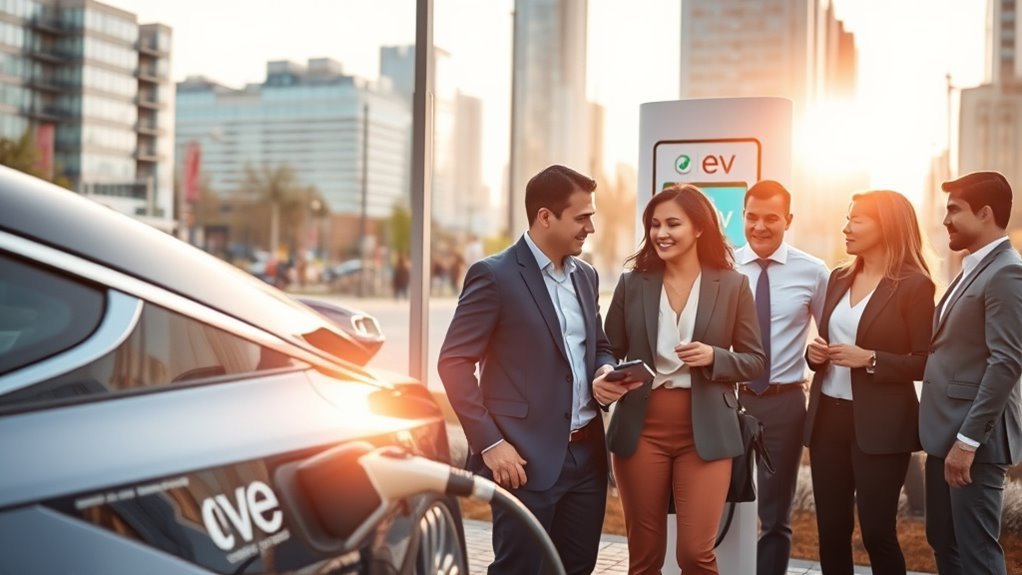
EV charging companies are essential for electric mobility, providing infrastructure and technology for EV drivers. They operate through various business models, including direct ownership of charging stations and partnerships with retailers. Key players like Tesla, ChargePoint, and Electrify America lead the market, leveraging innovative strategies to expand their networks. These companies enhance the user experience through convenient access and advanced technology. If you’re interested in how these networks operate and evolve, there’s more to explore.
Understanding the Role of EV Charging Companies and How They Serve Drivers
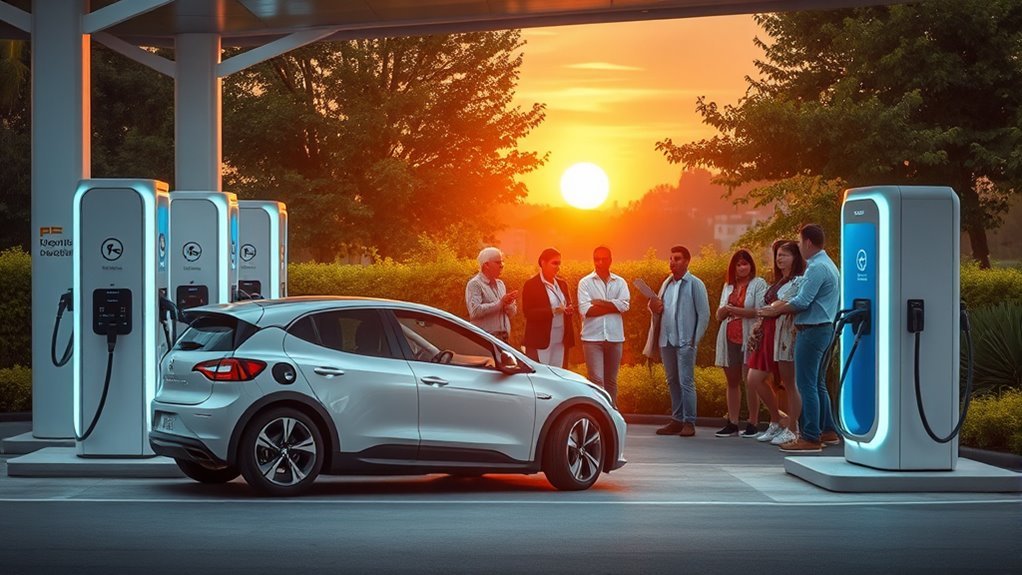
EV charging companies play an essential role in supporting the shift to electric mobility by providing critical infrastructure and technology for drivers. They deliver both hardware and software solutions, enhancing the user experience at charging stations worldwide.
Major players like ChargePoint operate over 174,000 charging stations, while manufacturers like ABB and Siemens produce DC fast chargers, important for rapid recharging. The growing network of over 228,000 EV charging ports in the U.S. reflects a 35% year-over-year increase, driven by the demand for improved charging accessibility.
New entrants, such as EVgo and Electrify America, focus on expanding fast-charging networks, particularly in urban areas, ensuring that you can easily find convenient charging options. Collaborations with businesses and local governments further enhance user experience by integrating charging solutions with mobile applications, making it seamless for you to access and utilize charging facilities whenever you need them.
How EV Charging Companies Operate: Business Models Explained
As the demand for electric vehicle charging infrastructure grows, understanding the business models of charging companies becomes essential. These companies primarily operate through various models, including direct ownership of charging stations and strategic business partnerships with retail locations.
Many, like ChargePoint and EVgo, combine hardware and software solutions, enhancing user engagement and streamlining the charging experience.
Companies such as ChargePoint and EVgo integrate hardware and software to improve user interaction and simplify the charging process.
Membership models are prevalent, allowing users to access charging stations through mobile logins or physical cards, although regulations can affect these requirements in publicly funded locations.
Charging network operators often provide site planning, installation support, and technical expertise, ensuring that infrastructure meets regional needs.
This collaborative ecosystem involves utilities, private companies, and site hosts, all adapting to local demands.
Leading Companies Driving the EV Charging Market
The electric vehicle charging market is rapidly evolving, driven by several key players that markedly shape its landscape.
Tesla remains a leader with over 50,000 Superchargers worldwide, leveraging Level 3 charging technology to enhance user experience.
ChargePoint follows closely, operating more than 174,000 stations globally and offering extensive hardware and software solutions tailored for diverse applications.
Electrify America, a Volkswagen subsidiary, is expanding its footprint with over 900 stations and nearly 4,000 DC Fast Charger ports in the U.S.
Meanwhile, EVgo boasts one of the largest public networks of DC fast chargers, with plans to triple its network in the coming years.
ABB, a prominent manufacturer, recently sold its one millionth charger and is enhancing its production capabilities in the U.S.
These companies exemplify the fierce market competition and the technological advancements influencing the EV charging ecosystem, driving innovation and accessibility for electric vehicle users.
How Charging Networks Collaborate to Support EV Infrastructure
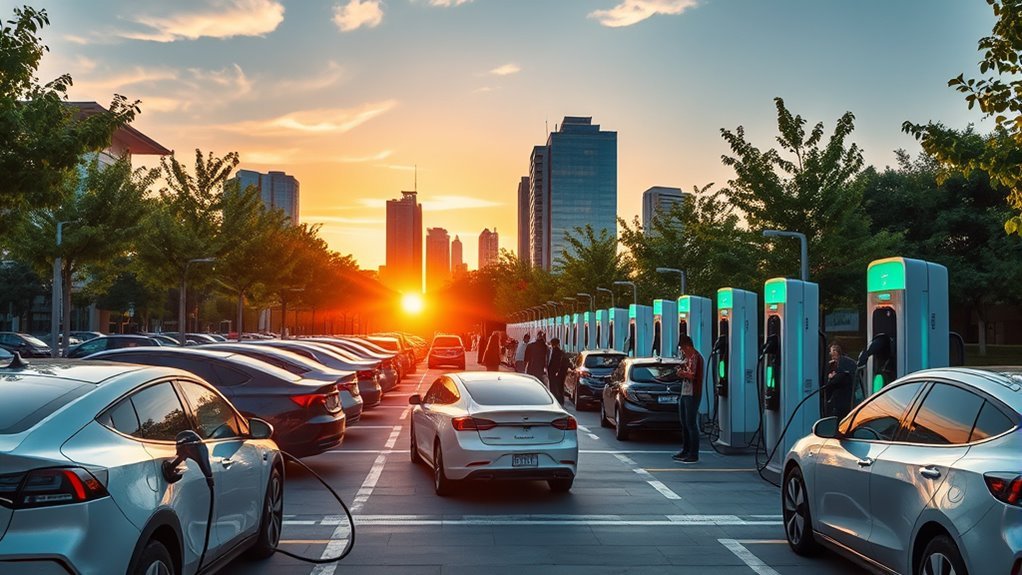
Collaboration among charging networks plays a critical role in expanding EV infrastructure and enhancing accessibility for users. By implementing effective collaboration strategies, these networks partner with retail locations and utilities to establish DC fast charging stations, optimizing traffic flow and convenience.
Sharing technical expertise and installation resources streamlines deployment, resulting in operational efficiencies that benefit both network providers and EV users. Membership models also emerge from these partnerships, allowing access to multiple charging stations across different networks, which increases utilization and customer satisfaction.
Companies like ChargePoint and EVgo offer software solutions that enable businesses to manage charging operations effectively, ensuring reliability and maximizing uptime. Collaborating with various stakeholders enables charging networks to develop tailored business models that address local market needs, ultimately supporting the broader expansion of EV infrastructure and fostering a more accessible future for electric vehicle users.
Why EV Charging Infrastructure Matters for Widespread Adoption
While many consumers express interest in electric vehicles (EVs), the lack of robust charging infrastructure remains a significant barrier to widespread adoption. Currently, with over 228,000 charging ports across 76,000 locations, the U.S. is beginning to address this issue, but much more is needed.
With 292.3 million vehicles on the road and only 4.1 million being EVs, substantial infrastructure investment is essential to accommodate a larger market share. The 35% year-over-year increase in DC fast chargers exemplifies efforts to reduce charging times, which enhances the convenience of EV ownership.
Substantial investment in charging infrastructure is crucial to support the growing electric vehicle market and enhance ownership convenience.
Urban areas like San Francisco and New York City demonstrate strong demand, with utilization rates exceeding 50%. Government incentives can further stimulate this growth, encouraging more charge point operators to enter the market.
As the industry evolves, expanding charging infrastructure will be vital for fulfilling the potential of electric vehicles.
Comparing Charging Station Types: Level 2 vs. DC Fast Charging
When comparing Level 2 and DC fast charging stations, you’ll notice significant differences in charging speed and installation costs.
Level 2 chargers take longer to fully charge an EV, making them more suitable for home or workplace use, while DC fast chargers offer rapid charging for those on the go.
Understanding these distinctions is essential for determining the best charging solution for various needs.
Charging Speed Comparison
How does the charging speed of Level 2 stations compare to that of DC fast chargers? Level 2 chargers typically provide a range of 10 to 20 miles per hour, ideal for home or workplace settings. In contrast, DC fast chargers deliver 60 to 100 miles in just 20 minutes, making them essential for long-distance travel and urban charging needs. The U.S. infrastructure development reflects this trend, with a growing number of both charging technologies.
| Charger Type | Range per Hour | Typical Use |
|---|---|---|
| Level 2 | 10-20 miles | Home/Workplace |
| DC Fast | 60-100 miles | Long-Distance Travel |
| Availability | 165,000 ports | 61,700 ports |
Installation and Costs
The installation and costs associated with Level 2 and DC fast charging stations vary greatly, impacting both consumers and businesses.
Level 2 chargers typically range from $500 to $2,000, making them accessible for home and commercial installations, despite potential installation challenges tied to existing electrical infrastructure.
In contrast, DC fast chargers can cost between $20,000 and $150,000, reflecting their advanced technology and rapid charging capabilities.
This cost analysis reveals that while DC fast charging supports quick top-ups—ideal for long trips—its higher operational costs due to electricity demand and maintenance can deter widespread adoption.
As of September 2023, the reliance on Level 2 charging solutions greatly outweighs that of DC fast charging, influencing market dynamics and consumer choices.
Trends and Future of EV Charging Networks
As the EV charging market evolves, you’re likely to see emerging technologies that enhance charging efficiency and speed.
Major players are expanding their networks strategically, aiming to meet growing demand while improving customer experiences through added amenities.
This competitive landscape will drive innovations that not only increase capacity but also cater to diverse regional needs.
Emerging Charging Technologies
While the expansion of the U.S. EV charging infrastructure accelerates, emerging technologies are reshaping the landscape. Here are key trends to evaluate:
- Wireless Charging: This technology offers convenience by eliminating physical connections, enabling effortless charging as vehicles park.
- Battery Swapping: Companies are exploring battery swapping stations, allowing drivers to exchange depleted batteries for fully charged ones, greatly reducing downtime.
- High-Power Charging Solutions: Innovations in high-capacity charging are enhancing station capabilities, as seen in Tesla’s Supercharger network.
- Rechargeries: Companies like Ionna are pioneering “rechargeries,” which blend charging facilities with leisure amenities, improving the overall user experience.
These advancements are essential for meeting growing consumer demands and enhancing the freedom of EV ownership.
Market Expansion Strategies
With the EV charging market poised for significant growth, companies are adopting innovative strategies to expand their networks and enhance user experience.
Market segmentation is critical, as businesses analyze regional demand, with urban areas like San Francisco and NYC showing high utilization rates compared to lower-demand Midwest cities.
Major players, including Walmart, are investing in extensive charging networks by 2030, while companies like Blink Charging and Ionna focus on integrating amenities to boost customer satisfaction.
Competitive analysis reveals a shift toward high-power chargers, as seen with Tesla’s Supercharger stations averaging 15.1 ports, compared to non-Tesla networks with just 3.8 ports.
This strategic approach aims to meet the diverse needs of EV users and drive network accessibility across varying markets.
What to Expect: Consumer Experience at EV Charging Stations
How does the consumer experience at EV charging stations shape the shift to electric vehicles? The quality of this experience is essential for adoption. Drivers expect convenience, reliability, and user-friendly interfaces.
Here are key aspects to take into account:
- Accessibility: With over 228,000 charging ports across the U.S., finding a station should be straightforward. Apps like ChargePoint make this process seamless.
- Charging Etiquette: Proper use of charging stations promotes efficiency. Understanding peak times and sharing resources can enhance user satisfaction.
- User Feedback: Continuous improvement based on consumer insights drives better services and features, ensuring stations meet evolving needs.
- Amenities: New entrants in the market are focusing on enhancing the experience with added conveniences, making charging less of a chore.
As you navigate this landscape, these elements will greatly influence your overall satisfaction and the broader acceptance of electric vehicles.
Innovations Enhancing Consumer Experiences at EV Charging Stations
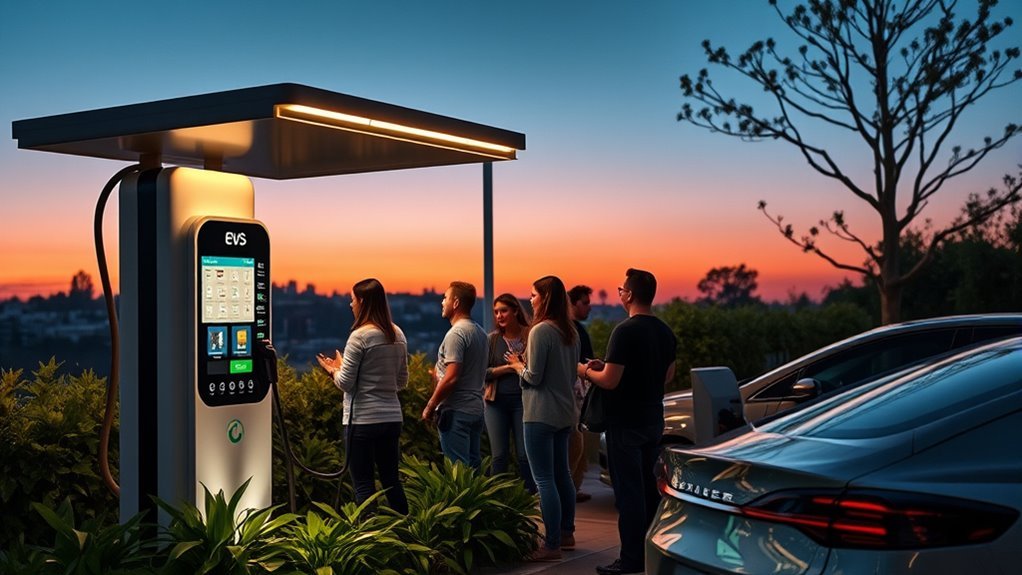
The consumer experience at EV charging stations is rapidly evolving, driven by innovative solutions designed to enhance convenience and satisfaction. Companies like ChargePoint and Tesla lead the charge with user-friendly interfaces that simplify finding, starting, and paying for charging. Tesla’s Supercharger network exemplifies this with quick-start charging at over 50,000 locations. Concurrently, amenities at charging stations are being prioritized, as seen with Ionna’s “rechargeries” offering lounges and food options.
| Company | User-Friendly Features | Charging Station Amenities |
|---|---|---|
| ChargePoint | Easy app for locating stations | Basic seating and rest areas |
| Tesla | Instant charging upon connection | Extensive Supercharger locations |
| Electrify America | App for real-time availability | Upscale charging hubs |
| Ionna’s Rechargeries | Streamlined payment options | Lounges and dining facilities |
These innovations reflect a shift towards high-power chargers and customer-centric experiences, meeting the evolving expectations of EV drivers.
Choosing the Right EV Charging Solution for Your Needs
Which EV charging solution best meets your needs? When considering options, evaluate the following factors:
- Charging Type: Decide between AC Level 2 chargers for home charging or DC fast chargers for commercial applications.
- Availability: Check the accessibility of charging stations; ChargePoint offers over 174,000 stations globally.
- Reliability: Assess network performance; Tesla’s Supercharger stations average 15.1 ports, notably higher than the non-Tesla average of 3.8.
- Software Integration: Look for solutions that include management software, like those offered by ChargePoint, to enhance operational efficiency.
Frequently Asked Questions
What Are the Main EV Charging Companies?
The main EV charging companies you’ll encounter include ChargePoint, Tesla, Electrify America, EVgo, and ABB. These players greatly shape market trends and develop expansive charge networks, driving electric vehicle adoption and infrastructure growth.
What Is EV Charging?
Imagine pulling up to a sleek charging station, where your electric vehicle types rejuvenate with energy. EV charging supplies power through a growing charging infrastructure, vital for supporting widespread electric vehicle adoption and sustainability.
How Much Does It Cost to Charge an Electric Car at a Public Charging Station?
Charging costs at public stations typically range from $0.10 to $0.60 per kWh, or a flat fee of $1 to $5 per session. Membership can lower costs, while fast chargers are generally pricier.
What Are the Top 5 EV Companies?
The top EV manufacturers include Tesla, ChargePoint, EVgo, Electrify America, and ABB. Each drives electric vehicle innovations, enhancing infrastructure and technology, greatly impacting the market and supporting the growing demand for sustainable transportation solutions.
Conclusion
In conclusion, understanding EV charging companies and their business models is vital as the market evolves. As of 2023, over 1.5 million public charging ports exist worldwide, highlighting the infrastructure’s rapid expansion. This growth is essential for fostering widespread EV adoption. By analyzing key players and trends, you can make informed decisions about your charging needs, ensuring you stay ahead in the shift to electric mobility. The future of transportation hinges on effective charging solutions and innovative consumer experiences.







Leave a Reply