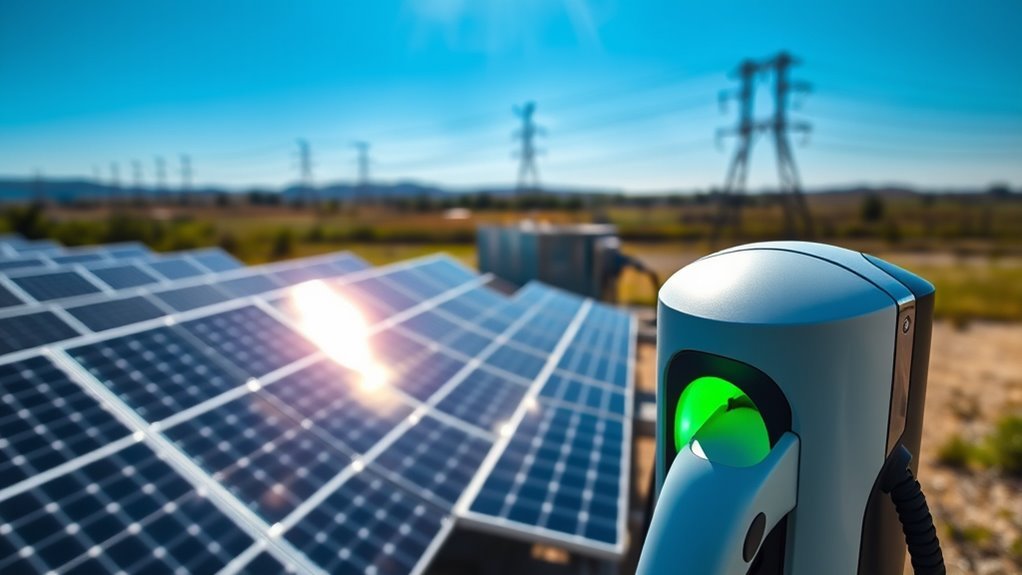
EV chargers primarily draw power from the National Grid, which combines renewable and non-renewable sources. They can also harness solar energy through on-site installations, reducing costs and emissions. Wind energy complements this by supplying power either directly or through the grid. Energy storage systems optimize efficiency by retaining excess power for use during low generation periods. These elements together create a reliable charging infrastructure. Explore further to uncover more about the future and innovations in EV charging.
The National Grid: Your EV Charger’s Primary Power Source
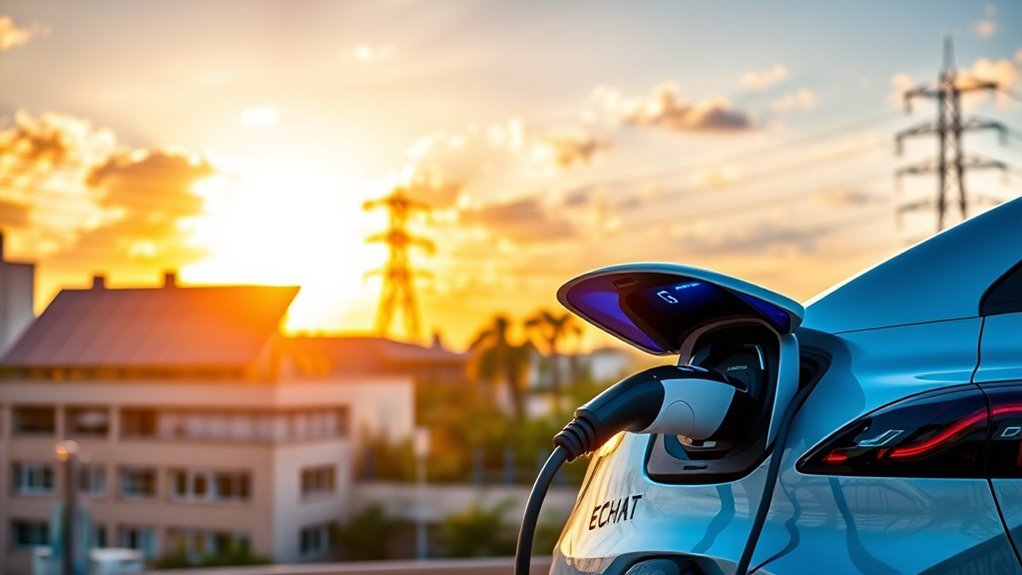
While you might think of electric vehicle (EV) chargers as standalone units, they fundamentally rely on the National Grid, which serves as their primary power source. This grid provides a mix of renewable and non-renewable energy, ensuring grid reliability for charging stations.
When you plug in your EV, the charger converts this electricity into DC power, efficiently fueling your vehicle. Most Level 2 chargers operate at 240 volts, delivering energy much faster than Level 1 chargers that use standard 120-volt outlets.
In Colorado, charging costs average around $0.12 per kWh, making it affordable to fully charge a 60 kWh battery for about $7.20. As the energy shift progresses, the growing integration of renewable sources like solar and wind enhances the sustainability of this infrastructure.
Harnessing Solar Power for EV Charging Stations
When you consider solar power for EV charging stations, you’re looking at a system that utilizes photovoltaic panels to generate clean electricity.
This integration not only cuts down on electricity costs but also enhances your sustainability efforts by reducing carbon emissions.
With advancements in technology, like battery storage and smart chargers, you can optimize the use of solar energy, ensuring efficient and consistent charging for your electric vehicle.
Benefits of Solar Energy
Harnessing solar energy for electric vehicle (EV) charging stations presents a compelling opportunity to enhance both sustainability and cost-effectiveness.
By converting sunlight into electricity, solar panels provide a clean, renewable energy source that reduces your reliance on the grid. During peak sunlight hours, solar panel efficiency is maximized, considerably lowering utility bills.
On-site installations enable energy storage in batteries, ensuring a consistent power supply, even at night. This renewable energy integration directly aligns with sustainability goals, helping to lower carbon emissions while promoting environmentally friendly solutions.
Additionally, solar-powered EV charging stations often qualify for tax incentives and rebates, making them an attractive investment for businesses and property owners looking to innovate and embrace cleaner energy practices.
Solar Panel Integration
Integrating solar panels into EV charging stations not only enhances energy efficiency but also considerably contributes to sustainable practices. By harnessing solar energy, you reduce reliance on the grid and lower operational costs. However, solar installation challenges, such as location and weather variability, can impact solar panel efficiency.
Here’s a quick overview:
| Aspect | Details |
|---|---|
| Renewable Energy Source | Converts sunlight into electricity |
| Storage Capability | Batteries store energy for low sunlight periods |
| Reliability | Combines solar power with battery systems |
| Environmental Impact | Minimizes carbon footprints |
| Financial Incentives | Potential for lower bills and government rebates |
Ultimately, solar-powered EV charging stations exemplify a commitment to clean energy and sustainability.
Cost Efficiency Considerations
Solar-powered EV charging stations not only promote sustainability but also offer considerable cost efficiency advantages.
By harnessing solar energy, you can dramatically reduce electricity costs, potentially eliminating utility bills entirely. While initial installation costs may be higher, you can take advantage of financial incentives like tax rebates to offset these expenses.
Additionally, integrating battery storage systems guarantees a reliable power supply, even during low sunlight periods, maximizing your cost savings. Shifting to solar energy aligns with your sustainability goals, markedly lowering the carbon footprint linked to traditional electricity sources.
Furthermore, creating an environmentally friendly image can attract eco-conscious customers and enhance property value, making it a smart investment for your business.
Using Wind Energy for EV Charging Solutions
As the demand for electric vehicles (EVs) continues to rise, exploring sustainable energy sources like wind power becomes increasingly essential.
Wind energy harnesses the kinetic force of the wind through turbines, converting it into electricity that can efficiently charge EVs at dedicated stations. These wind-powered chargers may directly supply power or feed excess energy back into the grid, enhancing overall charging efficiency.
However, the reliability of wind energy can fluctuate based on regional wind patterns, which often requires backup systems or hybrid solutions. Some stations incorporate battery storage systems to retain wind-generated electricity, ensuring a steady power supply even during low wind periods.
Energy Storage Solutions for Efficient EV Charging
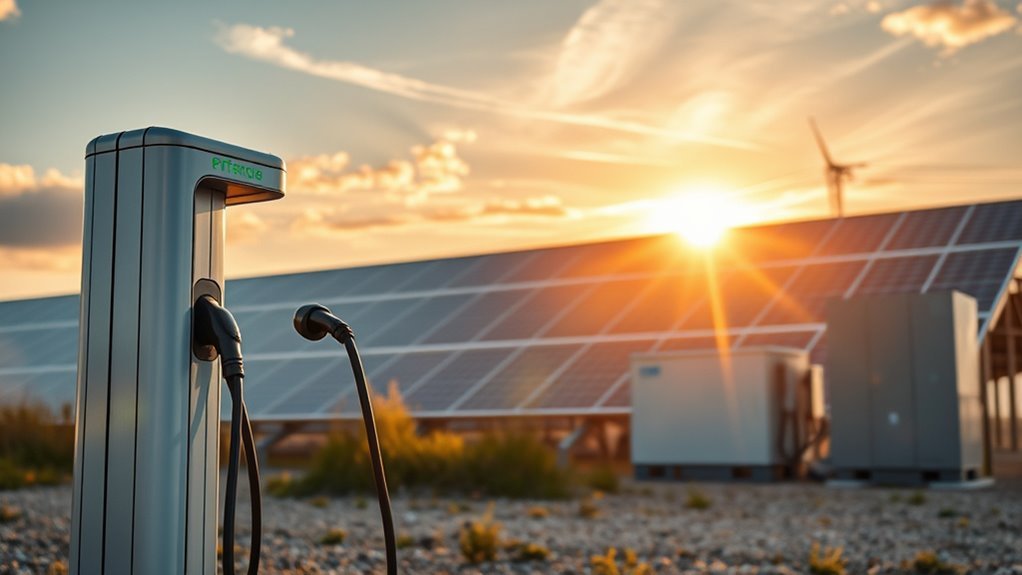
Harnessing renewable energy like wind power not only promotes sustainability but also highlights the importance of energy storage solutions in the context of electric vehicle (EV) charging.
By integrating battery systems into EV charging stations, you can store excess energy generated from renewables, ensuring a consistent power supply during low production periods. Technologies like the HELIX battery energy storage system enhance charging efficiency, reducing dependence on the grid and providing backup power when necessary.
These battery storage systems play a vital role in balancing energy demand at charging stations, enabling ideal use of renewable energy while minimizing overall costs.
Furthermore, they improve the reliability of EV charging infrastructure and facilitate the integration of more renewable sources into the grid. Hybrid EV charging stations that incorporate battery management can effectively manage energy flow, enhancing sustainability and lowering the carbon footprint associated with EV charging.
EV Charging Costs Explained
Understanding the costs associated with charging electric vehicles (EVs) is essential for potential owners and users alike, especially as the market expands.
Charging infrastructure plays a critical role in determining your expenses, as costs can fluctuate dramatically between home and public charging stations. At home, the average electricity rate in Colorado is about $0.12 per kWh, meaning a full charge for a typical 60 kWh EV battery would cost around $7.20.
In contrast, public fast chargers might charge anywhere from $0.25 to $0.69 per kWh, influenced by the charging speed and provider. Pricing models vary too; you’ll encounter options like per minute or per kWh, and even membership fees at some locations.
Factors such as charger type also impact your costs, with Level 1 chargers being cheaper but slower, while DC fast chargers offer rapid charging at a premium price.
Advantages of Installing EV Chargers for Businesses
Installing EV chargers can considerably increase your property value by attracting eco-conscious customers and tenants.
Additionally, these chargers create new revenue opportunities as you monetize charging services in response to the rising demand for electric vehicle infrastructure.
You’ll also enhance your sustainability efforts, aligning with corporate social responsibility goals and improving your environmental impact.
Increased Property Value
The presence of EV chargers can considerably boost property value, making commercial spaces more appealing to tenants and customers with electric vehicles. By integrating charging stations, you enhance property attractiveness, responding to shifting tenant preferences favoring sustainability.
This appeal not only attracts environmentally conscious consumers but can also improve your brand image. Additionally, properties with EV chargers may qualify for tax incentives and rebates, further enhancing financial returns and offsetting installation costs.
As foot traffic increases due to convenient charging options, you position your business to benefit from longer customer dwell times. Ultimately, embracing EV infrastructure isn’t just about meeting current demands; it’s a strategic investment in future property value and market relevance.
New Revenue Opportunities
As businesses adapt to the growing demand for electric vehicle (EV) infrastructure, they can tap into new revenue opportunities that come with installing EV chargers.
Charging fees for electricity usage is one straightforward revenue model, while offering subscription services can attract regular customers seeking convenience.
By positioning your business as an EV-friendly destination, you boost foot traffic, increasing sales in your stores or restaurants.
Furthermore, EV chargers enhance property value, making your location more attractive to potential tenants or buyers.
Additionally, businesses may qualify for tax incentives and rebates, offsetting installation costs and improving financial returns.
Incorporating EV charging services not only generates profit but also strengthens your brand image, appealing to environmentally conscious consumers.
Environmental Sustainability Benefits
Embracing EV charger installation not only opens new revenue streams but also greatly enhances your business’s environmental sustainability profile.
By promoting renewable energy sources like solar and wind, you considerably reduce reliance on fossil fuels, aligning with your sustainability initiatives. Offering EV charging attracts eco-conscious customers, increasing foot traffic and boosting sales while showcasing your commitment to green practices.
Additionally, tax incentives can offset installation costs, making it financially viable to adopt environmentally friendly solutions. Integrating EV chargers helps lower greenhouse gas emissions, contributing to climate action goals.
Furthermore, these installations enhance property value, appealing to tenants and customers who prioritize sustainable infrastructure, thereby fostering renewable partnerships that benefit both your business and the planet.
The Future of EV Charging: Trends and Innovations
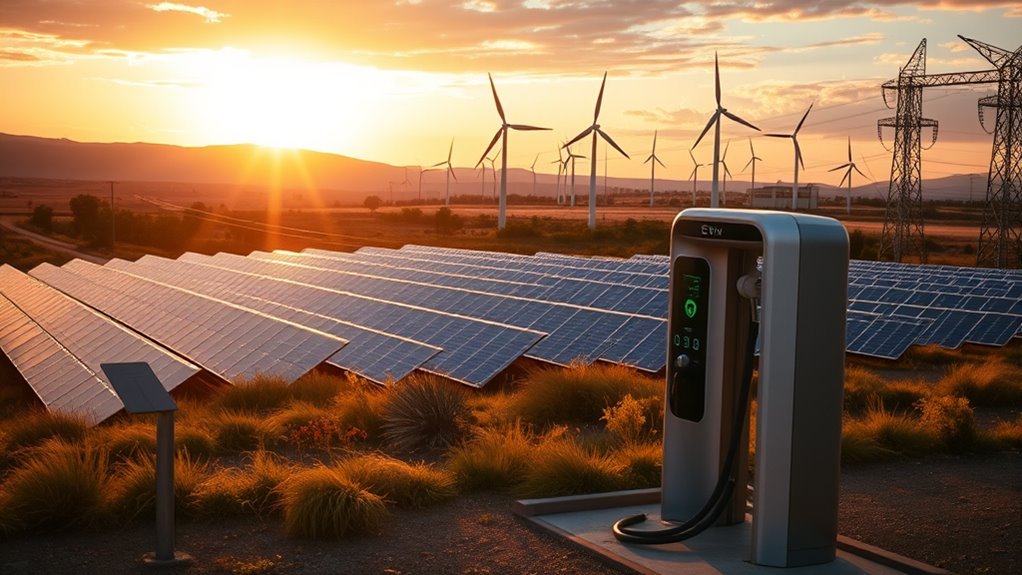
While advancements in electric vehicle (EV) charging technology are rapidly transforming the landscape, integrating renewable energy sources is becoming a focal point for future developments.
Advancements in EV charging technology and renewable energy integration are shaping a sustainable future for transportation.
Here’s what to expect in the evolving world of EV charging:
- Smart grid integration: Charging networks will leverage smart grids to optimize energy distribution and enhance reliability.
- Innovative battery storage: Systems like the HELIX battery will guarantee consistent power supply, balancing demand during low production periods.
- Vehicle-to-grid (V2G) technology: Your EV could serve as a mobile energy unit, feeding electricity back to the grid during peak demand, further stabilizing energy supply.
- Fast-charging advancements: With DC fast chargers delivering up to 350 kW, recharging times will decrease, making long-distance travel more convenient.
These trends not only enhance sustainability but also empower you as a consumer, promoting a more efficient and resilient charging infrastructure.
Frequently Asked Questions
Where Does the Power Come From for EV Charging Stations?
EV charging stations primarily draw power from the grid, utilizing a combination of renewable energy sources. This charging infrastructure promotes sustainability while reducing dependency on non-renewable resources, empowering you to contribute to a cleaner future.
Do Chargers Use Electricity When Nothing Is Plugged Into Them?
Charger idle power typically ranges from 1 to 5 watts, so they don’t greatly waste energy when not in use. You can rest easy knowing inactive chargers consume minimal electricity, making them efficient devices overall.
Where Do Tesla Superchargers Get Their Electricity From?
Tesla Superchargers draw electricity primarily from the National Grid, leveraging Tesla infrastructure. Many Supercharger locations also incorporate battery storage and solar energy systems, enhancing efficiency and sustainability while providing reliable charging for electric vehicles.
What Power Supply for EV Charger?
Think of EV chargers like thirsty plants; they sip power from the grid, solar panels, or battery storage, maximizing charging efficiency. Your choice impacts the power supply, influencing both cost and environmental benefits.
Conclusion
In summary, understanding where EV chargers get their power is essential for optimizing their use and supporting sustainable energy practices. By tapping into the grid, solar energy, and wind resources, you’re not just charging your vehicle; you’re also playing a role in a larger energy ecosystem. As technology advances, it’s clear that the future of EV charging is bright. So, don’t just sit on the fence—embrace these innovations and contribute to a greener tomorrow.







Leave a Reply