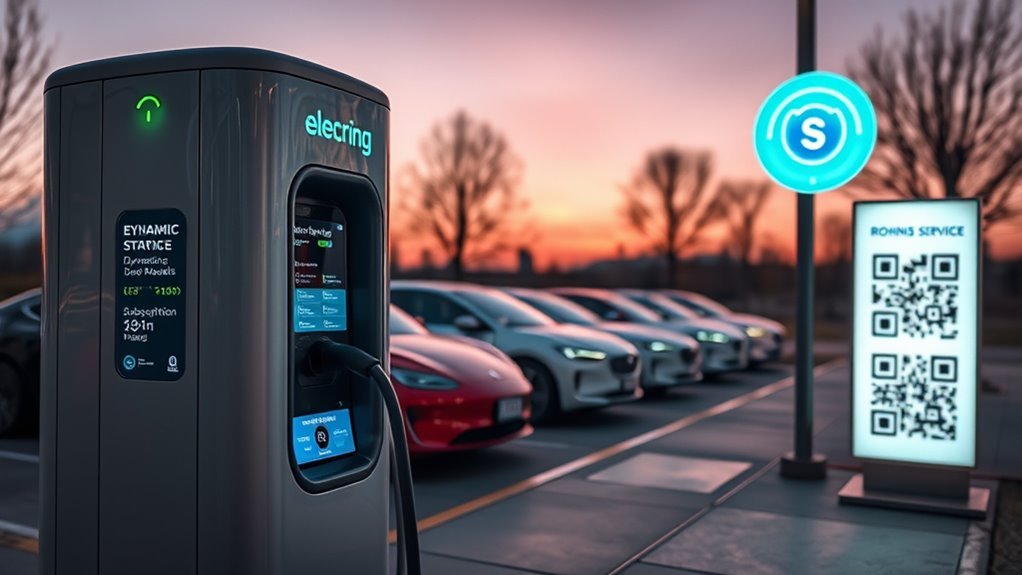
EV charging companies make money by selling charging sessions, offering paid memberships, and partnering with charging networks and property owners. Some also earn income from advertising, parking fees, and nearby retail activity. However, collecting charging fees is only part of the business. Electricity prices, equipment costs, maintenance, and how often drivers use a station determine whether it actually earns a profit.
Quick Answer
EV charging companies earn revenue through per-kWh charging fees, time-based fees, subscriptions, roaming agreements, and commercial partnerships. Some also collect advertising or parking revenue. Their profit depends on charging demand, electricity costs, installation expenses, maintenance, and network fees. A busy, reliable station generally has a stronger business case than an expensive charger with little use.
Key Takeaways
- Charging fees are a primary source of revenue, but prices and payment structures vary by network and location.
- Subscriptions can provide recurring income and encourage repeat charging.
- Roaming agreements expand access across participating networks and create opportunities for commercial settlement.
- Advertising, parking, and retail partnerships can create additional income.
- Electricity demand charges, equipment costs, and station utilization have a major effect on profitability.
- Charging revenue is not the same as profit. Operators must recover both ongoing expenses and their initial investment.
What You Need to Know About EV Charging Pricing Models
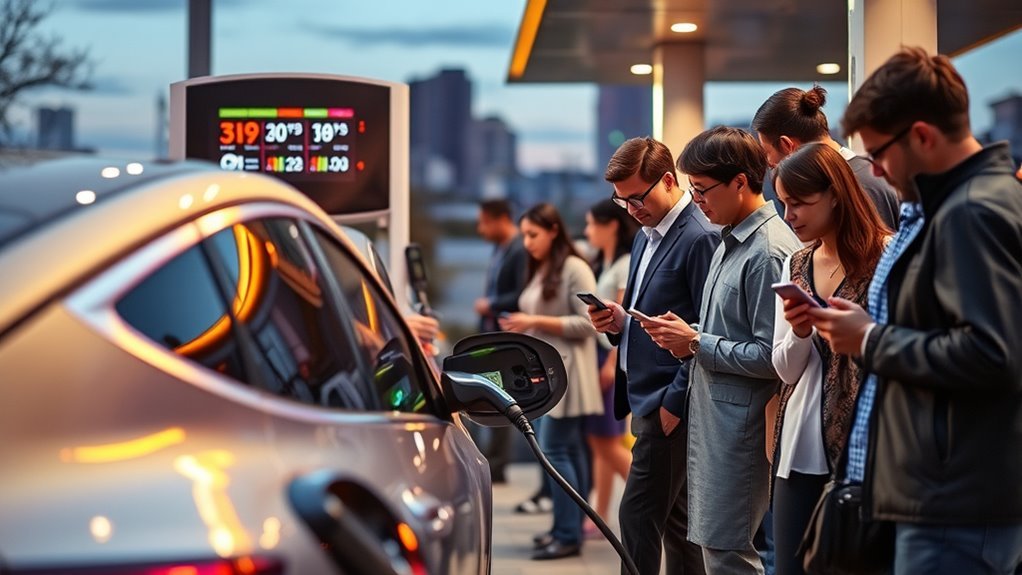
EV charging companies use several pricing models to generate revenue. The right structure depends on the charger type, location, electricity costs, expected demand, and customer preferences.
Some networks charge for the energy delivered. Others charge according to charging time, add a session fee, or offer discounted rates to members.
According to the U.S. Department of Energy’s Alternative Fuels Data Center, common structures include energy-based, session-based, time-based, and subscription pricing.
Common EV Charging Revenue Models
| Revenue Model | How It Works | Business Benefit |
|---|---|---|
| Per-kWh pricing | Drivers pay for electricity delivered. | Revenue follows energy sales. |
| Time-based pricing | Drivers pay for charging time. | Can encourage efficient use of charging spaces. |
| Session fees | A fixed fee applies when charging starts. | Can help recover transaction costs. |
| Subscriptions | Members pay a recurring fee for specified benefits. | Creates recurring revenue. |
| Roaming agreements | Participating networks provide access to each other’s customers. | Expands the potential customer base. |
| Advertising and partnerships | Businesses pay for advertising or share commercial benefits. | Diversifies income beyond charging fees. |
Operators may combine several models. For example, a public fast charger might charge per kWh, offer a discounted member rate, and apply an additional fee when a vehicle occupies the space after charging finishes.
Level 2 Versus DC Fast Charging Revenue
Level 2 chargers work well where drivers expect to park for several hours, such as workplaces, apartment buildings, hotels, and shopping centers.
These chargers generally require less investment than DC fast chargers. However, they deliver energy more slowly, which can limit the revenue generated during each hour of use.
DC fast chargers deliver energy more quickly and are useful along highways and at busy commercial destinations. Their higher charging capacity creates opportunities for greater energy sales, but installation and electricity-demand costs can be substantial.
Neither type automatically produces a better financial return. The right choice depends on expected usage, installation conditions, and the total cost of providing charging.
Pay-Per-Use Fees for EV Charging: How They Work
Pay-per-use pricing allows drivers to purchase charging without committing to a monthly membership.
It is one of the most straightforward ways for charging companies to collect revenue. However, the final session price may include more than the electricity delivered.
Pricing Structure Transparency
Clear pricing helps drivers understand what they are paying before starting a session.
Charging companies may display:
- The price per kilowatt-hour (kWh).
- Any applicable time-based charging fee.
- Session or connection fees.
- Idle fees that may apply after charging finishes.
- Member and non-member rates.
- Parking charges, where applicable.
Some providers also use dynamic pricing, which adjusts rates according to factors such as time of day, demand, or location.
Transparent pricing is particularly important when several charges apply to one session.
For federally funded charging projects covered by 23 CFR Part 680, applicable requirements include displaying the price before charging begins and clearly explaining additional fees.
Competitive Home Rate Comparison
Public charging prices should not be treated as equivalent to residential electricity rates.
Home charging generally uses electricity purchased through a household utility account. Public charging businesses must also recover costs associated with commercial equipment, installation, land or parking arrangements, maintenance, software, and payment processing.
DC fast charging sites may also face substantial utility demand charges.
Consequently, a public charging company may need to charge more per kWh than a driver pays at home.
Note: The price of electricity purchased by a charging operator is not necessarily the same as the price charged to customers. The difference must help cover other operating costs before it becomes profit.
Drivers can compare charging options by looking at the complete session cost rather than the advertised energy rate alone.
Flexible Payment Options
Charging companies can improve accessibility by accepting different payment methods, including credit cards, mobile applications, and RFID membership cards.
Hybrid pricing models may combine energy-based charges with session or time-based fees.
Consider two hypothetical charging sessions:
- Energy-based example: Charging 40 kWh at $0.45/kWh costs $18 before additional fees.
- Time-based example: Charging for 30 minutes at $0.40/minute costs $12, regardless of the energy delivered under that simplified pricing structure.
These figures are calculation examples, not published nationwide charging rates.
A vehicle’s actual charging speed can change during a session because of battery temperature, battery charge level, and the vehicle’s charging capabilities.
That means a time-based rate may produce a different effective cost per kWh for different vehicles.
Pro Tip: Charging operators should compare revenue per session, energy delivered, and charger occupancy time. A pricing model that generates more revenue per minute may still reduce customer satisfaction or overall utilization.
Subscription Services: Ensuring Steady Revenue
Subscription services create another revenue stream for EV charging companies.
Under these plans, drivers pay a monthly or annual membership fee in exchange for specified benefits.
Possible benefits include:
- Discounted charging rates.
- Access to participating charging networks.
- Membership rewards.
- Additional account-management features.
- Benefits designed for frequent users or commercial fleets.
For drivers who charge frequently, a membership can reduce their effective charging costs. For operators, recurring payments may improve revenue predictability and encourage repeat use.
However, subscription revenue is not automatically profitable.
The company must consider membership discounts, customer support costs, payment processing, and the cost of delivering promised benefits.
A discounted membership that attracts more frequent charging can still be useful if the additional utilization and recurring fees cover those costs.
The best subscription structure balances customer value with the economics of the charging network.
What It Costs to Operate an EV Charging Business
Understanding revenue is only half the picture. EV charging companies also face initial investment costs and ongoing operating expenses.
The largest expenses depend on the type of charger, site conditions, utility rates, and ownership model.
Equipment and Installation Costs
Building a public charging station can involve purchasing charging equipment, preparing the site, installing electrical connections, and obtaining permits.
According to the Department of Energy’s charging infrastructure guidance, public Level 2 equipment costs approximately $3,500 per connector, while DC fast charging equipment can cost approximately $38,000 to $90,000 per connector.
The same guidance reports public Level 2 installation costs averaging around $2,500 per connector, while DC fast charging installation can range from approximately $20,000 to $60,000 per connector.
These are planning figures, not guaranteed project quotes. Actual costs vary with power capacity, construction requirements, available electrical service, and the number of chargers installed.
Operators may also need to pay for:
- Electrical transformers and utility upgrades.
- Trenching, wiring, and site preparation.
- Parking-area modifications and signage.
- Network connectivity and payment equipment.
- Permits, inspections, and engineering work.
Installation should be completed by appropriately qualified electrical contractors in accordance with applicable codes and permitting requirements.
Ongoing Operating Expenses
Once a station opens, its operating expenses can include:
- Electricity purchased from the utility.
- Utility demand charges.
- Network software and connectivity.
- Maintenance and equipment repairs.
- Payment processing and customer support.
- Property rent or site-host revenue sharing.
- Insurance and administrative expenses.
These costs explain why a charger can generate substantial sales without producing a substantial profit.
Why Utility Demand Charges Matter
Some commercial electricity tariffs include charges based on the highest power demand recorded during a billing period.
A DC fast charger can create a large short-term electrical load, especially when multiple vehicles charge simultaneously.
As a result, a station with relatively few charging sessions may still face significant electricity-related expenses.
The Department of Energy identifies demand charges as an important consideration for DC fast charging operations.
Operators should review their utility tariff before choosing charger capacity or finalizing a business plan.
How Profitable Are EV Charging Stations?
Profitability depends on how much charging revenue a station collects compared with the complete cost of delivering that service.
A useful starting point is:
Gross charging revenue = Energy sold × Average selling price per kWh
However, this calculation does not include operating expenses or the cost of recovering the original investment.
Example of EV Charging Station Revenue
Consider a hypothetical station with the following assumptions:
- Eight charging sessions per day.
- 30 kWh delivered per session.
- An average customer price of $0.45/kWh.
- An illustrative electricity purchase cost of $0.20/kWh.
- 365 operating days per year.
The resulting calculations are:
| Metric | Illustrative Amount |
|---|---|
| Daily electricity sold | 240 kWh |
| Daily charging revenue | $108 |
| Annual charging revenue | $39,420 |
| Annual energy purchase cost | $17,520 |
| Remaining amount before other expenses | $21,900 |
The remaining $21,900 is not net profit.
The operator must still account for demand charges, maintenance, networking, rent, payment fees, insurance, taxes, financing, and recovery of the initial equipment and installation investment.
Actual revenue also changes with charging demand, downtime, seasonal travel, and the amount of electricity delivered per session.
Why Utilization Determines Profitability
Utilization describes how much a charging station is used relative to its available capacity.
A station with very little usage spreads its fixed costs across a small number of charging sessions.
As utilization increases, the operator can generally recover fixed costs across more electricity sales, although variable operating costs also increase.
A 2026 national-laboratory study of U.S. corridor DC fast charging found that utilization was a major driver of charging economics.
Its modeled baseline estimated average 20-year break-even costs of approximately $0.42/kWh. That figure represents a modeled cost under specific assumptions, not a guaranteed retail price or profit margin.
A charging station does not become profitable simply because it sells electricity at a price above the utility’s energy rate. The entire cost of delivering that electricity matters.
EV Charging Station Ownership and Revenue Sharing
Not every EV charging company owns the property or charging equipment it operates.
Different ownership arrangements affect who collects revenue, pays operating expenses, and carries the financial risk.
Site-Host-Owned Charging Stations
A shopping center, hotel, apartment building, or other property owner may purchase and operate its own charging equipment.
In this arrangement, the site host generally controls the pricing strategy and receives charging revenue, subject to any agreements with network or service providers.
The site host also carries responsibility for applicable equipment, installation, maintenance, and operating costs.
Third-Party-Owned Charging Stations
A charging company may install and operate equipment on another business’s property.
The company can collect charging revenue while the property owner receives rent, a negotiated revenue share, or other commercial benefits.
The exact arrangement depends on the contract.
Some agreements place equipment and maintenance responsibilities with the charging operator. Others divide costs and responsibilities between several parties.
Neither ownership structure guarantees profitability. The commercial agreement must reflect actual installation costs, expected usage, and ongoing expenses.
The Role of Roaming Agreements in EV Charging
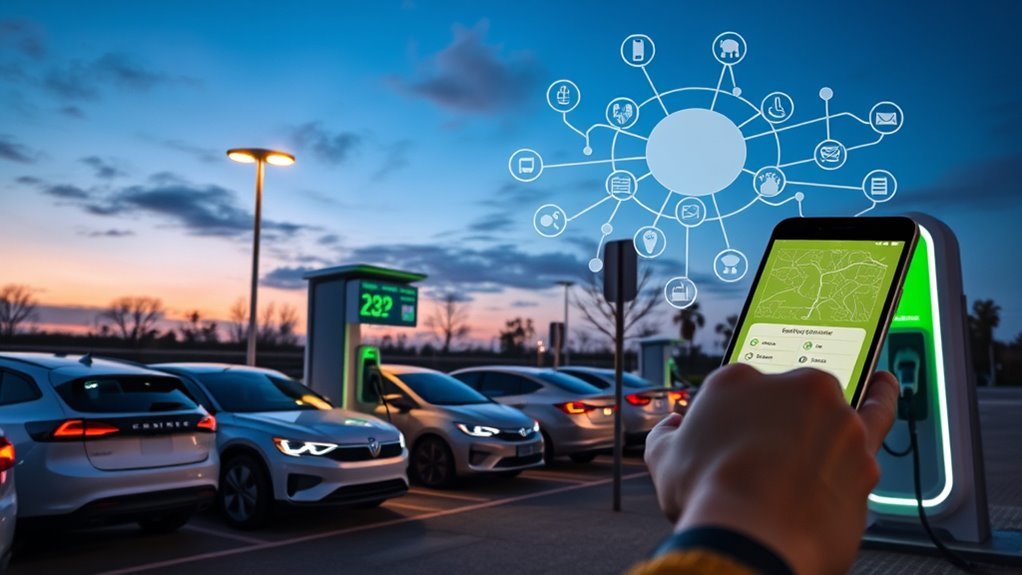
Roaming agreements allow drivers to access participating charging networks through another provider’s account or service.
This expands the available charging network without requiring every company to build and own stations in every location.
Benefits of Roaming Agreements
Roaming can create value for both drivers and charging businesses.
- Drivers gain access to more participating charging locations.
- Charging operators can reach customers from other networks.
- Mobility-service providers can offer broader charging coverage.
- Participating companies can exchange charging-session and billing information.
The financial arrangements vary. Agreements may involve negotiated tariffs, transaction charges, or settlement terms between participating businesses.
How Roaming Revenue Is Shared
Two important participants are the Charge Point Operator (CPO) and the Mobility Service Provider (MSP).
The CPO operates the charging infrastructure. The MSP provides charging access and related services to drivers.
When a driver uses a participating external network, the companies exchange the information needed to authorize the session and settle the transaction.
The amount each company retains depends on its commercial agreement. There is no universal revenue-sharing percentage that applies to every roaming transaction.
Challenges in Implementation
Roaming agreements can be difficult to establish because providers need compatible systems and clear commercial terms.
Important challenges include:
- Negotiating commercial settlement arrangements.
- Exchanging accurate pricing information.
- Supporting reliable user authentication.
- Keeping charging-location and availability data current.
- Resolving payment disputes and customer-support responsibilities.
Technical interoperability can reduce these barriers, but it does not eliminate the need for business agreements.
OCPI Versus OCPP: What’s the Difference?
Two important EV charging communication standards serve different purposes.
OCPP (Open Charge Point Protocol) supports communication between charging equipment and the charging management system.
OCPI (Open Charge Point Interface) supports communication between charging operators and mobility-service providers, including roaming, tariff information, session data, and billing records.
The EVRoaming Foundation’s OCPI documentation identifies version 2.3.0 as its current version in 2026.
These protocols serve complementary roles. An operator may use OCPP to manage chargers and OCPI to support communication with other charging-service businesses.
How to Boost Revenue With Ads and Partnerships

EV charging companies can generate revenue beyond the electricity they sell.
Advertising and local business partnerships can be particularly useful where charging stations are located near restaurants, shopping centers, hotels, and other destinations.
Consider these approaches:
- Targeted advertising: Display paid advertisements on compatible digital charging screens or nearby signage.
- Local partnerships: Work with nearby businesses to attract drivers who may shop or dine while charging.
- Loyalty programs: Offer rewards or discounts through participating retailers.
- Parking revenue: Where permitted, combine charging with paid parking or clearly disclosed parking arrangements.
- Commercial sponsorships: Partner with businesses that want to support charging availability at a particular destination.
These opportunities can diversify revenue, but the income is not guaranteed.
Advertising value depends on customer traffic, screen visibility, advertiser demand, and operating agreements.
Retail partnerships also require a clear method of measuring commercial value. Increased foot traffic does not automatically mean the charging operator receives a share of retail sales.
Key Factors in EV Charging Pricing Strategies
Charging companies need pricing strategies that attract customers while recovering operating costs.
One approach is dynamic pricing, which allows rates to vary according to factors such as demand, time of day, or local market conditions.
For example, an operator may offer lower off-peak rates to encourage charging when electricity is less expensive or equipment is underused.
However, price changes need to comply with applicable rules and be communicated clearly.
Other important pricing considerations include:
- Utilization: Whether enough drivers use the station to support its costs.
- Electricity tariffs: Both energy charges and demand-related expenses.
- Customer demand: How sensitive drivers are to price differences.
- Competition: The availability and pricing of nearby chargers.
- Charging speed: The amount of energy the equipment and vehicle can deliver.
- Location: The convenience and accessibility of the charging site.
- Membership incentives: Whether discounts encourage enough additional usage to justify their cost.
Hybrid models can also combine per-kWh pricing with time-based or session fees.
Idle fees may encourage drivers to move their vehicles when charging is complete, making spaces available for others.
A well-designed pricing strategy balances revenue, operating costs, station availability, and customer experience.
What Do EV Drivers Really Value in Charging?
EV drivers do not all choose charging stations for the same reasons.
Price matters, but convenience, reliability, speed, and accessibility can also influence where someone charges.
Important considerations include:
- Whether the charger is working when the driver arrives.
- Whether the connector is compatible with the vehicle.
- How quickly the station can deliver energy.
- Whether pricing is visible before charging starts.
- The availability of safe parking and nearby amenities.
- Whether the driver can pay without unnecessary complications.
Charging stations near cafes, stores, and other useful facilities may offer a more convenient experience during longer sessions.
Fast charging can be especially useful during road trips, while Level 2 charging may suit destinations where drivers already expect to spend several hours.
These preferences create opportunities for charging companies to develop services around different customer needs.
Why Reliability Affects Charging Revenue
A charging station cannot generate normal charging revenue when its equipment is unavailable.
Repeated outages may also discourage customers from returning.
Operators should monitor charging failures, maintain equipment, and establish clear repair responsibilities.
For federally funded charging projects subject to 23 CFR Part 680, the applicable rules include a requirement for charging-port uptime greater than 97%, calculated under the regulation’s defined methodology and exclusions.
Reliable equipment supports customer confidence and helps operators make better use of their installed charging capacity.
Maximizing Profitability Through Strategic Location
Location can strongly influence how often a charging station is used.
Sites near highways, shopping centers, hotels, workplaces, and residential developments may serve different charging needs.
The most suitable location depends on charger type and expected customer behavior.
For example, a highway fast-charging location may serve drivers who want to resume their journey quickly. A shopping-center Level 2 station may serve customers who plan to spend more time at the destination.
Before selecting a site, operators should evaluate:
- Existing and expected EV charging demand.
- Nearby competing charging stations.
- Traffic patterns and ease of access.
- Available electrical capacity.
- Utility upgrade and installation requirements.
- Property costs and ownership agreements.
- Lighting, accessibility, and customer amenities.
- Potential future expansion.
A busy location is not automatically profitable if installation or operating expenses are too high.
Likewise, a location with lower construction costs may struggle if too few drivers use the equipment.
The goal is to find a balance between expected utilization, customer convenience, and the complete cost of operating the station.
A Practical Profitability Checklist for Operators
Before investing in a charging location, a business should work through these steps:
- Estimate expected charging sessions and energy sales.
- Choose equipment that matches expected demand.
- Request installation and utility-upgrade estimates.
- Review commercial electricity tariffs and demand charges.
- Calculate expected revenue under different pricing models.
- Include maintenance, connectivity, payment, insurance, and property costs.
- Model lower-than-expected utilization and equipment downtime.
- Determine how much revenue is needed to recover the initial investment.
This process helps identify whether a site has a workable business case before construction begins.
Future Trends in EV Charging Revenue Generation
EV charging companies are exploring ways to improve utilization, control costs, and diversify revenue.
Several developments are relevant to the economics of future charging projects.
Smarter Pricing and Load Management
Operators can use charging and electricity-demand data to refine pricing and manage site power consumption.
Smart charging systems may help shift energy use toward less expensive periods or manage simultaneous charging loads.
These tools can support operating efficiency, although their financial benefit depends on the utility tariff and site configuration.
Battery Storage and Energy Management
Some charging sites may use battery storage or on-site solar generation to manage electricity costs.
Battery storage can help reduce peak electricity demand in certain situations, while solar generation may offset some purchased electricity.
These technologies require additional investment, so their value should be assessed using the station’s actual operating conditions.
Expanded Roaming and Interoperability
Improved interoperability can make it easier for drivers to use participating charging networks.
For operators, compatible systems can support broader customer access, more efficient network management, and improved transaction data exchange.
However, technical compatibility must still be supported by appropriate commercial agreements.
More Diverse Revenue Streams
Charging operators may continue developing subscriptions, loyalty programs, fleet arrangements, advertising, and local retail partnerships.
These activities can reduce reliance on charging-session income alone.
The most useful opportunities will depend on the location, customer base, equipment, and contractual arrangements.
As the industry develops, charging businesses that understand both customer demand and complete operating costs will be better positioned to evaluate new opportunities.
Frequently Asked Questions
How Do Electric Car Charging Stations Make Money?
Charging stations earn revenue by charging drivers for electricity, charging time, or individual sessions. Some operators also collect subscription fees, roaming revenue, parking charges, advertising income, or payments through commercial partnerships. The actual income depends on usage, pricing, and the operator’s business agreements.
What Is the 80/20 Rule in EV Charging?
The 80/20 rule is a general business principle suggesting that a relatively small share of activities or assets may produce a large share of results. Charging operators can use it as a planning concept when reviewing station revenue. However, there is no established rule that exactly 20% of EV charging locations generate 80% of industry revenue.
How Are EV Charging Stations Priced?
Public EV charging may be priced per kWh, per minute, per session, or through a combination of fees. Some networks also offer discounted subscription rates. Actual prices vary by provider, location, charger type, and applicable electricity costs.
Who Is Paying for EV Charging Stations?
Charging infrastructure may be funded by charging networks, property owners, businesses, utilities, or public-sector programs. Some projects use partnerships or eligible incentives to offset installation costs. Drivers generally contribute through charging fees, while property owners may benefit from customer activity, rent, or negotiated revenue-sharing arrangements.
Are EV Charging Stations Profitable?
EV charging stations can be profitable, but profitability is not guaranteed. It depends on utilization, customer pricing, electricity expenses, installation costs, maintenance, and other operating charges. A station must generate enough revenue to cover its ongoing expenses and recover its initial investment.
How Do Free EV Charging Stations Make Money?
Free charging stations may be funded by property owners, employers, retailers, or other organizations. The financial benefit may come indirectly through customer attraction, employee benefits, parking arrangements, or other business objectives. Free charging does not necessarily mean the station itself generates direct charging revenue.
What Is the Biggest Expense for an EV Charging Company?
Major expenses can include equipment, installation, utility upgrades, electricity, demand charges, networking, and maintenance. The largest expense varies by charging level, location, utility tariff, and ownership model. DC fast charging generally requires greater initial investment than Level 2 charging.
Conclusion
EV charging companies generate revenue through a combination of charging fees, subscriptions, roaming agreements, advertising, and commercial partnerships.
However, the amount collected from drivers does not tell the whole financial story. Equipment investment, installation costs, electricity tariffs, maintenance, and utilization determine how much revenue remains after expenses.
For operators, the most useful approach is to evaluate each location using realistic demand estimates and a complete cost model. Reliable equipment, clear pricing, accessible locations, and suitable partnerships can support customer loyalty and improve the business case.
For drivers, understanding these revenue models explains why public charging prices vary and why convenience, reliability, and charging speed can influence the final cost.
Ultimately, a sustainable EV charging business needs more than a good location or a competitive electricity rate. It needs a model that delivers value to drivers while recovering the full cost of providing the service.
Sources
- U.S. Department of Energy — Operation and Maintenance for EV Charging Infrastructure — Pricing structures, operating expenses, maintenance, and utilization.
- U.S. Department of Energy — Procurement and Installation for EV Charging Infrastructure — Equipment costs, installation considerations, ownership models, and utility planning.
- National Laboratory of the Rockies — Economics of Electric Vehicle Corridor Fast Charging in the United States (2026) — Utilization, capital costs, demand charges, and modeled break-even charging costs.
- EVRoaming Foundation — Open Charge Point Interface — Roaming interoperability, provider roles, tariffs, and transaction data exchange.
- U.S. Department of Transportation — National Electric Vehicle Infrastructure Standards and Requirements — Applicable federal charging infrastructure standards, pricing transparency, and uptime requirements.






Leave a Reply