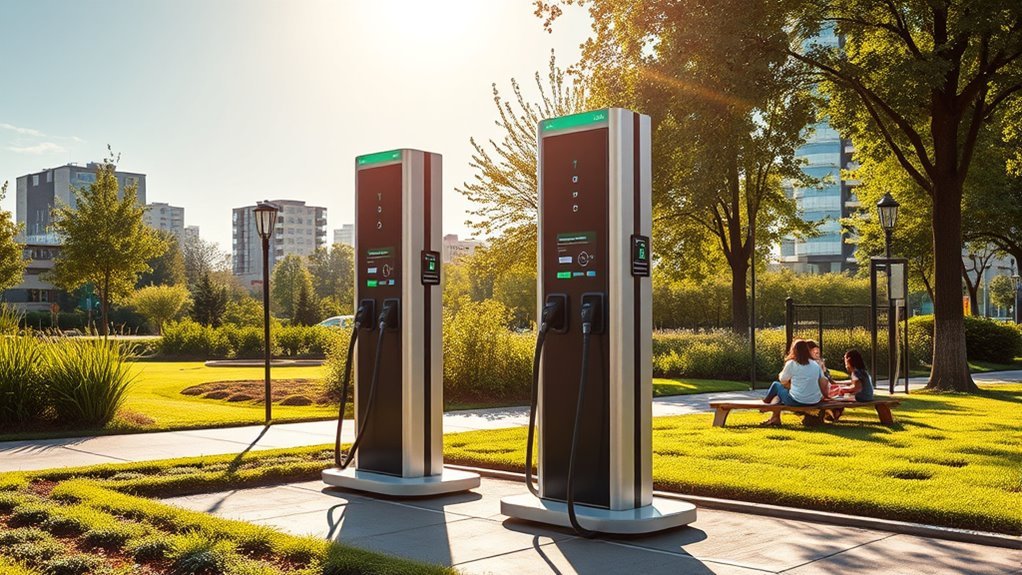
When designing an EV charging station, choose high-visibility locations with good accessibility. Create a user-friendly layout with clear entry and exit points, organized signage, and ample spacing for larger vehicles. Incorporate safety measures by adhering to electrical codes and using protective barriers. Enhance user experience with diverse payment options and amenities like Wi-Fi. Don’t forget to plan for future expansion and collaborate with local businesses for marketing strategies. There’s much more to contemplate for ideal design.
How to Choose the Right Location for Your EV Charging Station?
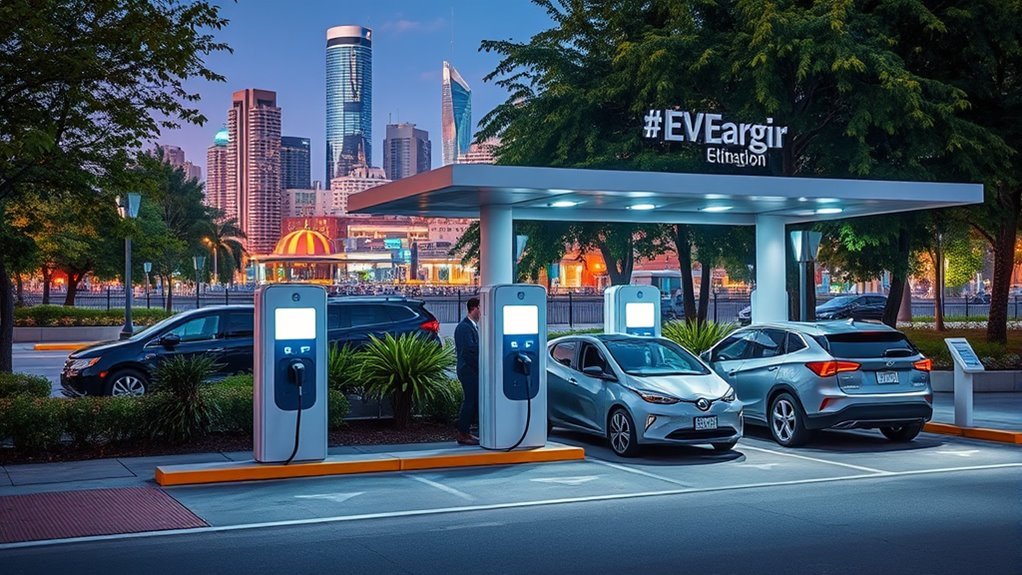
Where should you place your EV charging station to maximize usage? Start with site selection by choosing high-visibility locations near major roads, shopping centers, or business parks. These spots attract EV drivers who may linger while charging, enhancing your station’s utility.
Conduct a traffic analysis to assess patterns and identify peak usage times, guaranteeing your site can handle high vehicle volumes efficiently. Accessibility is vital; guarantee ADA-compliant spaces and level surfaces to accommodate all users.
Check the proximity to existing electrical infrastructure, as this minimizes construction costs and assures a sufficient power supply for your chargers. Finally, plan for future expansion by selecting sites with ample space for additional chargers, allowing you to keep pace with the growing demand for EVs.
Designing a User-Friendly Layout for Your Charging Station
When designing your charging station, prioritize clear entry and exit points to streamline traffic flow and reduce congestion.
Position accessible parking spaces strategically to guarantee all users, including those with disabilities, can easily access charging stations.
This thoughtful layout will enhance user experience and promote efficient use of the space.
Clear Entry/Exit Points
Designing clear entry and exit points for your EV charging station is essential, as it minimizes congestion and enhances traffic flow for users.
To streamline vehicle movement, consider incorporating one-way traffic patterns. This reduces the risk of accidents and boosts operational efficiency.
Well-marked lanes and clear signage guide drivers to available charging spots, improving navigation and cutting down wait times, especially during peak hours.
Guarantee adequate spacing between chargers and designated lanes, providing ample room for larger EVs and towing vehicles.
Additionally, implementing barriers or curbs around entry and exit points enhances safety by directing traffic and preventing unauthorized access.
Accessible Parking Spaces
Creating accessible parking spaces is crucial for guaranteeing that all users can easily access your EV charging station. Adhering to ADA standards, your accessible space design should include van-accessible spots with a minimum width of 96 inches and a slope not exceeding 1:48.
Position these spaces as close to the charging stations as possible to reduce travel distance for individuals with mobility challenges. Clearly marked signage with universally recognized symbols enhances identification.
Confirm user accessibility features, like charging interfaces, are at an appropriate height (15 to 48 inches) for wheelchair users. Regular maintenance checks and clear pathways free from obstructions are essential to keep these spaces functional and safe for everyone.
How to Keep Your EV Charging Station Safe and Compliant?
To guarantee your EV charging station remains safe and compliant, start by adhering to the National Electrical Code, which mandates that outdoor chargers be installed at least 24 inches above ground and indoor units at 18 inches.
Schedule regular compliance inspections and maintenance to ascertain all charging equipment meets safety regulations and operates efficiently. Neglecting this can lead to fines or shutdowns.
Implement clear signage that aligns with the Federal Highway Administration’s Manual on Uniform Traffic Control Devices, marking EV charging spaces and traffic flow to enhance user safety.
Additionally, install protective barriers like bollards or curbs around charging stations to prevent accidental collisions and reduce hazards.
Finally, keep all charging cables and connections well-maintained and organized; this minimizes tripping hazards and ascertains that all equipment is operational and safe for public use.
Prioritizing these elements will create a safer and more compliant experience for everyone.
Enhancing User Experience With Payment Options and Amenities
To enhance your charging experience, consider the variety of payment options available, such as mobile apps and tap-to-pay systems.
Combining this flexibility with value-added amenities like high-speed Wi-Fi and comfortable lounge areas can turn a simple stop into a pleasant break.
Payment Flexibility Options
How can offering diverse payment options transform your charging experience? By integrating mobile payment solutions, RFID cards, and tap-to-pay systems, you cater to varying preferences, making transactions seamless and efficient.
Flexible pricing models, like per-minute, per-session, or subscription pricing models, empower you to select the most economical approach for your charging needs. This not only enhances convenience but also promotes cost-effectiveness.
Additionally, discounts for loyal users can encourage repeat visits, fostering a sense of community around your charging station. A user-friendly interface displaying payment options, real-time charger availability, and clear pricing guarantees a smooth interaction.
Embracing these payment flexibility options can greatly elevate your overall experience, making charging as liberating as the journey itself.
Value-Added Amenities
Integrating diverse payment options is just the beginning of enhancing the electric vehicle charging experience.
To truly elevate user satisfaction, consider incorporating value-added amenities. Providing high-speed Wi-Fi, comfortable lounge areas, and partnerships with local businesses can foster customer engagement, encouraging users to spend more time at your station.
Flexible pricing models like free charging, per-minute, or subscription-based plans cater to varying preferences and can increase utilization. Additionally, implementing loyalty programs and offering discounts for repeat customers can incentivize them to return.
Thoughtful design, with clear signage and intuitive interfaces, transforms charging stations into attractive destinations, ultimately boosting brand loyalty and enhancing the overall experience for EV drivers.
Planning for Future Expansion and Power Infrastructure Needs
As demand for electric vehicles (EVs) continues to rise, planning for future expansion and power infrastructure needs becomes essential for any EV charging station project.
You must conduct an infrastructure assessment early on to determine the site’s electrical capacity. This foresight is critical, as DC fast chargers can require costly upgrades.
To guarantee future scalability, consider the following:
- Allocate adequate space for additional chargers.
- Implement modular electrical systems, including oversized conduits.
- Collaborate with utility providers for grid capacity insights.
- Negotiate potential upgrades that accommodate increased loads.
- Integrate load management technologies for efficient power distribution.
Marketing Your EV Charging Station to Attract Users
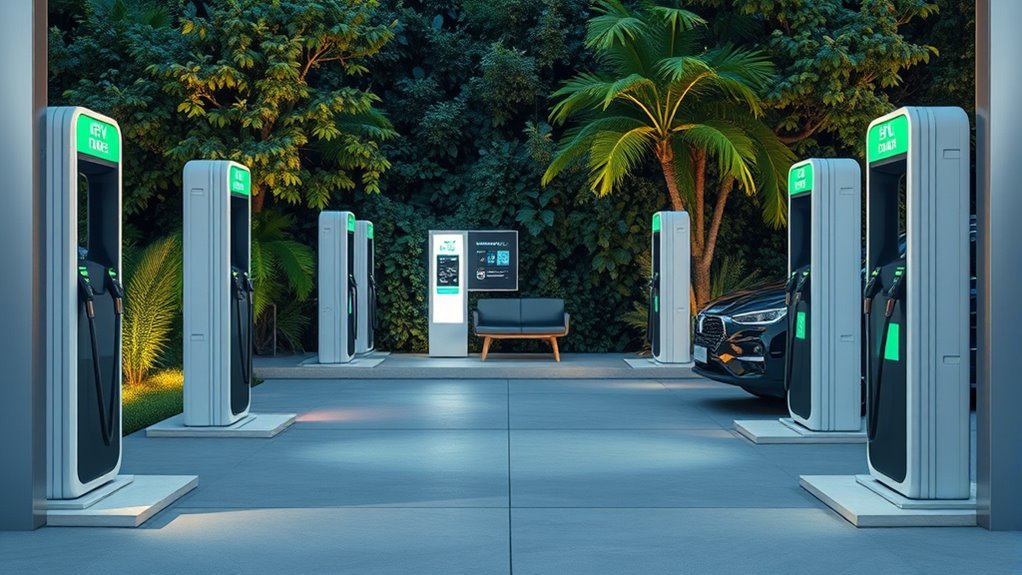
To attract users effectively, it’s crucial to implement a strategic marketing approach that highlights the unique benefits of your EV charging station. Start by listing your station on popular apps like PlugShare and Google Maps, boosting visibility. Use promotional strategies, such as off-peak discounts or loyalty programs, to drive traffic. Emphasizing environmental benefits can resonate with the 62% of U.S. consumers willing to shift their purchasing habits for sustainability. Collaborate with local businesses to offer value-added services, enhancing user engagement. Finally, guarantee multiple payment options, like mobile apps and tap-to-pay systems, streamline the experience.
| Strategy | Benefits | User Engagement |
|---|---|---|
| List on Charging Apps | Increased visibility | Attracts more users |
| Off-Peak Discounts | Cost-effective solutions | Encourages repeat visits |
| Collaborate Locally | Enhanced value-added services | Creates attractive destination |
| Multiple Payment Options | Improved customer satisfaction | Streamlined experience |
Frequently Asked Questions
What Are Common Materials Used for EV Charging Station Construction?
For EV charging station construction, you’ll commonly use concrete foundations for stability and weather-resistant materials like stainless steel or specialized plastics to guarantee durability and protect your investment from environmental factors.
How Can I Incorporate Renewable Energy Into My Charging Station?
Imagine your charging station basking in sunlight, equipped with solar panels and wind turbines. By harnessing these renewable energy sources, you’ll reduce costs, enhance sustainability, and empower users to embrace a greener future.
What Maintenance Is Required for EV Charging Stations?
You’ll need routine inspections and preventive maintenance for your EV charging stations. Regularly check connections, software updates, and equipment wear to guarantee peak performance and safety, keeping your station reliable and user-friendly for everyone.
How Do I Handle Vandalism or Damage to the Charging Station?
If you find graffiti on your charging station, assess the damage first. Implement vandalism prevention measures, like surveillance cameras. Regularly check and maintain stations to guarantee functionality and minimize repair costs from damages.
What Are the Best Practices for Signage Design at Charging Stations?
For effective signage design at charging stations, guarantee high visibility and clear user instructions. Use large fonts, contrasting colors, and simple icons to guide users seamlessly, minimizing confusion and enhancing the overall experience.
Conclusion
In designing your EV charging station, prioritize location, layout, safety, and user experience. Choose a strategic site, create an intuitive flow, guarantee compliance, and offer convenient payment options. Think ahead by planning for future needs and marketing effectively. By focusing on these elements, you not only enhance usability but also foster a welcoming environment for all EV users. Remember, a well-designed charging station is not just about power—it’s about providing a seamless experience that keeps customers coming back.







Leave a Reply