To guarantee safe EV charging, always use certified stations and inspect your cables for damage. Avoid extreme temperatures and wet conditions while charging. Make certain your home charging setup is installed by a qualified electrician and is well-organized and grounded. For public charging, monitor your vehicle and report any malfunctioning stations. Regular maintenance check-ups of your equipment are essential for safety. There’s much more to learn about ideal charging practices and technologies to keep you informed.
Essential Safety Guidelines for EV Charging
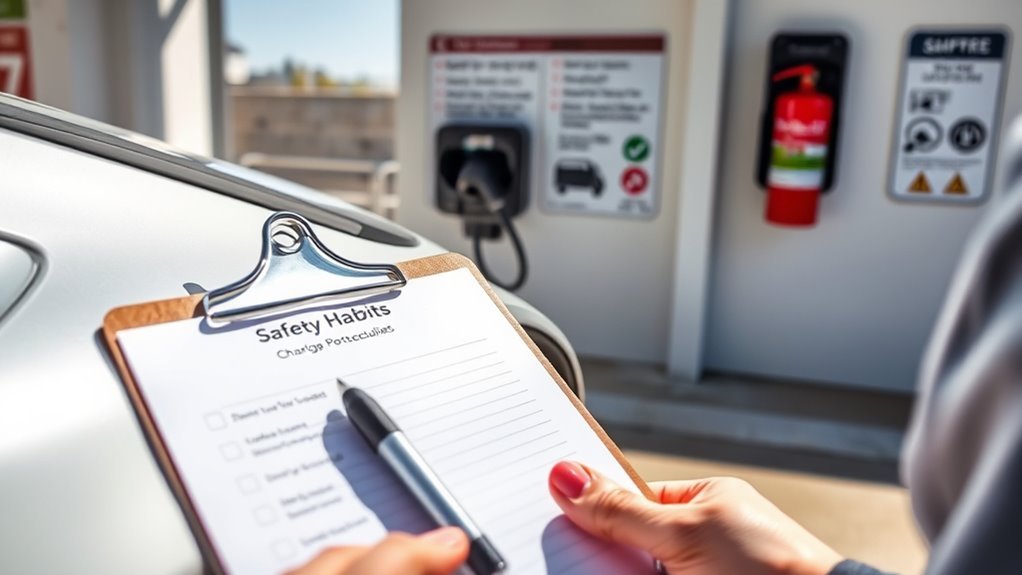
When charging your electric vehicle (EV), it’s crucial to prioritize safety to prevent accidents and equipment damage. Start by using certified charging stations designed to prevent overcharging and overheating; these safety certifications guarantee proper functionality.
Inspect your charging cables and connectors for any signs of damage or wear before use, as faulty equipment can pose serious electrical hazards. Avoid charging in extreme temperatures and verify all components are dry to protect your battery’s lifespan and prevent electrical issues.
Always follow the manufacturer’s instructions for installation and operation, and confirm that charging stations comply with local electrical codes for safety.
Practicing good charging etiquette also means scheduling regular inspections of your equipment to maintain reliability over time.
Conduct Home Charging Safety Checks
To guarantee safe home charging, regularly inspect your charging cables for any signs of wear, like cracks or fraying.
It’s essential to have your charging station installed by a qualified electrician who follows local codes and standards.
Keeping your charging area organized and dry further minimizes risks and promotes efficient operation.
Inspect Charging Equipment Regularly
Regular inspections of your charging equipment are essential for maintaining safety and efficiency. Start by examining your charging cables for any signs of damage, like cracks or frayed wires, to prevent electrical hazards.
Make sure all connectors are clean and free from debris, which helps maintain a secure connection while charging. Check the charger’s housing for wear or corrosion, as these issues can pose safety risks.
Additionally, verify that your charging station is properly grounded and that circuit breakers are sized to handle the charger’s amperage. Don’t forget to conduct periodic safety inspections of your installation to guarantee compliance with local electrical codes.
Prioritizing these checks can enhance the reliability and safety of your charging setup.
Ensure Proper Electrical Setup
Ensuring a proper electrical setup for your EV charger is essential for safe and efficient operation.
First, assess your home’s electrical capacity; it should have at least 200 amps and two empty slots to support a Level 2 charger. Hiring a qualified electrician is vital for performing load calculations and making any necessary electrical system modifications.
Make sure the circuit breakers are sized correctly for your charger, as inadequate breakers can cause safety risks. Additionally, choose a dry, well-ventilated location for installation to prevent overheating and electrical hazards.
Finally, regularly inspect your charging equipment and connections for wear or damage to maintain safe operation. Being proactive safeguards your freedom and enhances your electric vehicle experience.
Select the Right Charging Equipment for Your EV
When selecting charging equipment for your electric vehicle (EV), it’s essential to guarantee compatibility with your car’s connector, as most use the J1772 for Level 1 and Level 2 chargers, while newer Tesla models will shift to the J3400/NACS connector starting in 2025.
Consider the following factors when choosing your charger:
| Charger Type | Range Added per Hour | Amp Output |
|---|---|---|
| Level 1 | 3-5 miles | 8-16 amps |
| Level 2 | 25-40 miles | 16-80 amps |
| Compatibility | J1772 or J3400/NACS | Varies |
| Installation | Standard Outlet | 240-volt |
| Features | Smart Charging Options | Yes/No |
Evaluate your home’s electrical system to confirm it can support the charger, ideally having at least 200 amps available for Level 2 installations. Opt for smart chargers with scheduling and monitoring to optimize your charging experience.
Prepare Your Vehicle for Charging
Before you start charging, check your vehicle’s battery status to verify it’s not too hot, as this can affect its longevity.
Inspect the charging cables for any signs of wear or damage, since faulty cables can create serious safety hazards.
Taking these steps helps guarantee a safe and efficient charging process.
Check Battery Status
It’s important to check your vehicle’s battery status regularly to keep it in peak condition. Effective battery monitoring guarantees your charge remains within the ideal range of 20% to 80%, promoting longevity and performance. Use your EV’s onboard system or a mobile app to check the current battery level and estimated range before you plan a charging session.
| Battery Status | Action Needed | Ideal Range |
|---|---|---|
| Below 20% | Charge immediately | 20% – 80% |
| 20% – 80% | Maintain current charge | |
| Above 80% | Avoid charging for now | |
| Extreme Temp | Postpone charging |
Remember to charge during off-peak hours for cost-effectiveness and efficiency.
Inspect Charging Cables
Inspecting charging cables is essential for guaranteeing safe and efficient charging of your electric vehicle. Regularly check for visible damage indicators like cracks, fraying, or bent pins. These signs can compromise both safety and cable longevity.
During use, feel for warm spots on the cables, as they may signal potential overheating or electrical issues. Keep connectors clean and free from debris to maintain proper electrical contact, preventing charging failures.
Store your cables in a dry, clean environment to protect them from moisture and contaminants. Always use cables and adapters certified by recognized safety organizations, such as UL or ETL.
What You Need to Know About Public Charging Safety?
When using public charging stations, guaranteeing your safety is paramount, especially in unfamiliar areas. To enhance personal safety while charging, consider the following:
| Tip | Action to Take | Reason |
|---|---|---|
| Choose Well-Lit Locations | Opt for stations in busy areas | Deters criminal activity |
| Inspect for Damage | Look for signs of tampering | Guarantees safe usage |
| Stay Nearby During Charging | Monitor your vehicle closely | Minimizes theft risk |
Select public charging stations operated by reputable networks that maintain their infrastructure. This guarantees reliability and reduces the chance of encountering malfunctioning equipment. Carry the necessary cables and adapters to avoid being stranded due to compatibility issues. By following these guidelines, you can enjoy the freedom of electric vehicle driving while prioritizing your personal safety.
Best Practices for Regular Charger Maintenance
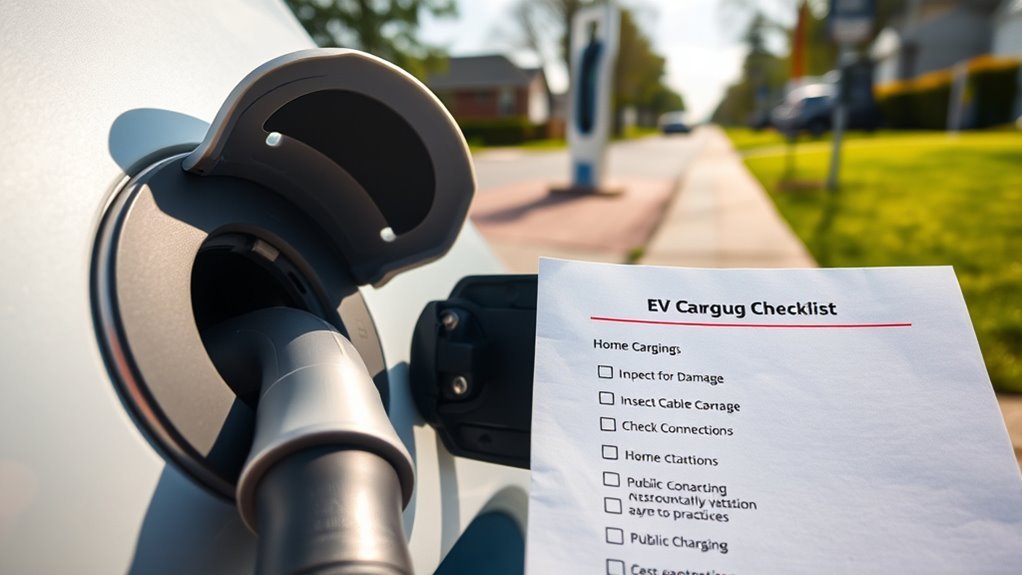
Maintaining your electric vehicle charger is just as important as guaranteeing your safety while using public charging stations. Regularly inspect your charging cables and connectors for any signs of wear, damage, or fraying. This practice is essential for safe operation and can prevent electrical hazards that may compromise charger longevity.
Regularly inspect your charging cables and connectors for wear and damage to ensure safety and prolong charger life.
Keep your charging equipment clean and store it in a dry, ventilated area to avoid moisture-related issues. Follow the manufacturer’s maintenance guidelines and set maintenance reminders to perform routine checks every 10,000 km. This helps you identify and address minor issues before they escalate.
Always use certified charging stations that comply with local electrical codes for added safety and reliability. Finally, periodically test the functionality of your charger and have a qualified electrician inspect it to guarantee proper grounding and electrical connections.
Taking these steps will safeguard your investment and enhance your charging experience.
Safe Charging Tips for Extreme Weather
Charging your electric vehicle in extreme weather can pose risks to both your vehicle and safety, so it’s crucial to take precautions.
Avoid charging in very cold or hot temperatures, as these temperature effects can severely impact battery performance and charging efficiency. In cold weather, precondition your vehicle before charging to enhance battery temperature and reduce stress.
Never charge your EV in wet conditions; moisture can create dangerous electrical hazards, so verify all components are dry.
During extreme heat, keep an eye on your battery status, as high temperatures can lead to overheating. If possible, seek a shaded charging location to protect your vehicle.
When charging outdoors during severe weather, use a heavy-duty extension cord rated for outdoor use to prevent potential electrical hazards.
Emergency Procedures for Charging Issues
Extreme weather can complicate your EV charging experience, but knowing what to do in case of charging issues is equally important.
If you encounter a malfunctioning charging station, report it immediately to the operator or maintenance service to expedite repairs and avoid safety hazards. Always keep a portable EV charger in your vehicle as a backup; unexpected downtime can happen anytime.
If you face an emergency while charging, leave a clear note on your vehicle to explain your situation if you need to unplug another vehicle’s charger temporarily. Familiarize yourself with your vehicle’s emergency procedures and memorize your emergency contacts for roadside assistance related to charging issues.
Regularly inspect your charging equipment for wear or damage, replacing faulty components promptly. Following these charging protocols will help guarantee your safety and maintain the integrity of your EV charging experience.
Stay Informed About EV Charging Technology and Safety Updates
How can you guarantee your EV charging experience remains safe and efficient? Start by staying informed about the latest charging technology and safety updates. Familiarize yourself with new connector types like J3400/NACS to ascertain compatibility with future vehicles and charging stations.
Regularly review safety guidelines from certified organizations to maintain safe charging practices, whether at home or public stations.
Utilizing smart chargers with energy monitoring features optimizes charging times and tracks energy usage, enhancing efficiency. Keep an eye on advancements in battery management systems; understanding these can help extend battery life and improve your charging habits.
Lastly, always follow manufacturer guidelines and look for safety certifications, such as ETL or UL marks, to confirm your charging equipment meets regulatory safety standards.
Frequently Asked Questions
What Are the Safety Precautions for EV Charging?
When charging your EV, always inspect your charging equipment for damage. Avoid outdoor charging in extreme weather, keep connections dry, and stay close to public stations to prevent theft or tampering. Safety’s key!
What Is the 80 20 Rule EV Charging?
Think of your EV battery like a water bottle; fill it to 80% for daily use to enhance charging efficiency and power management. Overfilling can hinder longevity, so save that 100% for road trips.
What Is the 20/80 Rule for Charging?
The 20/80 rule for charging suggests you keep your electric vehicle’s battery between 20% and 80%. This improves energy efficiency and encourages better charging habits, ultimately extending your battery’s life and enhancing performance.
How Safe Is EV Charging at Home?
Home charging’s like nurturing a garden; with the right safety standards, it flourishes. Guarantee your equipment’s certified, cables are intact, and installation’s professional. This way, you cultivate a safe and reliable charging environment.
Conclusion
In the world of EV charging, safety isn’t just a checklist; it’s your shield against potential hazards. By following these guidelines, you’re not only protecting yourself but also nurturing the future of clean energy. Think of your charging routine as a dance—each step deliberate and mindful, ensuring every connection is safe. Stay vigilant, adapt to changing conditions, and keep your knowledge fresh. With these practices, you’ll navigate the charging landscape like a seasoned pro, illuminating the way for others.







Leave a Reply