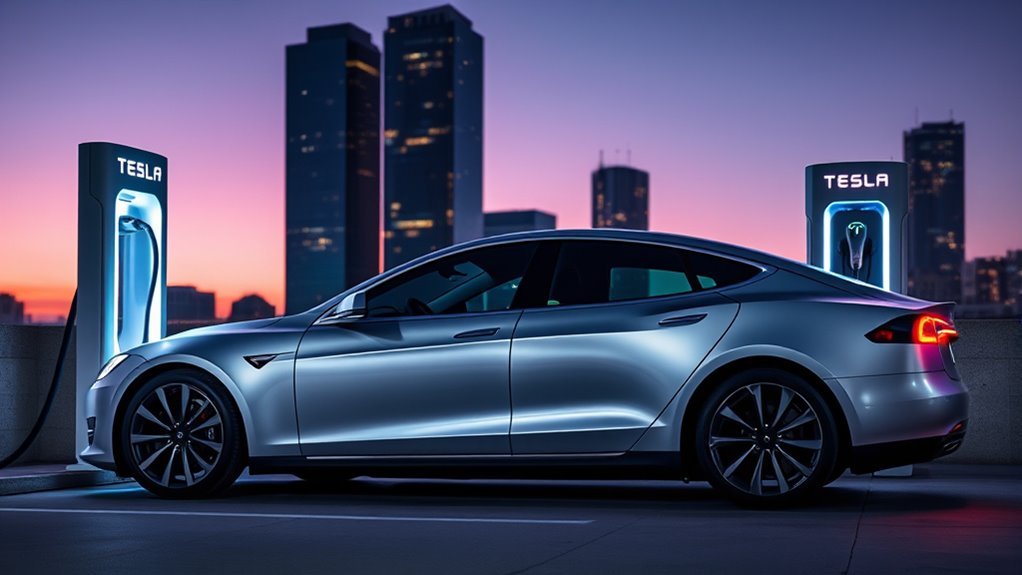
Charging your Tesla takes between 30 minutes and several days, depending on your charger type and starting battery level. Most owners rely on home charging for daily needs and Superchargers for long-distance travel. Mastering a few simple habits will keep your battery healthy and your wait times short.
Quick Answer
Home charging with a Level 2 wall connector typically takes 8 to 12 hours for a full charge, while Tesla Superchargers can add 150 to 200 miles of range in about 30 minutes. Use a standard Level 1 wall outlet only for emergency situations or if you drive very short distances daily, as it requires multiple days for a full charge.
Key Takeaways
- Level 1 chargers provide a slow charge, best for low daily mileage.
- Level 2 chargers fully recharge most Tesla models in 8 to 12 hours.
- Superchargers restore 150 to 200 miles of range in under 30 minutes.
- Wall Connectors offer the most reliable home charging speed.
- Charging to 80 or 90 percent preserves long-term battery health.
Understanding Tesla Charging Methods
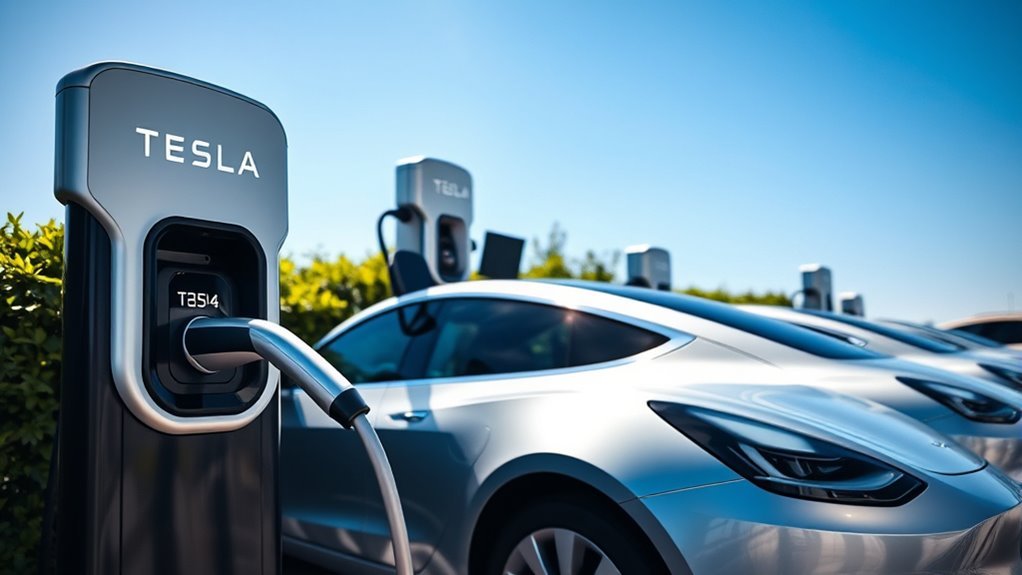
Tesla provides several charging solutions to fit different travel needs and home setups. You can choose from standard wall outlets, dedicated home charging stations, or the high-speed public Supercharger network.
Level 1 charging uses a standard 120-volt household outlet. It adds only a few miles of range per hour, making it the slowest option. Level 2 charging uses a 240-volt outlet or a hardwired Wall Connector to provide much faster speeds. This is the standard for home charging.
Superchargers serve as the primary option for long trips. These stations deliver high-voltage direct current to your battery, significantly reducing wait times on the road.
Selecting the right method depends on your daily commute and home infrastructure. Proper planning ensures you maintain enough range for your schedule.
Charging Times by Model
Each Tesla model features different battery capacities and charging limits. These factors dictate how long you spend connected to a charger.
Model 3 and Model Y variants reach an 80 percent charge in 15 to 20 minutes at a Supercharger. Model S and Model X vehicles generally take 30 to 40 minutes to reach the same level due to larger battery packs.
Understanding your specific vehicle limits helps you plan stops more effectively during long drives.
Model 3 Charging Times
The Tesla Model 3 offers high efficiency and rapid charging capabilities. It can achieve over 360 miles of range on a single full charge.
When you use a 250 kW Supercharger, you can charge from 20 to 80 percent in about 15 to 20 minutes. Home charging with a Level 2 Wall Connector typically completes a full charge in 8 to 12 hours.
Avoid using a standard Level 1 outlet if possible. This method can take several days to provide a full charge.
Model S Charging Times
The Model S is built for distance, and its battery management allows for quick recovery at high-speed stations.
At a 250 kW Supercharger, you can reach an 80 percent charge in 30 to 40 minutes. Using a home Wall Connector, you can expect 6 to 9 hours for an 80 percent charge. A full charge takes 12 to 20 hours depending on your specific electrical setup.
Level 1 charging provides only 2 to 3 miles of range per hour, which is impractical for daily use.
Model X Charging Times
The Tesla Model X balances size and utility with robust charging performance. It supports a maximum charging speed of 250 kW.
You can reach an 80 percent charge at a Supercharger in 30 to 40 minutes. At home, a Level 2 charger completes a full cycle in 12 to 20 hours. Using a 60-amp circuit can reduce that time, allowing you to reach 80 percent capacity in about 4 hours.
Standard household outlets remain insufficient for the Model X, often requiring multiple days to finish a full charge.
Supercharger Best Practices
Maximizing your time at a Supercharger keeps your road trip on schedule. Speed is highest when your battery is nearly empty.
Arrive at a station with a low state of charge, ideally around 10 percent. Charging speeds slow down significantly once you pass 80 percent, so unplugging then is the most efficient choice.
Use your Tesla navigation system to set the Supercharger as your destination. This triggers automatic battery preconditioning, which can improve your charging speed by up to 25 percent.
Practice good charging etiquette by unplugging when you reach your target charge. This allows other drivers access to the station.
Efficient Charging Habits
Consistency is key to maintaining battery health and ensuring your car is ready when you need it.
Charge at home overnight whenever possible. This adds 25 to 40 miles of range per hour and ensures you start your day with a full battery. Schedule charging to finish just before you leave, as this warms the battery for optimal performance.
For road trips, limit your Supercharger stops to reaching 80 or 90 percent. Frequent short stops are often faster than waiting for a full charge at every station.
Charging Costs
Electricity prices change based on where you live and your utility provider. Planning ahead can help you manage your driving budget.
| State | Model S Charging Cost |
|---|---|
| Washington | $6.60 |
| Virginia | Varies (rebates available) |
| California | Approx. $15.00 |
| Texas | Approx. $12.00 |
| Hawaii | $21.00+ |
Regional incentives, such as rebates from utility companies, can lower your costs. Always check your local utility website for special EV charging rates or off-peak programs.
Using Solar to Offset Costs
Installing home solar panels provides clean energy for your vehicle and reduces your reliance on the power grid. This setup can lower your energy bills for decades.
Most residential solar systems pay for themselves within 7 to 8 years. Once the system breaks even, the electricity used to charge your car becomes nearly free.
Benefits of Solar Installation
- Lower costs: You generate your own power instead of buying it.
- Long-term value: Systems last over 25 years, providing ongoing savings.
- Higher home value: Renewable energy upgrades often increase property resale prices.
- Sustainability: You reduce your carbon footprint by using renewable energy.
Emission-Free Charging
Charging with solar panels means your vehicle runs on renewable energy. This eliminates the carbon emissions associated with burning fossil fuels for electricity.
By producing power at home, you insulate yourself from rising utility rates. This long-term strategy supports both your budget and the environment.
Maximizing Battery Life
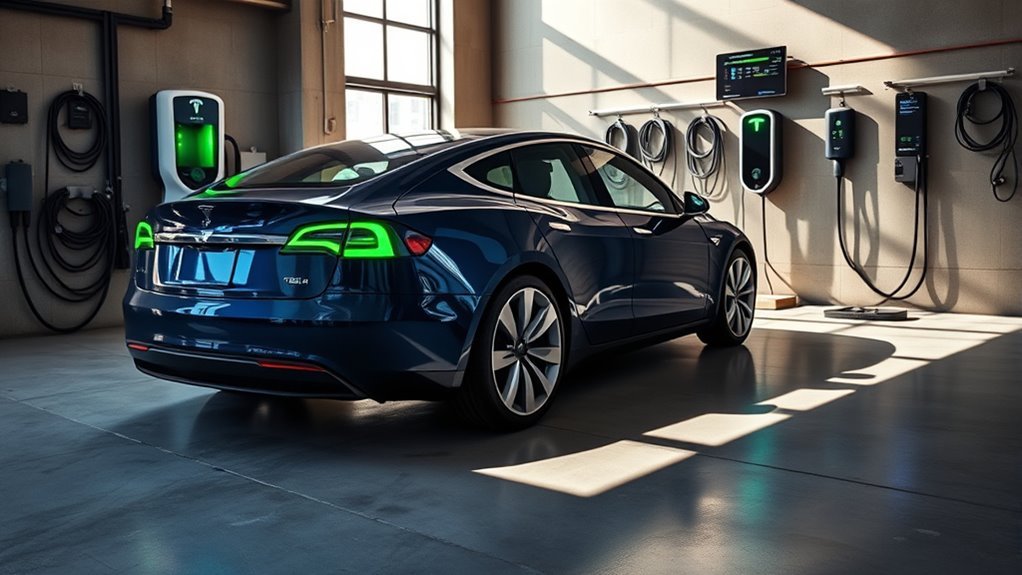
Treating your battery with care extends its lifespan and performance. Follow these best practices to ensure your Tesla remains efficient.
- Charge to 80-90 percent: Avoid charging to 100 percent for daily use, as high states of charge can accelerate battery wear.
- Avoid deep discharges: Keep your battery above 20 percent when possible to reduce stress on the cells.
- Precondition the battery: Use the mobile app to warm or cool the battery before your trip.
- Avoid extreme heat: Try to park in the shade during hot days to prevent the cooling system from working overtime.
Always consult your owner manual for specific guidance related to your vehicle model. Professional maintenance helps detect potential issues before they become expensive repairs.
Frequently Asked Questions
How long does it take to charge at a public station?
Public charging typically takes 15 to 40 minutes. The exact time depends on the charger output, your current battery percentage, and the station demand.
How far can a Tesla travel on a full charge?
Most Tesla models offer a range between 325 and 405 miles on a full charge. Real-world range depends on driving style, weather, and wheel size.
What happens if the battery dies?
The car will enter a reduced power mode as it nears zero. If the battery dies completely, you must arrange for a flatbed tow to the nearest charging station.
How much does Supercharging cost?
Costs vary by location and time of day. Most sessions range between $6 and $22, depending on how much energy your vehicle needs to reach your target.
Conclusion
Charging your Tesla is a routine task that becomes second nature with experience. By using home charging for daily needs and Superchargers for long trips, you maximize convenience and battery health. Stay mindful of your charging habits to save money and ensure your vehicle is ready for the road. Start by checking your local utility for off-peak rates to lower your costs further.







Leave a Reply