
If your Toyota Quantum won’t start, it could be due to a dead battery, faulty starter motor, or issues with the fuel and ignition systems. A clicking sound may indicate a weak battery, while grinding noises suggest starter motor problems. Check for clogged fuel filters or malfunctioning spark plugs that could disrupt fuel delivery and ignition. Regular maintenance can help prevent these issues. Want to know more about troubleshooting and repairs? There are additional tips available for you.
Common Signs Your Toyota Quantum Won’t Start

When your Toyota Quantum won’t start, it’s essential to identify the signs that indicate the underlying issue. A clicking sound when you turn the key often points to a dead battery, a common problem in these models.
If the engine cranks but doesn’t fire up, you might be facing fuel delivery issues, such as a clogged fuel filter or a failing fuel pump.
Additionally, illuminated warning lights on the dashboard, especially the engine light, can signify problems within the ignition system or other malfunctions.
Dimming headlights or the vehicle starting briefly before dying may indicate a faulty alternator, which fails to keep the battery charged.
Finally, if dashboard lights remain unresponsive when attempting to start, it could indicate electrical issues, like blown fuses or corroded battery terminals.
Identifying these signs will help you diagnose and resolve the issue effectively.
Understanding the Role of the Battery in Starting Issues
The battery is essential for powering your Toyota Quantum’s ignition system and dashboard electronics, supplying the voltage needed to start the engine.
If your battery’s voltage drops below 12.6 volts, you may start experiencing symptoms like dim lights or a clicking sound when trying to start.
Recognizing these signs early can help you address potential battery issues before they lead to a complete failure.
Battery Power Supply Importance
A reliable battery plays an essential role in your Toyota Quantum’s starting system. It supplies power to the ignition system and dashboard electronics, crucial for smooth operation.
A healthy battery typically reads around 12.6 volts, while a dead or weak battery can lead to frustrating starting issues.
To guarantee peak performance, keep these factors in mind:
- Regularly check for corrosion on battery terminals.
- Confirm secure connections to maintain effective power supply.
- Charge the battery as needed to avoid starting problems.
If you experience persistent issues despite a new battery, the alternator mightn’t be properly charging the battery.
Addressing these areas can keep your Quantum running smoothly and help you avoid unexpected breakdowns.
Signs of Battery Failure
Understanding the signs of battery failure is crucial for diagnosing starting issues in your Toyota Quantum. If you notice dim or unresponsive dashboard lights, it could indicate battery failure.
When you turn the key, if the engine cranks but doesn’t start, that’s another red flag. A distinct clicking sound when attempting to start the engine often points to a weak or dead battery.
Check the battery voltage; anything below 12.6 volts suggests you might need to replace the battery. Additionally, inspect the battery terminals for corrosion or loose connections, as these can disrupt power flow.
Regular maintenance, including voltage checks and terminal cleaning, is essential for dependable performance and to avoid unwanted starting failures.
How a Faulty Starter Motor Can Prevent Engine Start
A faulty starter motor can prevent your engine from starting, often resulting in symptoms like clicking sounds without cranking.
To diagnose the issue, mechanics typically check if the starter is receiving power using a multimeter.
If the starter motor is confirmed to be defective, replacing it’s essential for restoring engine functionality.
Symptoms of Starter Failure
How can you tell if your starter motor is failing? The starter motor is responsible for cranking your engine when you’re turning the key.
If your car still won’t start, pay attention to the following symptoms:
- You hear no sound or only a series of clicking noises when attempting to start.
- There are grinding noises, indicating the starter gear isn’t meshing properly with the flywheel.
- The starter cranks but the engine doesn’t start, suggesting gear issues rather than battery problems.
Recognizing these signs early can save you time and trouble.
If you experience any of these symptoms, it’s essential to have a professional diagnose the issue to confirm starter motor failure and discuss potential repairs.
Diagnosis and Replacement Steps
When dealing with a faulty starter motor, diagnosing the problem accurately is vital to restoring your vehicle’s functionality.
Begin by listening for clicking sounds when you attempt to start the engine, as this may indicate a malfunctioning starter motor. Use a multimeter to check if power is reaching the starter; a lack of power suggests an electrical issue.
If the starter engages but doesn’t turn the engine over, it’s likely faulty. A professional mechanic can provide a thorough diagnosis, inspecting electrical connections and components in the starting system.
If the starter motor is confirmed as the issue, replacement is necessary to guarantee your engine starts smoothly, allowing you to regain control of your vehicle’s performance.
Identifying Fuel System Issues in Your Toyota Quantum
Fuel system issues in your Toyota Quantum can lead to frustrating starting problems, often manifesting as a crank without a start. Identifying the root cause is essential to getting back on the road.
Start by checking these key components:
- Fuel pump: A malfunctioning pump can result in insufficient fuel pressure.
- Clogged fuel filter: If the filter is blocked, fuel can’t flow properly to the engine.
- Fuel gauge: Always guarantee there’s enough fuel in the tank; an empty tank can easily cause starting issues.
Look for symptoms such as engine stalling, rough idling, or even a noticeable fuel smell, which could indicate leaks or inefficiencies.
If you suspect fuel delivery issues, a professional inspection is recommended to test fuel pressure and check the injectors.
Addressing these concerns promptly can restore your Toyota Quantum’s reliability and performance.
How Ignition System Issues Cause Starting Problems
When your Toyota Quantum won’t start, ignition system issues might be to blame.
A faulty ignition switch can fail to send power to the starter motor, while malfunctioning spark plugs may not generate the necessary spark for ignition.
Additionally, key fob problems can disrupt the ignition circuit, preventing your vehicle from starting altogether.
Ignition Switch Failures
If you’re experiencing starting issues with your Toyota Quantum, the ignition switch might be the culprit. This critical component sends power from the battery to the starter motor when you turn the key or press the start button.
A faulty ignition switch can cause:
- No response when attempting to start
- Dashboard lights not illuminating
- Difficulty turning the key or using the key fob
When the ignition switch fails, it can prevent the engine from turning over, leading to intermittent starting issues.
Diagnosing the problem typically involves checking for continuity in the switch and ensuring it engages the starting circuit.
If determined defective, replacing the ignition switch is essential for restoring proper starting functionality to your vehicle.
Spark Plug Malfunctions
Though often overlooked, spark plug malfunctions can greatly hinder your Toyota Quantum’s ability to start.
Spark plugs play an important role in igniting the air-fuel mixture in the engine. When they’re worn out or fouled, you might experience starting issues, misfires, and reduced fuel efficiency.
A malfunctioning ignition coil can also prevent the spark plugs from receiving the necessary voltage, leading to weak or nonexistent sparks. Additionally, a faulty crankshaft position sensor can disrupt spark timing, causing the engine to stall.
Regular maintenance of your spark plugs is essential; checking for wear and ensuring proper gap settings can markedly enhance engine performance and prevent those frustrating starting problems linked to malfunctioning fuel delivery.
Key Fob Issues
Key fob issues can greatly impact your Toyota Quantum‘s ability to start, often leading to frustrating scenarios where the vehicle fails to recognize the key.
If you’re facing this problem, consider the following steps:
- Replace the key fob battery to guarantee it has adequate power.
- Hold the key fob close to the start button while attempting to start the engine, which may help with recognition.
- If issues persist, check for damage or consider reprogramming or replacing the fob.
Making sure your key fob functions correctly is essential for reliable vehicle access and ignition.
Resolving these key fob issues can liberate you from the stress of unexpected starting problems, allowing you to hit the road with confidence.
Diagnosing Electrical Issues That Affect Starting
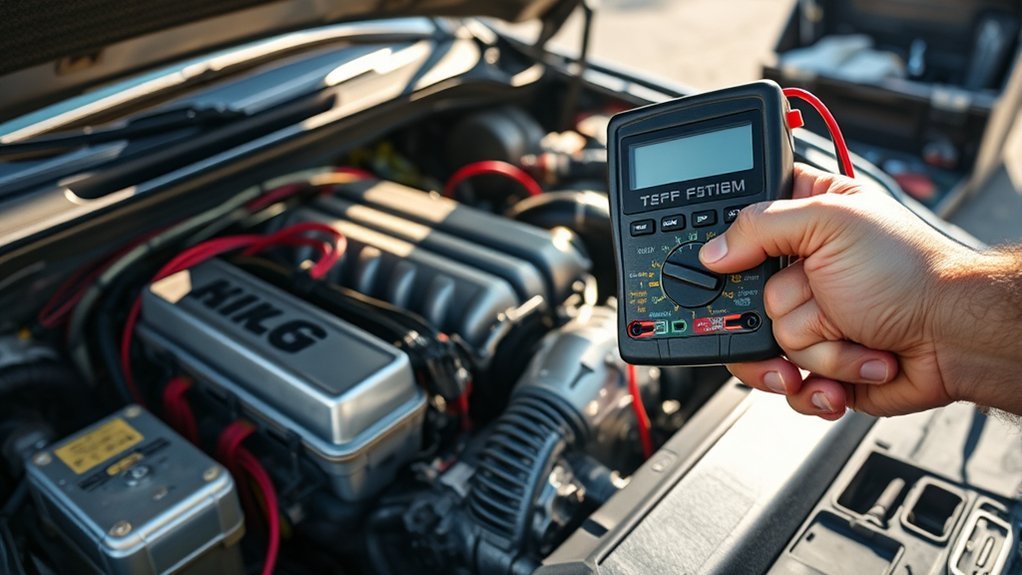
When diagnosing electrical issues that prevent your Toyota Quantum from starting, it’s crucial to systematically assess potential problem areas. Start with the battery; check for corrosion on terminals that can impede electric flow. Next, inspect fuses, as blown ones can disrupt power to the ignition system and dashboard lights. Additionally, faulty wiring or grounding issues may prevent signals from reaching the crankshaft position sensor, vital for ignition.
| Problem Area | Symptoms | Possible Solutions |
|---|---|---|
| Battery Connection | No power, dim lights | Clean terminals, replace battery |
| Blown Fuses | Dashboard lights off | Replace blown fuses |
| Faulty Wiring | Intermittent starting issues | Inspect and repair wiring |
| Grounding Issues | Engine cranks but won’t start | Check ground connections |
Conduct thorough diagnostic tests using a multimeter to check voltage levels and inspect wiring for damage to promote a smooth starting process.
How to Spot High-Voltage Battery Problems in Hybrids?
How can you tell if your hybrid’s high-voltage battery is on the fritz? Recognizing the signs early can save you from costly repairs. Here are some common indicators:
- Warning messages like “Check Hybrid System” appear on the dashboard.
- The vehicle struggles to enter “Ready” mode, indicating a potential battery issue.
- You notice reduced electric range and abnormal engine performance during drives.
To diagnose high-voltage battery problems, professionals use specialized diagnostic tools that assess battery health and capacity.
If tests confirm a failing high-voltage battery, replacement may be necessary to avoid further damage to your hybrid system.
Regular monitoring and maintenance of your battery’s performance can help you avoid these issues and extend your vehicle’s lifespan.
Being proactive empowers you to maintain your hybrid’s efficiency and reliability, ensuring a smoother driving experience.
How Regular Maintenance of Your Toyota Quantum Can Prevent Starting Issues
To keep your Toyota Quantum starting reliably, regular maintenance is vital. By adhering to a structured maintenance schedule, you can mitigate starting issues effectively.
| Maintenance Task | Importance | Frequency |
|---|---|---|
| Oil Changes | Guarantees peak engine performance | Every 5,000 miles |
| Air Filter Replacement | Maintains airflow, preventing stalling | Every 15,000 miles |
| Battery Inspection | Prevents electrical issues from corrosion | Every 6 months |
| Fuel System Check | Maintains fuel pressure for reliable starts | Annually |
Be certain to inspect and replace air filters when needed, as restricted airflow can hinder engine performance. Additionally, keeping the fuel system clean is vital; replacing fuel filters guarantees adequate fuel supply. Regular diagnostics of the engine control module and ignition system components will help identify issues before they lead to starting failures.
Troubleshooting Tips for Non-Starting Vehicles
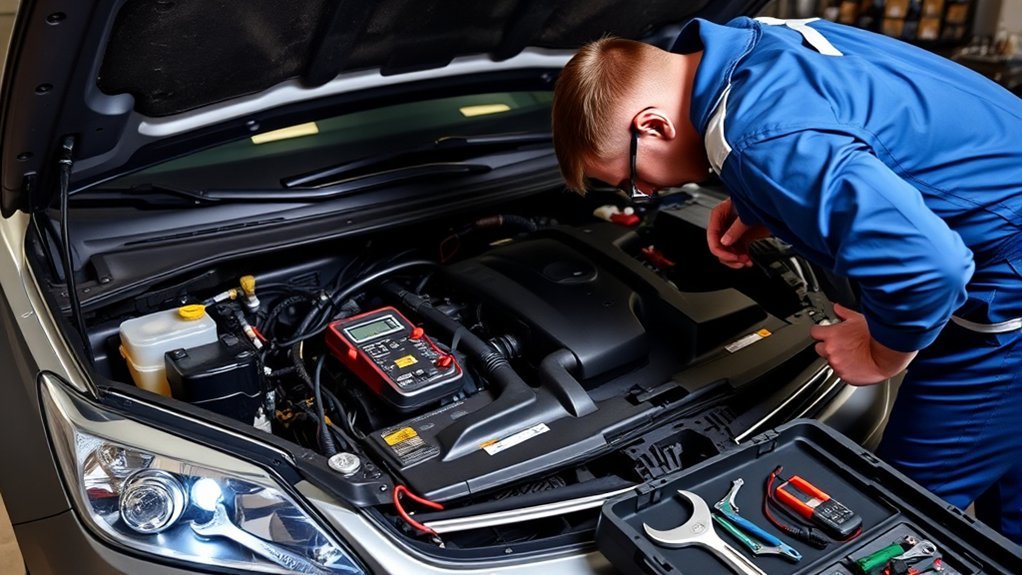
Regular maintenance helps prevent starting issues, but sometimes your Toyota Quantum may still refuse to start. To troubleshoot effectively, follow these steps:
Regular maintenance is key, but if your Toyota Quantum won’t start, effective troubleshooting is essential.
- Check the battery: Inspect the charge and connections; a weak or dead battery can halt the engine.
- Check the fuel: Verify there’s fuel in the tank and examine the fuel pump and filter for blockages that may impede delivery.
- Inspect the ignition system: Test components like the ignition switch and spark plugs, as they play a vital role in engine firing.
Additionally, monitor your dashboard for any warning lights. These indicators can reveal underlying issues, such as sensor failures or electrical problems.
If you have diagnostic tools available, utilize them to read error codes, which can help pinpoint specific problems, enabling a more targeted approach to repairs. This proactive strategy can save you time and frustration.
When to Seek Professional Help for Your Toyota Quantum?
When should you consider seeking professional help for your Toyota Quantum? If your vehicle has repeated starting issues despite your troubleshooting efforts, it’s time to consult a mechanic.
Symptoms like grinding noises, clicking sounds, or a complete lack of response when you turn the ignition signal potential faults in the starter motor or ignition system.
If the engine cranks but fails to start, and you’ve confirmed battery and fuel are fine, professional assistance is vital to identify any ignition system or sensor malfunctions.
Additionally, if dashboard warning lights illuminate during startup attempts, a professional diagnostic is necessary to uncover underlying computer or electrical problems.
Lastly, if fuel delivery issues arise, such as a clogged fuel filter or a failing fuel pump, seeking expert help guarantees that repairs are safe and effective.
Don’t hesitate to reach out; proactive measures can save you time and money.
Frequently Asked Questions
Why Does My Toyota Have Power but Won’t Start?
Your Toyota may have power but won’t start due to battery issues, ignition problems, or fuel delivery failures. Check connections, test the ignition system, and inspect the fuel components for a proper diagnosis and resolution.
What Is the Most Common Reason a Car Will Not Start?
When your car won’t start, it’s often due to battery issues, fuel delivery problems, or ignition malfunctions. Check the battery first, then explore fuel levels and ignition components for a potential fix.
What Is the Biggest Cause of Starter Motor Failure on Toyota?
The biggest cause of starter motor failure in Toyotas is battery connections. Poor connections can lead to starter relay issues, preventing adequate power flow and ultimately causing different starter motor types to malfunction.
Why Is Nothing Happening When I Turn the Key in My Car?
When nothing happens as you turn the key, check for battery issues, faulty ignition system components, or poor electrical connections. Any of these can disrupt power flow, preventing your engine from starting effectively.
Conclusion
Ultimately, understanding why your Toyota Quantum won’t start can save you time, money, and frustration. You might find it ironic that something as simple as a weak battery or a faulty starter can lead to such inconvenience. Regular maintenance can help you avoid these issues, ensuring your vehicle’s reliability. But if problems persist, don’t hesitate to seek professional help. You deserve a dependable ride, so keep your Quantum running smoothly and enjoy the journey ahead.







Leave a Reply