
If your Toyota Tazz is smoking, it usually indicates a serious issue like a blown head gasket or burning oil. Look for white smoke, which suggests coolant is entering the combustion chamber. Blue smoke points to oil burning due to worn valve seals. You should act quickly to avoid costly repairs. Regular maintenance, like oil changes and checking the PCV valve, can help prevent these issues. Keep going to discover more about diagnosing and fixing smoke problems effectively.
Identifying Common Causes of White Smoke in Your Toyota Tazz
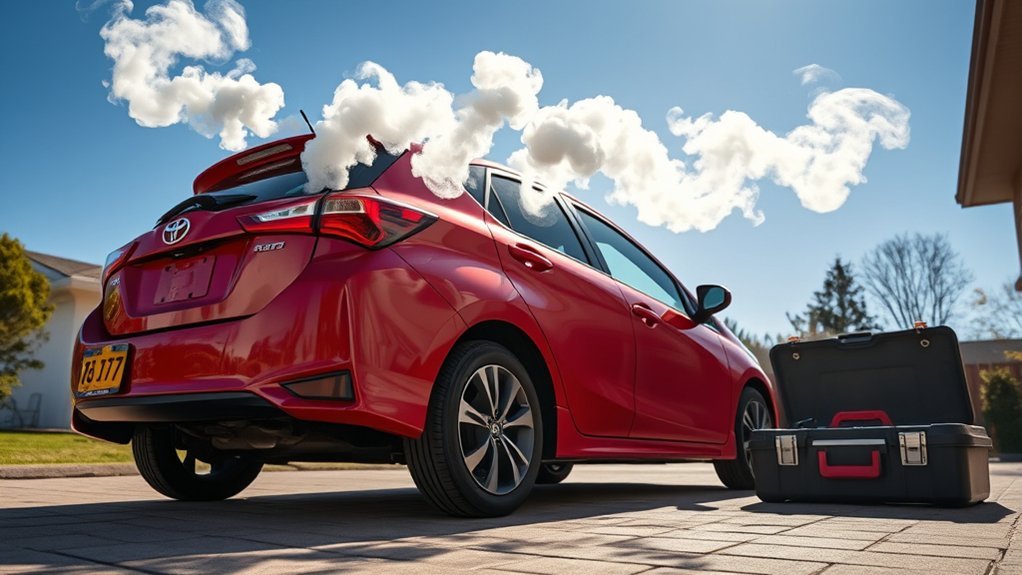
White smoke billowing from your Toyota Tazz can signal serious engine trouble, and it’s vital to identify the cause promptly. One common culprit is coolant entering the combustion chamber, often due to a blown head gasket.
White smoke from your Toyota Tazz often indicates engine issues, such as coolant leaks from a blown head gasket.
You should also consider damaged piston rings or worn valve seals, which allow oil to leak into the combustion area, contributing to that white smoke.
Inspect the intake manifold for signs of oil contamination; this can reveal issues related to a blown head gasket. Additionally, clogged PCV valves may lead to increased crankcase pressure, causing oil to be drawn into the engine.
Regular maintenance is important—check coolant levels and inspect engine components to prevent these problems. By staying proactive, you can maintain your Tazz’s performance and avoid the frustrations of persistent white smoke.
How to Diagnose a Blown Head Gasket
To diagnose a blown head gasket in your Toyota Tazz, start by identifying key symptoms like engine overheating and creamy oil.
You can perform diagnostic tests, such as checking for bubbles in the radiator or conducting a compression test, to confirm your suspicions.
Once diagnosed, you’ll have several repair options to contemplate, depending on the severity of the damage.
Symptoms of Blown Head Gasket
When diagnosing a blown head gasket, recognizing the symptoms early can save you from extensive engine damage.
Look out for white smoke from the exhaust, which indicates coolant burning in the combustion chamber. You might also experience engine overheating and a loss of coolant without visible leaks.
Oil contamination can present as a milky appearance, signaling serious issues. A compression test can reveal low compression in certain cylinders, further confirming a blown head gasket.
Additionally, watch for bubbles in the radiator or coolant overflow tank, and note any unusual increase in exhaust smoke during acceleration.
If you suspect a blown head gasket, seek professional inspection promptly to prevent further engine damage and costly repairs.
Diagnostic Testing Techniques
Diagnosing a blown head gasket requires systematic testing techniques to identify the underlying issues effectively.
Start with a compression test to check for uneven cylinder pressures, which can indicate leaks.
Next, inspect the oil for a creamy or milky appearance, signaling coolant mixing with oil—a clear sign of head gasket failure.
Conduct a coolant pressure test to identify any leaks within the cooling system, often associated with a blown head gasket.
Use a chemical test or block tester to detect combustion gases in the coolant, confirming your suspicions.
Finally, observe for white exhaust smoke during engine operation; this suggests coolant is entering the combustion chamber, reinforcing the diagnosis of a blown head gasket.
Repair Options Available
Identifying the best repair options for a blown head gasket requires understanding the damage and its implications.
First, check for signs of coolant in the oil, which typically looks milky. Low coolant levels without visible leaks often indicate a leak into the combustion chamber, leading to smoking from the exhaust.
Conduct a compression test to assess cylinder pressure; uneven results suggest a compromised gasket. Inspecting the spark plugs for oil fouling or corrosion can also provide clues if they’re damaged.
For confirmation, professional mechanics may perform a diagnostic test using a chemical test to detect exhaust gases in the coolant.
Once diagnosed, repair options range from gasket replacement to, in severe cases, engine rebuilds.
Identifying Symptoms of Issues Causing Excessive Smoke
Excessive smoke from your Toyota Tazz can signal various underlying issues that need immediate attention. Identifying the color of the smoke can help you pinpoint the problem.
| Smoke Color | Possible Cause |
|---|---|
| Excessive White | Blown head gasket or moisture in exhaust |
| Blue | Oil burning due to worn valve seals |
| Black | Rich fuel mixture from clogged air filter |
| Light White | Condensation during cold starts |
| Dark Black | Malfunctioning fuel injectors |
If you notice excessive white smoke, it often indicates coolant entering the combustion chamber. Conversely, blue smoke suggests oil burning, typically linked to worn valve seals. Black smoke signals a rich fuel mixture, possibly caused by a clogged air filter. Keep an eye on engine performance, as reduced power or increased fuel consumption can reveal deeper underlying engine issues that require immediate action.
Step-by-Step Guide to Diagnosing White Smoke Issues
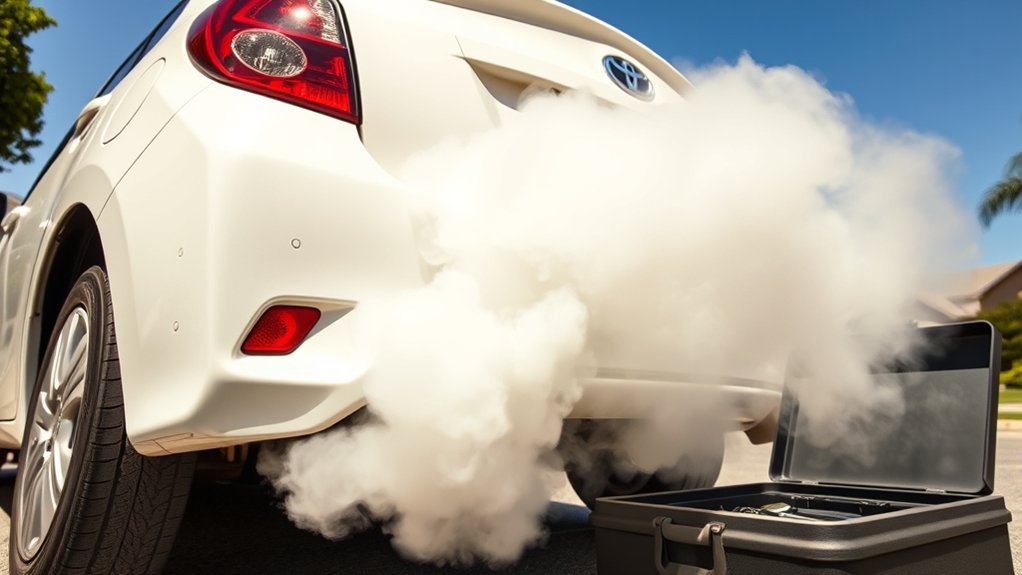
If you’re seeing white smoke from your Toyota Tazz, it’s vital to identify the symptoms and pinpoint the issue.
Start with key diagnostic tests like checking oil contamination and conducting a compression test.
Once you’ve assessed the situation, follow essential repair steps to address the root cause effectively.
Common Symptoms To Observe
Detecting the cause of white smoke from your Toyota Tazz engine is essential for maintaining ideal performance.
Start by observing the smoke color; white smoke usually means coolant is burning in the combustion chamber, hinting at a blown head gasket or coolant leak.
Check for oil contamination in the intake manifold, which signals potential head gasket failure.
Monitor engine performance for symptoms like reduced power or acceleration, as these may correlate with excessive smoke production.
Conduct a compression test to assess piston rings and valve seals since worn components can contribute to white smoke.
Regularly inspect coolant levels and look for leaks around hoses and the radiator to prevent overheating and further smoke from the exhaust.
Key Diagnostic Tests
To effectively diagnose white smoke issues in your Toyota Tazz, start with a thorough inspection of the spark plugs. Look for signs of oil fouling, which could mean oil’s entering the combustion chamber due to worn valve seals or damaged piston rings.
Next, conduct a compression test to evaluate the piston rings’ condition; low compression may indicate internal engine wear.
Follow these steps:
- Check the PCV valve for clogs or malfunctions that could increase crankcase pressure.
- Monitor oil levels and inspect for leaks around seals, as significant drops may point to excessive oil burning.
- Assess overall engine performance, noting any unusual noises, power drops, or acceleration changes that could indicate deeper issues.
Essential Repair Steps
After completing key diagnostic tests, it’s time to implement the necessary repair steps for white smoke issues in your Toyota Tazz.
Start by checking the oil levels in the intake manifold for signs of contamination, which may indicate a blown head gasket. Next, perform a compression test to assess the piston rings and identify any leaks.
Inspect the PCV valve for clogs, as these can increase crankcase pressure and cause excessive smoke. Don’t forget to assess the radiator and hoses for damage or leaks that could lead to overheating and coolant entering the combustion chamber.
If you’re unsure, consult a professional mechanic for a thorough diagnosis to ascertain all underlying issues are accurately resolved.
When to Consult a Mechanic for Your Toyota Tazz?
When should you consult a mechanic for your Toyota Tazz? It’s essential to seek professional help if you notice any troubling signs. Here are key indicators:
- White Smoke: If you see excessive smoke from the exhaust, it may indicate coolant entering the combustion chamber, often due to a blown head gasket.
- Engine Overheating: A sudden rise in engine temperature, especially with unusual noises, requires immediate professional assessment to avoid severe engine damage.
- Reduced Power: If your vehicle experiences poor performance or acceleration alongside excessive smoke, it’s time to consult a mechanic for an accurate diagnosis.
Regular maintenance checks are important in catching these issues early.
If you can’t pinpoint the smoke’s source or suspect serious engine problems, don’t hesitate to request a thorough inspection.
Timely intervention can save you from costly repairs and keep your Toyota Tazz running smoothly.
Maintenance Tips to Prevent Smoke Issues
Maintaining your Toyota Tazz is essential for preventing smoke issues and guaranteeing peak engine performance. Regular oil changes every 3,000 to 5,000 miles are critical to maintain engine health, preventing oil contamination that could lead to excessive smoke.
Don’t overlook the PCV valve; replace it every 30,000 miles to avoid clogging and minimize oil leaks into the combustion chamber. During routine maintenance, inspect valve seals and piston rings to catch potential issues early, helping you avoid costly repairs related to smoke problems.
Address any visible oil leaks promptly to keep oil levels stable and reduce the risk of burning oil, which can cause blue smoke.
Finally, keeping engine components clean and free of debris is essential for maximum performance and can help prevent overheating, a significant contributor to smoke production.
Prioritize these maintenance tasks to guarantee a smoke-free driving experience.
User Experiences: Solutions From Toyota Tazz Owners

Many Toyota Tazz owners have encountered smoke issues that prompted them to share their experiences and solutions.
If you’re facing white smoke, it often signals a blown head gasket. Here are some effective strategies from the community:
- Inspect Radiator Hoses: Damaged hoses can lead to coolant leaks, a common cause of white smoke. Replacing them can alleviate the issue.
- Conduct Regular Maintenance: Consistent oil changes and PCV valve replacements enhance engine health and minimize excessive smoke.
- Perform a Compression Test: This helps evaluate piston ring condition. If you detect blue smoke, it may indicate oil burning, which requires immediate attention.
Frequently Asked Questions
What Causes a Toyota Tazz to Smoke?
A Toyota Tazz can smoke due to coolant leaks, worn seals, or failing piston rings. It may also signal turbocharger issues or an improper fuel mixture, indicating potential problems within the exhaust system or overheating engine.
How Do I Fix My Car From Smoking?
Think of your car as a symphony; tune it right. To fix smoking, check engine oil, inspect coolant leaks, evaluate piston rings, valve seals, and fuel mixture—then tackle turbocharger issues with smart maintenance tips to minimize repair costs.
Is It Okay to Drive Your Car if It’s Smoking From the Exhaust?
It’s not okay to drive if your car’s smoking from the exhaust. Different smoke types indicate issues like oil leaks or overheating, risking engine damage. Prioritize vehicle maintenance and seek professional smoke diagnosis for driving safety.
What Color Smoke Is a Bad Injector?
A bad injector often causes black smoke, indicating fuel system problems. You might also see blue or white smoke. Knowing these common smoke colors helps diagnose injector failure symptoms and maintain peak engine performance.
Conclusion
To sum up, if your Toyota Tazz is smoking, it’s vital to identify the cause quickly to prevent further damage. Notably, nearly 70% of engine failures are linked to overheating, often due to a blown head gasket or coolant leaks. Regular maintenance and timely diagnosis can save you from costly repairs. If you notice persistent white smoke, don’t hesitate to consult a mechanic to guarantee your Tazz runs smoothly and efficiently for years to come.






Leave a Reply