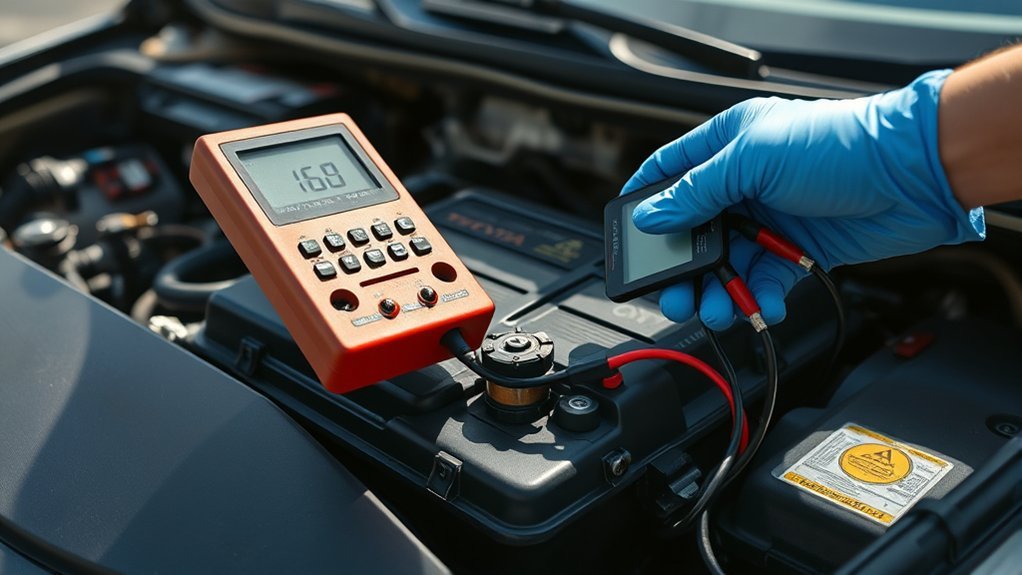
Is your Toyota Corolla taking longer than usual to start? The problem could be a weak battery, poor electrical connection, fuel delivery fault, worn spark plugs, or an engine sensor that is sending incorrect information. The key is to identify exactly what happens when you try to start the car before replacing any parts.
Whether your Corolla struggles after sitting overnight, refuses to restart when hot, or starts and immediately stalls, this guide will help you narrow down the cause and understand which checks you can safely perform yourself.
Quick Answer
Toyota Corolla hard starting can result from a weak battery, faulty starter, inadequate fuel delivery, ignition problems, or incorrect engine sensor readings. Start by checking whether the engine cranks normally. Then inspect the battery and connections, read diagnostic trouble codes, and test the relevant system before replacing components.
Key Takeaways
- A slow-cranking Corolla needs a different diagnosis from one that cranks normally but will not start.
- Battery condition, terminal connections, and starter operation should be checked before replacing fuel-system components.
- Fuel pressure and spark-plug maintenance specifications vary by model year and engine.
- Diagnostic codes help identify the affected system but do not automatically prove that a particular part has failed.
- Stop troubleshooting if you discover a fuel leak, severe overheating, damaged electrical wiring, or another immediate safety hazard.
At a Glance
| Time Required | 15–30 minutes for preliminary checks; longer for professional diagnosis. |
| Difficulty | Beginner for visual checks; intermediate to advanced for electrical and fuel-system testing. |
| Tools Needed | Flashlight, digital multimeter, OBD-II scanner, and suitable safety equipment. Specialized tools may be needed for further testing. |
| Cost | Visual checks may cost nothing. Tool purchases, diagnostic labor, and repairs vary by vehicle and location. |
Warning: Perform checks outdoors or in a properly ventilated work area. Keep hands, clothing, and tools away from moving engine components. Do not open pressurized fuel lines or a hot cooling system. If you smell gasoline, see leaking fuel, or notice smoke, stop immediately and arrange professional assistance.
Signs of Hard Starting in Your Toyota Corolla
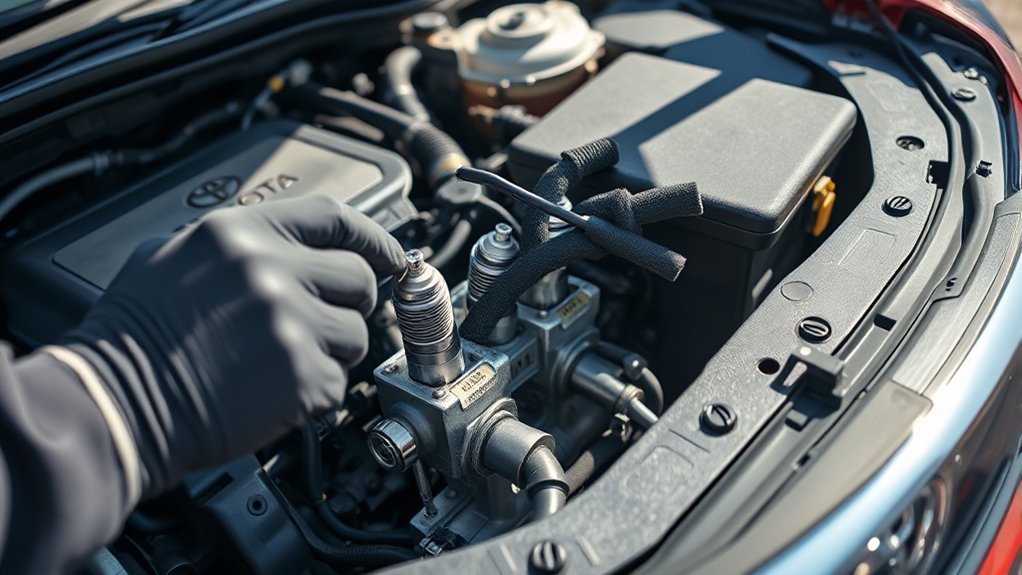
Hard starting means your Corolla requires more effort or time than normal to start. It may happen every morning, only when the engine is hot, or after the vehicle has been parked for several hours.
Common warning signs include:
- Prolonged cranking: The engine turns over for several seconds before starting.
- Slow cranking: The starter turns the engine more slowly than usual.
- Repeated starting attempts: The engine fails to start on the first attempt but starts later.
- Hot-start difficulty: The engine starts normally when cold but struggles after a short stop.
- Cold-start difficulty: Starting problems are more noticeable after the vehicle sits overnight.
- Starting and stalling: The engine starts briefly but cannot maintain normal operation.
- Rough idle or hesitation: The engine runs unevenly after starting.
- Check engine light: The engine computer detects a problem that may be related to the starting complaint.
Pay attention to whether the engine turns over at its normal speed. That observation can save you from replacing parts that have nothing to do with the actual fault.
Identify What Happens When You Try to Start
| Symptom | Possible Causes | First Check |
|---|---|---|
| No crank | Battery, starter circuit, immobilizer, or starting interlock | Battery, dashboard messages, and correct starting procedure |
| Slow crank | Weak battery, poor connection, starter, or excessive mechanical resistance | Battery and cable connections |
| Normal crank but no start | Fuel, ignition, sensor, immobilizer, or mechanical fault | Fuel level, warning lights, and stored codes |
| Long crank after parking | Fuel-pressure loss, leaking injector, or incorrect sensor reading | Record how long the vehicle sat and whether the engine was hot or cold |
| Starts then stalls | Airflow, fuel delivery, throttle, sensor, or other engine-control fault | Scan for codes and inspect the intake system |
A Note About Corolla Hybrid Models
A Corolla Hybrid does not always start its gasoline engine immediately when you press the power button. The hybrid system may be operating normally even when the gasoline engine is silent.
Check whether the READY indicator illuminates. When READY is displayed, the hybrid system is prepared to operate, even if the gasoline engine is not running.
If READY does not appear, follow the hybrid-specific starting and warning-message instructions in your owner’s manual.
Do not attempt to diagnose or service orange high-voltage cables or hybrid battery components yourself.
Common Causes of Hard Starting in Your Corolla
Several systems must work together for your Corolla to start. The battery must supply enough electrical power, the engine must receive the correct air-fuel mixture, and ignition and engine-control systems must operate at the right time.
The symptoms and test results—not the age of the vehicle alone—should guide your diagnosis.
Fuel Delivery Issues
Insufficient fuel delivery can cause prolonged cranking, hesitation, loss of power, or a crank-no-start condition.
Potential causes include:
- Failing fuel pump: The pump may not supply adequate fuel under certain operating conditions.
- Fuel-pressure loss after shutdown: A check-valve problem, leaking injector, or another system fault may allow pressure to fall.
- Restricted fuel filter or strainer: A restriction may reduce fuel delivery.
- Faulty fuel-pressure regulation: The system may not maintain its required operating pressure.
- Leaking or restricted injectors: The cylinders may receive too much or too little fuel.
- Electrical fault: A fuse, relay, wiring problem, or control issue may prevent proper pump operation.
Not every Corolla uses the same fuel-pump, filter, or pressure-regulation arrangement. Confirm the system fitted to your model before attempting repairs.
Ignition System Failures
The ignition system must create a properly timed spark to ignite the air-fuel mixture.
Worn spark plugs, faulty ignition coils, damaged connectors, or wiring problems can produce weak or inconsistent ignition.
Typical symptoms include:
- Rough running immediately after startup.
- Misfires under acceleration.
- Longer-than-normal cranking.
- A flashing or steady check engine light.
- Starting difficulty that changes with engine temperature.
Older Corolla generations may use different ignition arrangements from newer models. Some designs have separate ignition-control components, while others integrate ignition functions into the coils and engine-control electronics.
Use the appropriate diagnostic procedure rather than assuming every Corolla has the same components.
Temperature-Related Problems
Some faults become more noticeable when the engine is hot or cold.
For example:
- A weak battery may struggle more in cold weather.
- An ignition coil may develop intermittent problems when hot.
- A faulty engine coolant temperature sensor may cause incorrect fueling.
- Fuel-pressure problems may become more noticeable after a hot shutdown.
- An intake air leak may affect the mixture differently as the engine temperature changes.
- A crankshaft or camshaft position sensor may fail intermittently.
A hot-start problem is not automatic proof of a failing fuel pump. Recording the conditions and checking for stored fault codes is more useful than replacing parts based on temperature alone.
Battery, Starter, and Electrical Problems
A weak battery, corroded terminal, damaged ground cable, or worn starter motor can prevent the engine from cranking at the required speed.
If the dashboard lights dim significantly during a starting attempt, begin with the battery and electrical connections.
If the starter does not operate at all, also consider the starting interlock, immobilizer, starter-control circuit, and relevant switches.
Sensor and Engine-Control Problems
The engine computer depends on information from several sensors to calculate fuel delivery and ignition timing.
A faulty crankshaft position sensor, camshaft position sensor, coolant temperature sensor, or airflow sensor may contribute to starting problems.
These faults should be diagnosed using stored codes and relevant live sensor data. A code identifies an affected circuit or operating condition, not necessarily the component that must be replaced.
How to Diagnose Fuel System Issues
If your Corolla cranks normally but struggles to start, fuel delivery is one of the systems worth investigating.
Start with simple observations before moving to specialized testing.
Inspect Fuel Pressure Gauge
A fuel-pressure test can help determine whether the fuel system is supplying the pressure required by the engine.
However, there is no single fuel-pressure specification that applies to every Corolla.
The correct testing method depends on the model year, engine, and fuel-injection system. Some newer engines use direct injection and have separate low-pressure and high-pressure fuel circuits.
A qualified technician should:
- Identify the exact engine and fuel-system configuration.
- Obtain the applicable Toyota repair specifications.
- Use approved equipment and the specified pressure-test procedure.
- Compare measured pressure with the manufacturer’s operating range.
- Check pressure behavior during starting, running, and shutdown when required by the diagnostic procedure.
Warning: Do not loosen fuel lines or connect an unsuitable gauge to a pressurized fuel system. High-pressure fuel can cause serious injury. Direct-injection components require the correct service procedure and specialized equipment.
A low reading does not automatically mean that the pump is defective. Electrical supply, pressure regulation, restrictions, and fuel-system control must also be evaluated.
Check Fuel Pump Operation
A fuel pump that does not operate correctly may cause prolonged cranking or prevent the engine from starting.
You may hear a brief humming sound near the fuel tank during certain operating conditions. However, pump activation behavior varies, and an inaudible pump is not proof of failure.
A proper diagnosis includes:
- Checking the relevant fuse and control circuit.
- Inspecting accessible wiring and connectors.
- Checking pump power and ground using the specified procedure.
- Measuring fuel pressure or reviewing applicable system data.
- Investigating pressure loss after shutdown when symptoms support that test.
If pressure drops too quickly after shutdown, possible causes include a leaking injector, pump check-valve problem, or another pressure-retention fault.
The test must identify which component is responsible before replacement.
Evaluate Fuel Filter Condition
A restricted fuel filter or pump strainer can reduce fuel flow and contribute to starting and performance problems.
However, fuel-filter design varies across Corolla generations. Some vehicles use an in-tank filter arrangement that is not treated as a routine external service item.
The 2025 U.S. Corolla maintenance guide does not specify a universal 30,000-mile fuel-filter replacement interval.
For the correct service requirements, consult the Toyota Corolla maintenance guide or the guide for your exact model year.
If a restriction is suspected, a technician should use fuel-system test results to confirm it rather than replacing the filter solely because of mileage.
Importance of Spark Plugs and Ignition Components
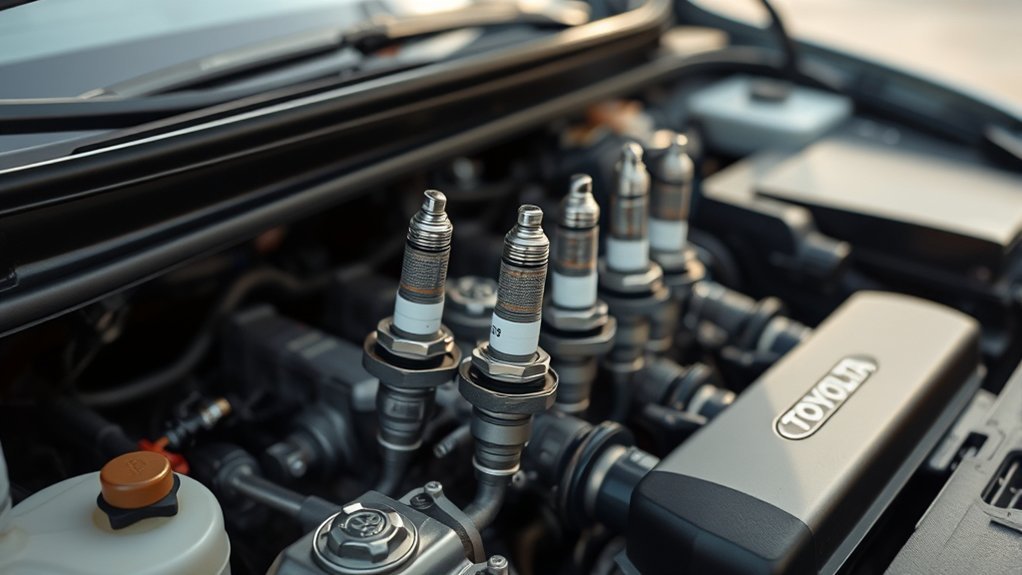
Spark plugs ignite the air-fuel mixture inside the engine. When they become worn, contaminated, or damaged, combustion may become less reliable.
Ignition coils supply the high voltage needed to produce that spark.
Faulty plugs or coils may cause:
- Difficulty starting.
- Rough idle.
- Engine misfires.
- Hesitation during acceleration.
- Reduced engine performance.
Inspect ignition components when the symptoms or diagnostic codes point toward an ignition problem.
Look for damaged connectors, moisture, oil contamination around the plug wells, and other visible defects.
Use the manufacturer-specified spark plugs and follow the replacement interval in your vehicle’s maintenance guide.
For example, the U.S. 2025 Corolla maintenance chart lists spark-plug replacement at 120,000 miles. This does not establish the interval for every older Corolla or every market.
Use the correct part specification rather than assuming all Corolla engines accept the same plug.
Pro Tip: If your Corolla runs roughly and the scanner identifies a misfire on one cylinder, investigate that cylinder’s spark plug, ignition coil, injector, wiring, and mechanical condition before replacing every ignition component.
Understanding Your Fuel Pump and Filter
The fuel pump moves gasoline from the tank toward the engine. The filter or strainer helps prevent contaminants from reaching sensitive fuel-system components.
Both can affect starting reliability, but their design and service requirements depend on the vehicle.
A failing pump may cause:
- Extended cranking.
- Intermittent no-start conditions.
- Hesitation or loss of power.
- Engine stalling.
- Unusual pump noise in some cases.
A clogged filter or strainer may produce similar symptoms, especially when the engine requires more fuel.
Because these symptoms overlap with ignition and electrical faults, they cannot identify the failed component on their own.
Why Does a Corolla Take Longer to Start After Sitting?
If your Corolla starts normally after it has been running but takes longer after several hours of parking, fuel-pressure retention is one possible area to investigate.
Fuel pressure may fall because of a leaking injector, a check-valve problem, or another fault within the system.
A technician can compare pressure during operation with pressure after shutdown using the correct Toyota procedure.
However, fuel-pressure loss is not the only explanation. Battery weakness, incorrect temperature-sensor readings, and other engine-control faults may create similar symptoms.
Record whether the problem occurs after an overnight stop, a brief hot restart, or both.
Inspecting and Replacing the Intake Manifold Gasket
An intake manifold gasket helps seal the connection between the intake manifold and the engine.
If the seal fails, unwanted air may enter the intake system. This can upset the air-fuel mixture and contribute to hard starting, rough idle, and lean-running conditions.
However, a gasket should not be replaced simply because the engine is difficult to start. The leak must first be confirmed.
Symptoms of Gasket Failure
Possible symptoms of an intake manifold air leak include:
- Rough or unstable idle.
- Hard starting, particularly under certain temperature conditions.
- Hesitation during acceleration.
- Positive fuel-trim corrections as the engine computer responds to a lean mixture.
- A lean-system diagnostic code such as P0171.
These symptoms can also result from other intake, fuel, or sensor problems.
A lean-system code does not automatically confirm a failed intake manifold gasket.
Likewise, do not assume that an intake gasket air leak explains a coolant leak or an overheating engine. Cooling-system problems require their own diagnosis.
Inspection Process Overview
A structured inspection can help confirm whether the intake manifold gasket is leaking.
| Step | Action | Purpose |
|---|---|---|
| Visual inspection | Check accessible intake hoses, connections, and gasket areas. | Identify visible damage or disconnected parts. |
| Code and data review | Check stored codes and fuel-trim information. | Determine whether a lean-running condition is present. |
| Smoke test | Use approved equipment to locate intake leaks. | Identify the actual leak location. |
| Gasket inspection | Inspect the gasket after confirming that removal is necessary. | Check the sealing surfaces and gasket condition. |
| Repair verification | Recheck for leaks and review engine operation. | Confirm the repair addressed the original fault. |
Replacement Steps Explained
If testing confirms a failed intake manifold gasket, replacement may be necessary.
The exact procedure varies by Corolla engine. A qualified repair should follow these general stages:
- Switch off the engine and follow the applicable battery-disconnection precautions.
- Remove the air intake and other components required for access.
- Disconnect the specified electrical connectors and hoses.
- Remove the intake manifold using the correct Toyota procedure.
- Inspect the gasket and mating surfaces for damage.
- Clean the surfaces using the approved method.
- Install the correct replacement gasket.
- Use the manufacturer’s tightening sequence and torque specifications.
- Reassemble the removed components.
- Check for leaks and confirm normal engine operation.
Do not apply gasket sealant unless the applicable repair instructions require it.
Incorrect sealing or tightening may create another intake leak, so this repair is better left to a qualified technician if you do not have the necessary experience and specifications.
How to Check Your Battery and Starter Motor
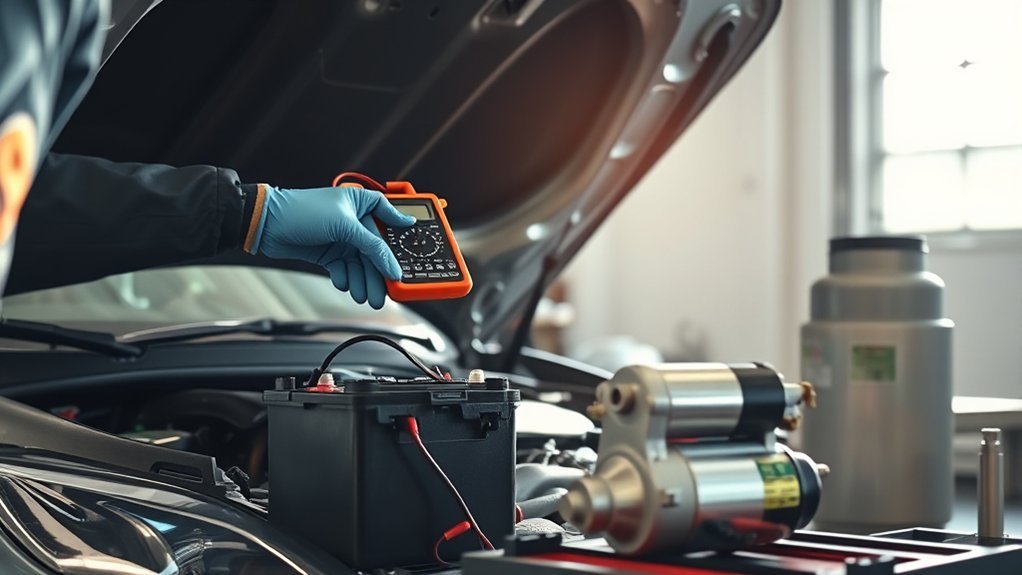
If your Corolla cranks slowly, clicks, or does not crank at all, inspect the battery and starting circuit before moving to fuel or ignition diagnosis.
Check Battery Condition
Start with a visual inspection.
- Confirm that the battery is properly secured.
- Look for loose or corroded terminals.
- Inspect accessible battery cables for damage.
- Check for signs of battery swelling, leakage, or other physical damage.
Use a digital multimeter to measure battery voltage with the vehicle switched off.
A fully charged resting lead-acid battery commonly reads around 12.6 volts, but the exact reading depends on battery type, temperature, and recent charging activity.
Voltage alone does not prove that the battery can supply enough current to start the engine.
A battery may show an acceptable resting voltage yet fail under starter load. If the symptoms suggest a weak battery, have it professionally load-tested.
A battery voltage reading is a useful first check, but its performance under load matters when diagnosing a slow-cranking engine.
Check Starter Motor Operation
If the battery passes testing and its connections are secure, the starter circuit deserves closer attention.
Possible symptoms include:
- A single click without engine rotation.
- Intermittent no-crank conditions.
- Slow cranking despite adequate battery performance.
- No response when the correct starting procedure is followed.
A technician can test the starter’s power supply, ground circuit, control signal, and voltage drop during operation.
Do not replace the starter simply because voltage is present at one terminal. The complete circuit and starter performance must be checked.
Check the Key, Immobilizer, and Starting Interlocks
Sometimes the engine does not crank because the vehicle has not accepted the starting command.
Before assuming that the starter has failed:
- Confirm the transmission is in Park where applicable.
- Follow the correct brake-pedal or clutch-pedal starting procedure.
- Check for dashboard warnings related to the key or immobilizer.
- Try an available spare key if the vehicle appears not to recognize the usual key.
- Consult the manual for the electronic-key emergency starting procedure if applicable.
A depleted key-fob battery and a depleted vehicle battery are different problems.
Follow the vehicle-specific instructions rather than attempting to bypass an immobilizer or starting interlock.
Can You Jump-Start a Corolla With a Weak Battery?
A jump-start may help if the 12-volt battery is discharged.
However, the correct connection points and sequence depend on the vehicle.
Follow the instructions in your owner’s manual, including the specified ground connection and cable-removal procedure.
Toyota provides dedicated instructions in its 2025 Corolla discharged-battery guide.
Do not attempt to jump-start a visibly damaged, leaking, or frozen battery.
If the engine starts after a jump but the problem returns, have the battery and charging system tested rather than assuming the issue has been fixed.
What to Do If Your Vehicle Overheats?
Overheating requires immediate attention because continued operation can damage the engine.
If your Corolla displays an overheating warning, loses power, or releases steam:
- Move to a safe location as soon as possible.
- Turn off the air conditioning.
- Follow the overheating instructions for your model.
- If steam or coolant is escaping, stop the engine and keep the hood closed until the steam subsides.
- Allow the engine and cooling system to cool fully before inspecting accessible components.
- Check the coolant reservoir only when it is safe to do so.
- Look for visible leaks or damaged hoses without touching hot components.
Warning: Never remove a radiator or pressurized coolant reservoir cap while the engine is hot. Escaping coolant or steam can cause serious burns. Do not rely on a fixed waiting time to determine when the cooling system is safe to open.
If the coolant level is low, use the coolant specified for your Corolla and follow the owner’s manual.
If the coolant is leaking, the engine repeatedly overheats, or the temperature warning remains active, arrange professional inspection or towing.
Potential causes include a coolant leak, cooling-fan problem, thermostat fault, water-pump problem, or another cooling-system failure.
Overheating and hard starting can occur together, but they should not automatically be attributed to the same component.
Troubleshooting Hard Starting Step-by-Step
The most efficient way to diagnose Toyota Corolla hard starting is to start with the symptom and narrow down the affected system.
Step 1: Confirm the Starting Behavior
Park safely, apply the parking brake, and follow the normal starting procedure.
Observe whether:
- The engine does not crank.
- The engine cranks slowly.
- The engine cranks normally but does not start.
- The engine starts after an unusually long cranking period.
- The engine starts and immediately stalls.
Also note whether the problem occurs when the engine is hot, cold, or after a particular parking period.
A brief written record can help a technician reproduce an intermittent problem.
Step 2: Check the Battery and Connections
Inspect the battery terminals, cables, and accessible grounds.
If the engine cranks slowly, test battery condition before investigating more complicated systems.
If the battery is discharged, follow the correct jump-start procedure or arrange assistance.
Step 3: Read Diagnostic Trouble Codes
Connect a compatible OBD-II scanner and check for stored and pending trouble codes.
Some common examples include:
- P0171: System too lean, bank 1.
- P0300: Random or multiple-cylinder misfire detected.
- P0301–P0304: Misfire detected in the corresponding cylinder.
- P0335: Crankshaft position sensor circuit fault.
- P0340: Camshaft position sensor circuit fault.
These codes help identify where to investigate. They do not independently confirm that a particular sensor, injector, coil, or pump must be replaced.
If possible, save the codes and freeze-frame information before clearing anything.
Step 4: Check Fuel Delivery
Verify that the vehicle has sufficient fuel.
If the engine cranks normally but will not start, the fuel system may need further diagnosis.
A technician can evaluate fuel pressure, pump control, injector operation, and related electrical circuits using the correct specifications.
Do not open the pressurized system as an exploratory check.
Step 5: Inspect Ignition Components
Check the maintenance history and investigate signs of misfiring.
If the spark plugs are overdue for replacement, install the manufacturer-specified type.
If a misfire code points to a specific cylinder, inspect the relevant ignition components and perform additional testing as necessary.
Do not assume that a new spark plug or coil will resolve every misfire.
Step 6: Check the Intake System and Sensor Data
Inspect accessible intake hoses and connections for disconnection or damage.
If testing suggests a lean mixture, investigate possible intake leaks.
Review coolant temperature, airflow, engine-speed, and other relevant live data when available.
For example, an implausible coolant temperature reading may influence the engine’s starting fuel calculation.
A crankshaft position sensor fault may interfere with engine-speed information needed for starting.
Step 7: Check Idle and Throttle Operation
If the Corolla starts but immediately stalls, intake airflow and throttle operation may need attention.
Some older engines have a separate idle air control valve. Newer configurations may manage idle through the electronically controlled throttle body.
Use the system fitted to your engine when investigating idle-related faults.
Do not force an electronic throttle plate or use an aggressive cleaning method without confirming the proper service procedure.
Step 8: Confirm the Repair
After correcting the identified fault, verify that the engine starts normally under the conditions that originally caused the problem.
For example, if the complaint was an overnight hard start, a successful restart immediately after repair may not be enough to confirm the issue is resolved.
Check for returning warning lights and diagnostic codes, and confirm that the engine idles and accelerates normally.
When Should You Stop Troubleshooting?
Arrange professional diagnosis if:
- The engine will not start despite a healthy battery and correct starting procedure.
- The vehicle repeatedly stalls while driving.
- The check engine light flashes while the engine runs.
- You smell gasoline or discover a fuel leak.
- The engine overheats.
- Starting problems remain intermittent and cannot be reproduced safely.
- Testing requires opening pressurized fuel lines or working on hybrid high-voltage components.
If the vehicle is unsafe to operate, have it transported to a repair facility instead of continuing to drive it.
Preventative Measures to Avoid Hard Starting Issues
Routine maintenance cannot prevent every starting problem, but it can reduce the risk of avoidable failures.
These habits are particularly useful:
- Follow the maintenance schedule: Use the guide for your exact Corolla model year and engine.
- Monitor battery condition: Inspect terminals and have the battery tested when starting performance changes.
- Replace spark plugs when scheduled: Use the specified plug type and replacement interval.
- Address warning lights: Investigate recurring diagnostic codes instead of repeatedly clearing them.
- Maintain the intake system: Replace the engine air filter as required and repair damaged intake connections.
- Use appropriate fuel: Follow Toyota’s fuel requirements and avoid contaminated fuel.
- Inspect visible leaks: Have fuel, coolant, and other fluid leaks repaired promptly.
- Maintain the cooling system: Check coolant condition and level according to the owner’s manual.
- Investigate unusual starting behavior early: A problem that occurs only occasionally may become more difficult to manage later.
Do not replace the fuel filter, battery, or ignition coils according to a generic interval that does not apply to your vehicle.
For scheduled service requirements, use the official Toyota maintenance schedule.
Note: Keep a record of when the starting problem occurs, the engine temperature, battery condition, recent repairs, and any diagnostic codes. This information can help a technician identify intermittent faults more efficiently.
Frequently Asked Questions
What Causes Hard Starting in a Toyota Corolla?
Common causes include a weak battery, poor electrical connections, starter problems, fuel delivery faults, ignition failures, intake leaks, and incorrect engine sensor readings. The starting symptom helps determine which system to test first.
Why Is My Toyota Having a Hard Time Starting?
Check whether the engine cranks normally. Slow cranking suggests starting-system or battery problems, while normal cranking without starting may point toward fuel, ignition, sensor, immobilizer, or mechanical faults.
Why Is My Car Struggling to Start but Runs Fine?
A vehicle that takes longer to start but runs normally afterward may have a battery, fuel-pressure retention, sensor, or intermittent electrical problem. Record when the condition occurs and test the relevant system before replacing parts.
What Is the Main Cause of Engine Hard Starting?
There is no single cause that applies to every engine. Battery and starting-circuit faults, fuel delivery problems, ignition failures, and incorrect sensor inputs can all interfere with starting. A symptom-based diagnosis is more reliable than assuming one component is responsible.
Why Does My Corolla Start Poorly in the Morning?
An overnight hard start can involve a weak battery, a fuel-pressure problem, incorrect temperature-sensor information, or another intermittent fault. Start by checking cranking speed and battery condition, then investigate the fuel and engine-control systems if needed.
Why Does My Corolla Struggle to Start When the Engine Is Hot?
Hot-start problems may involve fuel-pressure loss, intermittent ignition faults, or a temperature-sensitive sensor or electrical connection. The fault should be tested while the symptom is present whenever possible.
Can a Bad Fuel Pump Cause Long Cranking?
Yes. A fuel pump that cannot provide the required fuel delivery may cause extended cranking or a no-start condition. However, leaking injectors, pressure regulation, electrical faults, and other problems can produce similar symptoms. Proper testing is needed before replacing the pump.
Should I Replace the Battery if My Corolla Cranks Slowly?
Not automatically. Inspect the terminals and cables, then test the battery under load. A poor connection or starter problem can also cause slow cranking. Replace the battery when testing confirms that it is defective or no longer provides adequate starting performance.
Conclusion
Toyota Corolla hard starting can have several causes, but you can narrow down the problem by identifying the starting symptom first.
Begin with the battery and electrical connections if the engine cranks slowly or does not crank. If it turns over normally but will not start, investigate the fuel, ignition, sensor, and intake systems using diagnostic codes and appropriate testing.
Avoid replacing parts based only on a familiar symptom or a generic mileage interval. Follow the specifications for your exact Corolla, and seek professional assistance when the repair involves pressurized fuel, significant electrical faults, overheating, or hybrid high-voltage components.
With the right diagnostic approach and regular maintenance, you can improve starting reliability without wasting money on unnecessary repairs.
Sources
- Toyota — 2025 Corolla Owner’s Manual — official operating instructions, vehicle systems, and troubleshooting information.
- Toyota — 2025 Corolla Warranty and Maintenance Guide — scheduled maintenance and spark-plug service requirements.
- Toyota — If the Vehicle Battery Is Discharged — official 12-volt battery and jump-starting precautions.
- Toyota — Corolla Maintenance Data — examples of model-specific battery and ignition specifications.
- Toyota — Corolla Engine Compartment — battery inspection, coolant checks, and cooling-system safety.
- Toyota — 2023 Corolla and Corolla Hybrid Quick Reference Guide — hybrid starting procedure and READY indicator operation.





Leave a Reply