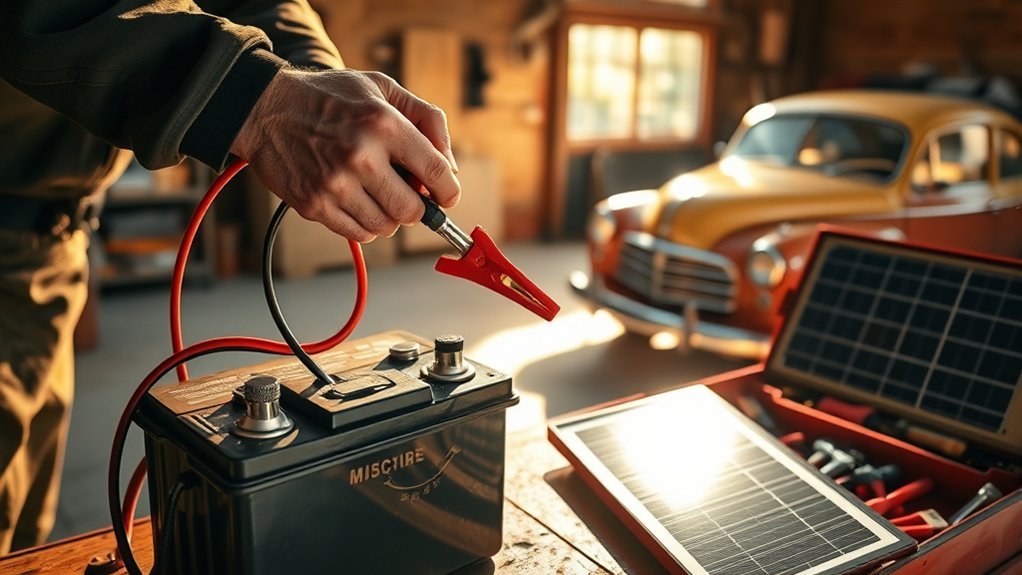
You can charge a car battery without a traditional charger using several safe DIY methods. You can jump-start your car with a donor vehicle by connecting battery terminals correctly. Alternatively, you can use a home inverter to convert AC to DC power, provided you follow the proper setup steps. Solar panels also effectively charge batteries if you have adequate sunlight and a charge controller. Portable Jump Starters offer a quick, reliable solution for many drivers. Always follow safety guidelines to protect yourself and your vehicle.
Quick Answer
You can charge a car battery without a standard charger by jump-starting from a donor vehicle, using a solar panel with a controller, or using a home power inverter that converts AC current to 12V DC. Note that these methods work best for topping off a battery or providing an emergency start rather than fully recharging a completely dead, deep-cycled battery.
Key Takeaways
- Jump Start with a Donor Vehicle: Connect a working car battery to your own using jumper cables, keeping terminal order strict.
- Utilize a Home Inverter: Convert standard AC wall power to 12V DC to slowly provide charge to the battery.
- Employ Solar Panels: Use a dedicated solar kit with a charge controller to safely manage power intake.
- Use a Portable Jump Starter: Connect a portable battery pack to provide an immediate starting boost.
- Perform Regular Maintenance: Clean terminals and check for corrosion to ensure efficient power transfer.
The Importance of Charging Car Batteries Safely
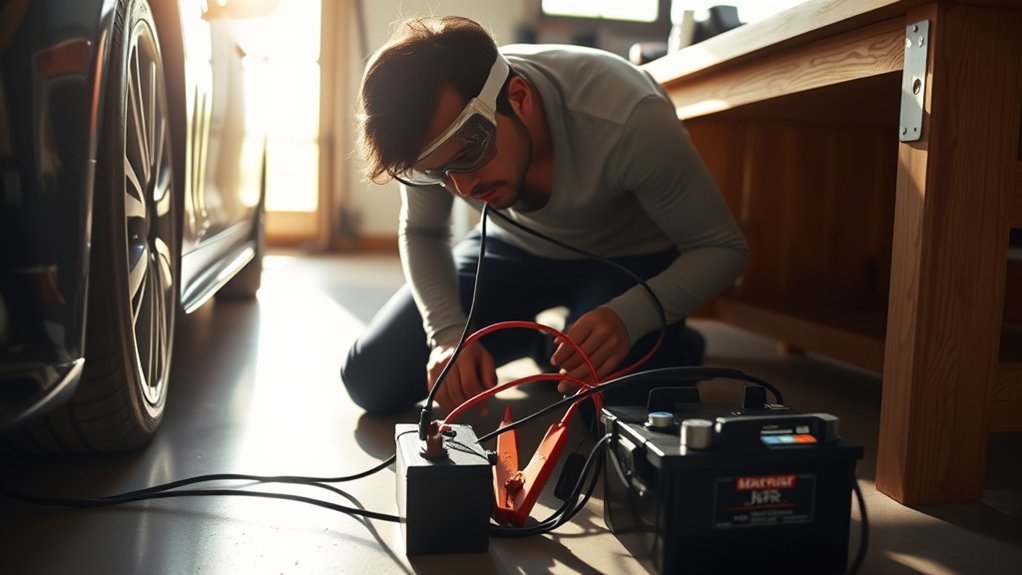
Safety remains your top priority when you handle a car battery. Improper techniques often lead to battery damage or serious personal injury. Always wear protective gloves and eye gear when you work near lead-acid batteries.
Clean the battery terminals before you connect any cables. This step removes oxidation and promotes a stable, safe electrical connection.
Verify that the battery voltage matches your charging equipment. Most consumer passenger vehicles use a 12-volt system. Using the wrong voltage or amperage leads to overheating and potential battery fires. Always consult the battery manufacturer manual before you connect external power sources.
Common Signs of a Dead Car Battery
Recognizing the symptoms of a failing battery prevents unexpected breakdowns. If your car fails to turn over and the engine makes a rapid clicking sound, your battery likely lacks the cold cranking amps required to start the engine.
Dim headlights that brighten only when you rev the engine suggest a weak battery or a failing alternator. Check your dashboard for the battery warning light; this symbol indicates a charging system fault.
A rotten egg smell near the engine bay indicates a leaking battery or an overcharging condition. If you notice these signs, inspect the battery casing for bloating or leaks immediately. Seek professional help if the battery case shows physical damage.
How to Jump Start Your Car Using a Donor Vehicle
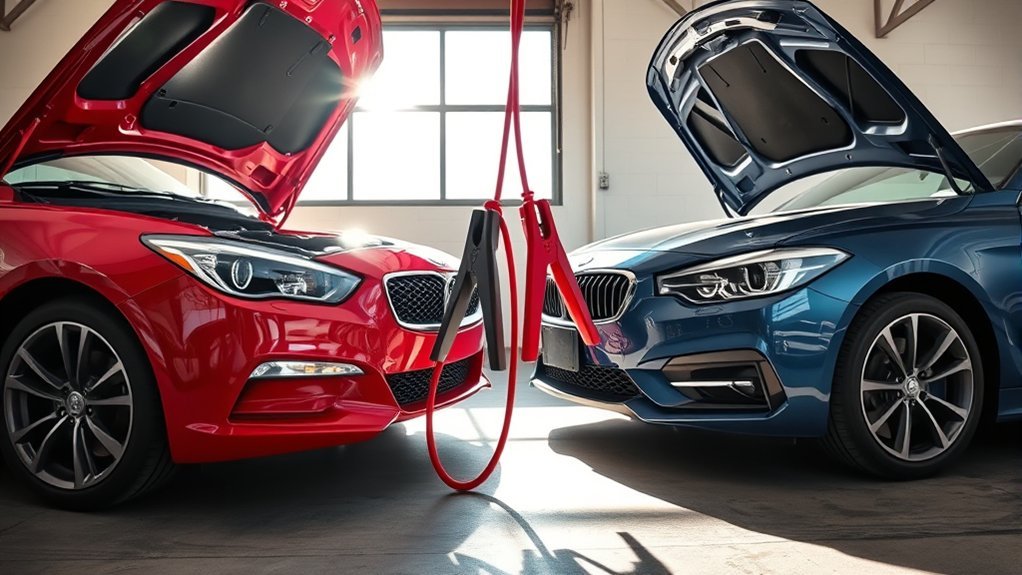
Jumping a car using a donor vehicle restores enough power to get the alternator running. Follow these steps for a safe connection:
- Park the donor vehicle close enough for cables to reach, but ensure the two cars do not touch.
- Turn off the ignition in both vehicles and engage the parking brakes.
- Connect the red (positive) clamp to the positive terminal of the dead battery.
- Attach the other red clamp to the positive terminal of the donor battery.
- Connect one black (negative) clamp to the donor battery’s negative terminal.
- Attach the final black clamp to an unpainted metal surface on the dead vehicle’s engine block.
Start the donor vehicle and let it idle for about 10 minutes. This provides a surface charge to the dead battery before you attempt to start your engine.
Step-By-Step Guide to Charging Your Car Battery With a Home Inverter
You can use a home inverter as a temporary charging solution. You must ensure the inverter converts AC power to the exact 12V DC requirement of your battery. Improper voltage settings damage the battery cells permanently.
Home Inverter Basics Explained
A home inverter takes 120V AC wall power and transforms it into the DC power your battery accepts. Use this method only if you understand the power output of your specific device.
- Verify your inverter supports 12V DC output.
- Check the wattage to ensure it does not overwhelm the battery.
- Expect this process to take several hours to achieve a partial charge.
Proper Connection Setup
Securely connect the positive terminal of the battery to the positive output of the inverter. Attach the negative terminal to the negative output next.
Check all connections for tightness. A loose connection causes arcing and creates a fire risk. Plug the inverter into the wall outlet only after you confirm all clips remain securely attached to the battery terminals.
Charging Time Considerations
Charging speed depends on your inverter capacity and the current state of the battery. Higher wattage inverters charge the battery faster, but you must monitor the heat levels throughout the process.
Plan for a wait time of 1.5 to 3 hours. Always disconnect the inverter once the battery shows signs of charge, as most simple inverters lack the sophisticated cut-off sensors found in professional battery chargers. Always consult a qualified professional before making decisions based on this information.
How to Use Solar Panels for Charging Your Car Battery
Solar panels provide an eco-friendly way to maintain a battery charge over time. Use a solar charge controller between the panel and the battery to regulate voltage.
Without a controller, the solar panel may overcharge and boil the electrolyte inside the battery. Secure the panels in direct sunlight for the best results. Note that solar panels work best as a maintenance tool to keep a battery topped off rather than reviving a completely dead battery.
Using Portable Jump Starters to Charge Car Batteries
Portable jump starters pack a lithium-ion battery designed to deliver a high-amperage burst. These devices bypass the need for a donor vehicle.
- Connect the starter clamps to the battery terminals following the manufacturer’s color-coding.
- Turn on the jump starter device.
- Attempt to start your vehicle immediately.
Remove the jump starter as soon as the engine catches. Portable units serve as emergency aids and not as long-term battery chargers.
Key Safety Precautions for DIY Car Battery Charging
Adhere to strict safety habits to avoid injury. Clean the terminals to eliminate corrosion, which often causes sparks. Ensure your equipment matches the battery size and chemistry to avoid dangerous chemical reactions.
If your car requires battery registration via the vehicle’s ECU, speak with a mechanic. Failure to register a new battery or improper jump-starting often damages complex modern electrical systems. Always consult a qualified professional before making decisions based on this information.
Frequently Asked Questions
Can I Charge a Car Battery With a Regular Wall Outlet?
No, you cannot connect a car battery directly to a wall outlet. Wall outlets provide high-voltage AC, which will destroy the battery and pose a severe shock risk. You must use an intermediate device like an inverter or a dedicated charger.
How Long Does It Take to Charge a Car Battery Without a Charger?
Depending on the method, you might wait between two to ten hours. Jump-starting provides enough power to drive the car, allowing the alternator to do the actual charging work while the engine runs.
Is It Safe to Charge a Battery in Extreme Temperatures?
Charging in extreme heat or freezing cold is unsafe. High heat causes internal gas buildup, while extreme cold makes the battery chemical reaction sluggish. Always attempt to charge your battery at room temperature.
What Tools Do I Need for DIY Battery Charging Methods?
You need insulated jumper cables, a digital multimeter, and personal protective equipment like gloves and safety glasses. A wire brush helps remove terminal corrosion effectively.
Can I Use Any Car Battery for Jump-Starting?
You should only use a battery with the same voltage. Using a 24V truck battery to jump-start a 12V car will fry your vehicle’s sensitive electronic control units.
Conclusion
Charging a car battery without a traditional charger is possible using several emergency DIY techniques. Use a donor vehicle or a portable jump starter to restore enough power to run your alternator. Always prioritize safety by checking connections and wearing protective gear to prevent accidents. Keep your battery well-maintained to ensure your vehicle starts reliably whenever you need it.






Leave a Reply