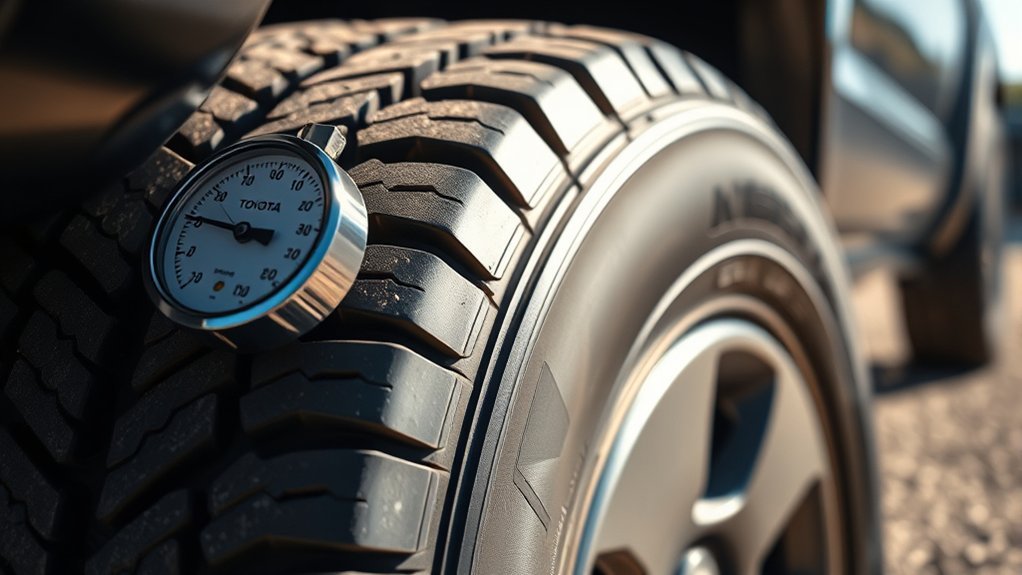
Driving a Toyota Tacoma with incorrect tire pressure costs you money at the gas pump and wears out your tires faster than expected. Many owners guess the right inflation level, but guessing compromises your truck’s handling and safety. This guide gives you the exact tire pressure numbers for your Tacoma and shows you how to maintain them for maximum performance.
Quick Answer
The recommended tire pressure for a stock Toyota Tacoma is 30 PSI for both front and rear tires. You should check this pressure monthly using a reliable gauge while the tires are cold. Maintaining 30 PSI ensures maximum fuel efficiency, even tread wear, and optimal handling.
What is the Recommended Tire Pressure for a Tacoma?
Understanding the recommended tire pressure keeps your Toyota Tacoma running smoothly. You should aim for 30 psi for both front and rear stock tires. You can find this exact number printed on the driver’s side door placard. This pressure ensures ideal tire wear and enhances the overall performance of your truck.
Different Tacoma trims feature specific tire sizes. You will find 265/60R18 tires on the Limited and 245/75R16 on the SR and SR5 models. The recommended pressure remains 30 psi across these standard sizes. Always verify your specific setup if you buy a used truck with aftermarket wheels.
You must check your tire pressure regularly because tires lose about 1 psi each month naturally. Dealerships sometimes inflate tires up to 36 psi during routine service. This overinflation creates a stiffer ride and leads to uneven tire wear over time.
Why Correct Tire Inflation Matters for Performance
Maintaining the correct tire pressure in your Tacoma boosts fuel efficiency and extends the life of your tires. Properly inflated tires grip the road better and improve your braking distance. You will experience better stability and make every drive safer.
Even a small drop in pressure hurts your truck’s performance. Soft tires generate excess heat, which can cause blowouts at highway speeds. Regular checks prevent these hidden dangers from catching you off guard.
How Tire Pressure Impacts Fuel Efficiency
Inflating your Toyota Tacoma tires to the recommended 30 psi maximizes your fuel economy. Proper pressure reduces rolling resistance and helps your engine work less. Research from the Department of Energy shows that under-inflated tires drop fuel economy by about 0.2 percent for every 1 psi decrease.
Keeping your tires at 30 psi ensures even wear and keeps money in your wallet. Soft tires drag on the pavement and force you to visit the gas pump more often. Check the table below to see how slight pressure drops impact your gas mileage.
| Tire Pressure (psi) | Fuel Efficiency Impact |
|---|---|
| 30 | Ideal gas mileage |
| 29 | 0.2% decrease |
| 28 | 0.4% decrease |
| 27 | 0.6% decrease |
| 26 | 0.8% decrease |
How Proper Pressure Improves Tire Longevity
Proper tire pressure plays a massive role in extending the lifespan of your Tacoma’s tires. Maintaining 30 psi prevents uneven tread wear on the outer edges. Balanced wear means you will not have to buy replacement tires as frequently.
Overinflating tires creates a balloon effect that wears out the center of the tread. This common mistake creates a harsh ride and compromises your steering control. Properly inflated tires give you better traction on wet roads and tight corners.
Why Dealerships Often Overinflate Tacoma Tires
Many dealerships ignore the 30 psi manufacturer guideline and inflate Tacoma tires to 35 or 36 psi. Technicians often apply a universal pressure setting to save time during busy service hours. This generic approach ignores the specific engineering of your truck.
Dealers also inflate tires higher to prevent the tire pressure monitoring system light from turning on. Cold weather drops tire pressure rapidly, which triggers the warning light and causes customers to complain. High pressure masks this natural air loss but forces you to endure a bumpy ride.
Verify your manufacturer’s recommended tire pressure on the door jamb sticker after every service visit. Adjusting the air back down to 30 psi restores your ride quality and protects your tire tread. Take control of your truck’s maintenance to guarantee peak comfort.
How to Check and Adjust Tacoma Tire Pressure
Regularly checking and adjusting your tire pressure prevents unexpected flats and poor handling. You can perform this simple task in your driveway in less than five minutes.
Follow these steps to get an accurate reading:
- Park your truck and wait at least three hours so the tires cool down completely.
- Locate the recommended PSI on the driver’s side door jamb sticker.
- Remove the valve cap and press a reliable digital tire gauge firmly onto the valve stem.
- Add air with a compressor if the reading is low, or press the valve pin to release air if it is too high.
How Payload and Towing Affect Tire Pressure
Hauling heavy loads in your truck bed changes how your tires interact with the road. The extra weight pushes the rear tires down and causes the sidewalls to bulge. You must adjust your tire pressure to handle this added stress safely.
If you plan to tow a heavy trailer or fill the bed with cargo, increase your rear tire pressure by 2 to 3 psi. This small adjustment stiffens the tire and prevents excess heat buildup during your trip. Always release the extra air and return to 30 psi once you finish hauling your load.
Ideal Pressure Settings for Upgraded Tacoma Tires

Choosing the right tires for your Toyota Tacoma transforms its performance on different surfaces. Different tire types require specific pressure adjustments to function correctly. Everyday highway tires work perfectly at the factory standard of 30 psi.
If you upgrade to heavier all-terrain tires, you should aim for 30 to 32 psi to balance street comfort and durability. Mud-terrain tires require similar street pressures but offer flexibility off the pavement. Off-road enthusiasts frequently drop their tire pressure to 20 psi to gain traction on rocks and deep sand.
Always verify the pressure requirements for aftermarket tires with the manufacturer. Upgraded heavy-duty tires often need different settings than the factory door sticker suggests. Always consult a qualified tire professional before making permanent changes to your pressure strategy.
How to Maintain Your Tires Year-Round
Temperature changes constantly affect the air packed inside your tires. You must stay vigilant and adjust the pressure as the seasons shift. Consistent maintenance keeps your Tacoma safe during severe weather conditions.
Monthly Pressure Checks
Tires lose about 1 psi per month naturally due to standard air permeation. Waiting for your dashboard warning light to turn on means your tires are already dangerously low. You should check all four tires and your spare tire on the first day of every month.
- Use a digital tire pressure gauge for the most precise readings.
- Measure the pressure early in the morning before the sun heats the rubber.
- Replace any missing plastic valve caps to keep dirt and moisture out of the stem.
How Weather Changes Affect Tire Pressure
Cold winter air causes the molecules inside your tires to contract and drop the overall pressure. You lose roughly 1 psi for every 10-degree drop in outside temperature. You must add air during the winter to keep your tires at the safe 30 psi threshold.
Summer heat creates the opposite problem and forces the air inside to expand. Driving on hot asphalt pushes the pressure even higher and risks a blowout. Check your gauge frequently in July and August to ensure your tires stay within safe limits.
| Season | Recommended PSI | Adjustment Strategy |
|---|---|---|
| Winter | 30 PSI | Add air frequently to counter cold drops |
| Summer | 30 PSI | Release excess air caused by heat expansion |
| Spring/Fall | 30 PSI | Check weekly during severe temperature swings |
Common Myths About Tacoma Tire Pressure
Many drivers mistakenly read the sidewall of their tire and fill it to the “Max PSI” listed. The number on the sidewall indicates the maximum pressure the tire can hold safely, not the recommended driving pressure. Pumping your tires to 44 or 50 psi creates a harsh ride and ruins your suspension components.
Another myth claims that overinflated tires drastically improve gas mileage. Pumping your tires past 30 psi barely impacts your fuel economy but completely destroys your tread wear patterns. Sticking to the 30 psi rule gives you the best combination of savings and comfort.
Frequently Asked Questions
What PSI Should My Toyota Tacoma Tires Be?
Your Toyota Tacoma tires require 30 psi for standard stock sizes on both the front and rear. Proper inflation guarantees peak handling and prevents uneven wear across the tread. Check your pressure monthly with a reliable gauge to maintain this target.
Is 35 PSI Too High for Tacoma?
Running your stock Tacoma tires at 35 psi is too high for comfortable daily driving. This pressure stiffens the sidewall and transfers every bump in the road directly into the cabin. Drop the pressure back to 30 psi to restore your smooth factory ride.
Is 40 PSI Good Tire Pressure for a Toyota?
Pumping your tires to 40 psi compromises your safety and ruins your handling. High pressure reduces the amount of rubber touching the road, which increases your braking distance significantly. You should only use 40 psi if specifically instructed by the manufacturer of a heavy-duty aftermarket tire.
Should I Run 35 or 40 PSI for Tires?
You should not run 35 or 40 psi on standard Tacoma tires. Stick strictly to the 30 psi rating found on your driver’s door placard. Exceeding the recommended setting damages the center of your tires and forces you to replace them prematurely.
Final Thoughts on Tacoma Tire Maintenance
Keeping your Toyota Tacoma’s tire pressure at exactly 30 psi guarantees your truck handles safely on the road. Proper inflation maximizes your fuel efficiency and stops you from buying new tires earlier than necessary. Grab a digital gauge today and verify your current pressure levels in the driveway. Sticking to a monthly maintenance habit protects your truck and keeps every adventure running smoothly.







Leave a Reply