Driving a Toyota Tundra with the wrong tire pressure directly impacts your fuel economy, tire life, and safety. Many truck owners guess their tire pressure or rely on the maximum number stamped on the sidewall. You will get the best ride quality and performance by following the factory specifications for your specific truck configuration.
Quick Answer
For most Toyota Tundra models, the recommended tire pressure is 30 to 33 PSI for the front tires and 33 to 35 PSI for the rear tires. You should increase the rear tire pressure to 40 to 44 PSI when towing heavy loads. Always check the sticker on your driver side door jamb for the exact PSI for your specific trim and tire size.
How to Find the Correct Tire Pressure for Your Tundra
Start by checking the tire and loading information sticker on the driver side door frame. Toyota prints the factory recommended PSI levels for your specific truck right there.
For many standard Tundra builds, the ideal tire pressure is 30 PSI for the front and 33 PSI for the rear. Newer models with 20-inch factory wheels often recommend 33 to 35 PSI all around.
Always measure your tire pressure when the tires are cold. Driving heats up the air inside the tires and causes the pressure to rise. Checking hot tires gives you an inaccurate reading. Check your pressure every two weeks to maintain safety and maximize tire life.
How to Check Your Tundra Tire Pressure
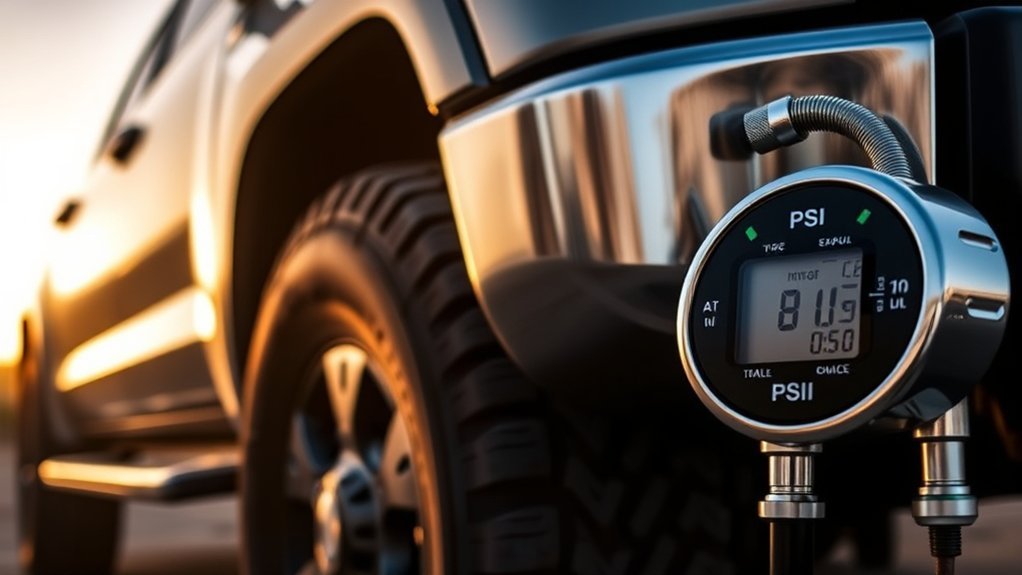
Checking your tire pressure takes only a few minutes. Grab a quality digital tire pressure gauge for the most accurate results.
Remove the valve cap from your tire. Press the gauge firmly onto the valve stem until the hissing sound stops. Read the number on the screen or dial.
If the reading falls below the target PSI, use an air compressor to add air. Check the pressure again after adding air. Do this for all four tires and the spare.
Regular pressure checks improve fuel efficiency and prevent uneven tread wear.
Benefits of Maintaining Correct Tire Pressure
Properly inflated tires keep your truck stable and improve your steering control. Good traction is critical when driving a heavy full-size truck.
Running your tires at the correct PSI promotes even tread wear. This simple habit extends the lifespan of your tires and saves you money on replacements. Under-inflated tires increase rolling resistance. This forces your engine to work harder and reduces your gas mileage.
According to the National Highway Traffic Safety Administration, proper tire inflation prevents sudden blowouts. Your truck needs the right air pressure to safely support heavy cargo. Correct inflation prevents sidewall flexing, which can cause excessive heat buildup.
Tire Pressure Recommendations for Towing
You must adjust your tire pressure before pulling a heavy trailer. Extra tongue weight pushes down on the rear axle and changes how your truck handles.
Toyota engineers and tire experts recommend increasing your rear tire pressure to handle heavy loads safely. Many Tundra owners increase their rear tires to 40 or 44 PSI when towing heavy equipment or travel trailers.
Always check the maximum pressure rating on your tire sidewall before adding air. Standard passenger tires hold less pressure than heavy-duty truck tires. Use your dashboard tire pressure monitoring system to track these numbers while driving.
Always consult a qualified professional before making extreme tire pressure changes for maximum towing loads.
Understanding P-Metric vs. LT Tires for Your Tundra
Your ideal tire pressure depends heavily on the type of tires installed on your truck. Toyota equips most standard Tundras with P-metric passenger tires. These tires offer a smooth ride and typically require 30 to 35 PSI.
Many truck owners upgrade to Light Truck (LT) tires for off-roading and heavy towing. LT tires have thicker sidewalls and require higher air pressure to carry the same weight as a P-metric tire.
If you switch to LT tires, you will likely need to run them at 40 to 50 PSI for daily driving to prevent premature wear.
Debunking Common Tire Pressure Myths
Many drivers mistakenly inflate their tires to the maximum PSI listed on the tire sidewall. This number shows the absolute maximum pressure the tire can hold safely, not the recommended pressure for daily driving.
Running your Tundra tires at the maximum pressure creates a harsh, bumpy ride. It also causes the center of the tire tread to wear out quickly.
Another common myth is that your TPMS light will warn you about over-inflated tires. The factory system only triggers an alert when your pressure drops too low. You still need to perform manual checks to prevent over-inflation.
How Weather Changes Affect Tundra Tires
Air pressure drops as the temperature outside gets colder. Your tires lose about one PSI for every 10 degree drop in air temperature.
You need to monitor your tires closely during the winter months. A sudden cold snap can drop your pressure by several pounds and trigger your TPMS warning light. Inflate your tires back to the factory specifications to maintain good traction on snow and ice.
Summer heat has the opposite effect. Hot weather and hot asphalt cause the air inside your tires to expand. Always check your pressure early in the morning before the sun heats up the rubber.
How to Reset the Tundra TPMS Light
Sometimes the tire pressure warning light stays on after you fill your tires. You may need to manually reset the system.
- Turn your ignition to the “On” position without starting the engine.
- Locate the TPMS reset button under the steering wheel or lower dashboard panel.
- Press and hold the button until the tire pressure light blinks three times.
Start the engine and drive your truck for a few minutes to let the sensors calibrate. If the light remains solid, you may have a punctured tire or a dead sensor battery.
When to Seek Professional Help
A persistent TPMS light means you need a professional inspection. A local tire shop can check for slow leaks, nails, or a faulty sensor.
You should also visit a mechanic if you notice uneven tread wear. Bald spots on the edges or center of your tires often indicate long-term inflation issues or a bad wheel alignment.
A professional can help you calculate the exact tire pressure needed if you install larger aftermarket wheels or heavy-duty suspension upgrades.
Frequently Asked Questions
What is the proper tire pressure for a Toyota Tundra?
The recommended tire pressure is usually 30 PSI for the front and 33 PSI for the rear on standard trims. Newer models or trucks with 20-inch wheels often require 33 to 35 PSI. Check your door jamb sticker to find the exact requirement for your truck.
Is 40 PSI too high for truck tires?
Forty PSI is perfectly safe for many truck tires, especially when towing or carrying heavy loads. If you have upgraded to heavy-duty LT tires, you will actually need to run them at 40 PSI or higher for normal driving. Always verify the maximum pressure listed on the sidewall first.
Should my front and back tires be the same PSI?
Your front and rear tires do not always need the same pressure. Many Tundra models specify a lower pressure in the front for steering comfort and a higher pressure in the rear to support the truck bed. Follow the factory door sticker for the best performance.
Maintain Your Tundra Tires for the Long Haul
Maintaining the correct tire pressure is one of the easiest ways to care for your Toyota Tundra. Proper inflation improves your gas mileage, keeps you safe, and prevents premature tire wear. Check your tires every two weeks with a reliable gauge and adjust the air before towing heavy loads. Take a few minutes this weekend to verify your tire pressure and protect your truck on the road ahead.







Leave a Reply