How to Disconnect a Car Battery: Safe Step-by-Step Process

safe car battery disconnection

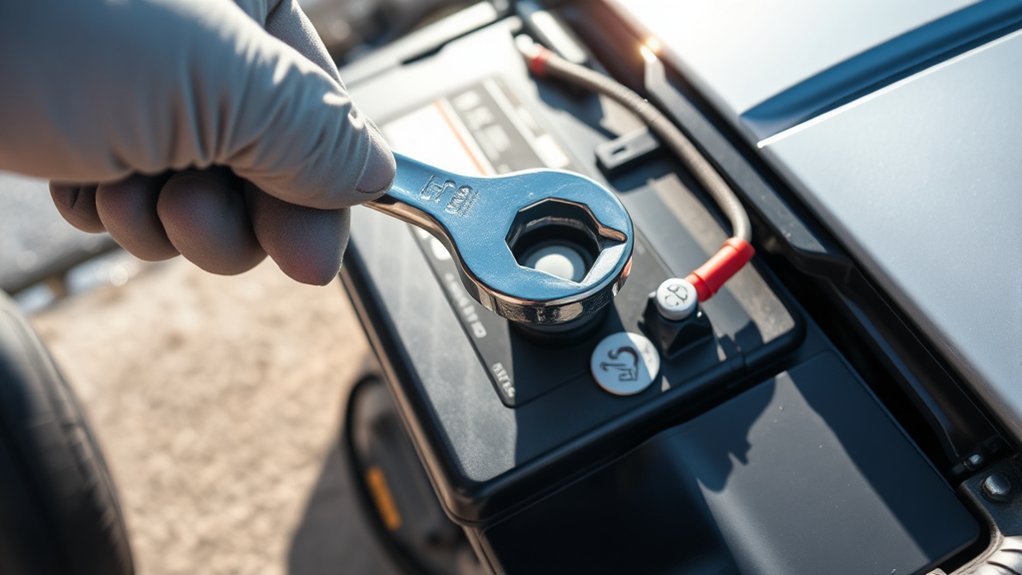
To disconnect a car battery safely, start by wearing gloves and goggles. Ensure the vehicle’s powered down. First, locate the negative terminal (−) and use a 10mm wrench to loosen it counterclockwise. Remove the negative terminal and tuck it away from metal surfaces. Next, disconnect the positive terminal (+) in the same manner. Clean any corrosion from terminals and check connections before moving on to reconnection steps. More detailed guidance awaits you ahead.

Key Takeaways

  • Wear gloves and goggles, and ensure the vehicle is powered down before starting the disconnection process.
  • Locate the negative terminal (−) and use a 10mm wrench to loosen and remove it first.
  • Tuck the negative terminal away from metallic surfaces to prevent accidental contact.
  • Next, disconnect the positive terminal (+) by loosening the nut and carefully removing it.
  • Cover the positive cable end with non-conductive material to avoid sparks during maintenance.

Essential Safety Precautions Before Disconnecting Your Car Battery
safety precautions for battery

Before you disconnect your car battery, it’s crucial to take essential safety precautions to protect yourself and your vehicle.

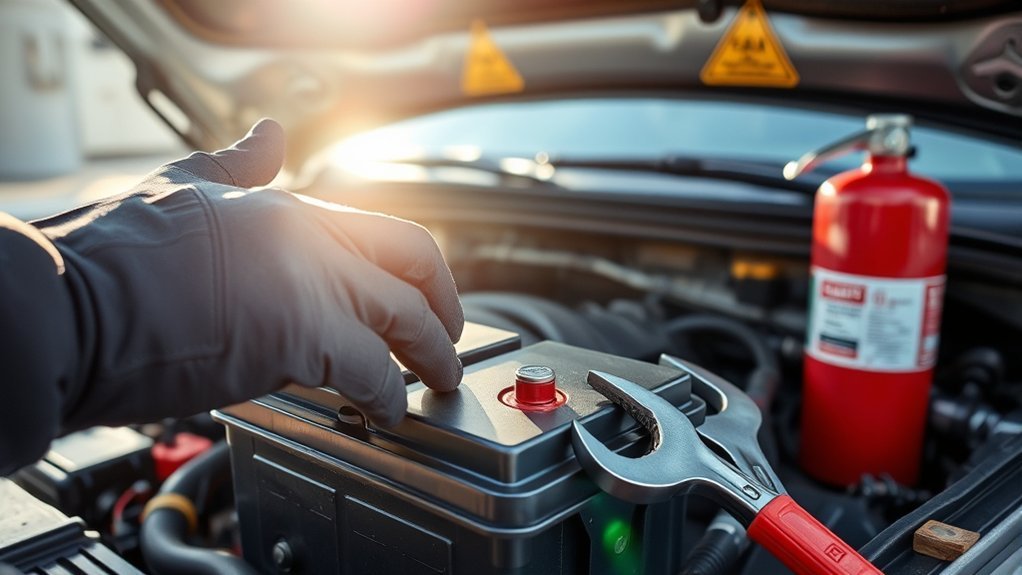
Start by donning appropriate safety gear, such as gloves and goggles, to shield against acid splashes and terminal corrosion.

Ensure the vehicle is completely powered down; turn off all lights and accessories to prevent electrical shocks or damage.

Familiarize yourself with the battery’s location and identify the positive and negative terminals to avoid confusion.

Clear your work area of any metal objects that could create a short circuit during the disconnection process.

Lastly, review your vehicle’s owner’s manual for any specific safety instructions related to battery maintenance and disconnection.

Following these steps will help ensure a safe and effective battery handling experience.

Identifying Your Car Battery and Its Terminals
identify battery terminals correctly

Identifying your car battery and its terminals is a critical step in the disconnection process.

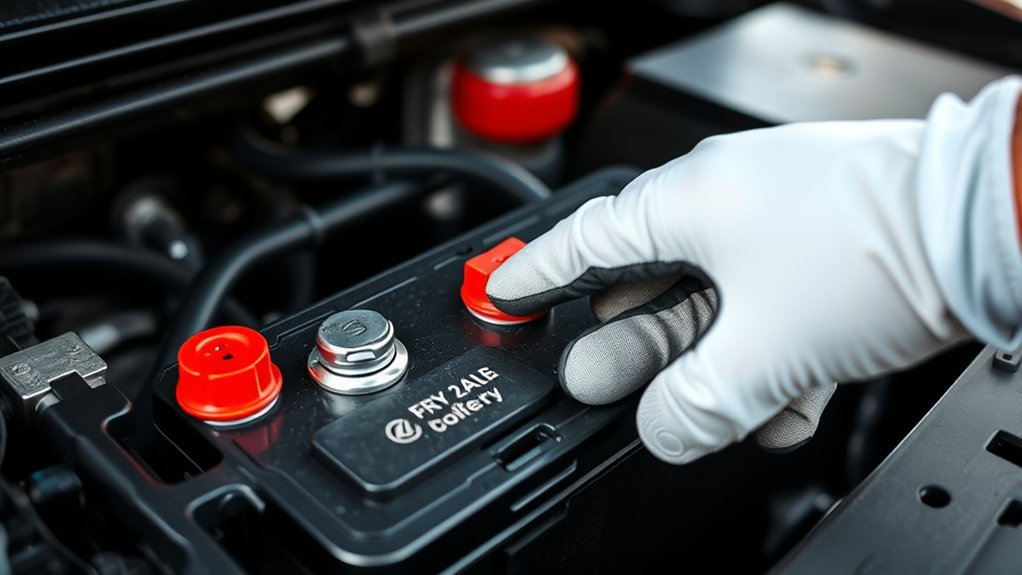
You’ll typically find two terminals: the positive, marked with a “+”, and the negative, marked with a “−”. The positive terminal is usually red, while the negative terminal is black. Understanding these terminal labels is essential for safe handling.

Before proceeding, consider these key points:

  • Knowing your battery types can help you understand maintenance needs.
  • Look for signs of corrosion, like a white, ashy substance, indicating the need for cleaning.
  • Always consult your owner’s manual for the exact battery location, as it can vary by model.

Proper identification ensures safety and prevents potential electrical shorts during disconnection.

Step-by-Step Guide to Disconnecting the Negative Terminal
disconnect negative battery terminal

With the battery terminals identified, you can now focus on safely disconnecting the negative terminal.

First, make sure your vehicle’s completely powered down, with all lights and accessories off to prevent any electrical issues.

Locate the negative terminal, marked with a negative sign (−), typically connected to the vehicle’s chassis.

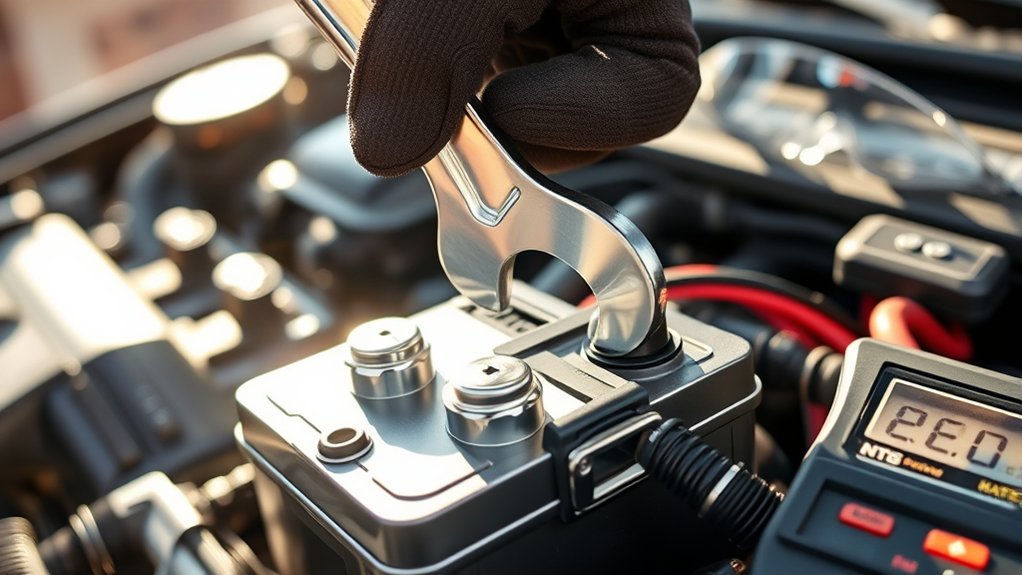
Using a 10mm wrench or socket, loosen the nut on the negative terminal by turning it counterclockwise.

Once it’s sufficiently loose, gently wiggle the negative terminal off the battery post, ensuring you don’t touch any other metal parts.

Finally, tuck the negative terminal away from metallic surfaces to prevent accidental contact.

This step is crucial for battery safety as you proceed with maintenance or disconnection.

How to Properly Disconnect the Positive Terminal

Before disconnecting the positive terminal, you’ve already removed the negative terminal to prevent electrical short circuits.

This order is crucial since the positive terminal is connected to the battery’s charge.

Always ensure the positive terminal is completely disconnected before continuing any battery maintenance.

Importance Of Proper Order

When disconnecting a car battery, it’s crucial to follow the correct order to minimize the risk of short circuits and sparks. Disconnect the positive terminal last, as it connects directly to your vehicle’s electrical system. Failing to do this can jeopardize both your safety and battery life.

  • Prevent sparks that could cause accidents.
  • Ensure effective terminal maintenance for future use.
  • Protect your vehicle’s electrical components.

After removing the negative terminal, be cautious that the positive cable doesn’t touch any metal surfaces.

When loosening the positive terminal, use appropriate tools to avoid damaging the nut.

Finally, cover the positive cable end with non-conductive material once disconnected to prevent accidental contact until you’re ready to reconnect.

Preventing Electrical Short Circuits

To prevent electrical short circuits while disconnecting the positive terminal, always ensure the vehicle is completely powered down, including all accessories. Disconnecting the negative terminal first is crucial for battery safety. When removing the positive terminal, avoid contact between metal tools and the vehicle’s frame. Use insulated tools to minimize electrical discharge risk. Keep the positive terminal isolated from metal parts after disconnection to prevent accidental reconnection during electrical maintenance.

Step Action Precaution
1 Power down vehicle Ensure all accessories off
2 Disconnect negative terminal first Reduce short circuit risk
3 Use insulated tools for positive terminal Minimize accidental discharge
4 Isolate positive terminal post-disconnection Prevent accidental contact
5 Verify surroundings before maintenance Ensure no metal contact

Cleaning and Inspecting Battery Terminals

After disconnecting the battery, inspect the terminals for any signs of corrosion, which can obstruct electrical flow.

If you notice a white, ashy buildup, clean the terminals using a baking soda and water solution to neutralize the acid.

Finally, check for any damage and ensure the connections are tight to maintain optimal performance.

Inspect For Corrosion Damage

Inspecting battery terminals for corrosion is crucial, as corrosion can hinder electrical connectivity and lead to various vehicle issues.

You’ll typically see corrosion as a white, ashy substance, indicating a chemical reaction. Pay attention to the corrosion types present, as they can affect terminal maintenance.

  • Corroded terminals can cause starting problems.
  • Loose connections may lead to intermittent power loss.
  • Ignoring corrosion can shorten your battery’s lifespan.

Always check for physical damage, like cracks or loose connections, during your inspection.

Regularly inspecting and cleaning your battery terminals not only enhances performance but also extends battery life. Taking these steps ensures your vehicle runs smoothly and reliably, keeping you on the road without unexpected issues.

Clean With Baking Soda

Cleaning battery terminals with baking soda is an effective way to combat corrosion and maintain optimal electrical connections. To begin terminal cleaning, mix one tablespoon of baking soda with one cup of water. This solution neutralizes acid corrosion. Use a toothbrush or small brush to apply the mixture to corroded terminals, scrubbing gently to remove grime. After scrubbing, rinse the terminals with clean water to eliminate any baking soda residue. Finally, dry the terminals thoroughly with a clean cloth to prevent moisture-related corrosion. Regular inspection and cleaning can extend battery life and improve performance.

Step Action
Mix Solution Combine baking soda with water
Apply Solution Use a brush to scrub terminals
Rinse Wash away residue with clean water
Dry Wipe terminals with a clean cloth

Post-Disconnect Safety Actions

Once you’ve disconnected the battery, it’s crucial to take specific safety actions to prevent any mishaps.

Prioritize terminal protection and proper battery storage to enhance safety during your maintenance. Here are key actions to follow:

  • Cover each terminal with non-conductive materials like plastic caps or tape to prevent accidental contact.
  • Store the battery in a cool, dry place to avoid degradation and potential leaks.
  • Keep the disconnected negative terminal away from metallic surfaces to reduce short circuit risks.

Additionally, review your disconnection steps and document any observations.

If the battery remains disconnected for an extended period, check its voltage periodically to prevent complete discharge.

These measures ensure both safety and confidence in your work.

How to Reconnect a Car Battery Safely

Before you reconnect the car battery, ensure that the terminals are clean and free of corrosion, as this is critical for a secure connection. Use a baking soda and water mixture if necessary. Connect the positive terminal first, followed by the negative terminal, to prevent electrical shorts. Secure the battery in the tray with hold-down fasteners to prevent movement during operation.

Step Action
1. Clean Terminals Use a baking soda and water mixture
2. Connect Positive Attach the positive terminal first
3. Connect Negative Attach the negative terminal next
4. Secure Battery Fasten the battery in the tray

After reconnecting, test the car by starting the engine and checking for battery replacement signs or warning lights.

What to Expect After Reconnecting Your Battery

After you’ve successfully reconnected the car battery, you can expect a few immediate reactions from your vehicle’s systems. Here’s what to look for:

  • The alarm may activate, prompting you to unlock or start the car to deactivate it.
  • ABS and traction control warning lights might illuminate; these usually reset after starting the engine and turning the steering wheel.
  • You may need to reset the one-touch window feature by fully lowering and then raising each window.

Additionally, if your battery’s been disconnected for a while, you’ll likely need to reprogram the clock and radio settings.

It’s crucial to check all electrical systems to ensure optimal battery performance and functionality, as temporary issues may occur.

When to Call in the Pros for Battery Help?

Wondering when it’s time to call in professionals for battery help? If you’re unsure about the right battery type for your vehicle, consult a professional to avoid purchasing the wrong one.

Persistent electrical issues or warning lights after reconnecting the battery signal that you should seek expert diagnostic services.

Additionally, if you notice corrosion or damage to the battery terminals, a technician can safely clean and repair them.

For those lacking the tools or experience for safe disconnection and reconnection, professionals ensure the process is done correctly, minimizing injury risk.

Finally, if your battery shows signs of wear or you suspect it’s failing, getting a battery test from a professional is crucial for informed decisions regarding battery maintenance tips and professional installation.

Frequently Asked Questions

Can I Disconnect the Battery Without Any Tools?

You can’t safely disconnect the battery without tools. Proper battery maintenance requires using a wrench or pliers. Always follow safety precautions, like wearing gloves and goggles, to protect yourself from electrical hazards while working.

What Should I Do if the Terminals Are Corroded?

If the terminals are corroded, you’ll want to clean them thoroughly using a mixture of baking soda and water. After cleaning, apply corrosion prevention spray to keep your terminals in top shape and avoid future issues.

Is It Safe to Disconnect the Battery While the Engine Is Running?

No, it isn’t safe to disconnect the battery while the engine’s running. This can cause battery damage and disrupt engine safety systems, potentially leading to electrical failures or component damage. Always turn off the engine first.

How Long Can I Leave the Battery Disconnected?

Imagine your car’s heart, the battery, resting peacefully. You can safely leave it disconnected for up to 24 hours. For optimal battery maintenance, consider replacement frequency every three to five years to ensure reliable performance.

Can I Touch Both Terminals Simultaneously While Disconnecting?

You shouldn’t touch both terminals simultaneously while disconnecting. Doing so risks short-circuiting your battery, compromising battery safety. Always disconnect negative first, ensuring proper terminal connections to prevent electrical hazards and maintain system integrity.

Conclusion

By following these steps, you’ve safely disconnected your car battery and ensured its longevity. Picture your battery as a sleeping giant; handling it with care means it’ll wake up ready to power your vehicle with vigor. Always remember to check for corrosion and secure the terminals properly when reconnecting. If you encounter any complications or uncertainties, don’t hesitate to call in a professional. Your safety and your car’s performance depend on it.

Liam Sterling Avatar

Leave a Comment

Leave a Reply

Your email address will not be published. Required fields are marked *