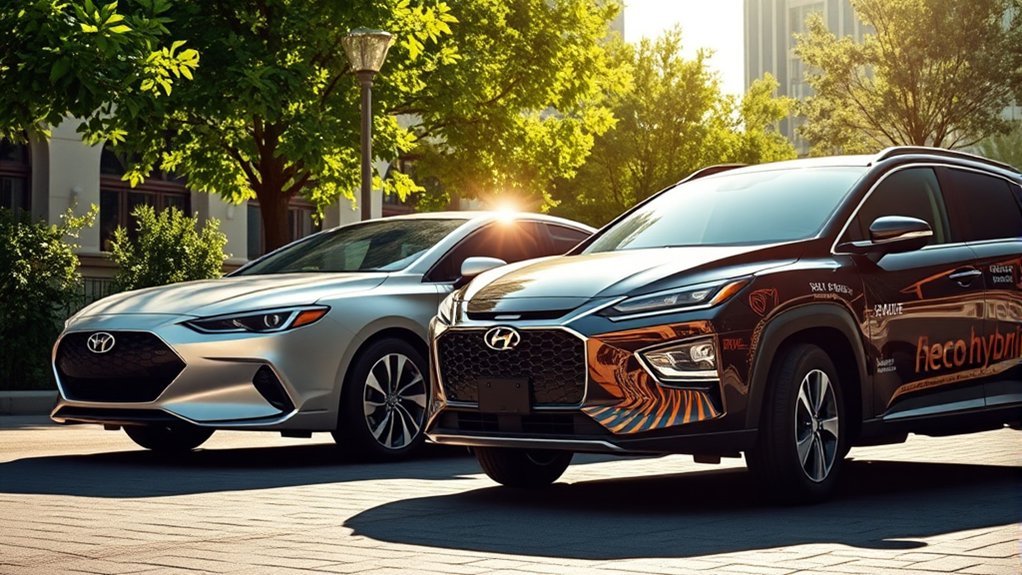
Mild hybrids use a smaller electric motor to support the gasoline engine but can’t drive solely on electric power. They enhance performance and fuel economy by 10-15%, making them cost-effective and easy to own. Full hybrids, however, feature larger batteries that allow short electric-only drives, achieving up to 45% better fuel economy in city conditions. While both have pros and cons, understanding their differences helps you choose the best option for your driving habits. There’s more to explore on this topic.
Key Takeaways
- Mild hybrids enhance performance and fuel economy but cannot drive solely on electric power, while full hybrids can operate on electric power for short distances.
- Full hybrids feature larger batteries (1-2.5 kWh) compared to mild hybrids (0.5-1 kWh), enabling better energy capture and efficiency.
- Full hybrids achieve up to 45% better fuel economy in city driving, while mild hybrids offer a 10% to 15% improvement over traditional cars.
- Mild hybrids are generally less expensive and easier to own, as they require no charging, unlike plug-in hybrids and full hybrids.
- Full hybrids significantly reduce CO2 emissions, particularly in urban settings, making them more environmentally friendly than mild hybrids.
What Is a Mild Hybrid and How Does It Work?

When exploring the world of hybrid vehicles, it’s essential to understand what a mild hybrid (MHEV) is and how it functions.
Mild hybrids utilize a smaller electric motor that supports the internal combustion engine but can’t power the vehicle on electric power alone.
This setup includes a compact battery pack, typically ranging from 0.5 kWh to 1 kWh, charged through regenerative braking and the engine, eliminating the need for plugging in.
Key Features of Full Hybrids
Full hybrids offer you the unique ability to drive on electric power alone for short distances, enhancing your urban driving experience.
With their larger batteries and advanced technology, these vehicles provide significant fuel economy benefits, often outperforming conventional gasoline cars by up to 45% in city MPG.
This combination of electric-only capability and improved efficiency makes full hybrids a compelling choice for eco-conscious drivers.
Electric-Only Driving Capability
How can electric-only driving transform your urban commuting experience?
With full hybrids, you can enjoy the freedom of zero-emission driving in bustling city environments. These vehicles leverage their electric-only driving capability to enhance your daily journey.
Here are three key benefits:
- Short Distances: You can travel 1-2 miles on electric power alone, perfect for quick errands.
- Seamless Shift: Full hybrids automatically switch between electric and gasoline power, optimizing performance based on driving conditions.
- Enhanced Speeds: Many models can cruise up to 50 km/h using electric power, offering a smooth, quiet ride.
With larger battery packs than mild hybrids, full hybrids not only boost fuel economy but also liberate you from the noise and emissions of traditional vehicles.
Enhanced Fuel Economy Benefits
Although you might be accustomed to the fuel efficiency of traditional gasoline vehicles, full hybrids take it to a new level with their advanced technology. They can achieve up to 45% better city MPG than conventional cars, thanks to their ability to operate solely on electric power for short distances. This technology not only enhances fuel economy but also greatly reduces CO2 emissions, especially in urban settings.
Here’s a quick comparison of full hybrids and mild hybrids:
| Feature | Full Hybrids |
|---|---|
| Battery Size | 1 kWh to 2.5 kWh |
| Electric-Only Range | 1-2 miles |
| CO2 Emissions Reduction | Greater than mild hybrids |
| City Driving Efficiency | Optimized with seamless shift |
Choosing a full hybrid could liberate you from high fuel costs.
Hybrid Performance Comparison: Mild vs. Full?
When comparing the performance of mild hybrids and full hybrids, what really sets them apart? You’ll find that each type of hybrid technology offers distinct advantages that can enhance your driving experience:
- Fuel Economy: Full hybrids can achieve up to 45% better fuel efficiency in city driving, leveraging electric power alone for short distances, unlike mild hybrids which improve fuel economy by 10% to 15% but rely solely on the engine.
- Battery Capacity: Mild hybrids use smaller batteries to assist the engine, while full hybrids have larger batteries that enable brief electric-only operation, allowing for greater energy capture.
- Power Boost: Full hybrids provide a stronger power boost during acceleration, delivering a seamless shift between electric and engine power, enhancing overall engine performance.
In essence, if you seek a dynamic driving experience, full hybrids might be your best bet.
Fuel Efficiency: Which Hybrid Type Is More Fuel Efficient?
Understanding the differences in fuel efficiency between mild hybrids and full hybrids can greatly influence your choice when considering a more eco-friendly vehicle.
Full hybrids dominate in urban settings, achieving up to 45% better city MPG thanks to their ability to run on electric power for short distances. In contrast, mild hybrids only provide a 10% to 15% improvement over traditional gas cars.
Full hybrids excel in city driving, offering up to 45% better MPG compared to mild hybrids’ modest 10% to 15% gains.
For instance, the Honda Civic Sedan Hybrid showcases this disparity, delivering a combined fuel economy of 49 MPG compared to its gas-only counterpart’s 36 MPG.
With full hybrids capable of using electric power for up to 80% of city drives, they not only offer better fuel economy but also considerably lower emissions.
As a result, if you’re seeking a hybrid car that maximizes fuel efficiency while minimizing your environmental footprint, full hybrids are the more advantageous choice over mild hybrids.
Pros and Cons of Mild Hybrids
Mild hybrids offer a cost-effective way to improve fuel economy, boosting efficiency by 10% to 15% compared to traditional gasoline cars.
However, their limited electric-only capability means you won’t experience the full benefits of hybrid technology, especially when it comes to emissions reduction.
This balance between affordability and performance makes mild hybrids an appealing option for many drivers, but it’s crucial to weigh these factors carefully.
Cost-Effective Fuel Economy
With fuel economy improvements ranging from 10% to 15% over traditional gas vehicles, mild hybrids present a compelling option for those focused on cost-effective efficiency.
These vehicles enhance your driving experience without the complexities of charging. Here are a few benefits:
- Affordability: Mild hybrids are generally less expensive than full hybrids, making them an accessible option for many consumers.
- Simplicity: You won’t need to plug in for charging, which simplifies ownership and eliminates reliance on charging infrastructure.
- Enhanced Performance: By utilizing smaller batteries to assist the combustion engine, mild hybrids improve acceleration and contribute to better fuel economy.
While they do reduce CO2 emissions, keep in mind that they still produce more pollutants than full hybrids.
Limited Electric-Only Capability
While many drivers appreciate the fuel efficiency of mild hybrids, their limited electric-only capability can be a significant drawback.
Mild hybrids can’t run solely on electric power, relying instead on a small electric motor to assist the internal combustion engine. This setup improves fuel economy by 10% to 15%, but you miss out on the substantial environmental benefits offered by full hybrids.
With battery sizes ranging from 0.5 kWh to 1 kWh, the electric-only driving experience is minimal, leaving you unable to capitalize on cost savings in urban commuting.
If you’re looking for a truly fuel-efficient vehicle that embraces electric driving, mild hybrids may not liberate you as much as full hybrids or plug-in hybrids would.
Pros and Cons of Full Hybrids
Full hybrids offer a compelling blend of efficiency and environmental benefits, making them a significant choice for many drivers. You’ll appreciate their fuel-efficient design, especially for urban commuting, where they can operate on electric power alone for short distances.
Here are some pros and cons to evaluate:
- Fuel Economy: Full hybrids can enhance fuel economy by up to 45% in city conditions, saving you money at the pump.
- Larger Battery: With a larger battery (1-2.5 kWh), they capture energy more effectively, reducing CO2 emissions and promoting eco-friendliness.
- Upfront Cost: While they tend to have a higher upfront cost, the long-term savings on fuel and potential tax incentives can offset this initial investment.
Ultimately, full hybrids provide a powerful option for those seeking both performance and sustainability in their vehicles.
Choosing the Right Hybrid for Your Driving Habits
How do you determine which hybrid vehicle is best for your daily driving habits? Start by evaluating your typical routes and conditions.
If you often navigate urban settings with lots of stop-and-go traffic, a full hybrid may be ideal. It allows short trips on electric power alone, greatly enhancing fuel economy and reducing fuel consumption.
On the other hand, if you want improved efficiency without the need for charging, mild hybrids boost acceleration and overall performance without the complexities of electric-only driving.
If you have access to charging, consider a plug-in hybrid for its substantial all-electric range.
Remember, full hybrids usually come with a higher upfront cost but can save you more in the long run.
Ultimately, aligning your choice with your driving habits will lead to the most rewarding experience and liberation from excessive fuel costs.
Frequently Asked Questions
Which Is Better, Mild Hybrid or Full Hybrid?
It depends on your priorities. Mild hybrids offer cost-effective efficiency and simpler maintenance, while full hybrids excel in fuel efficiency and environmental impact, especially in city driving. Evaluate performance differences and driving experience to make your choice.
What Are the Disadvantages of a Mild Hybrid Car?
Mild hybrids are like a diet soda—less satisfying! Their limitations include poor battery performance, lower fuel efficiency, and environmental impact. Plus, you’ll face maintenance issues and a lackluster driving experience, affecting consumer perception.
How Long Will a Mild Hybrid Battery Last?
A mild hybrid battery typically lasts 8 to 10 years, influenced by driving conditions and maintenance. Battery replacement costs can vary, impacting performance. Users appreciate environmental benefits, but charging frequency and maintenance are essential for longevity.
Is It Worth Having a Mild Hybrid?
Yes, it’s worth having a mild hybrid. You’ll enjoy fuel efficiency, lower maintenance costs, and cost savings, while benefiting from improved battery technology. Plus, you contribute to a positive environmental impact without sacrificing your driving experience.
Conclusion
When it comes to choosing between mild and full hybrids, it’s essential to weigh your driving habits and preferences. As the old saying goes, “you get what you pay for.” Mild hybrids offer a cost-effective option with decent efficiency, while full hybrids provide superior performance and fuel savings, albeit at a higher price. Assess your needs carefully, and you’ll find the right hybrid that fits your lifestyle perfectly, blending sustainability with practicality.







Leave a Reply