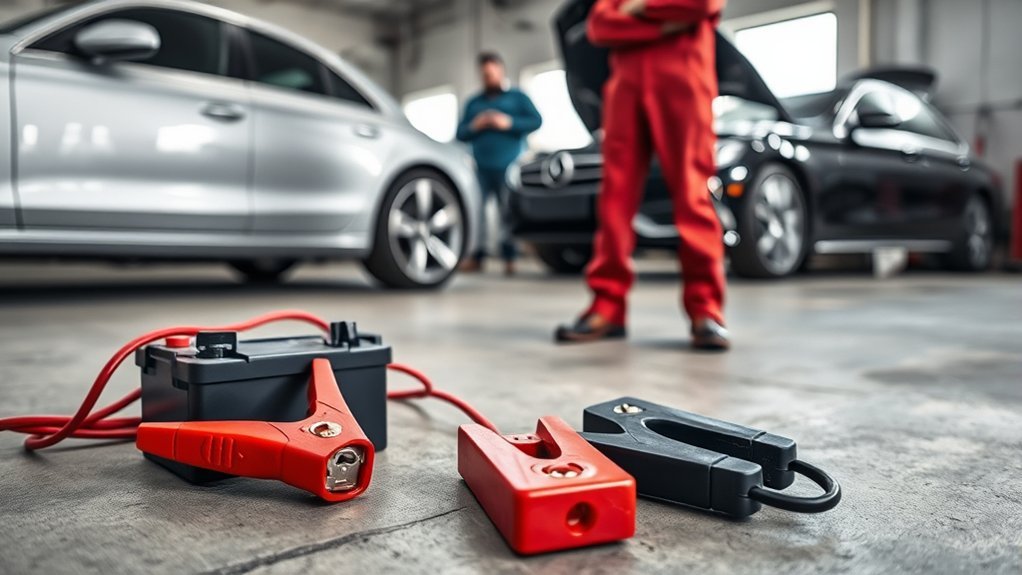
To jump start a car using cables, park both vehicles safely and turn them off. Connect the red clamp to the dead battery‘s positive terminal, then to the good battery’s positive terminal. Attach the black clamp to the good battery’s negative terminal and the other end to an unpainted metal spot on the dead car. Start the good vehicle, wait a few minutes, then attempt to start the dead one. You can also use a portable jump starter for a simpler process.
Key Takeaways
- For jump starting with cables, connect red clamps to positive terminals first, then black clamps to negative and ground surfaces.
- Ensure both vehicles are off and parked safely with the parking brakes engaged before connecting any cables.
- When using a portable jump starter, connect the red clamp to the positive terminal and the black clamp to a grounded metal surface.
- Always wear gloves and safety goggles to protect against battery acid and potential sparks during the jump-starting process.
- If the vehicle doesn’t start after several attempts, check for faulty components like the starter or alternator, not just the battery.
What You Need to Know About Car Batteries
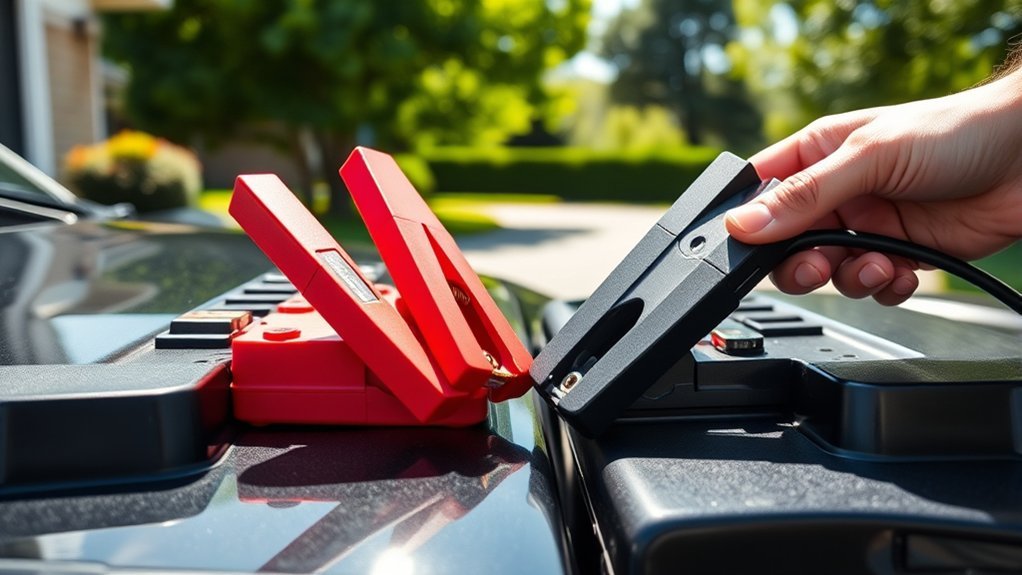
Understanding car batteries is vital for maintaining your vehicle’s performance. A car battery is a rechargeable storage device that supplies electrical energy to start your engine and power the electrical system when the engine isn’t running.
Signs of a failing battery include slow engine cranking and a dashboard battery warning light. If you notice these, your battery might be nearing the end of its lifespan, typically 3 to 5 years, depending on conditions. A dead battery can result from improper alternator charging or excessive electrical draws, so ensuring your battery needs are met is essential.
Regular maintenance, such as checking battery terminals for corrosion and securing connections, can meaningfully prolong reliability. To avoid issues, monitor your battery’s health and address any signs of wear promptly.
Jump Starting Cars With Cables: a Step-By-Step Guide
Jump starting a car can be a straightforward process if you follow the right steps. Here’s how to safely jump start a vehicle with jumper cables:
Jump starting a car is simple if you follow the correct steps for safety and efficiency.
- Make certain both vehicles are off and parked safely with the parking brake engaged.
- Connect the red positive clamp to the positive terminal of the dead battery and the other red clamp to the good battery’s positive terminal.
- Attach the black negative clamp to the good battery’s negative terminal, then secure the other black clamp to an unpainted metal surface on the dead vehicle to minimize spark risk.
- Start the engine of the good vehicle first, allowing it to run for a few minutes to charge the dead battery before attempting to start the dead vehicle.
After the dead vehicle starts, remember to disconnect the cables in reverse order: black from the dead vehicle, black from the good vehicle, red from the good vehicle, and finally red from the dead vehicle.
Using Portable Jump Starters: Key Steps
For situations where traditional jumper cables aren’t available, a portable jump starter offers a convenient alternative for reviving a dead battery. Before you begin, make certain your jump starter is fully charged and compatible with your car’s engine size and battery voltage.
| Step | Action |
|---|---|
| 1 | Connect the red clamp to the positive terminal of the dead battery. |
| 2 | Attach the black clamp to an unpainted metal surface to ground it. |
| 3 | Turn on the jump starter and allow it to charge the battery for a few minutes. |
| 4 | Attempt starting the engine. |
| 5 | Disconnect the clamps in reverse order: black first, then red. |
After successfully jump-starting, run the vehicle for at least 20 minutes to verify the battery is adequately charged. This will help prevent future starting issues and keep you on the road.
Staying Safe While Jump Starting: Key Precautions
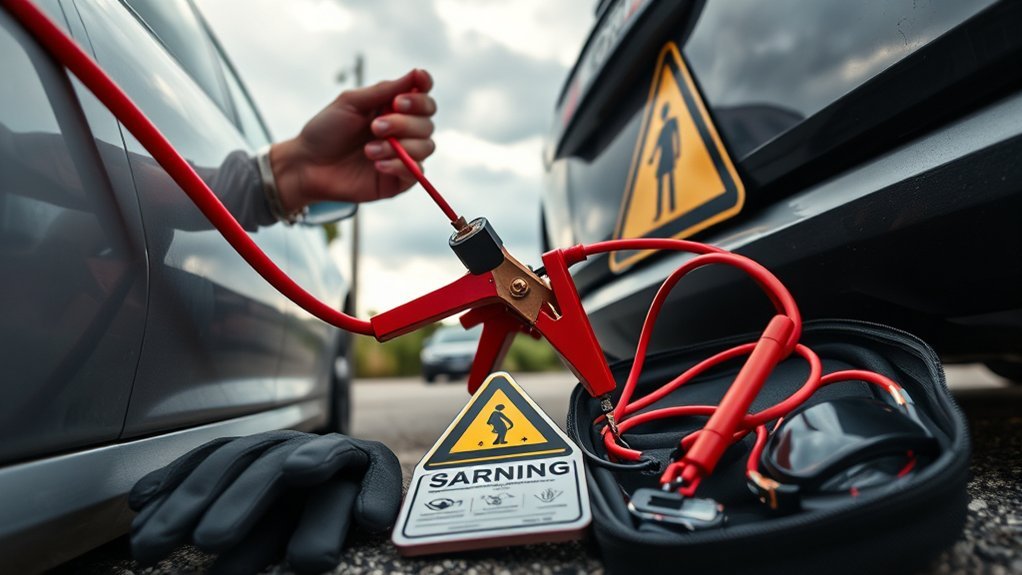
When handling a dead car battery, safety should always be your top priority to prevent accidents and injuries. Here are key precautions to follow:
- Always wear gloves and safety goggles to protect yourself from battery acid and sparks.
- Verify both vehicles are turned off and have the parking brake engaged before connecting jumper cables.
- Inspect battery terminals for corrosion; clean them if necessary to verify a good connection, as poor contact can lead to dangerous sparks.
- Connect the jumper cables in the correct order: red to the dead battery first, then to the good battery, black to the good battery, and finally to an unpainted metal surface on the dead car.
Keep a fire extinguisher nearby to address any potential fires from battery explosions during the jump-starting process.
Common Issues When Jump Starting Your Car
Even with proper safety precautions in place, several common issues can arise during the jump-starting process. It’s essential to be aware of these to guarantee a successful jump start.
| Common Issue | Description |
|---|---|
| Improper Connection | Connecting cables in reverse order can cause sparks and damage. |
| Corroded Battery Terminals | Dirty terminals hinder connections; clean them beforehand. |
| Poor Connection | Cables not securely attached lead to insufficient power transfer. |
| Dead Battery | If the vehicle doesn’t start after several attempts, check for a faulty starter or alternator. |
| Safety Risks | Jump starting a damaged or leaking battery can result in chemical spills or explosions. |
Frequently Asked Questions
How Can I Jumpstart My Car Without Cables?
You can jumpstart your car without cables by using portable battery packs or solar jump starters. Explore emergency power sources and DIY jump solutions, ensuring you follow safety precautions for modern vehicle technologies. Keep an emergency preparedness kit ready.
What Are the 5 Steps to Jumpstart a Car?
To jumpstart a car, connect the batteries correctly, ensuring safety precautions. Avoid common mistakes, troubleshoot electrical systems, and maintain battery lifespan. This liberation from emergencies empowers your vehicle’s power source through proper vehicle maintenance practices.
How to Manually Jump-Start a Car?
To manually jump-start a car, follow jump start tips: guarantee battery safety and proper connections. Prioritize emergency preparedness, use charging techniques suited for your battery type, and troubleshoot starter issues while observing safety precautions during DIY repairs.
How to Jump-Start a Car With Another Battery?
Wondering how to revive a dead car battery? Position both vehicles close, guarantee safety precautions, connect jumper cables to the battery terminals, keep the engine running, and troubleshoot as needed for a successful jump start.
Conclusion
Jump starting a car can feel as intimidating as maneuvering through a maze, but with the right knowledge and tools, it becomes a straightforward task. Whether you opt for cables or a portable jump starter, following the proper steps guarantees a successful restart. Always prioritize safety to prevent mishaps, and be aware of common issues that might arise. With practice, you’ll master this essential skill, keeping you on the road when unexpected battery failures occur.







Leave a Reply