A Cat S write-off is a vehicle that an insurance company has declared a total loss after structural damage. That does not mean the car can never be driven again. With proper repairs, the right documents and a roadworthy condition, a Cat S vehicle can return to the road. However, its accident history makes checking repair quality particularly important. Before buying one, you’ll want to examine its history, understand the damage and confirm that you can insure it.
Quick Answer
Cat S means a vehicle has been written off following structural damage but can be repaired. Check its status through a vehicle history report and V5C logbook. Before buying, verify the repairs, obtain an independent inspection and confirm insurance availability. A repaired Cat S car can legally return to the road when it meets the applicable requirements.
Key Takeaways
- Cat S identifies repairable structural damage, not a fixed percentage of the vehicle’s value.
- A vehicle history report and V5C can help confirm whether a car has been recorded as Cat S.
- A professional inspection is strongly recommended because an MOT does not guarantee structural repair quality.
- A repaired Cat S vehicle can be driven when it is roadworthy and meets the applicable insurance, tax and MOT requirements.
- Insurance availability, repair costs and resale value should all be considered before purchasing.
What Is a Cat S Write-Off and How Is It Classified?
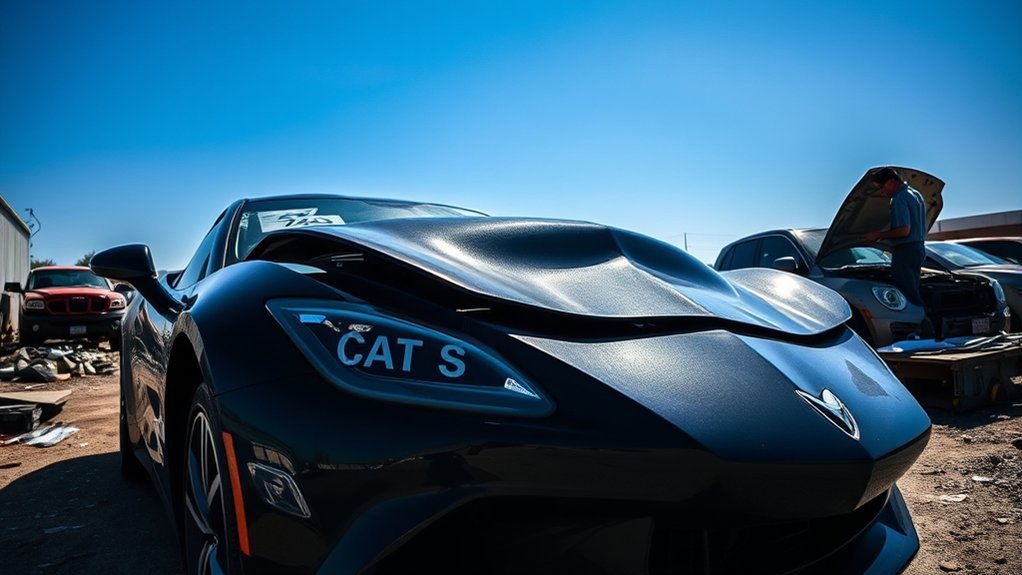
A Category S write-off is a vehicle that has suffered structural damage and has been declared a total loss by an insurance company.
The damage may affect important parts of the vehicle’s structure, such as its chassis, pillars, structural supports or other load-bearing components.
These parts help protect occupants and maintain the vehicle’s strength during normal driving and a collision.
A Cat S classification means structural damage was recorded, but the vehicle is considered repairable. It does not confirm that repairs have already been completed.
Insurance companies may declare vehicles a total loss when repairs are uneconomical compared with the vehicle’s value. However, there is no universal rule stating that repair costs must exceed 50% or 70% of the car’s value for it to become Cat S.
The classification identifies the type of damage, while the insurer’s total-loss decision reflects the circumstances of the claim.
According to the Association of British Insurers, the salvage categories distinguish vehicles that can be repaired from those that must not return to the road.
Cat S vs Other Insurance Write-Off Categories
Understanding the categories helps you judge what a vehicle’s recorded history actually means.
| Category | Meaning | Can It Return to the Road? |
|---|---|---|
| A | Scrap vehicle | No. The entire vehicle must be crushed. |
| B | Vehicle must be broken for parts | No. The bodyshell must be crushed, although certain parts may be salvaged. |
| S | Repairable structural damage | Yes, following suitable repairs and when roadworthy. |
| N | Repairable non-structural damage | Yes, following suitable repairs and when roadworthy. |
Cat S and Cat N do not describe the complete condition of a vehicle. A Cat N car can still have serious faults involving brakes, suspension, electrical systems or other safety-related components.
Likewise, a Cat S vehicle may have undergone extensive professional repairs. The classification alone cannot establish its current condition.
How to Identify a Cat S Write-Off
The most reliable starting point is a recorded vehicle history. Visual inspection is useful, but a car can look almost new after significant accident damage.
Use the following process before making a purchase.
At a Glance
| Time Required | Allow around 30–60 minutes for initial document and online checks, plus a separate inspection appointment. |
| Difficulty | Easy for recorded history checks; professional expertise is needed to assess structural repairs. |
| Tools Needed | Registration number, VIN, V5C, repair documents, internet access and a reputable vehicle history service. |
| Cost | Official DVLA and MOT checks are free. Private history reports and independent inspections are charged according to the provider. |
Step 1: Check the Vehicle History
Obtain a vehicle history report from a reputable provider, such as HPI or an equivalent service.
Look for:
- Recorded insurance write-off categories.
- The date of the recorded total loss.
- Outstanding finance.
- Stolen vehicle records.
- Mileage discrepancies.
- Registration plate changes.
A vehicle history report is valuable, but it cannot guarantee that every accident or repair has been recorded.
If the seller claims the vehicle has never been written off but the report records Cat S, ask for an explanation and supporting documents before proceeding.
Step 2: Check DVLA Records and the V5C
Use the official DVLA vehicle enquiry service to compare the vehicle’s recorded details with the seller’s information.
Ask to inspect the V5C registration certificate, commonly called the logbook.
DVLA records the Cat S classification on the V5C. Check the relevant notes and compare the document with the vehicle history report.
Also confirm that the registration number, make, model and vehicle identification number match the actual car.
The VIN is usually visible on the vehicle and may also appear on a plate or label. Its exact locations depend on the manufacturer.
Note: A V5C identifies the registered keeper and records vehicle information. It is not proof of legal ownership or proof that repairs have been carried out correctly.
Step 3: Review the MOT History
Use the official GOV.UK MOT history service.
Review previous test results, mileage readings, failures and advisories.
Look for unusual patterns, such as repeated suspension problems, steering faults or unexplained changes in mileage.
These issues do not automatically prove accident damage, but they can help identify questions to raise with the seller or inspecting engineer.
Remember that a valid MOT does not guarantee that a car is safe today or that structural accident repairs were completed correctly.
Step 4: Request Repair Documentation
Ask for photographs of the vehicle before repairs, a repair estimate, parts invoices and records from the garage that completed the work.
Useful documents include:
- The original damage assessment, if available.
- Photographs showing the damaged structural areas.
- Invoices identifying replacement parts.
- Records of body alignment and structural repairs.
- Airbag and seatbelt repair records, where applicable.
- Wheel alignment measurements.
- Electronic safety system calibration records, where applicable.
- Any independent inspection report.
Missing documentation does not automatically mean repairs were poor. However, it makes repair quality harder to establish.
Step 5: Arrange an Independent Inspection
Have the vehicle assessed by a qualified mechanic or automotive engineer with suitable experience in accident repairs.
For significant structural repairs, a specialist body repair inspection is preferable to relying only on a general mechanical check.
The Department for Transport’s consumer guidance specifically recommends independent inspection when considering a repaired write-off.
| Key Factor | What to Look For | Why It Matters |
|---|---|---|
| Vehicle History | Cat S record, damage history and finance status. | Helps establish the vehicle’s recorded background. |
| DVLA Registration | Correct V5C details and matching VIN. | Helps verify identity and registration records. |
| Repair Evidence | Invoices, photographs and technical records. | Helps establish the extent and quality of repairs. |
| Independent Inspection | Structural condition and safety-related systems. | Can identify faults not apparent from documents or appearance. |
| Insurance Coverage | Written quote and relevant policy terms. | Helps establish future ownership costs and coverage. |
How to Confirm Cat S Status and Assess the Damage
How can you be certain a vehicle is classified as a Cat S write-off?
Start with its recorded insurance history and V5C. These provide evidence of the classification. The condition of the bodywork alone cannot establish whether an insurer recorded Cat S status.
You should then investigate whether the repairs appear consistent with the recorded damage.
Physical Signs of Previous Structural Damage
Potential warning signs include:
- Uneven gaps between body panels.
- Doors or the boot not closing correctly.
- Visible distortion around structural panels.
- Unusual welding or signs of poorly finished repairs.
- Uneven tyre wear or steering that pulls to one side.
- Warning lights for airbags or other safety systems.
- Unexplained water leaks, wind noise or vibration.
These symptoms can have causes unrelated to a previous accident. Equally, a professionally repaired vehicle may show no obvious visual damage.
For that reason, use visual clues to guide an inspection rather than attempting to classify the car yourself.
Warning: Do not rely on a clear dashboard, fresh paint or a valid MOT as proof that previous structural damage was repaired correctly. Poor structural repairs can affect vehicle strength and crash protection.
What If the Vehicle History Does Not Match the Seller’s Description?
If the recorded category, VIN, damage photographs or repair history do not match the seller’s explanation, avoid paying a deposit until the discrepancy is resolved.
Ask for the original insurer or salvage documentation where available.
If you still cannot establish the vehicle’s identity, history or repair quality, consider another vehicle.
Can You Drive and Insure a Cat S Vehicle?
Yes. A Cat S vehicle can legally return to the road after suitable repairs, provided it is roadworthy and meets the applicable requirements.
Its insurance write-off history does not automatically prevent future registration or insurance.
Before driving, confirm that:
- All necessary repairs have been completed.
- The vehicle is safe and roadworthy.
- It has a valid MOT where required.
- It is correctly taxed.
- Appropriate motor insurance is in place.
- Its registration documents are correct.
Vehicle owners and drivers remain responsible for roadworthiness even when a car has a current MOT certificate.
Does a Cat S Car Need a Special Inspection?
A Cat S classification does not automatically require a separate government structural inspection before the vehicle can return to the road.
However, an independent post-repair inspection is strongly recommended, particularly when the vehicle suffered significant damage.
GOV.UK also advises having a repaired or restored vehicle MOT checked and ensuring its insurance remains valid.
See the official DVLA repair and restoration guidance.
If the vehicle’s MOT has expired, the normal MOT requirements apply. A fresh inspection is also sensible after extensive repairs, even where an existing certificate remains valid.
What DVLA Paperwork Is Needed After a Cat S Write-Off?
If you retain a Cat S vehicle following an insurance settlement, GOV.UK instructs you to send the complete V5C to the insurer and apply for a free replacement using form V62.
DVLA records the vehicle’s write-off category on its logbook.
If you are buying a vehicle that has already been repaired, check that the seller has the appropriate V5C and that the details match the vehicle.
Being classified as Cat S does not, by itself, mean every repaired car requires a completely new registration.
However, additional notification requirements apply when certain structural components are replaced.
For example, replacing the chassis, monocoque bodyshell or motorcycle frame requires notification to DVLA under its repair and restoration rules.
The relevant process may involve form V627/1, supporting receipts and vehicle identity evidence.
Consult the official GOV.UK insurance write-off instructions before submitting documents.
How Does Cat S Affect Insurance?
You can obtain insurance for a repaired Cat S vehicle, but not every insurer will offer the same terms.
Some insurers may charge more, request additional information or decline coverage.
Others may offer suitable policies depending on the vehicle and your circumstances.
Always disclose the recorded Cat S status when answering an insurer’s questions or arranging cover.
Ask about:
- Annual insurance premiums.
- Available levels of cover.
- Any requirements for repair or inspection evidence.
- Policy exclusions or special conditions.
- How a future total-loss settlement would be calculated.
A previously written-off vehicle may have a different market value from an equivalent vehicle without recorded damage. That can affect the amount payable following a future claim.
Pro Tip: Obtain insurance quotations before purchasing a Cat S vehicle. A lower purchase price is less attractive if insurance costs, future repairs or resale losses cancel out the saving.
Important Factors to Consider When Buying a Cat S Write-Off
Buying a repaired Cat S car can make financial sense, but the advertised price should not be your only consideration.
The most important question is whether the repairs restored the vehicle to a suitable condition and whether the seller can provide convincing evidence.
1. Check the Quality of Repairs
Structural repairs should be assessed against the manufacturer’s repair procedures.
Ask whether the work involved structural alignment, replacement panels or other major components.
If airbags, seatbelts or electronic safety systems were affected, request evidence that they were repaired or replaced correctly.
Modern vehicles may also need calibration of cameras, radar sensors or other driver assistance systems following certain repairs.
For electric and hybrid vehicles, damage assessment should include any affected high-voltage components and battery systems, with work carried out by suitably qualified technicians.
The ABI’s updated Salvage Code specifically addresses newer vehicle technologies, including electric and hybrid vehicles.
2. Confirm the Vehicle’s Documentation
Compare the V5C, VIN, registration number and history report.
Ask for repair invoices, available photographs and service records.
Check whether the vehicle has outstanding finance and confirm that the seller is entitled to sell it.
3. Obtain an Independent Assessment
A general test drive may reveal unusual noises, vibration or poor handling, but it cannot establish structural repair quality.
Arrange an appropriate professional inspection before committing to the purchase.
The inspection should cover the condition of repaired structural areas, steering, suspension, braking systems, tyres and safety-related components.
4. Compare the Purchase Price and Ownership Costs
Cat S vehicles may sell for less than comparable cars without recorded write-off history.
However, there is no fixed discount that makes every Cat S purchase worthwhile.
Consider the total cost rather than focusing only on the advertised price.
| Factor | What to Consider |
|---|---|
| Repairs Made | Quality, extent, documentation and possible future problems. |
| Safety Inspection | Professional findings and whether identified faults have been corrected. |
| Vehicle History | Recorded write-off status, mileage, finance and previous damage. |
| Insurance Premiums | Actual quotations and the terms offered by different insurers. |
| Resale Value | The potential effect of recorded structural damage on future buyer demand. |
| Future Maintenance | Possible repairs, alignment problems or safety system faults. |
5. Know When to Walk Away
Be particularly cautious if:
- The seller refuses an independent inspection.
- The VIN or registration details do not match.
- The damage history conflicts with the seller’s explanation.
- The vehicle has unresolved structural or safety-related faults.
- Warning lights are present or appear to have been concealed.
- The repair documentation is inconsistent.
- You cannot obtain suitable insurance.
- The asking price does not reflect the vehicle’s history and condition.
Warning: Never drive a vehicle that you know or suspect is in a dangerous condition. Arrange professional assessment and suitable transportation if serious damage or safety-related faults remain unresolved.
The UK government confirms that drivers are responsible for maintaining a roadworthy vehicle, regardless of whether it has a valid MOT.
You can review the official vehicle safety requirements for further guidance.
Frequently Asked Questions
How Do I Know if My Car Is S or SE?
S and SE are commonly used as manufacturer trim-level names, while Cat S is an insurance write-off classification. They are not interchangeable. To confirm whether your car has been recorded as Cat S, obtain a vehicle history report and check its V5C. If you are comparing Cat S with Cat N, remember that S identifies structural damage and N identifies non-structural damage.
Which Cat Is Better, N or S?
Cat N indicates non-structural damage, while Cat S indicates structural damage. Neither category guarantees the current condition of a vehicle. Compare the actual damage, repair quality, inspection results, insurance terms and purchase price before deciding which individual car meets your needs.
Does Cat S Mean Engine Damage?
No. Cat S identifies structural damage, not necessarily engine damage. The engine may be unaffected, damaged or replaced depending on the accident. Check repair records and arrange a mechanical inspection to establish its actual condition.
Which Car Category Is Cheapest to Insure?
There is no universal answer. Insurance prices depend on the individual vehicle, driver, insurer and previous damage. Cat N is not automatically cheaper to insure than Cat S. Obtain quotations for the specific car before purchasing.
Can You Check Cat S Status for Free?
Official DVLA and MOT checks provide useful vehicle information free of charge, but they are not substitutes for a comprehensive insurance write-off history report. Check the V5C and use a reputable history provider when investigating a used car.
Does a Cat S Car Need a New MOT After Repairs?
Cat S status alone does not automatically create a separate mandatory structural test. The normal MOT rules still apply, and GOV.UK advises having a repaired vehicle MOT checked. A valid MOT cannot guarantee the quality of previous structural repairs, so an independent assessment is also recommended.
Does Cat S Show on the V5C Logbook?
Yes. DVLA records the Cat S classification on the vehicle’s logbook. Always compare the V5C with the VIN and an independent vehicle history report before buying.
Does Cat S Affect Resale Value?
It can. Buyers may pay less for a vehicle with recorded structural damage, particularly when repair evidence is incomplete. Its actual resale value depends on the model, age, mileage, condition, repair quality and market demand.
Conclusion
Understanding Cat S write-offs can help you avoid costly mistakes when buying a used vehicle.
A Cat S classification does not mean the car is permanently unusable, but it does mean structural damage has been recorded and repair quality deserves careful attention.
Check the vehicle history, verify the V5C, review repair documents and obtain an independent inspection. Confirm insurance availability and compare the total ownership costs before making a purchase.
A properly repaired Cat S vehicle may offer good value, but the decision should rest on its documented condition rather than its appearance or advertised discount.
Sources
- GOV.UK — Insurance Write-Offs — official write-off categories, Cat S road use and V5C requirements.
- Association of British Insurers — Salvage Code Update — categorisation and the 2025 updates covering modern vehicle technologies.
- GOV.UK — Check a Used Vehicle You’re Buying — vehicle identity, registration, MOT and recall checks.
- GOV.UK — Vehicle Repairs and Restorations — repair guidance and circumstances requiring DVLA notification.
- GOV.UK — Check Your Vehicle Is Safe to Drive — roadworthiness responsibilities and the limitations of an MOT certificate.
- Department for Transport — Buying Repaired Written-Off Vehicles — independent inspections, vehicle history checks and insurance considerations.



Leave a Reply