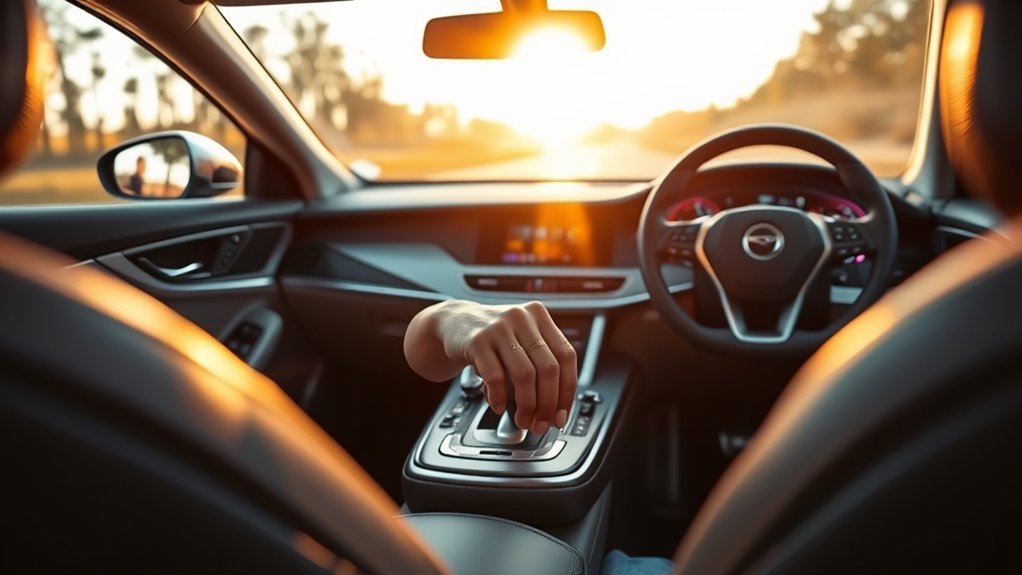
To drive an automatic car, start by adjusting your seat and mirrors. Press the brake pedal with your right foot and turn the ignition or push the start button. Shift the gear from ‘P’ to ‘D’ or ‘R’, then slowly release the brake to move. Always come to a full stop before changing gears. When parking, shift to ‘P’ and engage the parking brake. Curious about more tips and techniques? There’s plenty more to explore!
Key Takeaways
- Adjust your seat and mirrors for optimal visibility before starting the vehicle.
- Press the brake pedal with your right foot to start the engine while in ‘P’.
- Shift from ‘P’ to ‘D’ or ‘R’ after ensuring the parking brake is disengaged.
- Familiarize yourself with gear options: ‘P’ (park), ‘R’ (reverse), ‘N’ (neutral), and ‘D’ (drive).
- Always engage the parking brake after shifting to ‘P’ when parking, especially on inclines.
Essential Driving Techniques for Automatic Vehicles
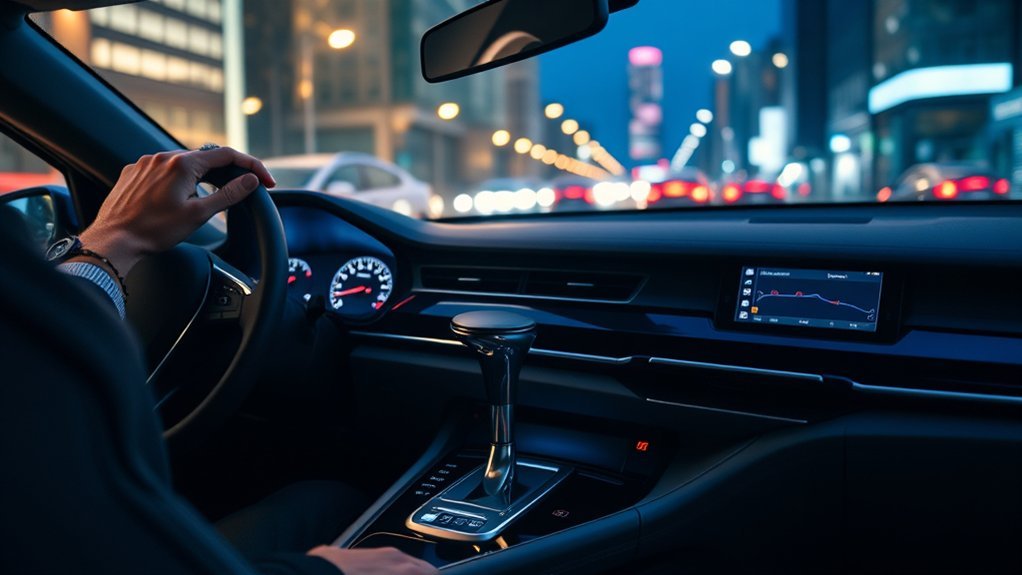
When you drive an automatic vehicle, it’s essential to understand the fundamental techniques to guarantee a safe and smooth experience.
Start by using your right foot for both the accelerator and brake pedals, keeping your left foot on the footrest to avoid confusion. To begin, press the brake pedal to start, then shift the gear shifter from ‘P’ (park) to ‘D’ (drive) or ‘R’ (reverse), ensuring the parking brake is disengaged.
Utilize your right foot for both pedals, press the brake to start, and shift gears smoothly for a safe drive.
When you shift to ‘R’ for reversing, make sure to come to a complete stop first. Remember, the rear wheels turn in the opposite direction of the steering wheel.
While driving an automatic car, you can focus on the road and steering without worrying about manual gear changes.
Finally, always engage the parking brake and shift to ‘P’ when parking to secure the vehicle, especially on slopes.
Enjoy your freedom as a learner driver!
Step-by-Step Guide: How to Start Your Automatic Car
Before you start your automatic car, make sure you’re seated comfortably and have your mirrors adjusted for ideal visibility.
First, press your foot on the brake pedal with your right foot. This is vital for safety! Now, turn the ignition key or push the start button to start the engine.
Once the engine is running, keep your foot on the brake and shift the gear from ‘P’ (park) to ‘D’ (drive) or ‘R’ (reverse), based on where you want to go.
After you shift the gear, slowly release the brake pedal to let the car ‘creep’ forward or backward. Once you feel the car moving, gently press the accelerator to increase speed.
It’s essential to be familiar with the gear selector options, including ‘P,’ ‘R,’ ‘N,’ and ‘D,’ to master your car with an automatic transmission.
Enjoy the freedom of the open road!
How Automatic Cars Work: Understanding the Basics
Understanding how automatic cars work can enhance your driving experience and boost your confidence behind the wheel.
Automatic transmission systems shift gears automatically based on vehicle speed and engine load, freeing you from the hassle of manual gear changes. Familiarize yourself with the common gear options: ‘P’ (park) locks the transmission to prevent rolling, ‘R’ (reverse) lets you move backward, ‘N’ (neutral) disengages the engine from the wheels, and ‘D’ (drive) is for forward motion.
When you accelerate, the transmission, often utilizing torque converters, provides smoother gear changes.
Some vehicles also offer a manual mode, giving you the option to control gear selection when desired.
Parking an Automatic Car: Tips and Best Practices
Parking an automatic car requires attention to a few key steps to guarantee safety and prevent damage.
First, come to a complete stop before shifting the gear lever into ‘R’ (reverse) or ‘P’ (park). This helps prevent transmission strain.
Next, engage the parking brake after moving to ‘P’ to secure your vehicle and prevent rolling, especially on inclines. To confirm the parking brake is properly engaged, slowly lift your foot off the brake pedal; if the car rolls, the brake isn’t engaged.
If you’re parking on a hill, turn the steering wheel towards the curb to prevent rolling into traffic if the brakes fail.
Finally, always shift from ‘R’ to ‘P’ before turning off the ignition to confirm the car is safely parked and to avoid damage to the transmission.
Following these steps will keep your automatic car secure and ready for your next adventure.
FAQs on Driving Automatic Cars: Tips and Troubleshooting?
Driving an automatic car can be straightforward, but you might’ve some questions about best practices and common issues. Here are some essential tips to keep in mind:
- Starting the Engine: Always make sure your foot’s on the brake before starting the engine and shifting out of park. This prevents accidental movement.
- Understanding Gears: Familiarize yourself with the gear selector: ‘P’ for park, ‘R’ for reverse, ‘N’ for neutral, and ‘D’ for drive. This knowledge helps you control the vehicle effectively.
- Reversing Safely: When reversing, remember the rear wheels move opposite to your steering. Adjust accordingly to avoid mishaps.
If you face gear-shifting issues or unexpected responses from your car, check for warning lights on the dashboard and consult the vehicle manual for troubleshooting steps.
Engage the parking brake after shifting to park to secure your vehicle, especially on inclines.
Enjoy driving freely!
Frequently Asked Questions
How to Drive an Automatic Car Step by Step for Beginners?
Start by adjusting your mirrors and ensuring proper driving posture. Familiarize yourself with essential controls. Engage the brake system, shift gears, use the accelerator pedal, and activate turning signals. Don’t forget to check road signs and apply the parking brake.
Do I Need to Put My Automatic Car in Neutral at Traffic Lights?
No, you don’t need to shift to neutral at traffic lights. Keeping it in drive guarantees better traffic flow and driver comfort while maintaining brake usage. Just remember to stay alert for safety measures!
What Is the Recommended Method of Driving a Car With Automatic Transmission?
To drive an automatic car effectively, master gear selection, utilize safety features, maintain proper vehicle maintenance, adapt to road conditions, avoid common mistakes, and handle parking procedures responsibly while optimizing fuel efficiency with engine braking techniques.
What Not to Do When Driving an Automatic Car?
You shouldn’t mix braking mistakes with gear shifting or ignore parking errors. Avoid throttle control mishaps, lane changing without signals, and merging unsafely. Respect speed limits and traffic signs for a smoother, liberated drive.
Conclusion
Now that you’ve mastered the basics of driving an automatic car, picture yourself gliding smoothly down the road, the sun shining through your windows. With each gentle press of the accelerator, you feel the car respond effortlessly, like a trusted companion. Remember to practice parking and maneuvering in various conditions to build your confidence. Soon, you’ll navigate the streets with ease, enjoying the freedom and adventure that comes with driving your own vehicle. Happy driving!







Leave a Reply