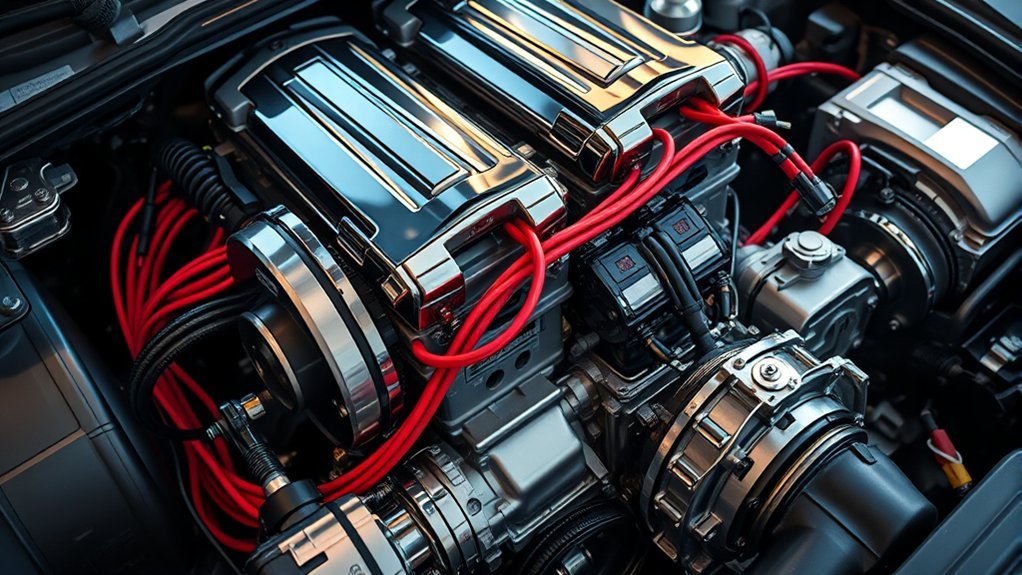
A hybrid car engine works with an electric motor to move the vehicle while using less gasoline than a comparable conventional car in many driving conditions. The gasoline engine provides power when needed, while the electric motor assists with acceleration and, in some hybrids, drives the wheels on its own. A battery stores electricity, and regenerative braking recovers some energy when the vehicle slows down. A computer coordinates these systems so the driver does not need to manually switch between gasoline and electric power.
Quick Answer
A hybrid car combines a gasoline engine with one or more electric motors. The motor helps move the car, while a battery stores electricity recovered during braking or produced by the engine. A control system automatically selects electric power, gasoline power, or both. This reduces fuel consumption, especially during stop-and-go driving.
Key Takeaways
Key Takeaways
- A hybrid combines an internal combustion engine (ICE) with an electric motor to improve fuel efficiency.
- The traction battery stores electricity for the motor, while the gasoline engine provides additional power and can help recharge the battery.
- Regenerative braking converts some of the vehicle’s motion into electricity instead of losing all that energy as heat.
- Power electronics and vehicle computers coordinate motor output, battery charging, and engine operation.
- The transmission or power-split system transfers power from the engine, motor, or both to the wheels.
- Conventional hybrids recharge while driving. Plug-in hybrids have larger batteries that can also be charged from an external electrical supply.
How Hybrid Car Engines Work: Power Sources Explained
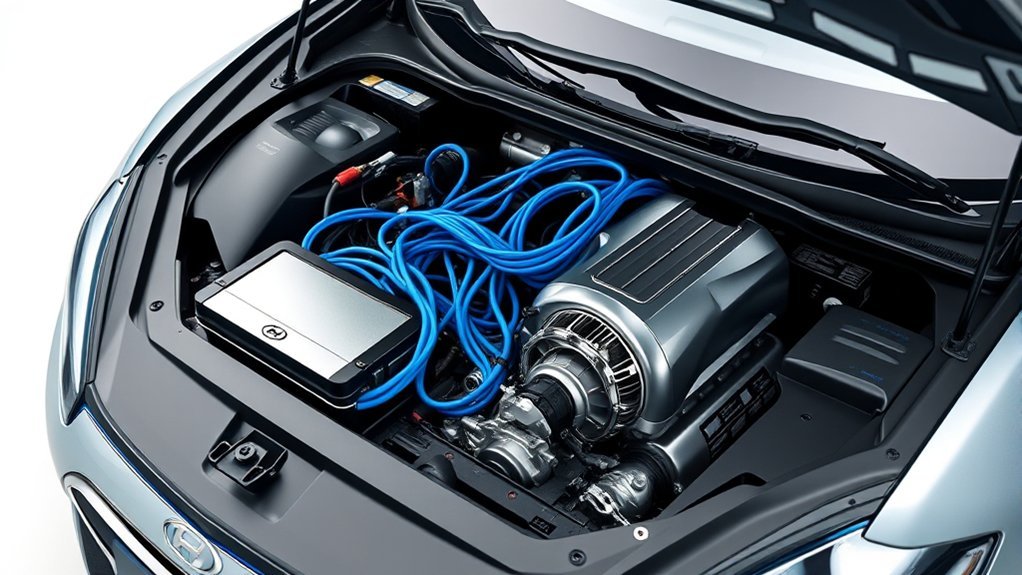
A hybrid car uses two sources of propulsion: a gasoline engine and an electric motor. The system decides how much power each should provide based on vehicle speed, acceleration, battery charge, temperature, and other operating conditions.
Unlike a fully electric car, a conventional hybrid still has a gasoline engine and fuel tank. However, its electric motor can reduce the amount of work the gasoline engine must perform.
According to the U.S. Department of Energy’s hybrid vehicle guide, combining these power sources can allow manufacturers to use a smaller gasoline engine without sacrificing the vehicle’s required performance.
How a Hybrid Car Works Step by Step
Although the exact sequence varies by model, a typical full hybrid operates as follows:
- Starting: The vehicle activates its hybrid electrical system. The gasoline engine may remain off if conditions allow.
- Moving from a stop: The electric motor may drive the wheels using electricity from the traction battery.
- Accelerating: The gasoline engine starts when needed. Both power sources may work together to provide additional torque.
- Cruising: The system chooses an efficient balance between gasoline and electric power. Some hybrids can briefly operate using electricity alone.
- Slowing down: The electric motor acts as a generator, converting some of the vehicle’s kinetic energy into electrical energy.
- Stopping: The gasoline engine may shut off to avoid unnecessary idling. It restarts automatically when required.
You normally do not have to control these transitions yourself. The vehicle’s hybrid control computer manages them automatically.
Why Does a Hybrid Switch Between Gasoline and Electric Power?
Gasoline engines and electric motors work efficiently under different conditions.
An electric motor can deliver torque immediately, making it useful when moving away from a stop. The gasoline engine provides sustained power when driving conditions require it.
During acceleration, the motor can assist the engine. During braking, the same motor or a separate motor-generator can recover energy.
This reduces fuel wasted during idling, acceleration, and repeated stopping.
The system also considers battery charge. When the battery reaches its normal lower operating limit, the control system can run the gasoline engine to help restore its charge.
Parallel, Series, and Power-Split Hybrids
Hybrid systems differ in how they connect the engine and electric motor to the wheels.
- Parallel hybrid: Both the gasoline engine and electric motor can provide mechanical power to the wheels. Depending on the design, either source may operate alone or together.
- Series hybrid: The electric motor drives the wheels. The gasoline engine operates a generator that supplies electricity to the motor, charges the battery, or supports both functions.
- Power-split or series-parallel hybrid: A mechanical and electrical power-management system allows the vehicle to combine characteristics of series and parallel operation.
Toyota’s Hybrid Synergy Drive is an example of a manufacturer-specific hybrid powertrain that coordinates gasoline and electric power. Other manufacturers use different designs and control strategies.
What Is the Difference Between Mild, Full, and Plug-In Hybrids?
These terms describe how much the electric system contributes and whether the vehicle can recharge from an outside electrical supply.
- Mild hybrid: The electric motor assists the gasoline engine and may support stop-start operation. It generally cannot propel the vehicle using electricity alone.
- Full hybrid: The electric motor can provide propulsion by itself under suitable conditions, although electric-only operation is usually limited.
- Plug-in hybrid (PHEV): A larger battery allows more electric driving. The battery can be charged from an external power source as well as through the engine and regenerative braking.
A conventional hybrid does not require a charging station. A plug-in hybrid can still use gasoline, but charging it regularly helps maximize its electric-driving benefits.
The Department of Energy’s plug-in hybrid guide explains how external charging, battery capacity, and driving distance affect gasoline consumption.
What Is Regenerative Braking in Hybrid Cars?
Regenerative braking is one of the main reasons hybrid cars can be especially efficient in city traffic.
When you release the accelerator or press the brake pedal, the hybrid system can use an electric motor as a generator.
Instead of using electricity to turn the wheels, the rotating wheels drive the motor-generator. This produces electrical energy and creates resistance that helps slow the vehicle.
The recovered electricity flows back into the traction battery, where it can be stored for later use.
Regenerative braking recovers some energy that conventional friction brakes would otherwise release as heat.
Does Regenerative Braking Replace Normal Brakes?
No. Hybrids still have conventional friction brakes.
Regenerative braking cannot recover all the energy from every stop. Its effectiveness depends on factors such as speed, battery charge, battery temperature, and the amount of braking requested.
During stronger braking, or when regeneration is limited, the vehicle relies more heavily on its friction brakes.
A brake-control system blends regenerative and mechanical braking to provide the requested deceleration.
Because regeneration can reduce the amount of work performed by brake pads and rotors, these parts may last longer than they would on a comparable conventional vehicle. Actual service life still depends on driving conditions, corrosion, and maintenance.
Pro Tip: Anticipate traffic and brake smoothly when it is safe to do so. This can help the hybrid system recover energy. Never delay necessary braking just to increase regeneration.
Essential Components of Hybrid Car Performance
Several components work together to deliver power efficiently and keep the hybrid system operating correctly.
1. Internal Combustion Engine
The gasoline engine provides mechanical power and may also help generate electricity.
Many hybrid engines are designed to favor fuel efficiency, relying on electric assistance when additional power is needed.
2. Electric Traction Motor
The electric traction motor uses electricity from the high-voltage battery to produce torque.
Depending on the hybrid design, it can propel the vehicle independently or assist the gasoline engine.
Some hybrids use multiple motor-generators for propulsion, electricity generation, and engine starting.
3. Traction Battery Pack
The traction battery stores electrical energy for the electric motor.
Hybrid vehicles may use nickel-metal hydride or lithium-ion battery technology, depending on the manufacturer and model.
The battery-management system monitors operating conditions and manages charging and discharging to protect the battery.
Unlike a conventional car battery, the traction battery is part of a high-voltage electrical system.
4. Power Electronics Controller
The power electronics controller regulates electrical energy delivered to the motor.
It helps control motor speed and torque while coordinating energy flow between the motor and battery.
Related power-electronics equipment converts electricity into the form required by the motor and manages energy recovered during regeneration.
5. DC/DC Converter
The DC/DC converter transforms higher-voltage battery power into the lower-voltage electricity needed by vehicle accessories and the auxiliary electrical system.
It also helps maintain the auxiliary battery’s charge while the hybrid system is operating, depending on the vehicle design.
6. Auxiliary 12-Volt Battery
The auxiliary battery is separate from the main traction battery.
It supports the vehicle’s low-voltage electrical systems and helps activate the controls needed to start the hybrid system.
A discharged 12-volt battery can prevent a hybrid from entering its normal driving-ready state, even when the traction battery contains energy.
7. Transmission or Power-Split System
The transmission transfers mechanical power to the wheels.
Depending on the design, the engine and motor may connect through a conventional transmission, hybrid transaxle, or power-split mechanism.
This arrangement allows the vehicle to use different combinations of gasoline and electric power across its operating range.
8. Cooling System
The cooling system maintains suitable operating temperatures for components such as the gasoline engine, electric motor, battery, and power electronics.
Battery cooling arrangements vary by vehicle. Some use air cooling, while others use liquid-based systems.
Restricted battery cooling airflow or a cooling-system fault can affect performance and battery life.
The Department of Energy’s component guide provides additional explanations of these systems.
Energy Management in Hybrid Cars
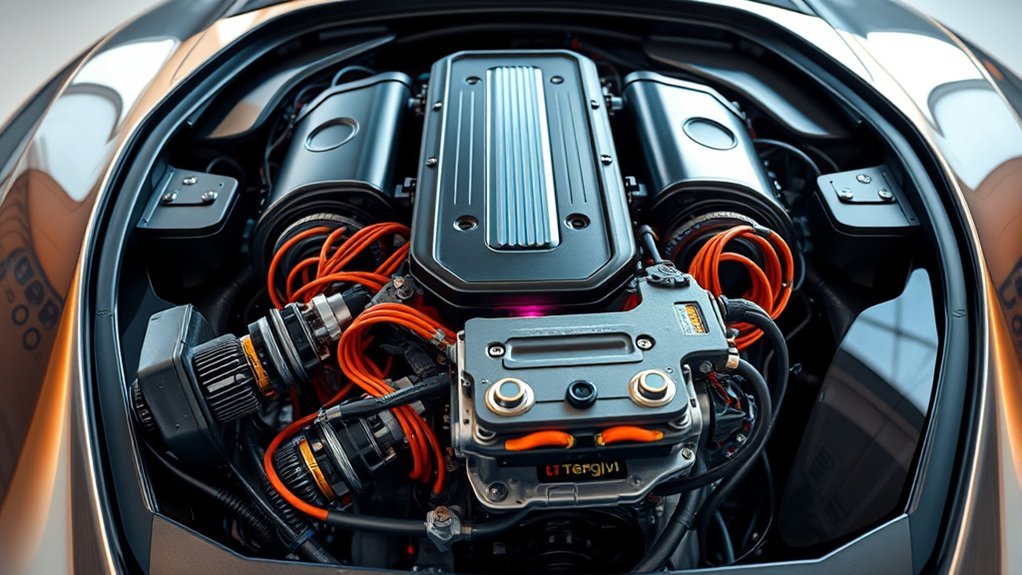
Effective energy management allows a hybrid vehicle to use gasoline and electric power without requiring constant input from the driver.
The hybrid control system monitors battery charge, accelerator demand, vehicle speed, and other operating conditions.
It then determines whether to use the electric motor, start the gasoline engine, combine both power sources, or recharge the battery.
How Does a Hybrid Battery Recharge?
A conventional hybrid recharges its traction battery in two main ways:
- Regenerative braking: The motor-generator captures some energy during deceleration and sends it to the battery.
- Gasoline-engine operation: The engine can drive a generator or otherwise support battery charging, depending on the powertrain design.
A plug-in hybrid has a third charging method: electricity supplied through its external charging port.
The DC/DC converter also supplies the low-voltage electrical system, helping power accessories and maintain the auxiliary battery.
What Happens When the Hybrid Battery Gets Low?
A low charge reading during normal driving does not necessarily mean the battery is failing.
Hybrid vehicles manage the traction battery within an operating range established by the manufacturer. The gasoline engine can run to maintain or restore charge when necessary.
The driver may notice the engine running more often when the battery charge is low or when additional power is required.
However, a battery that is fully discharged, damaged, or unable to operate correctly is a different situation.
Can a Hybrid Drive With a Failed Battery?
You should not assume that a hybrid can operate normally with a failed traction battery simply because it still has a gasoline engine.
Some hybrid systems require the traction battery and associated electronics for startup, engine operation, or normal propulsion.
If the hybrid system cannot enter its driving-ready state, follow the owner’s manual and arrange professional assistance.
Toyota’s hybrid battery guidance specifically advises contacting a dealer if a fully discharged traction battery prevents the hybrid system from starting.
Warning: Never open a hybrid traction battery or handle exposed high-voltage components or orange high-voltage cables. If the vehicle displays a hybrid-system warning, will not enter its driving-ready state, or has damaged electrical components, follow the owner’s manual and use a qualified hybrid technician.
How Long Does a Hybrid Battery Last?
Hybrid traction batteries are designed for extended service, but they do not last indefinitely.
Battery life depends on the design, operating temperature, charging patterns, age, and vehicle use.
Replacement can be expensive outside warranty coverage, so check the specific manufacturer’s battery warranty before purchasing a new or used hybrid.
The vehicle’s cooling system and any battery ventilation passages should also be maintained according to the owner’s manual.
Benefits of Driving a Hybrid Car for You and the Environment
Hybrid cars can reduce gasoline consumption by using electric assistance, recovering energy during braking, and shutting off the engine when it is not needed.
However, the actual benefits depend on the vehicle, driving conditions, and the type of hybrid system.
Improved Fuel Economy
Many hybrids achieve better fuel economy than comparable gasoline-only vehicles, particularly in stop-and-go traffic.
Regenerative braking and engine stop-start operation are useful in city driving, where vehicles frequently slow down and accelerate.
Highway fuel-economy improvements vary by model because regenerative braking occurs less often during steady-speed cruising.
For an accurate comparison, check the EPA city, highway, and combined MPG ratings for the specific hybrid and gasoline vehicles you are considering.
Reduced Fuel Consumption and Emissions
Using less gasoline generally reduces the carbon dioxide emitted during vehicle operation.
Hybrid vehicles can also reduce certain tailpipe pollutants compared with less efficient conventional vehicles.
However, a gasoline hybrid is not a zero-emission vehicle. Its gasoline engine still produces exhaust emissions whenever it runs.
Battery manufacturing, vehicle production, fuel production, and eventual battery recycling are also part of the vehicle’s overall environmental impact.
The Department of Energy explains that conventional hybrids combine fuel-economy benefits with lower tailpipe pollution while maintaining the range and fueling convenience of gasoline vehicles.
Potentially Lower Brake Maintenance Costs
Because regenerative braking handles part of the braking effort, brake pads and rotors may experience less wear.
This can reduce some maintenance costs over the vehicle’s life.
However, conventional brake components still need periodic inspection. Low brake use can also contribute to corrosion in some operating environments.
What Are the Main Disadvantages of Hybrid Cars?
Hybrid technology offers efficiency benefits, but it also introduces ownership trade-offs.
- Purchase price: Some hybrids cost more upfront than comparable gasoline-only versions.
- Battery replacement: A traction battery may eventually need repair or replacement, particularly as the vehicle ages.
- System complexity: Hybrid-specific electrical problems may require specialized diagnostic equipment and trained technicians.
- Vehicle design: Battery placement and powertrain packaging can affect cargo space or other features, depending on the model.
- Variable savings: Fuel-cost savings depend on mileage, gasoline prices, purchase-price differences, and driving conditions.
Hybrids also retain a gasoline engine, so they still require appropriate oil changes, cooling-system service, and other manufacturer-specified maintenance.
According to the Department of Energy’s maintenance guidance, conventional and plug-in hybrids have broadly similar general maintenance requirements to gasoline vehicles, while regenerative braking can reduce brake wear.
Can Government Incentives Reduce the Cost?
Incentive eligibility depends on the vehicle, purchase date, and applicable program.
Ordinary non-plug-in hybrids do not qualify for the former federal plug-in clean-vehicle purchase credit.
As of September 2026, the IRS states that federal new, previously owned, and commercial clean-vehicle credits are unavailable for vehicles acquired after September 30, 2025.
Some state, local, or manufacturer-specific incentives may differ, so check the applicable current program rather than assuming a hybrid purchase qualifies for a federal credit.
See the IRS clean-vehicle credit guidance for the federal rules.
Frequently Asked Questions
How Does a Hybrid Engine Work Step by Step?
A hybrid starts its electrical system, uses the electric motor when conditions allow, starts the gasoline engine when more power is needed, and may combine both during acceleration. During braking, the motor-generator recovers some energy and returns it to the battery. The control system manages these changes automatically.
What Is the Main Disadvantage of a Hybrid Car?
A higher purchase price is a common disadvantage, although the difference varies by model. Hybrids also have a traction battery and additional electrical components that may require specialized repairs. Fuel savings and reduced brake wear can offset some ownership costs, but the result depends on the vehicle and how it is used.
Can You Still Drive a Hybrid Car if the Battery Dies?
Not necessarily. A low traction-battery charge during normal operation is different from a failed or fully discharged battery. A traction-battery failure may prevent the hybrid system from starting or operating normally. A discharged auxiliary 12-volt battery can also prevent startup. Follow the owner’s manual and seek qualified assistance when needed.
How Does a Hybrid Engine Switch Between Gas and Electric?
A hybrid control computer monitors speed, power demand, battery charge, temperature, and other conditions. It then determines when to use the electric motor, run the gasoline engine, or combine their output. The transmission or power-split system delivers the available power to the wheels.
Do You Have to Plug In a Hybrid Car?
No external charging is required for a conventional hybrid. It recharges through regenerative braking and the gasoline engine. A plug-in hybrid can also charge from an external electrical supply, allowing more driving on stored electricity.
Can a Hybrid Run on Electricity Alone?
Some can. Full hybrids may operate on electric power alone for limited periods under suitable conditions. Mild hybrids generally cannot propel the vehicle independently. Plug-in hybrids typically provide greater electric-only driving capability because they have larger batteries.
Conclusion
A hybrid car combines gasoline and electric power to improve efficiency without relying entirely on either source.
Its electric motor assists with propulsion, the traction battery stores energy, and regenerative braking recovers some electricity during deceleration. Meanwhile, the gasoline engine provides power and can help maintain the battery’s charge.
The result is a vehicle that can reduce gasoline consumption while retaining familiar driving range and fueling convenience.
However, hybrid systems are not identical. Battery capacity, electric-driving capability, maintenance requirements, and fuel savings differ between models.
Understanding how these systems work can help you make better decisions about driving habits, maintenance, and whether a conventional or plug-in hybrid meets your needs.
Sources
- U.S. Department of Energy — How Do Hybrid Electric Cars Work? — Hybrid powertrain components and operating principles.
- U.S. Department of Energy — Hybrid Electric Vehicles — Hybrid classifications, regenerative braking, fuel efficiency, and conventional hybrid operation.
- U.S. Department of Energy — Plug-In Hybrid Electric Vehicles — External charging, electric driving, and hybrid configurations.
- U.S. Department of Energy — Maintenance and Safety of Electric Vehicles — Battery maintenance, braking-system wear, ownership considerations, and high-voltage safety.
- Toyota Owners — Hybrid System Features — Traction-battery charging and fully discharged battery guidance.
- Internal Revenue Service — Clean Vehicle Tax Credits — Federal clean-vehicle credit eligibility and acquisition-date rules.






Leave a Reply