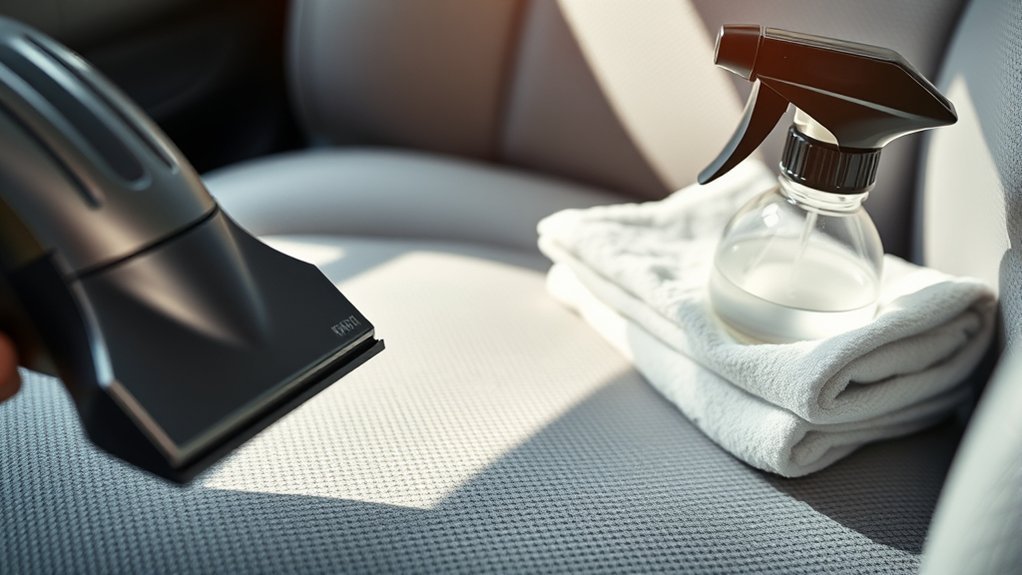
To clean fabric seats in your car properly, start by identifying the upholstery type and checking care labels. Gather essential tools like a vacuum, foaming citrus shampoo, and microfiber towels. Vacuum the seats thoroughly, focusing on crevices. Before applying any cleaner, test it on a hidden area to avoid damage. Use gentle scrubbing techniques and blot, rather than rub, spills. For effective maintenance, schedule regular cleanings and consider using fabric protector sprays to repel stains. There’s a lot more to learn for ideal care.
Key Takeaways
- Identify the upholstery fabric type and check care instructions before cleaning to avoid damage.
- Use a high-powered vacuum to remove loose dirt and debris prior to applying any cleaning solutions.
- Test cleaning solutions on a hidden area to ensure they do not damage the fabric before full application.
- Apply foaming citrus fabric shampoo lightly, using a soft brush for delicate areas and a drill attachment for tougher stains.
- Regularly maintain seats by vacuuming, addressing spills immediately, and using fabric protector sprays to prevent stains.
Understanding Your Upholstery Fabric Before Cleaning
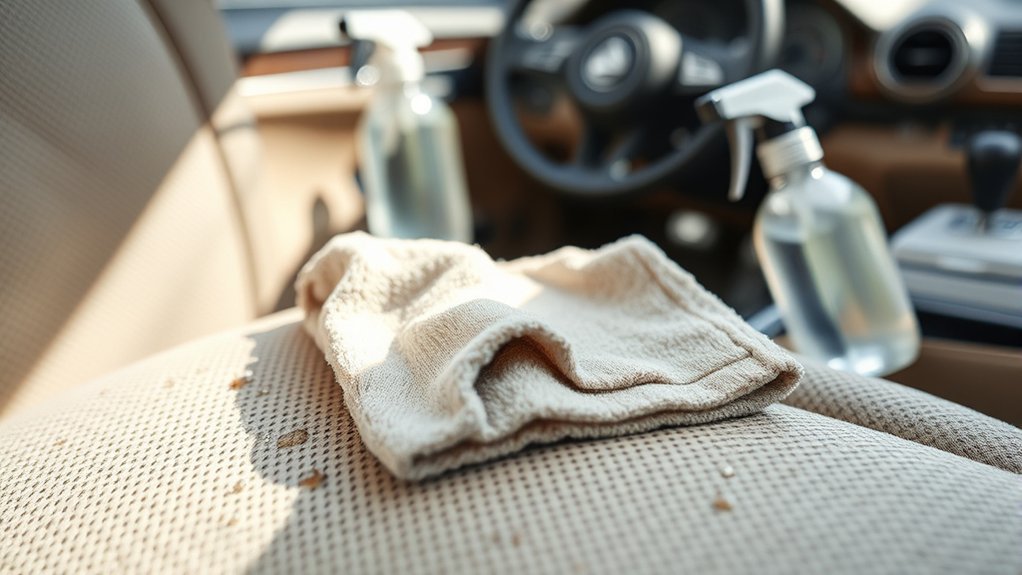
To effectively clean your car’s fabric seats, it’s essential to first identify the type of upholstery used. Common upholstery fabrics like nylon and polyester have distinct cleaning requirements. Check for labels or consult your car manual for specific care instructions. This step guarantees you choose the right cleaning products without risking damage.
Inspect the fabric for signs of aging or damage; this helps determine appropriate cleaning methods. If your upholstery consists of delicate fabrics, like silk, you’ll need to exercise extra caution. Opt for mild cleaning solutions to preserve their integrity.
Before diving into the cleaning process, always conduct a test on an inconspicuous area to prevent discoloration or further damage. Understanding your upholstery fabric not only enhances the effectiveness of the cleaning process but also liberates you from potential pitfalls that could mar your car’s interior.
Must-Have Tools for Cleaning Your Car Seats
To effectively clean your car seats, you’ll need a few essential tools that guarantee thorough results.
Start with a high-powered vacuum cleaner to eliminate loose dirt and debris, followed by specialized cleaning solutions like foaming citrus fabric shampoo.
Additionally, having a microfiber towel and a detailing brush will help you achieve a spotless finish while addressing stubborn stains.
Essential Cleaning Supplies
Cleaning fabric seats in your car requires a strategic selection of essential cleaning supplies that can effectively address various types of dirt and stains.
Start with a foaming upholstery shampoo for general dirt and a specialized stain extractor for stubborn stains. Microfiber towels are important; they wipe away residue without scratching the fabric. An interior detailing brush helps scrub delicate fabrics, ensuring thorough cleaning in hard-to-reach areas.
For heavy-duty tasks, drill-powered brush attachments, such as gray light-duty and yellow medium brushes, tackle grime effectively. Always test cleaning solutions on inconspicuous areas to prevent damage.
Finally, a high-powered vacuum cleaner is essential for removing loose dirt, providing a solid foundation for your cleaning fabric car efforts and maintaining a clean cloth car.
Recommended Cleaning Tools
When it comes to cleaning fabric seats in your car, having the right tools makes all the difference. Start with a high-powered vacuum cleaner to remove loose dirt and debris, ensuring a clean car base.
For tough stains, specialized cleaning solutions like Foaming Citrus Fabric Clean or Lightning Fast Stain Extractor are vital. An upholstery brush or soft-bristled manual scrubber helps agitate the fabric without damage.
For larger areas, consider drill-powered attachments like Gray Light Duty and Yellow Medium Drill Brushes to speed up the process. A steam cleaner can also be invaluable for deep cleaning.
Finally, microfiber towels are important for wiping away residue and excess moisture, leaving your seats looking polished and refreshed.
Step-by-Step Guide to Vacuuming Your Car Seats
Vacuuming your car seats effectively requires a systematic approach to guarantee every inch of fabric is clean. Start by using a high-powered vacuum cleaner to remove loose dirt and grime, focusing on the areas between cushions and along edges. Utilize attachments to reach seat seams and crevices, ensuring thorough cleaning.
Follow this guide for an efficient vacuuming session:
| Step | Action |
|---|---|
| 1 | Remove loose items from seats. |
| 2 | Use a high-powered vacuum. |
| 3 | Focus on seams and crevices. |
| 4 | Vacuum in one consistent direction. |
| 5 | Repeat every 3-6 months. |
Regular vacuuming prevents dirt buildup and keeps your fabric seats looking pristine. Consider integrating a steam cleaner for stubborn stains to enhance your cleaning routine.
Why Testing Cleaning Solutions Is Crucial?
After thoroughly vacuuming your fabric seats, it’s crucial to guarantee that the cleaning solutions you choose won’t harm the upholstery.
Testing cleaning solutions on a hidden area is an important step to prevent discoloration and damage caused by harsh chemicals. By performing a small patch test, you can observe the cleaner’s effect, confirming it doesn’t lead to fading or deterioration.
Wait about 10 minutes after applying the cleaner on the inconspicuous spot to assess any adverse reactions before proceeding with a full application. This precaution allows you to verify that the cleaner is safe and effective, enhancing your cleaning process without risking the integrity of your seats.
Neglecting this important step could result in costly repairs or replacements of damaged upholstery, underscoring the significance of testing before you clean.
Prioritize this practice to confirm your fabric seats remain in excellent condition.
Effective Techniques for Applying and Scrubbing Cleaners
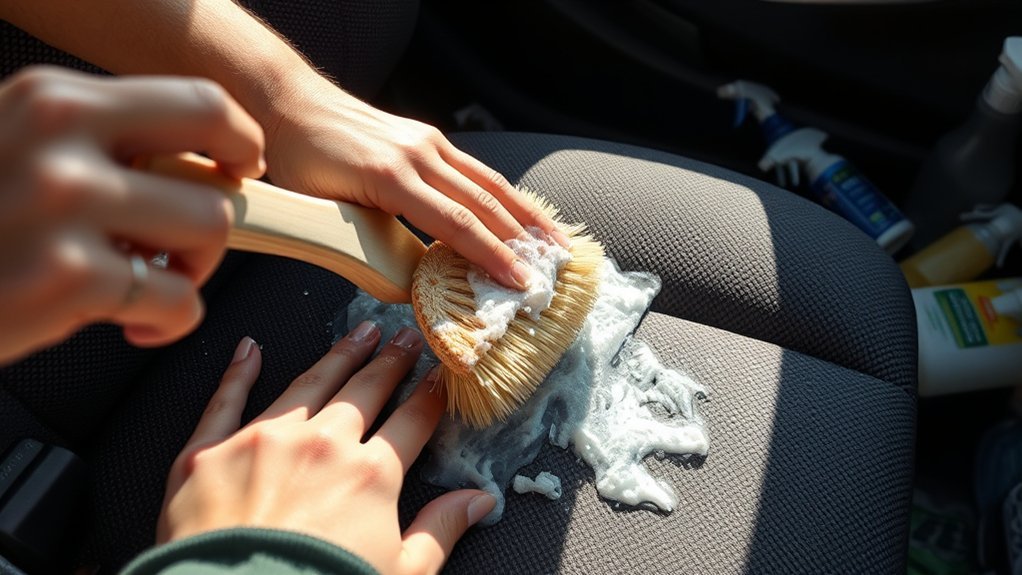
To achieve the best results when cleaning fabric seats, it’s essential to apply and scrub the cleaners with precision. Start by applying cleaners lightly to lightly soiled areas, using more on heavily soiled spots. This prevents oversaturation and maximizes effectiveness.
For optimal results, apply cleaners carefully, using more for tougher stains to avoid oversaturation and enhance cleaning effectiveness.
For scrubbing, use a hand brush on delicate fabrics and a drill attachment for tougher stains, maintaining consistent pressure while scrubbing in a circular motion.
For a deep clean, employ a DA polisher, working in a 2×2 ft cross-hatch pattern and adjusting speed based on grime levels. After scrubbing, always wipe away residue with a microfiber towel to guarantee no leftover cleaner remains, providing a polished finish.
If you opt for steam cleaning, agitate the fabric while steaming to lift dirt and stains effectively, but be cautious to avoid over-saturation. Following these techniques will help you clean your cloth seats thoroughly and efficiently.
Effective Drying Techniques for Fabric Car Seats
Once you’ve effectively scrubbed and cleaned your fabric seats, drying them properly is essential to prevent issues like mold and mildew.
Start by using a microfiber towel to blot any excess water remaining on your car seats. For effective drying techniques, enhance air circulation by utilizing a fan or the car’s air conditioning, but avoid running these overnight to prevent potential damage to your interior.
If possible, park your vehicle in a shaded area with good airflow to promote natural drying without risking fading from direct sunlight. Remember, fabric seats shouldn’t remain damp for extended periods, as this can lead to unwanted odors and mold growth.
Regularly check the fabric for moisture, and be patient; drying can take anywhere from a few minutes to an hour, depending on humidity levels.
How to Maintain Clean Fabric Seats and Prevent Stains
Maintaining clean fabric seats and preventing stains requires a proactive approach, as neglect can lead to a decline in both appearance and hygiene.
To effectively protect your car’s fabric seats, consider these essential steps:
- Regular Vacuuming: Aim to vacuum your seats every three to six months, increasing to one to two months if you use your car heavily. This prevents dirt buildup and keeps your seats looking fresh.
- Immediate Spill Treatment: If a spill occurs, treat it right away with a mild dish soap and water mixture. Blot the area with a clean cloth instead of rubbing, which can set stains.
- Utilize Seat Covers: Protect your fabric from wear and tear by using seat covers, especially during meals. This minimizes potential stains and extends the life of your seats.
Frequently Asked Questions
What Do Auto Detailers Use to Clean Cloth Seats?
Auto detailers use specialized detailing products tailored for various fabric seat types. They employ effective cleaning techniques, including steam cleaning and targeted stain removal, ensuring a thorough clean that restores your seats’ appearance and freshness.
How to Clean Fabric Seats in a Vehicle?
To clean fabric seats, vacuum thoroughly, test cleaners, spray lightly, scrub gently, target stains, and wipe excess. Avoid common mistakes, utilize effective detailing tools, and follow fabric care tips for best results.
What Is Best for Cleaning Fabric Car Seats?
For cleaning fabric car seats, use specialized fabric seat cleaners and effective upholstery cleaning techniques. Incorporate stain removal tips by treating spills immediately. Regular automotive fabric care guarantees your seats remain fresh and visually appealing.
Is It Better to Shampoo or Steam Clean Seats?
For fabric seat care, steam cleaning’s quick drying and eco-friendly benefits often outshine shampoo effectiveness, though shampooing tackles deep stains well. Consider both methods for a thorough cleaning product comparison and ideal results.
Conclusion
By following these steps, you’ll not only keep your fabric seats looking pristine, but you’ll also extend their lifespan. Isn’t it worth investing a little time and effort to avoid the headache of stubborn stains later? Regular maintenance and the right tools make all the difference, turning your car into a clean, inviting space. So, take pride in your ride and remember: a well-maintained interior reflects the care you put into every journey.






Leave a Reply