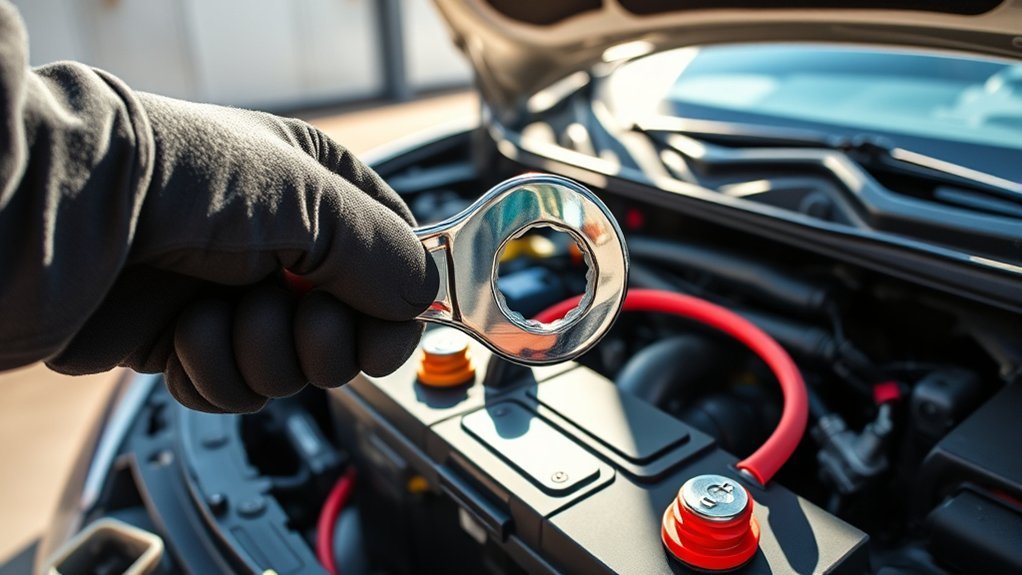
Replacing a car battery is a job many drivers can handle with basic tools, but the order of the steps matters. A loose connection, incorrect replacement battery, or accidental short circuit can cause expensive problems. By following the correct procedure, you can safely disconnect the old battery, install a compatible replacement, and check that your vehicle starts and charges properly.
Quick Answer
To safely replace a car battery, turn off the vehicle, wear protective gear, and disconnect the negative terminal first, followed by the positive. Remove the hold-down and old battery, clean the tray, and secure the correct replacement. Reconnect the positive terminal first, then the negative. Finally, check the connections and test the vehicle.
Key Takeaways
- Wear safety goggles and protective gloves before handling a car battery.
- Always disconnect the negative (-) terminal first, followed by the positive (+) terminal.
- Choose a replacement battery that matches your vehicle’s required size, chemistry, terminal layout, and electrical specifications.
- Clean the battery tray and cable connections before installing the replacement.
- Secure the battery with its hold-down before reconnecting the positive terminal and then the negative terminal.
- Check whether your vehicle requires battery registration or electronic-system resets.
- Recycle the old lead-acid battery through a retailer or an approved collection program.
At a Glance
| Time Required | Approximately 30–60 minutes for a straightforward replacement; longer if special procedures are needed. |
| Difficulty | Beginner to intermediate, depending on battery location and vehicle electronics. |
| Tools Needed | Safety goggles, protective gloves, suitable wrench or socket set, battery terminal brush, and optional multimeter. |
| Cost | Varies by vehicle and battery type. AAA lists standard replacement batteries at around $200 or more and premium AGM batteries at around $250 or more; labor and fees may be additional. |
Warning: This guide covers conventional automotive starting batteries. Do not touch orange high-voltage cables or attempt to service a hybrid or electric vehicle’s traction battery. If the battery is cracked, leaking, swollen, unusually hot, or difficult to access safely, stop and seek professional assistance. Always follow your vehicle manufacturer’s instructions when they differ from this general procedure.
Understanding the Importance of Car Battery Maintenance
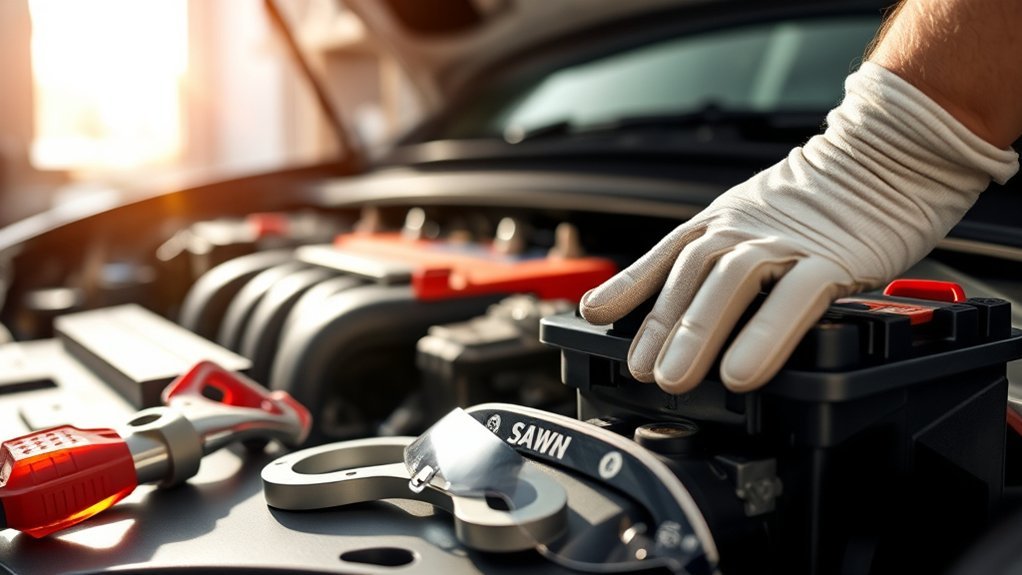
Your car battery supplies electrical power for starting the engine and supports the vehicle’s electrical systems. Poor connections, corrosion, age, and repeated deep discharging can reduce reliability.
Most conventional automotive batteries last approximately three to five years, although temperature, driving habits, charging conditions, and battery quality can change that estimate.
Regular maintenance should include:
- Inspecting the case for cracks, swelling, or leakage.
- Checking the terminals for corrosion and loose connections.
- Making sure the battery is firmly secured in its tray.
- Checking the battery’s age and condition.
- Having the battery and charging system tested when starting problems appear.
High temperatures can accelerate battery deterioration, while cold weather can reduce the power available for starting. Short trips and extended periods of inactivity may also leave the battery undercharged.
Replacing a weak battery before it fails can help prevent an unexpected no-start situation. However, not every starting problem means you need a new battery.
Signs Your Battery May Need Replacement
Watch for these common warning signs:
- The engine cranks more slowly than normal.
- You hear repeated clicking when attempting to start.
- Headlights or electrical accessories appear unusually weak.
- The battery repeatedly needs a jump-start.
- The battery case is damaged or shows signs of leakage.
- A battery test indicates that its condition or starting capacity is poor.
These symptoms can also result from loose connections, a charging-system problem, a faulty starter, or another electrical fault.
Before buying a replacement, have the battery tested when practical. A battery that is merely discharged may need charging rather than replacement.
For more information about testing and replacement, see AAA’s battery service guidance.
Essential Tools for a Safe Battery Replacement
Gather everything before opening the battery compartment. This reduces interruptions and helps you work more safely.
- Safety goggles: Protect your eyes from corrosive material and debris.
- Protective gloves: Help protect your hands while handling the battery and corroded components.
- Socket wrench or combination wrench: Used to loosen terminal clamps and battery hold-down hardware.
- Battery terminal brush: Removes corrosion from the posts and cable clamps.
- Baking soda and water: Useful for neutralizing small amounts of acidic residue on external surfaces.
- Clean cloths: Help protect disconnected terminals and dry cleaned surfaces.
- Multimeter: Allows you to perform basic voltage checks.
- Compatible replacement battery: Must meet the vehicle manufacturer’s requirements.
A battery carrying strap or built-in handle may make removal easier. Some batteries are heavy enough to require assistance.
Insulated tools can provide additional protection against accidental contact, but they do not replace proper working procedures.
Pro Tip: Keep a small container nearby for hold-down bolts and other removable hardware. Losing the battery clamp or its fasteners can prevent you from securing the replacement correctly.
Safety First: Guidelines Before Battery Replacement
Before you begin, prepare a safe working area and check your vehicle’s instructions.
- Park on a flat, stable surface and engage the parking brake.
- Turn off the engine, ignition, lights, and electrical accessories.
- Keep the key or key fob away from the vehicle to reduce the chance of an unintended activation.
- Allow the engine and nearby components to cool.
- Wear safety goggles and protective gloves.
- Remove rings, watches, necklaces, and other metal jewelry.
- Work in a well-ventilated area.
- Keep cigarettes, flames, and spark-producing equipment away from the battery.
- Check the owner’s manual for special disconnection, alarm, or battery-registration procedures.
Disconnect negative first. Reconnect positive first. Never allow a metal tool to bridge the battery terminals or connect the positive terminal to grounded vehicle metal.
A conventional automotive battery operates at a nominal 12 volts, but it can deliver enough current to cause severe burns, sparks, or overheating during a short circuit.
Lead-acid batteries also contain corrosive electrolyte and can release flammable gas under certain conditions.
What to Do if Battery Acid Contacts You
If battery electrolyte reaches your skin, remove contaminated clothing and flush the affected area thoroughly with clean running water.
If it enters your eyes, immediately flush them with clean water for at least 15 minutes and seek emergency medical attention.
Do not attempt to neutralize acid on your skin or in your eyes with baking soda. Baking soda is intended for cleaning suitable external surfaces, not for treating chemical exposure.
These precautions are consistent with OSHA battery safety guidance.
How Do You Identify Your Car Battery and Its Terminals?
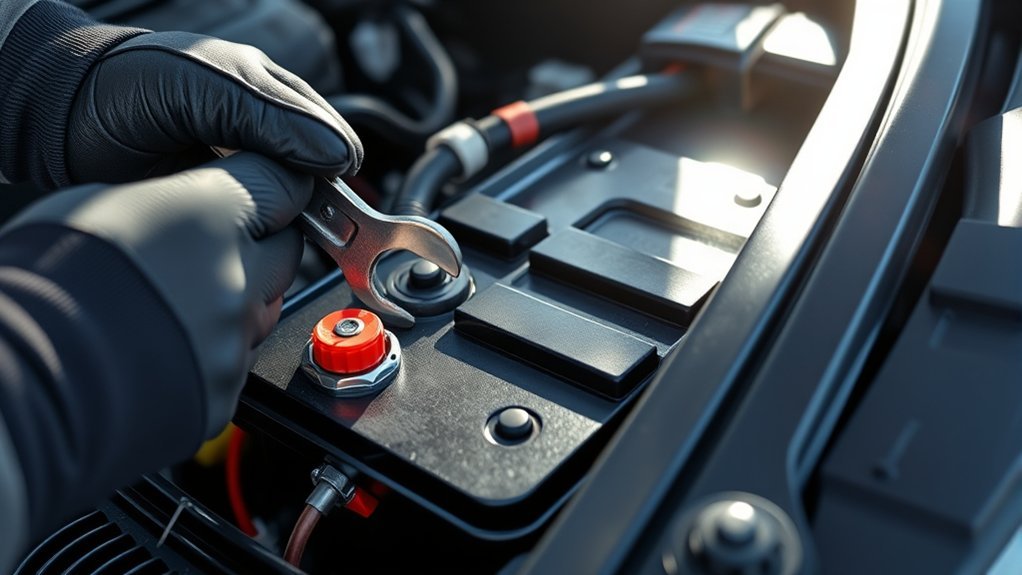
Start by locating the battery. Most conventional vehicles have it under the hood, but some place it in the trunk, under a seat, or in another compartment.
Consult your owner’s manual if the battery is not immediately visible.
Once located, identify the two terminals:
- Positive (+): Usually marked with a plus sign and often protected by a red cover.
- Negative (-): Marked with a minus sign and commonly connected to the vehicle’s chassis or engine ground.
Always confirm the molded terminal markings. Do not rely on cable color alone.
Some vehicles have battery sensors or additional electrical components attached to the negative terminal. Do not force, bypass, or damage these parts.
How to Choose the Correct Replacement Battery
Before removing the old battery, confirm that the replacement meets your vehicle’s requirements.
Check the following:
- Battery group size: Determines the physical dimensions and general fit.
- Terminal layout: Ensures the positive and negative posts are in the correct positions.
- Voltage: Most conventional passenger vehicles use a nominal 12-volt battery, but exceptions exist.
- Cold-cranking amps (CCA): The replacement must meet the manufacturer’s starting-power requirements.
- Reserve capacity: Follow the specified rating or approved replacement application.
- Battery chemistry: Match the required flooded, EFB, or AGM technology.
- Hold-down compatibility: The battery must fit securely in the original mounting system.
- Venting: Confirm that any required vent hose or vent-port arrangement can be installed correctly.
A battery that fits physically is not automatically the correct replacement.
Use your owner’s manual or a reliable vehicle-specific battery application guide. When uncertain, ask a qualified battery retailer or technician to verify the fit.
Special Considerations for Start-Stop and Modern Vehicles
Some modern vehicles require additional steps after a battery replacement.
Vehicles with automatic start-stop systems commonly use enhanced flooded batteries (EFB) or absorbent glass mat (AGM) batteries.
If your vehicle requires an AGM battery, do not replace it with an ordinary flooded battery simply to reduce the purchase price.
Some vehicles also use a battery-management system that monitors battery condition and charging requirements.
After replacement, the system may need a battery-registration or reset procedure using a suitable diagnostic tool.
According to VARTA’s start-stop battery guidance, incorrect replacement can affect start-stop operation and other vehicle functions.
Note: Disconnecting the battery can reset certain vehicle settings. Some models require radio-code entry, window initialization, clock adjustment, or other procedures afterward. Check your owner’s manual before disconnecting power.
Disconnecting Your Battery: The Right Sequence
The terminal-removal order is one of the most important parts of a safe battery replacement.
For a conventional negative-ground vehicle, disconnect the negative terminal first and the positive terminal second.
Negative Terminal First
Use the correct wrench or socket to loosen the negative terminal clamp.
Lift the clamp carefully from the battery post. If it is stuck, use a suitable terminal puller rather than prying against the battery case.
Move the disconnected cable aside so it cannot spring back into contact with the terminal.
Disconnecting the negative cable first reduces the chance of creating a short circuit if your wrench accidentally touches grounded metal while working on the positive terminal.
It does not make the battery completely harmless. Continue to keep metal tools away from the battery posts.
Positive Terminal Last
After the negative cable is safely disconnected:
- Open the positive terminal cover, if fitted.
- Loosen the positive terminal clamp.
- Lift the clamp from the battery post.
- Move the cable away and protect its exposed end from accidental contact.
Do not pull on the cable itself or use excessive force.
After both cables are disconnected, the battery can be removed once the hold-down hardware and any required vent connection are released.
For additional guidance, see Interstate Batteries’ terminal-disconnection guide.
Tips for Safe Handling When Removing the Old Battery
Car batteries can be heavy and may contain corrosive material. Use controlled movements and avoid tipping the battery unnecessarily.
Wear Protective Gear
Keep your goggles and gloves on throughout the removal process.
Protective equipment is especially important when corrosion is present or when the battery has signs of damage.
Make sure you have a secure grip before lifting.
Handle Battery Carefully
Follow these steps:
- Confirm that both battery cables are disconnected and safely positioned.
- Remove the hold-down clamp, bracket, or retaining strap.
- Disconnect any vent hose if your vehicle uses one.
- Check for attached covers, insulation, or other components that must be transferred to the replacement.
- Lift the battery using its designated handle or a suitable battery carrier.
- Keep the battery upright and place it on a stable surface.
Do not lift the battery by its electrical terminals.
If the battery is cracked, leaking, severely swollen, or unusually hot, do not attempt ordinary DIY removal. Arrange safe handling through a qualified service provider.
Keep the old battery upright and away from children, pets, and metal objects until it can be recycled.
Cleaning the Battery Tray: Why and How
Once the old battery is removed, inspect the tray and cable connections before installing the new one.
Dirt, corrosion, loose hardware, or accumulated moisture can interfere with proper installation and may contribute to future problems.
To clean the battery area:
- Inspect the tray: Look for rust, loose mounting parts, cracks, and sharp debris.
- Prepare a cleaning solution: Mix a small amount of baking soda with water.
- Clean affected external surfaces: Use a suitable brush to remove minor corrosion from the tray and disconnected cable clamps.
- Remove residue: Carefully wipe or rinse suitable surfaces without allowing liquid into electrical connectors or battery openings.
- Dry thoroughly: Make sure the tray and cable clamps are clean and dry before installation.
Do not allow baking soda solution to enter a battery’s cells or vents.
If the tray is badly corroded, damaged, or unable to hold the battery securely, repair or replace the affected hardware before continuing.
Cleaning Battery Terminal Clamps
Use a dedicated battery terminal brush to remove corrosion from the inside of the disconnected cable clamps.
The contact surfaces should be clean enough to make a reliable electrical connection.
Inspect the cables for broken strands, damaged insulation, or loose fittings.
If the clamp is damaged or cannot tighten securely, replace the faulty component rather than forcing it onto the new battery.
Step-by-Step Instructions for Installing the New Battery
After cleaning the tray, check that the replacement battery matches the required specifications and that its case is undamaged.
Then follow this installation sequence.
1. Position the New Battery
Place the new battery upright in the tray.
Match the original orientation so the positive and negative terminals align with their respective cables.
Do not stretch, twist, or force the cables to reach the terminals.
If your vehicle has a battery insulation cover or protective shield, reinstall it as required.
2. Secure the Battery Hold-Down
Reinstall the original hold-down clamp, bracket, or retaining strap.
Tighten the fasteners according to the manufacturer’s instructions.
The battery should not slide or rock in its tray.
Secure the battery before reconnecting its terminals. A properly fitted hold-down helps prevent movement and damage during normal vehicle operation.
3. Reconnect the Positive Terminal
Remove the protective cap from the positive battery post, if fitted.
Place the positive cable clamp onto the positive (+) post.
Tighten it according to the vehicle or battery manufacturer’s specification.
Do not overtighten. Excessive force can damage a clamp or battery post.
Make sure the connection is secure and reinstall the protective terminal cover.
4. Reconnect the Negative Terminal
Attach the negative cable clamp to the negative (-) post.
Tighten it securely without excessive force.
If the vehicle has a battery-monitoring sensor, make sure the original sensor and cable arrangement remain intact.
A small spark may occur as vehicle electronics receive power. Stop if you notice sustained arcing, smoke, excessive heat, or another abnormal condition.
5. Restore Venting and Protective Components
If your battery uses an external vent hose, reconnect it according to the vehicle manufacturer’s instructions.
Ensure the replacement battery has the correct vent-port arrangement and that any required vent plug is installed properly.
Reinstall covers, protective shields, and other components removed during access.
Do not leave loose hardware or tools in the battery compartment.
6. Perform an Initial Function Check
Before starting the vehicle, inspect both cable connections and the battery hold-down.
Then start the engine or activate the vehicle according to its normal operating procedure.
Check that the vehicle powers up normally and that no unexpected charging-system warning remains illuminated.
If the vehicle requires battery registration, perform the manufacturer-specified procedure using a suitable diagnostic tool or qualified technician.
Securing Battery Connections
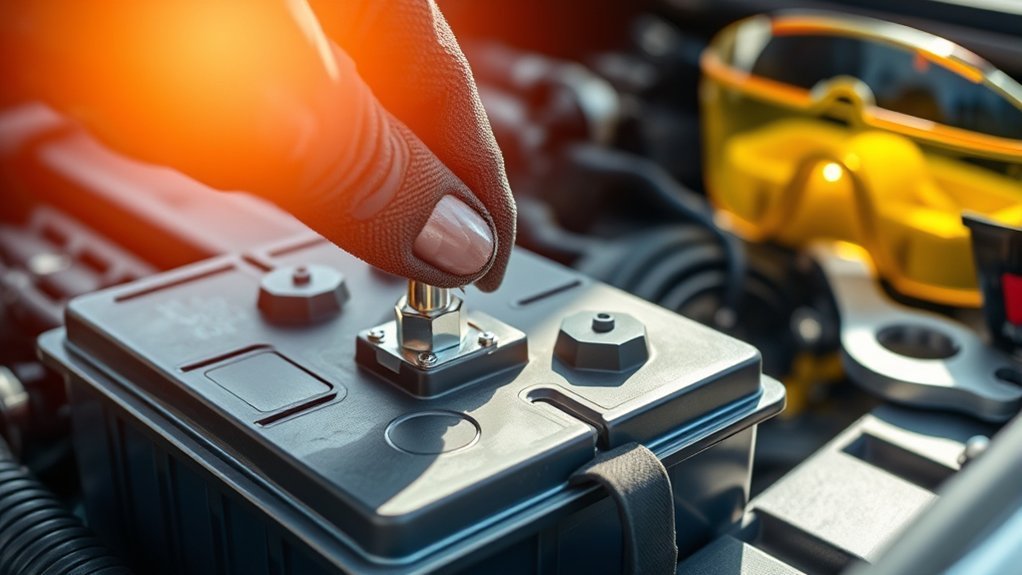
Secure battery connections are essential for reliable starting and charging.
After installation, inspect the following:
- The positive cable is connected to the positive post.
- The negative cable is connected to the negative post.
- Both terminal clamps are properly seated and tightened.
- The positive terminal’s protective cover is in place.
- The battery hold-down prevents movement.
- No cable is stretched, pinched, or touching a hot or moving component.
Do not overtighten the terminal bolts. Follow the vehicle manufacturer’s torque specification when available.
Preventing Future Terminal Corrosion
After the clamps are cleaned and properly secured, use an approved battery terminal protectant if recommended for your vehicle.
For conventional clamp-and-post connections, avoid placing a thick layer of nonconductive dielectric grease between the metal contact surfaces before assembly.
Instead, follow the protectant manufacturer’s application instructions. Exterior protection may help reduce moisture-related corrosion.
Inspect the connections periodically, especially when performing other routine maintenance.
Pro Tip: Record the battery’s installation date and keep the purchase receipt. This can help you track its age and check warranty coverage if a problem develops.
Checking the New Battery After Installation
A successful replacement involves more than simply starting the engine once.
Check the battery, electrical connections, and any systems affected by the temporary loss of power.
Check Battery Voltage
A multimeter can provide a useful initial voltage reading.
For a conventional 12-volt lead-acid battery, a resting voltage around 12.6 volts or somewhat higher is generally consistent with a well-charged battery.
Measure with the engine off and electrical loads switched off. Recent charging, temperature, and battery chemistry can affect the reading.
With the engine running, conventional charging systems often show a higher voltage, commonly around 13.7–14.7 volts.
However, some modern charging systems vary their voltage according to operating conditions.
A single voltage measurement does not establish battery health, alternator condition, or charging performance in every vehicle.
If the readings are unusual or the charging warning remains illuminated, have the system tested with appropriate equipment.
Check Vehicle Settings
Disconnecting the battery may reset certain convenience features or stored settings.
Depending on the vehicle, you may need to:
- Set the clock.
- Restore radio presets or enter a security code.
- Reinitialize automatic window functions.
- Restore other convenience settings.
- Complete a battery-management reset or registration procedure.
Follow the owner’s manual rather than applying a generic reset procedure to every vehicle.
Troubleshooting Common Issues Post-Battery Replacement
If your vehicle does not operate normally after the battery replacement, start with the simple checks before assuming another expensive component has failed.
Check Terminal Connections
Loose or corroded connections can prevent sufficient current from reaching the starter.
Turn off the vehicle before inspecting the connections.
Verify the correct cable placement, clamp fit, and condition of the battery cables.
Do not attempt to move, loosen, or retighten a terminal while the engine is running.
If you must disconnect a cable again, follow the correct sequence: negative first, then positive.
Inspect Alternator Functionality
If the new battery becomes discharged or the charging-system warning stays illuminated, the charging system may need inspection.
Possible causes include:
- A faulty alternator or charging component.
- A loose or damaged drive belt on vehicles with belt-driven alternators.
- Damaged wiring or poor electrical connections.
- A blown charging-system fuse or fusible link.
- A battery-management or charging-control fault.
A multimeter can provide an initial voltage check, but it cannot identify every charging-system problem.
Some vehicles use advanced charging controls that require vehicle-specific diagnostic procedures.
If the problem persists, have a qualified technician test the starting and charging systems.
What if the Car Still Won’t Start?
If the new battery is correctly installed but the vehicle still will not start, use the symptoms to narrow down the problem.
- No electrical power: Check the terminal connections, main fuses, and battery condition.
- Rapid clicking: Check battery charge, cable connections, and starting-system condition.
- Single click without cranking: The starter circuit or starter motor may require testing.
- Engine cranks but does not start: Investigate fuel, ignition, immobilizer, or engine-management issues.
- Battery warning stays illuminated: Have the charging system checked.
- New battery repeatedly goes flat: Investigate charging faults and excessive electrical drain while the vehicle is parked.
Do not repeatedly attempt to start the vehicle if cables become hot, sparks continue, or you notice an unusual smell.
When to Seek Professional Help
Professional assistance is appropriate when:
- The battery is damaged or leaking.
- The battery is difficult to reach safely.
- The vehicle requires special battery registration or electronic procedures.
- Terminal wiring or battery sensors are damaged.
- The new battery does not resolve the original starting problem.
- You cannot confidently identify the battery terminals or required replacement specifications.
Some automotive service providers offer battery testing and installation services. Ask whether battery registration, difficult access, and disposal are included before approving the work.
Recycling Your Old Car Battery
Do not place a used lead-acid car battery in household trash or ordinary curbside recycling.
Lead-acid batteries contain lead and corrosive electrolyte that require proper handling.
The US Environmental Protection Agency recommends returning them to a battery retailer or an appropriate household hazardous-waste collection program.
Many battery retailers accept old batteries when you purchase a replacement. A refundable core charge may also apply.
Keep the old battery upright during handling and transportation. Protect the terminals from accidental contact with metal objects and avoid transporting a damaged or leaking battery without appropriate professional guidance.
Proper recycling helps recover usable materials and reduces the risk of environmental contamination.
Frequently Asked Questions
How to Safely Remove and Replace a Car Battery?
Turn off the vehicle and wear protective equipment. Disconnect the negative terminal first, then the positive. Remove the hold-down and old battery, clean the tray, and install a compatible replacement. Secure it before reconnecting the positive terminal and then the negative. Check the installation and vehicle operation afterward.
How to Not Get Electrocuted When Changing a Car Battery?
With a conventional 12-volt automotive battery, the main risks are short circuits, sparks, burns, corrosive electrolyte, and flammable gas rather than ordinary electric shock. Turn off the vehicle, remove metal jewelry, wear protective equipment, and keep tools from bridging terminals or grounded metal. Never touch a hybrid or EV high-voltage system.
Which Battery Terminal Do You Disconnect First?
On a conventional negative-ground vehicle, disconnect the negative (-) terminal first. Then disconnect the positive (+) terminal. Reconnect them in reverse order: positive first, negative last.
What Not to Do When Disconnecting a Car Battery?
Do not disconnect the positive terminal first on a conventional negative-ground vehicle. Never bridge the battery terminals with a tool, force a stuck clamp, smoke near the battery, ignore damaged wiring, or handle a leaking battery without appropriate professional assistance.
Can I Replace a Car Battery Myself?
Many conventional vehicle batteries can be replaced with basic tools and the correct safety precautions. However, difficult battery locations, damaged components, and vehicles requiring battery registration or special electronic procedures may be better handled by a qualified technician.
Does a New Car Battery Need to Be Programmed?
Some vehicles require battery registration, coding, or a battery-management reset after replacement. Others do not. Check your owner’s manual or manufacturer service information for the procedure required by your specific vehicle.
Will Disconnecting the Battery Reset My Car?
It may reset the clock, radio presets, window functions, or other stored settings. Some vehicles also require an electronic initialization procedure. Check the manufacturer’s guidance before disconnecting power.
How Long Does It Take to Replace a Car Battery?
A straightforward replacement commonly takes around 30–60 minutes. Difficult access, corrosion, damaged hardware, or required battery-registration procedures can increase the time needed.
Conclusion
Safely disconnecting and replacing a car battery comes down to preparation, the correct terminal order, and careful installation.
Always disconnect the negative terminal first and reconnect the positive terminal first. Use the correct replacement battery, clean the mounting area, and secure the new battery before reconnecting the cables.
If your vehicle has a modern battery-management system, follow its additional replacement requirements.
A driver dealing with repeated starting problems may find that cleaning corroded connections or replacing a failed battery resolves the issue. However, persistent trouble after replacement deserves further testing rather than another unnecessary battery purchase.
With proper maintenance and safe handling, you can help keep your vehicle reliable and avoid unexpected starting problems.
Sources
- AAA — Replacing Your Car Battery — General battery replacement procedure, safety precautions, and terminal sequence.
- Interstate Batteries — Frequently Asked Questions — Battery lifespan, maintenance, voltage, and installation guidance.
- VARTA — Changing a Start-Stop Battery — AGM/EFB compatibility and battery-management requirements.
- OSHA — Battery Safety and Electrical Power Sources — Battery electrolyte hazards, protective equipment, and emergency procedures.
- US EPA — Used Household Batteries — Automotive lead-acid battery recycling and disposal guidance.
- AAA — Car Battery Replacement and Installation Service — Battery selection, replacement costs, testing, and electronic-system considerations.







Leave a Reply