
Quick Answer
To check your car battery voltage, set a multimeter to the 20V DC range and touch the probes to the battery terminals. A healthy battery should read between 12.6V and 12.8V. If your reading falls below 12.4V, the battery likely needs a charge or replacement.
Do you worry about your car failing to start on a cold morning? A dying battery often provides subtle warnings before it leaves you stranded. You can diagnose your battery health quickly and easily by checking its voltage with a standard multimeter.
Key Takeaways
- Set your multimeter to DC voltage mode and touch leads to battery terminals for an accurate reading.
- A healthy battery registers between 12.6V and 12.8V, while anything below 12.4V suggests potential trouble.
- Watch for slow engine cranks, dim lights, or terminal corrosion as common warning signs of failure.
- Charge your battery if voltage drops, and keep connections tight and clean.
- Consult a professional technician if voltage issues persist or if you feel uncomfortable performing diagnostic tests.
How to Set Up Your Multimeter for Battery Testing
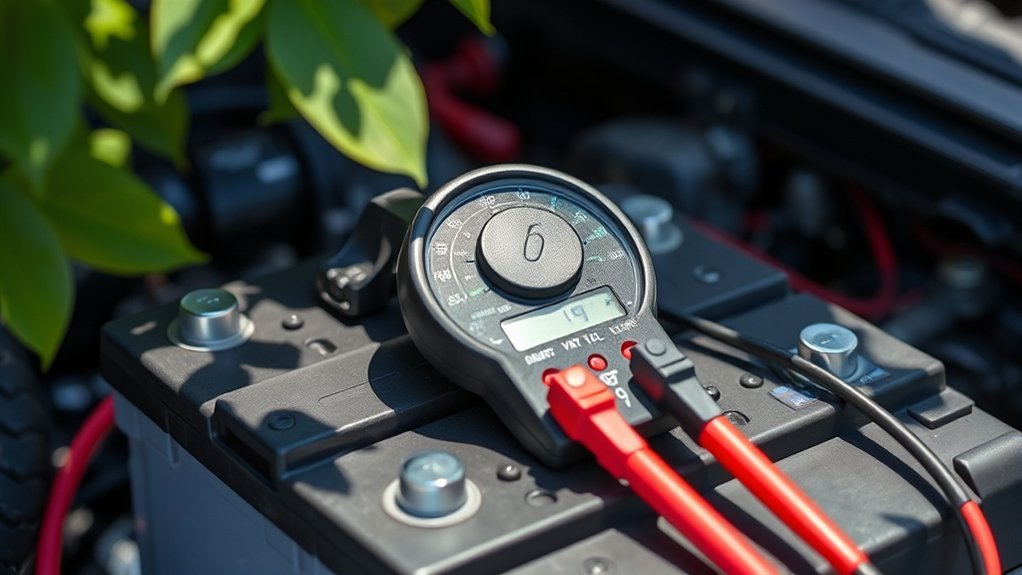
You need the right setup to get an accurate reading. First, turn your multimeter dial to the DC voltage setting and select the 20V range.
Insert the red lead into the V/Ω jack and the black lead into the COM jack. Connect the black probe to the negative battery terminal and the red probe to the positive terminal.
Turn on your headlights for one minute before testing. This removes the surface charge and provides a true measurement of the battery state.
Steps for Measuring Car Battery Voltage Accurately
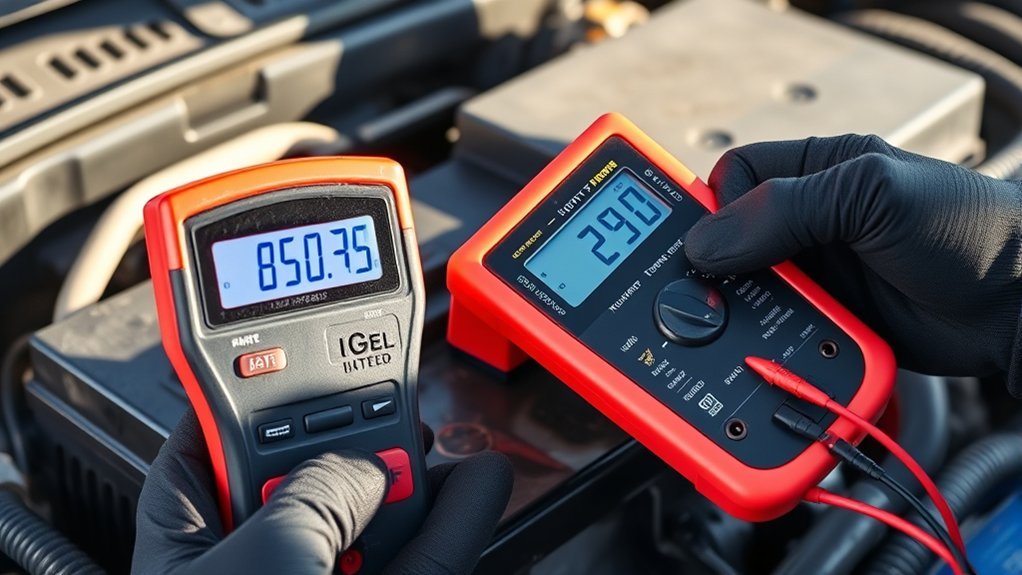
Follow these steps to confirm your battery health with precision. Set your multimeter to the 20V DC mode as noted previously.
Touch the probes to the correct battery terminals while the engine remains off. A fully charged, healthy battery should display between 12.6V and 12.8V.
Test the battery again with the engine running to verify the alternator output. You should see a reading between 13.8V and 14.8V, which confirms the alternator charges the system properly.
Interpreting Your Battery Voltage Readings

Numbers provide the best insight into your battery health. Use these ranges to determine your next steps.
Healthy Battery Voltage Range
A battery at full charge shows between 12.6V and 12.8V. Readings between 12.4V and 12.6V mean the battery has a partial charge and might need a boost.
Anything below 12.4V indicates a low or failing battery. Always consult a qualified professional before making expensive repairs based on this information.
Low Voltage Indicators
If your reading drops below 12.0V, the battery likely lacks the power to start the engine. Check that the voltage does not drop below 10.0V during the cranking process.
A significant dip during cranking often points toward an internal battery fault. Regular monitoring prevents these surprise failures.
Top Indicators of a Failing Car Battery
Watch for physical and performance cues that suggest your battery is dying. These signs usually appear before the vehicle refuses to start entirely.
Slow Engine Crank
A slow crank happens when the battery struggles to provide power for the starter motor. This often correlates with a voltage reading below 12.4V.
Listen for a sluggish “rurr, rurr, rurr” sound during ignition. If you hear this, your battery may be reaching the end of its typical three to five-year lifespan.
Dimming Dashboard Lights
Dashboard lights that dim or flicker often suggest a weak electrical supply. A healthy battery maintains stable power levels even when the engine is off.
If your lights pulse while driving, you might have a failing alternator. Test the battery and alternator separately to isolate the specific component causing the issue.
Corrosion and Leakage
Corrosion appears as a white, powdery crust on battery terminals. This residue blocks current and prevents the car from starting effectively.
Look for a swollen case or a smell like rotten eggs, which indicates a leaking battery. If you notice these hazards, replace the battery immediately as these represent safety risks. Always consult a qualified professional before handling a leaking battery.
What to Do If Your Battery Voltage Is Low?
If you find low voltage, start by using a dedicated battery charger to restore a full charge. Inspect the terminals for loose connections or thick corrosion.
Clean the terminals with a wire brush if necessary. If the voltage stays low after a full charge, perform a load test to see if the battery can handle power demands under pressure.
Tips for Maintaining Your Car Battery for Longevity
Extend your battery life by following these simple care practices:
- Check terminals monthly for corrosion or loose cables.
- Keep the battery surface clean to prevent self-discharge.
- Ensure the battery mount remains tight to minimize vibration damage.
When to Seek Professional Help for Battery Issues
Sometimes you need an expert to confirm your findings. Seek professional assistance if you encounter the following:
- Repeatedly needing jump-starts.
- Persistent clicking sounds during ignition.
- Visible casing damage or leaks.
- Voltage that refuses to hold after a full charge.
Frequently Asked Questions
Can I Check Battery Voltage Without a Multimeter?
Yes, you can use a basic battery monitor that plugs into your car’s accessory outlet. These tools provide a quick snapshot of voltage without requiring technical skills.
How Often Should I Check My Car Battery Voltage?
Check your battery every three months. Consistent checks identify issues before they cause a complete breakdown.
What Temperature Affects Battery Voltage Readings?
Cold weather slows down chemical reactions inside the battery. A significant drop in temperature can reduce battery capacity, making it harder for the engine to turn over.
Are There Specific Signs of a Dying Battery?
Yes, watch for a slow engine start, dim interior lights, and physical corrosion. These symptoms frequently indicate that the battery is nearing the end of its life.
Can a Faulty Alternator Affect Battery Voltage?
Yes, a broken alternator fails to keep the battery charged while the engine runs. This leads to a drained battery even if the battery itself is in good condition.
Conclusion
Testing your battery voltage allows you to manage your vehicle’s health proactively. Take action immediately if you find low readings to avoid the frustration of an unexpected roadside breakdown. Regular inspections keep your car running reliably for years to come.







Leave a Reply