Installing an EV charger at home can cost you anywhere from $0 to $3,000, depending on the type of charger and any electrical upgrades you may need. Level 1 chargers are the cheapest option, while Level 2 chargers offer greater efficiency and convenience, albeit at a higher cost. Consider potential permits and your electrical panel capacity, as these factors greatly influence the overall price. Keep exploring to understand all the nuances of installation costs and benefits.
Key Takeaways
- Level 1 charger installation can cost between $0 and $1,900, depending on electrical upgrades and wiring needs.
- Level 2 charger installations typically range from $1,000 to $3,000, including potential panel upgrades and labor costs.
- Level 3 chargers are generally not suitable for home use, with costs potentially reaching up to $50,000.
- Additional costs include permits ($50 to $300) and wiring expenses based on distance from the electrical panel ($10 to $20 per foot).
- Federal tax credits may cover up to 30% of installation costs, enhancing financial benefits for homeowners.
Understanding the Different Types of EV Chargers
When considering an EV charger, how do you choose the right type for your needs? You’ll find that Level 2 chargers are the most efficient option for home use. They operate on 240 V, offering charging speeds of 13 to 25 miles per hour, making them ideal for daily driving needs.
However, installing a Level 2 charger may involve installation costs ranging from $500 to $1,200, often requiring a dedicated outlet and possibly electrical upgrades to your electrical panel. Hiring a licensed electrician is essential to guarantee that your home’s electrical system can handle this enhancement safely.
The faster charging speeds of Level 2 chargers not only save you time but also align with the liberation that comes from seamless electric vehicle ownership. Understanding these factors will help you make an informed decision, guaranteeing your home EV charger meets your lifestyle and drives you towards a sustainable future.
Costs of Each Charger Type: What to Expect
Choosing the right EV charger involves understanding the costs associated with each type, as they can vary greatly based on your specific needs and home setup. Here’s a breakdown to help you navigate:
| Charger Type | Average Installation Cost | Additional Costs |
|---|---|---|
| Level 1 | Starting at $400 | Free if no upgrades needed |
| Level 2 | $450 to $1,310 | Electrical upgrade ($200 to $3,000) |
| Level 3 | Up to $50,000 | Not typical for residential use |
For home charging stations, installation costs generally range from $1,000 to $3,000, excluding the charger price. Keep in mind that factors like the distance from the electrical panel and necessary wiring can greatly affect the overall cost of installing. So, if you’re an EV driver looking for efficiency, understanding these costs is vital for an informed decision.
The Advantages of Level 2 Chargers for Home Charging
When it comes to home charging, Level 2 chargers offer significant advantages that can transform your EV experience.
With charging speeds ranging from 13 to 25 miles per hour, you can start each day with a fully charged vehicle, eliminating the hassle of frequent public charging.
This enhanced convenience not only saves you time but also makes owning an electric vehicle a more efficient and enjoyable choice.
Faster Charging Speeds
While many EV owners appreciate the convenience of home charging, the true game changer lies in the faster charging speeds offered by Level 2 chargers. With the ability to provide 13 to 25 miles of range per hour, you can fully charge your electric vehicle overnight. This efficiency not only enhances your daily routine but also saves you from frequent public charging stops.
| Feature | Level 1 Charger | Level 2 Charger |
|---|---|---|
| Charging Rate | 5 miles per hour | 13-25 miles per hour |
| Installation Requirement | Standard outlet | Dedicated 240-volt outlet |
| Cost Range | N/A | $500 – $2,000 |
Investing in an EV charger installation with a licensed electrician leads to long-term savings, as home electricity rates are generally lower than public charging fees.
Enhanced Daily Convenience
Upgrading to a Level 2 charger transforms your daily routine by offering unparalleled convenience for EV owners.
With Level 2 home charging, you can charge your vehicle overnight, waking up to a fully charged car without the hassles of public charging infrastructure.
Imagine cutting down on EV charging electricity consumption and enjoying significant cost savings—around $0.05 per mile driven, compared to more expensive public options.
Many drivers initially underestimate their charging needs, but the installation process with a certified electrician guarantees you’ll never face long wait times again.
This investment in convenience not only streamlines your charging habits but can also enhance your property’s value.
Embrace the freedom that comes with efficient home charging and reclaim your time.
Detailed Breakdown of Level 1 Charger Installation Costs
Although many homeowners find Level 1 charger installation to be a cost-effective option, it’s essential to understand the potential expenses involved.
Homeowners often view Level 1 charger installation as affordable, but it’s crucial to recognize the associated costs.
While installation may be free in some cases, costs can start around $400 if upgrades are necessary. Here’s a breakdown of what you might encounter:
- Basic Installation: $0 to $400 for standard setups.
- Electrical Upgrades: $200 to $1,500 if your existing electrical system needs enhancements.
- Wiring Extensions: $100 to $500, depending on distance and complexity.
- Safety Inspections: $100 to $300 to guarantee compliance with safety standards.
Level 1 chargers utilize standard 120V outlets, offering a capacity of about 1.9 kW, which translates to around 6 miles of range per hour.
Understanding these installation costs helps you make informed choices about charging at home, especially if you desire the flexibility that comes with owning an EV.
Level 2 Charger Installation Costs Overview
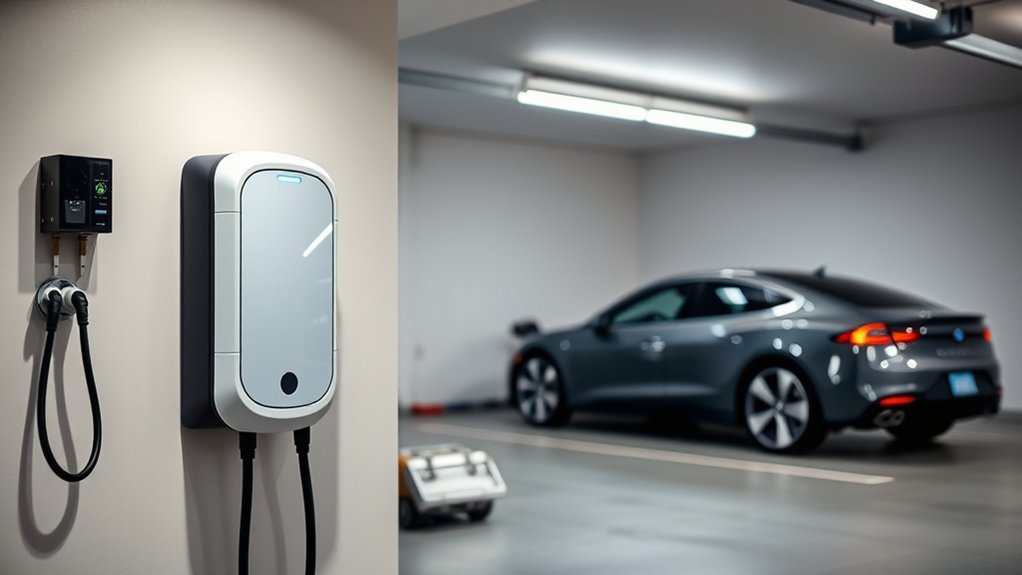
If you’re considering a Level 2 charger for your home, it’s essential to recognize that installation costs can vary considerably. Typically, you’ll see expenses ranging from $1,000 to $3,000, excluding the home charger itself, which starts at around $500.
Factors influencing these installation costs include existing wiring conditions and whether you need to upgrade your electrical panel, which can add $200 to $3,000 to your total.
Wiring and trenching may also incur costs of $10 to $20 per foot, and don’t forget about permit costs, which can range from $50 to $300 based on local regulations.
By understanding these potential installation expenses, you can make informed decisions about your charging options and guarantee your Level 2 charging station meets your needs without breaking the bank.
Embracing this technology can liberate you from fuel dependency and enhance your home’s efficiency.
Level 3 Charger Installation Costs Explained
While considering the installation of a Level 3 charger, it’s crucial to understand that costs can skyrocket, reaching up to $50,000, which makes them impractical for most residential scenarios.
Installing a Level 3 charger can cost up to $50,000, making it impractical for most homes.
Here are some key factors influencing these high installation costs:
- Power Supply: Level 3 chargers require a robust 480V power supply.
- Electrical Upgrades: Significant electrical upgrades may be necessary to support the charger.
- Local Regulations: Compliance with local regulations can add to the complexity and cost.
- Financial Incentives: Unlike Level 2 chargers, available financial incentives for Level 3 installations are often limited.
These factors reinforce that Level 3 charger installations are primarily suited for commercial locations rather than residential settings.
Given the ability to achieve a full charge in about 30 minutes, such chargers cater more to businesses and public charging stations, not individual homeowners.
Factors Influencing EV Charger Installation Prices
When you’re considering EV charger installation, several factors can greatly impact your costs.
The type of charger you choose, the capacity of your electrical system, and even the specifics of your installation environment all play vital roles in determining the final price.
Charger Type Selection
Choosing the right type of EV charger is crucial, as it directly impacts your installation costs. The two primary charger types are Level 1 and Level 2, with Level 2 chargers generally costing between $500 and $2,000 for parts and labor.
Here are key factors influencing your total cost:
- Electrical Panel: Upgrading your panel may be necessary, costing $200 to $3,000.
- Distance to Charger: Wiring costs average $10 to $20 per foot, affecting labor and materials.
- Existing NEMA Outlets: Utilizing these can streamline installation and lower costs.
- Permitting Fees: Local fees can range from $50 to $300, depending on your area.
Consulting a certified electrician guarantees compatibility and efficiency in your installation process.
Electrical System Capacity
The capacity of your electrical system greatly influences the cost and feasibility of installing an EV charger. Most Level 2 chargers require an electrical panel rated for 60 amps or higher for safe, efficient charging.
If your home has an older 60-amp panel, you may face significant installation costs due to necessary upgrades, which can range from $200 to $3,000. Additionally, the installation location impacts wiring expenses; expect to pay $10 to $20 per foot for labor and materials.
If rewiring is needed, or if you must switch to copper wiring, additional costs could exceed $8,000. Understanding these factors guarantees you make informed decisions about your charging station’s cost and functionality.
Installation Environment Factors
While various factors influence the installation costs of an EV charger, the environment in which you plan to install it plays an essential role.
Consider these key points:
- Distance from the Electrical Panel: Longer distances mean higher wiring expenses, averaging $10 to $20 per foot.
- Home Type: Single-family homes usually incur lower installation costs compared to multi-family buildings due to accessibility.
- Permitting Fees: Costs can range from $50 to $300 depending on your local jurisdiction.
- Electrical System Capacity: Older homes may require costly upgrades, adding $200 to $3,000 to your installation prices.
Understanding these installation environment factors can empower you to budget effectively for your EV charger installation.
Assessing Your Electrical Panel Capacity for Installation
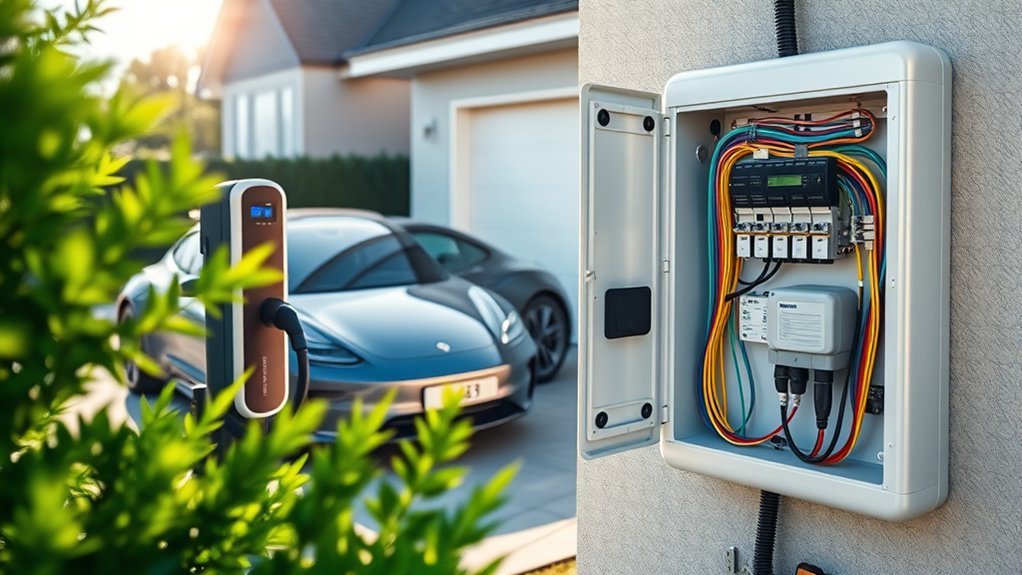
How prepared is your electrical panel to handle the demands of an EV charger? As a homeowner, evaluating your electrical panel’s capacity is vital before installation.
Most Level 2 chargers require at least 100 amps, and if your home has an older 60-amp panel, an upgrade may be necessary. To guarantee safe operation, the amperage of circuit breakers must be 125% of the charger’s rated output. This evaluation not only keeps your home safe but also prevents overload risks.
If significant upgrades are needed, costs can range from $200 to $3,000, depending on the work required.
Consider adjustable amperage chargers to save on installation costs while accommodating future electrical demands. Ultimately, understanding your electrical panel’s capacity empowers you to make informed decisions that enhance your home’s energy efficiency and capability, liberating you from potential power limitations.
Additional Costs to Consider During Installation
Evaluating your electrical panel’s capacity sets the stage for understanding the full scope of costs associated with EV charger installation.
Beyond the initial purchase, several additional installation costs can arise, impacting your budget. Consider these key factors:
- Permit Fees: These can vary widely, ranging from $50 to $300, depending on your local jurisdiction.
- Groundwork or Trenching: If your installation requires digging, expect to pay an additional $10 to $20 per foot.
- Panel Upgrades: Upgrading your electrical system may cost between $200 and $3,000, depending on complexity.
- Copper Wiring: Switching from aluminum to copper wiring can add thousands to your overall installation costs.
If you opt for a smart charger, be prepared for higher initial installation costs, but remember that these features can enhance your charging experience.
Understanding these factors guarantees your installation meets all necessary requirements.
How Installing an EV Charger Saves You Money?
Installing an EV charger at home can considerably lower your fuel costs, with savings averaging around $950 annually compared to gas vehicles.
You’ll also benefit from reduced maintenance expenses, as EVs generally require less upkeep.
Plus, take advantage of available financial incentives to offset installation costs, making this investment even more appealing.
Lower Fuel Costs
As you consider the financial implications of owning an electric vehicle (EV), installing a home charger can greatly reduce your fuel costs. Here’s how:
- Cost Efficiency: Home charging costs about $12.96 for a full charge of a 72 kWh battery, compared to $18 at public Level 2 stations.
- Per Mile Savings: You’ll spend around $0.05 per mile for home charging, versus $0.47 with public DC fast charging.
- Annual Savings: EV owners can save approximately $950 yearly on fuel compared to traditional gas vehicles.
- Time-of-Use Rates: Charging during off-peak hours can further lower your electricity costs.
Reduced Maintenance Expenses
While home charging considerably cuts down on fuel costs, it also plays a pivotal role in reducing maintenance expenses for electric vehicle (EV) owners. By installing a home charging station, you avoid the wear and tear from frequent trips to public chargers, leading to a longer vehicle lifespan.
EVs typically incur about $4,600 in maintenance over five years compared to $7,800 for gas vehicles, thanks to fewer moving parts and minimal servicing needs. With regenerative braking systems extending brake component life, your financial benefits multiply.
Plus, federal tax incentives can offset installation costs, making the switch to EV adoption even more appealing. Ultimately, investing in a charger not only saves you money but also liberates you from traditional vehicle hassles.
Available Financial Incentives
When you consider the financial landscape of electric vehicle ownership, the available incentives for installing an EV charger become a powerful motivator.
Here’s how you can save money:
- Federal tax credits can cover up to 30% of installation expenses.
- Many state and local programs offer rebates that reduce costs by hundreds or even thousands.
- Utility companies may provide incentives like rebates for installation or lower rates during off-peak hours.
- Home charging costs about $0.05 per mile, leading to significant long-term fuel savings compared to public charging.
Plus, installing an EV charger can enhance your property value, aligning with the growing demand for EV charging solutions.
Embracing these incentives liberates you financially while supporting a sustainable future.
Frequently Asked Questions
What Is the Average Cost to Install an Electric Car Charger in Your House?
Installing an electric car charger at home typically costs between $1,000 and $3,000, influenced by installation factors like charger types, permit requirements, and potential electrical upgrades. Consider incentive programs for long-term savings and professional guidance.
How Much Does It Cost to Have an EV Charger Put in Your House?
Installing an EV charger at home typically costs between $1,000 and $3,000. Consider charger types, home wiring, local permits, and potential electrical upgrades. DIY options can save you on average labor costs, enhancing long-term savings.
Is It Cheaper to Install an EV Charger at Home?
Yes, installing an EV charger at home offers significant energy savings and long-term benefits. With government incentives, cost comparisons reveal it’s often cheaper than public charging, especially with DIY options and efficient installation processes. Consider charger types too.
How Much Does It Cost to Install a 240V Outlet for an Electric Car?
Installing a 240V outlet typically costs between $1,000 and $3,000, factoring in installation labor costs, potential electrical panel upgrades, and local permits. Consider professional help for ideal outlet placement and long-term savings from improved charging speed.
Conclusion
Installing an EV charger at home can seem overwhelming, but understanding the costs and benefits makes it worthwhile. For instance, a homeowner who switched to a Level 2 charger saved over $1,000 annually on fuel and maintenance compared to traditional gas. By considering your electrical capacity and potential installation costs, you can make an informed choice that not only enhances convenience but also leads to significant long-term savings. Embrace the change to electric—it’s an investment in your future.







Leave a Reply