
Yes, you can tax your car without the V5C logbook, but you’ll need certain alternative documents. Use the new keeper slip (V5C/2) or the DVLA reference code from tax reminder letters. Make certain you have valid MOT and insurance as they may be required. If all documents are missing, you can apply for a replacement V5C, which can be done alongside taxing your vehicle. Find out more about the specific steps and best practices to make certain compliance.
Key Takeaways
- You can tax a car without the V5 logbook using the new keeper slip (V5C/2) or DVLA reference code.
- Valid documentation, including MOT and insurance, is required to complete the taxing process.
- If all documents are lost, apply for a replacement V5C using form V62 for a £25 fee.
- Ensure that all details on the new keeper slip match to avoid tax application rejections.
- Driving an untaxed vehicle is illegal; take immediate action if your vehicle is not taxed.
Why Is the V5C Logbook Important for Taxing Your Car?
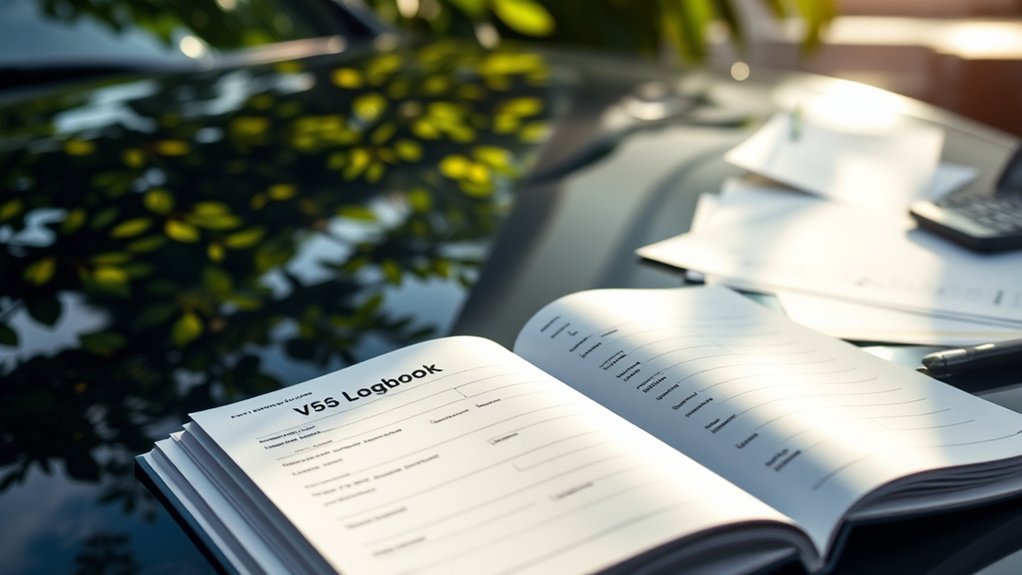
While you might think you can manage without it, the V5C logbook is essential for taxing your car. This document acts as your official proof of ownership and contains critical information, including the registered keeper‘s details and vehicle specifications.
Only the registered keeper listed on the V5C can legally tax the vehicle, ensuring compliance with government regulations.
The logbook also includes the date of first registration, which determines your vehicle’s tax band and applicable fees. Without a V5C, you’ll find taxing your car becomes increasingly complicated, often requiring you to provide alternative documentation like the new keeper slip or DVLA reference codes.
The V5C logbook contains vital registration dates that determine your tax band, making it crucial for vehicle taxation.
Additionally, the absence of a V5C can hinder your ability to prove ownership when selling or scrapping the vehicle, and it may lead to fines for driving an untaxed car.
If you’ve lost your V5C, it’s important to apply for a new one promptly.
Can You Tax Your Car Without a V5C Logbook? Here’s How
Can you really tax your car without a V5C logbook? Yes, you can!
If you don’t have your V5C, you can use the new keeper slip (V5C/2) or the DVLA reference code from reminder letters (V11). You can tax your vehicle online by entering the 12-digit reference from the new keeper slip or the 11-digit reference from the V5C.
If all V5C documents are missing, you’ll need to apply for a replacement V5C using form V62, which costs £25. You can tax your vehicle at the same time.
When visiting a Post Office, bring the V62 application, your MOT certificate, and proof of insurance to guarantee a smooth process.
What Alternative Documents Can You Use to Tax Your Vehicle?
If you don’t have your V5 logbook, there are alternative documents you can use to tax your vehicle.
The new keeper slip (V5C/2) and the DVLA reference code from tax reminder letters are both valid options.
If you lack all documentation, you can apply for a replacement V5C with form V62 while also processing your vehicle tax.
New Keeper Slip (V5C/2)
The New Keeper Slip (V5C/2) is an essential document for new vehicle owners, enabling you to tax your car even without the complete V5C logbook. To tax your vehicle, just enter the 12-digit reference number from the V5C/2 on the DVLA vehicle tax page. Here’s a quick overview of what you need:
| Document | Purpose | Additional Info |
|---|---|---|
| V5C/2 | Proves ownership | Tax without full logbook |
| MOT Certificate | Confirms roadworthiness | Must match V5C/2 details |
| Insurance Document | Provides coverage verification | Must match V5C/2 details |
If you don’t have the V5C or V5C/2, apply for a replacement logbook using form V62 before you can tax the vehicle.
DVLA Reference Code
When you’re ready to tax your vehicle but lack the V5C logbook, the DVLA reference code offers a practical solution. This 16-digit number, found on vehicle tax reminder letters (V11) or last chance warnings (V85/1), allows you to tax your vehicle online without waiting for a new V5C logbook.
Alternatively, you can use the new keeper slip (V5C/2) as proof of ownership. If you’ve lost your V5C logbook, you can apply for a replacement while taxing your vehicle, incurring a £25 fee.
Just guarantee you have valid documentation, as any discrepancies in your MOT or insurance records may require you to contact the DVLA for verification.
Visit the DVLA website for more information.
V62 Application Form
While you mightn’t have your V5C logbook handy, you can still tax your vehicle using the V62 application form. This form allows you to apply for a replacement registration certificate while simultaneously taxing your vehicle.
If you’re the new owner and lack the V5C, the new keeper slip (V5C/2) can also serve as an alternative document. Additionally, if you have a vehicle tax reminder letter (V11) or a last chance warning (V85/1), you can use the reference codes to tax online.
Just remember to have valid MOT and insurance documents ready, as they may be required. Note that the V62 form incurs a £25 fee, but you can tax your vehicle immediately without waiting for the new logbook.
Step-by-Step Guide: Taxing Without a V5C

Taxing your vehicle without a V5C logbook is possible and can be done efficiently by following a few straightforward steps.
First, you can use the new keeper slip (V5C/2) or the DVLA reference code from a vehicle tax reminder letter (V11) to apply for taxing. If you prefer, you can also apply for a replacement V5C at the same time by completing a V62 form and paying a £25 fee.
To tax your vehicle online, enter the 12-digit reference from your new keeper slip, or you can call the DVLA if you have all necessary documentation ready.
Alternatively, visit a Post Office that handles vehicle tax and present your MOT and insurance details, along with payment.
Ascertain all your documents are accurate and organized to avoid delays, as incorrect details can lead to a rejection of your tax application.
How to Tax Your Car Online Using a New Keeper Slip
If you have a new keeper slip (V5C/2) and want to tax your car online, the process is straightforward.
Follow these simple steps to guarantee your vehicle is legally taxed without hassle:
- Find the 12-digit reference number on your new keeper slip.
- Visit the DVLA vehicle tax page online.
- Enter the reference number and complete the payment process.
- Confirm that all details on your new keeper slip are accurate.
No physical documents are needed for this method, making it quick and efficient.
Once you submit your application, you’ll receive electronic confirmation of your tax status.
This online approach to V5C registration not only saves time but also provides an easy way to keep your vehicle compliant.
Need to Tax at the Post Office? Here’s What to Do
Wondering how to tax your car at the Post Office without a V5 logbook? You can do this by completing a V62 form and bringing it along with proof of insurance and a valid MOT certificate, if applicable.
If you don’t have a new keeper slip, you can apply for a replacement V5C for £25 while you’re at the Post Office. Make certain to visit a location that offers vehicle tax services, as not every Post Office handles this.
Don’t forget to prepare the necessary payment for the tax, along with any additional documentation they may need. If you’re in Northern Ireland, be ready to present your insurance certificate and MOT details to finalize the taxation process.
Following these steps will guarantee a smooth experience when you need to tax your car without that V5 logbook.
Using a DVLA Reference Code for Vehicle Taxation
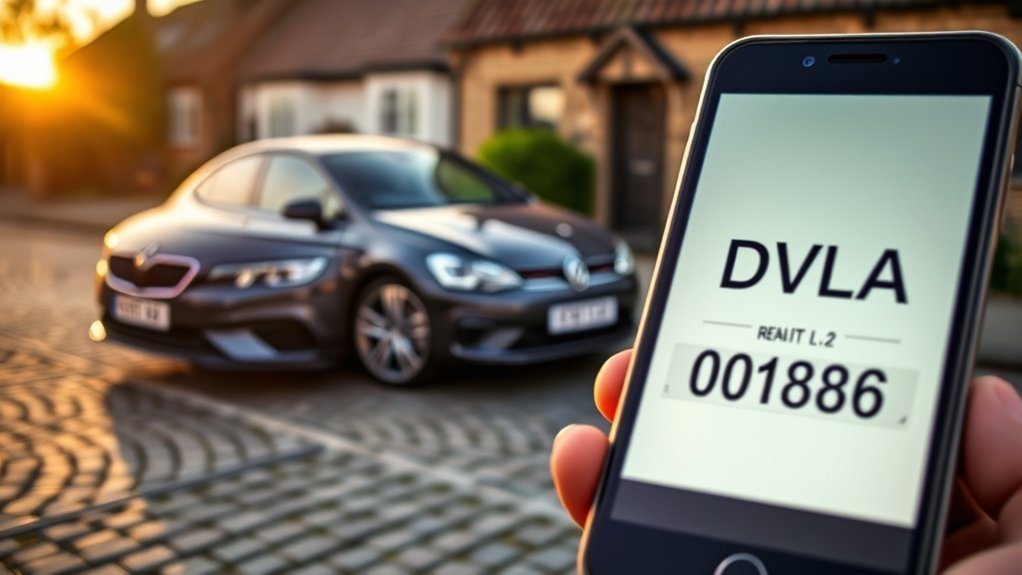
You can use a DVLA reference code to tax your vehicle quickly and efficiently online.
This 16-digit code, found on your tax reminder letter, allows you to bypass the V5C logbook and complete the payment process immediately.
Just make sure all your vehicle details match the information linked to the reference code to avoid any complications.
Valid Reference Code Usage
Taxing a vehicle without a V5 logbook can be streamlined by utilizing a DVLA reference code. This 16-digit number, found on your vehicle tax reminder letters, allows you to tax a vehicle online efficiently.
Here’s how to guarantee valid reference code usage:
- Visit the DVLA vehicle tax webpage.
- Enter your accurate DVLA reference number.
- Complete the payment process for instant processing.
- Verify your MOT and insurance status if discrepancies arise.
Online Tax Payment Process
For many vehicle owners, the online tax payment process offers a quick and efficient way to tax a car without a V5 logbook.
To get started, simply locate the 16-digit DVLA reference code from your vehicle tax reminder letter (V11) or last chance warning (V85/1).
Visit the DVLA vehicle tax page, enter the reference code, and complete the registration process. You won’t need any physical documents.
Once submitted, your application processes immediately, and you’ll receive electronic confirmation of your payment.
Verify your insurance and MOT records are current to avoid complications.
If your reference code is valid, you can tax your vehicle online without delay, freeing you from unnecessary hassles.
Taxing Your Car Without Any Documents: What to Do?
Wondering how to tax your car without any documents? You can still navigate the process, but you’ll need to act quickly and follow a few steps.
Start by applying for a new V5C logbook using form V62, which costs £25. You can tax your vehicle simultaneously once you receive it.
Here’s what you should do:
- Visit the DVLA vehicle tax page to pay online with your reference number.
- If you go to the Post Office, fill out a V62 form and bring proof of insurance.
- Confirm you have a valid MOT certificate, as it’s necessary for taxing.
- Remember, you must wait for the new logbook to arrive if you have no documents at all.
Driving an untaxed vehicle is illegal, so take prompt action to confirm you’re compliant with vehicle tax regulations.
Common Issues When Taxing Without a V5C and Their Solutions
When you attempt to tax your vehicle without a V5C, you might encounter several common issues that can complicate the process. One major concern is incorrect details on the new keeper slip (V5C/2), which can lead to system rejections during your tax application.
Additionally, discrepancies between your vehicle’s MOT history or insurance records and its details can hinder the taxation process, requiring verification from the relevant authorities.
If the new keeper slip is unavailable, you’ll need to apply for a replacement V5C using form V62, which can be submitted alongside your tax application.
Remember, if you don’t receive your new logbook within six weeks, it’s wise to contact the DVLA to guarantee everything’s on track.
Staying on top of your documentation is essential; it helps you avoid fines or penalties for an untaxed vehicle.
Always verify your vehicle has an up-to-date MOT for a smoother experience.
Best Practices for Ensuring Your Car Is Taxed Properly
Ensuring your car is taxed properly requires attention to detail and a clear understanding of the necessary steps.
To streamline the process, consider these best practices:
- Taxing online is the most efficient method, using the 12-digit reference from the new keeper slip (V5C/2).
- If you lack a V5C, utilize the DVLA reference code from your reminder letter (V11) to complete your tax application.
- Apply for a replacement V5C simultaneously with your tax application, as it incurs only a £25 fee.
- Keep all receipts and documentation organized to serve as proof of payment and ownership.
Frequently Asked Questions
Can I Tax My Vehicle Online Without a V5C?
Yes, you can tax your vehicle online without a V5C. Use V5C alternatives like the new keeper slip or DVLA reference code. Just make certain you’ve valid insurance and an up-to-date MOT to avoid car registration issues.
Conclusion
To sum up, while it’s best to have your V5C logbook when taxing your car, there are alternative options available. By using documents like the New Keeper Slip or a DVLA reference code, you can still hit the ground running. Just remember, if you’re in a tight spot without any paperwork, reaching out to the DVLA can help you find a way forward. Stay proactive, and you’ll keep your vehicle on the road without a hitch.






Leave a Reply