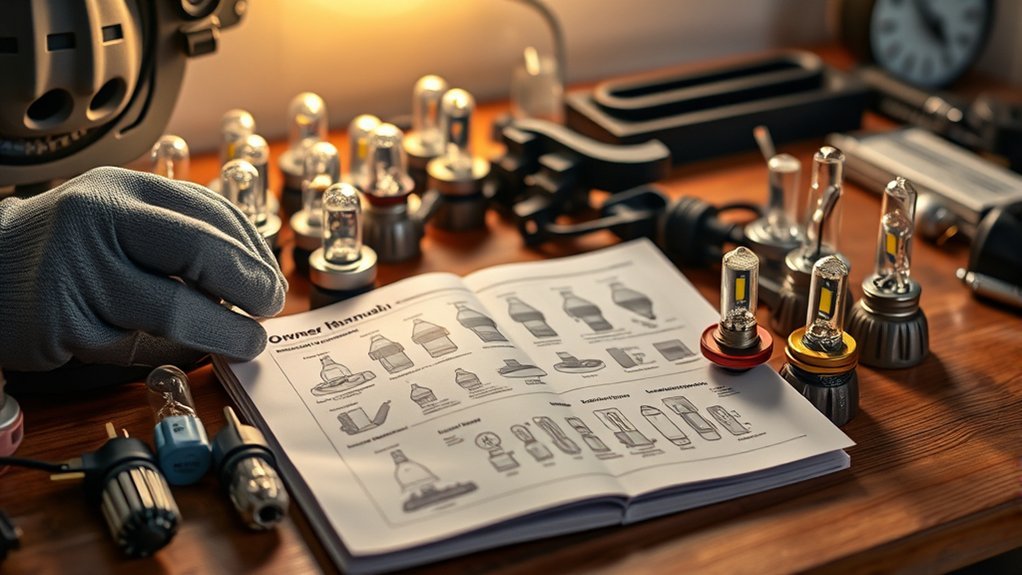
To find out which light bulbs your car needs, start by checking your owner’s manual for specific bulb types. You can also remove an old bulb to look for markings on its base. A Vehicle Bulb Finder tool can help match your vehicle’s make, model, and year with compatible bulbs. Inspect the bulbs for signs of wear and follow proper installation methods for best performance. There’s more to discover about ensuring your vehicle remains safe and efficient.
Key Takeaways
- Consult the owner’s manual for specific bulb types and sizes for headlights, taillights, and interior lights.
- Remove an existing bulb to check for printed information on size and type.
- Use a Vehicle Bulb Finder by entering your vehicle’s make, model, and year for compatible options.
- Regularly inspect bulbs for signs of dimming, flickering, or discoloration to anticipate replacements.
- Purchase bulbs from reputable retailers and verify compatibility before buying.
Understanding Your Vehicle’s Bulb Requirements
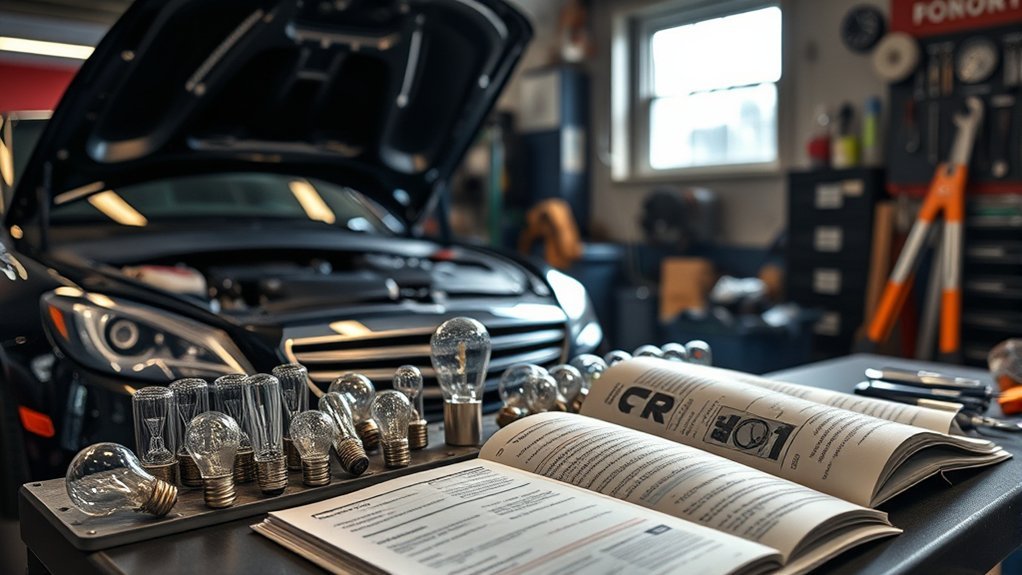
How do you know which light bulbs your vehicle requires? Start by consulting your owner’s manual, as it typically lists the specific bulb types and sizes for headlights, taillights, and interior lights.
Consult your owner’s manual to find the specific bulb types and sizes for your vehicle’s lighting needs.
If you don’t have access to the manual, you can remove an existing bulb to check for printed information directly on it. This often includes the bulb size and type for your convenience.
To streamline your search, consider using a Vehicle Bulb Finder. By inputting your vehicle’s make, model, and year, you can quickly identify compatible bulbs.
Remember, headlight and fog light enclosures may have size constraints, so double-check the fitment before purchasing.
Finally, think about your lighting preference: halogen headlights are cost-effective, while LED headlight bulbs offer longevity and brightness. Making an informed choice will empower you to maintain ideal visibility on the road.
Identifying Your Vehicle’s Headlight Bulb Type
To identify your vehicle’s headlight bulb type, start by checking the owner’s manual, which provides essential specifications.
You can also remove the existing bulb and examine any markings on its base for size and type information.
Alternatively, using a Vehicle Bulb Finder tool online can streamline the process by matching your vehicle’s details with compatible bulb options.
Check Existing Bulb Size
Identifying your vehicle’s headlight bulb type is crucial for guaranteeing proper lighting performance and safety.
To check the existing bulb size, start by examining the printed information on the bulb itself; it usually indicates the size and type needed. If you can, remove the bulb to assess its dimensions and socket type, confirming the replacement bulb fits correctly.
Additionally, consult your vehicle’s owner’s manual for specific details on the correct bulb sizes required for your headlights.
Remember that different configurations, like high beams or fog lights, may require distinct bulb types, so verify the application before purchasing.
This methodical approach guarantees you select the right replacement bulb for peak performance.
Use Vehicle Bulb Finder
Using a Vehicle Bulb Finder can greatly streamline the process of determining the correct headlight bulb type for your car. By entering your vehicle’s make, model, and year, this tool provides a detailed list of compatible headlight bulbs, guaranteeing you get the right replacement.
You’ll avoid the hassle of guessing and reduce the risk of purchasing incorrect bulbs. Additionally, the Vehicle Bulb Finder often highlights various bulb options, including standard and upgraded versions, to enhance your vehicle’s lighting performance.
Many automotive retailers, such as Sylvania, offer this resource on their websites, empowering you to make informed purchasing decisions for your car’s lighting needs. Embrace the convenience of technology to guarantee your headlights shine bright.
Consult Owner’s Manual
After utilizing a Vehicle Bulb Finder to pinpoint the right headlight bulb for your vehicle, consulting your owner’s manual is the next step to confirm accuracy.
This manual typically includes a section on lighting specifications, detailing the exact bulb types and sizes necessary for headlights and other fixtures. You’ll often find visual diagrams that help you locate specific bulb positions, making identification easier.
It’s important to check for any manufacturer recommendations regarding bulb brands or performance specifications to verify compatibility and safety. Additionally, the manual may list bulb wattage and color temperature, vital for selecting the right replacement bulbs.
If your manual’s unavailable, don’t hesitate to use online resources or customer service for assistance with identifying the correct bulb types.
Why Regular Inspection of Headlight Bulbs Matters
How can you guarantee your safety on the road during nighttime or low-visibility conditions? Regular inspection of headlight bulbs is key to ensuring ideal visibility and reducing accident risks.
Regularly inspecting your headlight bulbs is essential for safe driving in low-visibility conditions.
Halogen bulbs typically last about 2,500 hours, while LEDs can shine for up to 30,000 hours. Routine checks help you anticipate replacements before failure, keeping your headlights effective.
Uneven brightness between bulbs can compromise driving safety, making it harder to judge distances and spot obstacles.
In addition, many vehicle safety regulations mandate fully functioning headlights; regular inspections help you stay compliant and avoid fines.
Why Upgrade to LED or HID Headlights?
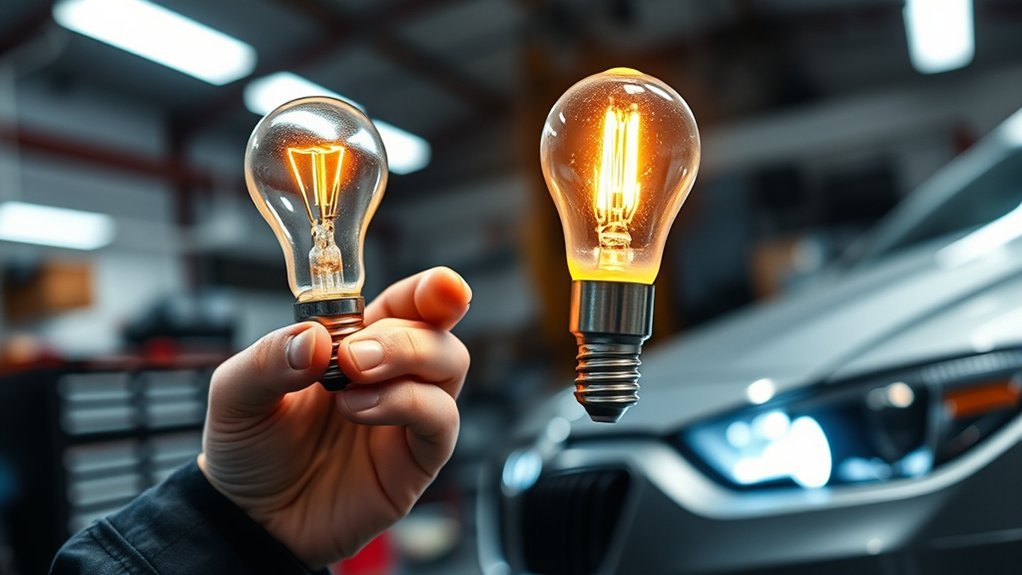
Upgrading to LED or HID headlights can greatly enhance your driving experience, particularly during nighttime or low-visibility conditions.
LED headlights provide up to 300% more brightness compared to traditional halogen bulbs, considerably improving your visibility on dark roads. With a lifespan of approximately 30,000 hours, LED bulbs last about 15 times longer than halogen options, reducing the hassle of frequent replacements.
On the other hand, HID headlights emit a bright, cool white light with a color temperature around 6,000K, illuminating the road up to 200 feet further than halogen bulbs. This additional brightness enhances your ability to react to potential hazards, making nighttime driving safer.
Moreover, LED headlights are 80-90% more energy-efficient, lightening the load on your vehicle’s electrical system and contributing to better fuel efficiency.
Choosing LED or HID headlights isn’t just an upgrade; it’s a smart investment in your safety and convenience.
Signs Your Headlight Bulbs Need Replacement
As you drive, noticing changes in your headlights can be essential for maintaining safety on the road. Here are some signs that indicate it might be time to replace your headlight bulbs:
| Sign | Description | Action |
|---|---|---|
| Dim Lights | Headlights appear less bright than usual. | Replace your headlights. |
| Decreased Visibility | Difficulty seeing at night or in poor weather. | Check headlight bulbs. |
| Flickering | Intermittent functionality signals malfunction. | Replace bulbs immediately. |
| Yellow or Hazy Lens | Impaired light output affects visibility. | Replace the bulbs for clarity. |
| One Headlight Out | Uneven brightness can impact safety. | Replace both bulbs. |
Being proactive about these signs helps guarantee your visibility remains ideal, enhancing your safety and that of others on the road. Regularly check your headlights to keep driving confidently.
Checking Compatibility and Fit for New Bulbs
When it comes to replacing your car’s light bulbs, ensuring compatibility and fit is essential for ideal performance. Start by consulting your owner’s manual, which lists the specific automotive bulb types and sizes your vehicle requires.
If you don’t have the manual, remove the existing bulb and look for a printed code; you can cross-reference this with online databases or retailers. Utilizing a Vehicle Bulb Finder tool can also streamline your search for compatible options based on your car’s make, model, and year.
When you choose to upgrade, make sure the replacement bulbs match the size and shape of the originals. Note that LED bulbs typically follow a 1:1 design to fit standard halogen sockets.
Additionally, verify wattage and voltage ratings; mismatched specifications can lead to performance issues or damage to your vehicle’s wiring. Prioritize compatibility to enhance your driving experience safely.
How to Install Your New Headlight Bulbs
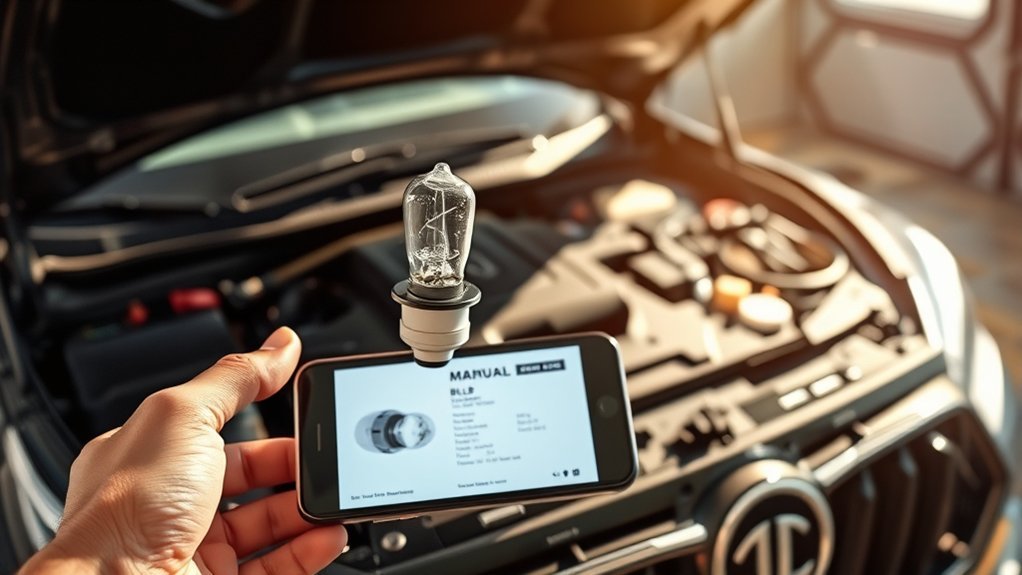
Once you’ve confirmed the compatibility of your new headlight bulbs, the installation process can begin.
First, make certain your vehicle is parked on a flat surface and turned off to prevent electrical issues. Gently remove the existing headlight bulb by twisting or unclipping it from the socket. Be careful not to damage the socket.
Compare the old bulb with the new halogen or LED bulbs to make certain the size and type match; incorrect fitment can cause wiring damage or improper light focus.
Next, insert the new bulb into the socket, aligning it correctly. Avoid touching the glass part with your fingers, as oils can cause overheating and premature failure.
Finally, test the new headlight bulbs by turning on your vehicle to check for proper functionality. If everything works, reassemble any covers or components, and enjoy the improved visibility from your new headlight bulbs.
Where to Buy Quality Replacement Headlight Bulbs
Where can you find quality replacement headlight bulbs that fit your vehicle’s needs? Start by exploring reputable online retailers like Amazon, Walmart, and Summit Racing.
These platforms offer a diverse selection of headlight bulbs, including halogen, LED, and HID options suitable for various automotive lighting requirements. To verify compatibility, utilize a bulb finder tool to confirm the correct bulb size and type for your vehicle.
Explore a range of headlight bulb options, including halogen, LED, and HID, and use a bulb finder tool for compatibility.
Don’t overlook local automotive parts stores, where you can find popular brands like Sylvania, the #1 aftermarket automotive lighting brand in the USA. Their in-store assistance can guide you in selecting the right bulbs.
Additionally, purchasing directly from manufacturer websites not only guarantees authenticity but also provides access to warranty details and valuable customer support for any installation queries.
With these resources, you’ll confidently select quality replacement headlight bulbs that enhance your driving experience.
Common Headlight Bulb FAQs and Troubleshooting
When dealing with headlight bulbs, it’s essential to identify the correct bulb type for your vehicle to guarantee peak performance.
You should also be aware of installation tips to avoid common issues such as improper fit or wiring damage.
If you’re facing headlight problems, understanding these aspects can help you troubleshoot effectively.
Identifying Bulb Type
How can you guarantee you’re using the correct headlight bulb type for your vehicle? Start by identifying the specific requirements for your car. Here’s how:
- Owner’s Manual: Check the manual for the exact type of bulb.
- Existing Bulb: Inspect the current bulb; the type is typically printed on its base.
- Vehicle Bulb Finder: Use online tools by entering your vehicle’s make, model, and year for accurate compatibility.
- Bulb Types: Know that headlight bulbs come in halogen, LED, and HID, each with distinct bulb uses and specifications.
Always verify that the bulb size fits your headlight housing to avoid issues with installation and light output quality.
Installation Tips
After you’ve confirmed the correct bulb type for your vehicle, the next step is installation. Always turn off your vehicle and let the headlights cool to avoid burns. Check the vehicle’s owner manual or an online bulb finder for the right bulb type and size. Most bulbs install by twisting or wedging into the socket; remember to wear gloves to prevent oil contamination. If the new bulb doesn’t work, verify it’s seated correctly and check the polarity, especially with LED bulbs. Regularly inspect your headlights for fogging or discoloration, which can decrease light output.
| Task | Tips | Reminder |
|---|---|---|
| Turn off vehicle | Cool headlights first | Avoid burns |
| Check manual | Use online bulb finder | Identify bulb size/type |
| Inspect headlights | Look for fogging | Replace if necessary |
Common Issues Explained
Numerous drivers encounter common issues with headlight bulbs that can compromise safety and visibility.
Here are key problems you might face:
- Dimming Light: If your headlights appear less bright, it’s time to replace them.
- Flickering: Intermittent light can indicate a failing bulb or connection issue.
- Complete Failure: If one or both headlights are out, immediate replacement is crucial.
- Type Confusion: Verify you’re using the right type, such as halogen, for peak performance.
Regularly inspect your headlights and replace both bulbs at once for balanced visibility.
Frequently Asked Questions
How Do I Know Which Light Bulb I Need for My Car?
To know which light bulb you need for your car, check your car manual for bulb types, remove the existing bulb for details, or use online resources and auto parts databases to find the right match.
How Do You Know Which Light Bulb You Need?
To know which bulb you need, check bulb types in your manual, verify compatibility with your vehicle, assess brightness levels, and consider longevity to make the best choice for ideal lighting performance and safety.
How Do I Know Which Headlight Bulb to Buy for My Car?
To know which headlight bulb to buy, consult a bulb compatibility guide for your car’s specific headlight bulb types and wattage requirements. Follow installation tips to guarantee proper fit and peak performance for your vehicle.
How to Solve the Light Bulb Puzzle?
To solve the light bulb puzzle, identify bulb types, check wattage requirements, and guarantee bulb compatibility. Follow installation tips for proper fitting, and you’ll illuminate your path with confidence and clarity.
Conclusion
Now that you know how to identify and replace your car’s headlight bulbs, you can drive with confidence. Keeping your headlights in top shape not only improves visibility but also enhances safety on the road. Remember, a stitch in time saves nine—regular inspections can prevent more extensive issues down the line. Whether you choose standard, LED, or HID bulbs, ensuring compatibility is key. So, take the time to stay informed and maintain your vehicle’s lighting system effectively.




Leave a Reply