
The UK introduced two new car registration plate identifiers in 2025: the 25 plate on 1 March and the 75 plate on 1 September. These identifiers help show when a vehicle was first registered and can be useful when you’re buying or selling a car. Here’s what the 2025 release dates mean, how the registration system works, and which DVLA rules you need to follow.
Quick Answer
The UK’s 25 registration plate was introduced on 1 March 2025 for vehicles registered through 31 August 2025. The 75 plate followed on 1 September 2025 and covered registrations through 28 February 2026. These are allocation periods, not expiry dates. Existing plates remain valid after the next registration series begins, provided they comply with legal requirements.
Key Takeaways
- The 25 plate was introduced on 1 March 2025 and used for new registrations through 31 August 2025.
- The 75 plate was introduced on 1 September 2025 and covered registrations through 28 February 2026.
- A number plate does not expire when the next age identifier is introduced.
- The standard GB registration format uses two letters, two numbers, and three final letters.
- A registration number can help identify a vehicle’s age, but its actual registration details should be checked with DVLA.
- Legal plates must meet the applicable DVLA display rules, including the required colours, character dimensions, and British Standard.
Key Dates for 2025 Registration Plates

New standard-format car registration identifiers are introduced twice a year, on 1 March and 1 September.
The 25 plate was introduced on 1 March 2025. The 75 plate followed on 1 September 2025. Each identifier represents a six-month registration period.
The following table shows the 2025 releases and the subsequent 2026 identifiers.
| Plate identifier | Release date | Registration period |
|---|---|---|
| 25 | 1 March 2025 | 1 March–31 August 2025 |
| 75 | 1 September 2025 | 1 September 2025–28 February 2026 |
| 26 | 1 March 2026 | 1 March–31 August 2026 |
| 76 | 1 September 2026 | 1 September 2026–28 February 2027 |
These dates follow the official DVLA registration number guidance.
Note: As of September 2026, the 76 identifier is the current September-series registration. This article focuses on the historical 2025 releases. Vehicles already registered with 25 or 75 plates do not need new plates simply because another series has been introduced.
Understanding the 25 and 75 Registration Identifiers
The standard current-style registration format was introduced in Great Britain in September 2001.
It contains seven characters arranged in two groups, such as AB25 CDE. This is an illustrative example.
- First two letters: The regional memory tag associated with the area where the vehicle was first registered.
- Middle two numbers: The age identifier, showing the registration period.
- Final three letters: Letters used to distinguish individual registrations.
For a normal March registration, the age identifier uses the final two digits of the year. For a September registration, 50 is added to the year number.
That is why vehicles registered in March 2025 received the 25 identifier, while the September 2025 series used 75.
The first two letters do not necessarily tell you where the vehicle is currently kept. They relate to its original registration area.
Does a 25 or 75 Plate Expire?
No. A plate change introduces a new age identifier for new registrations. It does not cancel registrations already issued.
For example, a vehicle registered with a 25 plate in July 2025 can continue displaying that registration after September 2025 and beyond.
The number plate must still be legal, readable, correctly displayed, and associated with that vehicle.
A new registration series changes the identifier issued to newly registered vehicles. It does not make an existing number plate invalid.
Understanding the Impact of the 75 Plate Identifier
The 75 identifier was introduced on 1 September 2025 and covered the registration period ending on 28 February 2026.
If you see a vehicle with an ordinary 75 registration, the age identifier gives you a useful indication of when it was first registered under the standard system.
However, a registration number does not provide a complete history of a vehicle.
Registration Date vs Manufacture Date
A vehicle’s registration date is not necessarily the date it was manufactured.
A car may have been built months before its first registration. Its model year may also differ from its registration year.
Private registrations can make age identification more complicated because some registrations do not contain a conventional age identifier.
When buying a used vehicle, use the official DVLA vehicle information service to check details such as its first registration date and year of manufacture.
Compare the results with the vehicle’s V5C registration certificate and the information provided by the seller.
Pro Tip: Before buying a car advertised as a 2025 vehicle, check its first registration date, manufacture year, mileage, and service history. The number plate alone cannot confirm all these details.
How New Plates Influence Vehicle Prices
Registration plate changes can influence the timing of vehicle purchases and sales, but they do not guarantee that used-car prices will rise or fall.
The UK normally experiences peaks in new vehicle registrations during March and September. Official Department for Transport statistics confirm this seasonal pattern.
The 2025 vehicle licensing statistics, published on 29 April 2026, also report approximately 2.071 million cars registered for the first time in the UK during 2025.
These registration figures show market activity. They do not establish a universal percentage decrease in used-car values following a plate change.
Factors That Affect Resale Value
When you’re buying or selling a car around a registration change, consider:
- Vehicle age: The first registration date can influence how buyers compare otherwise similar cars.
- Mileage: A low-mileage vehicle may attract different interest from a higher-mileage example of the same age.
- Condition: Mechanical condition, cosmetic damage, and maintenance history affect value.
- Market demand: Demand varies by make, model, fuel type, and location.
- Dealer incentives: Discounts on outgoing stock may change the relative appeal of new and nearly new vehicles.
- Comparable listings: Actual asking prices and recent market activity provide a more useful starting point than the registration identifier alone.
A plate change can create a reason to compare offers, but it should not be treated as a guaranteed opportunity to buy cheaply or sell at a higher price.
Best Times to Sell Your Vehicle Before New Plate Releases

If you’re thinking about selling your car, the weeks around March and September are useful periods for reviewing market prices and dealership offers.
However, the best selling date depends on your vehicle, local demand, and the offers available to you.
Optimal Selling Timing
Start researching prices several weeks before a new registration period if you’re planning to sell around a plate change.
This gives you time to compare private-sale prices, online buying services, and part-exchange offers.
For the 2025 registration changes, the relevant periods were the weeks before 1 March and 1 September.
For future registration changes, use the same preparation process rather than assuming that a particular month will always produce a higher sale price.
- Check asking prices for cars with the same make, model, year, mileage, and specification.
- Compare more than one dealer or vehicle-buying offer.
- Prepare the service history and other relevant documents.
- Address any known mechanical problems or disclose them accurately.
- Consider whether waiting would add significant mileage, maintenance costs, or depreciation.
Market Value Considerations
The March 2026 release of the 26 identifier followed the 75 registration period. The next change occurred on 1 September 2026 with the introduction of the 76 identifier.
These dates are useful reference points, but they should not be used as the sole basis for deciding when to sell.
Compare the expected selling price with the costs of keeping the vehicle, including insurance, maintenance, finance charges where applicable, and any replacement-car costs.
If a dealer offers a discount on outgoing stock, compare the total cost of changing your vehicle rather than focusing only on the discount or the registration number.
Note: If your vehicle has a personalised registration you want to keep, arrange to retain or transfer it before selling the car. Otherwise, the registration may pass with the vehicle.
What You Need to Know About Legal Requirements for 2025 Registration Plates
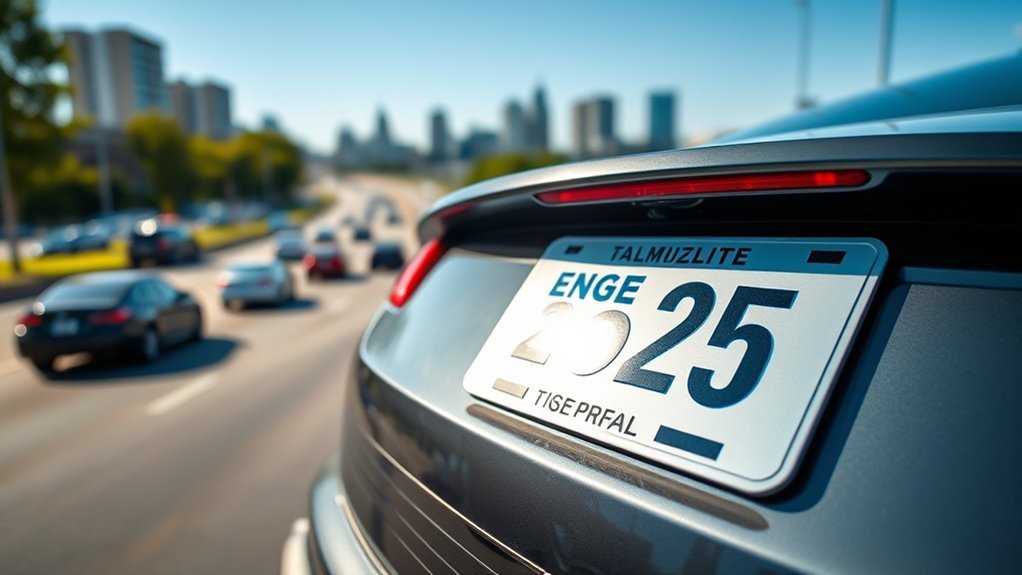
Whether you need a standard registration plate or a personalised replacement, it must meet the applicable UK display regulations.
The requirements cover the plate material, background colour, lettering, spacing, and identification markings.
Plate Material Specifications
According to the official GOV.UK number plate rules, ordinary modern registration plates must meet the following requirements:
- They must be made from reflective material.
- The front plate must show black characters on a white background.
- The rear plate must show black characters on a yellow background.
- The background must not contain a decorative pattern.
- The plate must display the supplier’s identification details.
- Plates fitted after 1 September 2021 must display the British Standard number BS AU 145e.
- The characters must be clearly readable and must not be altered to misrepresent the registration.
Raised or 3D characters are permitted when they meet the applicable rules. For plates fitted after 1 September 2021, the characters must be a single shade of black.
Character Size Regulations
For ordinary modern car registration plates, the standard character dimensions are the same at the front and rear.
| Specification | Standard measurement |
|---|---|
| Character height | 79 mm |
| Character width | 50 mm, except for the number 1 and letter I |
| Character stroke | 14 mm |
| Space between characters | 11 mm |
| Space between character groups | 33 mm |
| Top, bottom, and side margins | 11 mm |
These measurements come from the DVLA’s INF104 registration plate guidance. Different provisions apply to certain motorcycles, tricycles, quadricycles, imported vehicles, and older registrations.
The permitted character font and layout must also be followed. Decorative spacing, altered lettering, and fixings that change how a character appears can make a plate illegal.
Warning: Incorrectly displayed registration plates can result in a fine of up to £1,000 and an MOT failure. Do not modify lettering, spacing, or fixing positions to make a registration look like a name or word. Check the official DVLA display guidance before fitting replacement plates.
Personalised Plate Compliance
A personalised registration must comply with the same applicable display rules as a standard registration.
Buying the right to use a private registration does not give you permission to change the legal font, character spacing, or background colours.
You must also have the right to assign the registration to the vehicle on which it is displayed.
Key Regulations for Personalised Number Plates
Personalised number plates let you choose an available registration, but the DVLA controls how registrations are assigned and displayed.
One of the most important rules is that a private registration must not make a vehicle appear newer than it actually is.
For example, you cannot assign a 75 registration to a vehicle that was first registered in 2020.
You can check availability and purchase registrations through the official DVLA personalised registration service.
How to Get Replacement Number Plates
If your existing plates are damaged, missing, or need replacing after a registration change, use a registered number plate supplier.
The supplier must check documents confirming your identity and your right to use the registration.
Depending on your circumstances, acceptable documents may include:
- A valid driving licence or another accepted identity document.
- Your V5C registration certificate.
- The green new keeper slip.
- A V750 certificate of entitlement for a personalised registration.
- A V778 retention document.
- Another DVLA-approved registration entitlement document.
The full document requirements are available in the official GOV.UK replacement number plate guidance.
Check the finished plates before fitting them. They should show the correct registration, legal character layout, supplier details, and applicable British Standard marking.
Transferring or Retaining a Private Registration
If you want to keep a personalised registration when selling your vehicle, apply to transfer it or place it on retention before completing the sale.
DVLA provides services for assigning and retaining registrations using the relevant entitlement documents.
See the official private registration assignment rules for the requirements that apply to your vehicle.
Once a registration change is completed, make sure your vehicle records and insurance details reflect the registration being used.
2025 Registration Plates: Practical Checks
Before buying or selling a vehicle with a 25 or 75 registration, keep these points in mind:
- A 25 identifier normally relates to the March–August 2025 registration period.
- A 75 identifier normally relates to the September 2025–February 2026 registration period.
- The introduction of a new identifier does not invalidate an existing plate.
- The registration number alone cannot confirm a car’s complete history, condition, or manufacture date.
- A personalised registration may not reveal the vehicle’s age in the same way as a standard current-style plate.
- A legal replacement plate must meet the applicable DVLA requirements.
For a used car, check the DVLA vehicle record and compare the information with the V5C, mileage, MOT history where available, and the seller’s description.
The official MOT history service can help you review recorded test results and mileage.
Frequently Asked Questions
What month do new UK car registration plates come out?
New standard GB registration age identifiers are introduced on 1 March and 1 September each year. Car manufacturers can release new models at other times, so a registration plate change is not necessarily a new model launch.
When did the 25 registration plate come out?
The 25 identifier was introduced on 1 March 2025 and covered the registration period through 31 August 2025.
When did the 75 registration plate come out?
The 75 identifier was introduced on 1 September 2025 and covered new registrations through 28 February 2026.
Do 25 and 75 number plates expire?
No. The dates describe when those identifiers were issued for new registrations. A properly registered vehicle can continue displaying its existing plate after the next series begins, provided the plate remains legal and readable.
How do I get a replacement UK number plate?
Use a registered number plate supplier. You’ll need accepted identification and a document showing your right to use the registration, such as a V5C, V750, or V778, depending on your circumstances. The replacement plate must meet the applicable legal specifications.
Do UK dealerships provide number plates?
Dealerships commonly arrange registration plates as part of preparing a new vehicle for delivery. If you need replacement plates separately, you can use a registered number plate supplier. A personalised registration must be properly assigned before it is displayed.
How often are UK registration plates changed?
New standard registration age identifiers are introduced twice a year, in March and September. Existing vehicles do not have to change their registration numbers every six months.
Can I put a 75 personalised registration on an older car?
You cannot assign a private registration that makes a vehicle look newer than it is. A 75 registration therefore cannot be used to make an older vehicle appear to have been first registered in the September 2025 registration period.
How can I check the actual age of a vehicle?
Use the DVLA vehicle information service to check the recorded first registration date and manufacture year. Compare the result with the V5C and other vehicle records. A registration identifier provides a useful clue, but it is not a substitute for checking the actual vehicle information.
Conclusion
The 2025 UK registration plate releases took place on 1 March for the 25 identifier and 1 September for the 75 identifier. Understanding these dates can help you identify a vehicle’s registration period and compare cars more accurately.
Remember that a number plate does not expire when the next series arrives, and a registration identifier does not reveal every detail about a car’s age or history.
Whether you’re buying, selling, or choosing a personalised plate, check the relevant DVLA records and follow the legal display requirements. These simple checks will help you make informed decisions without relying on the registration number alone.
Sources
- DVLA — Vehicle Registration Numbers and Number Plates (INF104) — registration formats, age identifiers, dimensions, and display requirements.
- GOV.UK — Rules for Number Plates — legal materials, colours, identification markings, and British Standard requirements.
- GOV.UK — Getting Number Plates Made Up — registered suppliers and acceptable documents.
- GOV.UK — Assign a Private Registration Number — personalised registration eligibility and assignment rules.
- GOV.UK — Get Vehicle Information from DVLA — checking official vehicle records and registration dates.
- Department for Transport — Vehicle Licensing Statistics, United Kingdom: 2025 — official registration figures and seasonal registration patterns, published 29 April 2026.







Leave a Reply