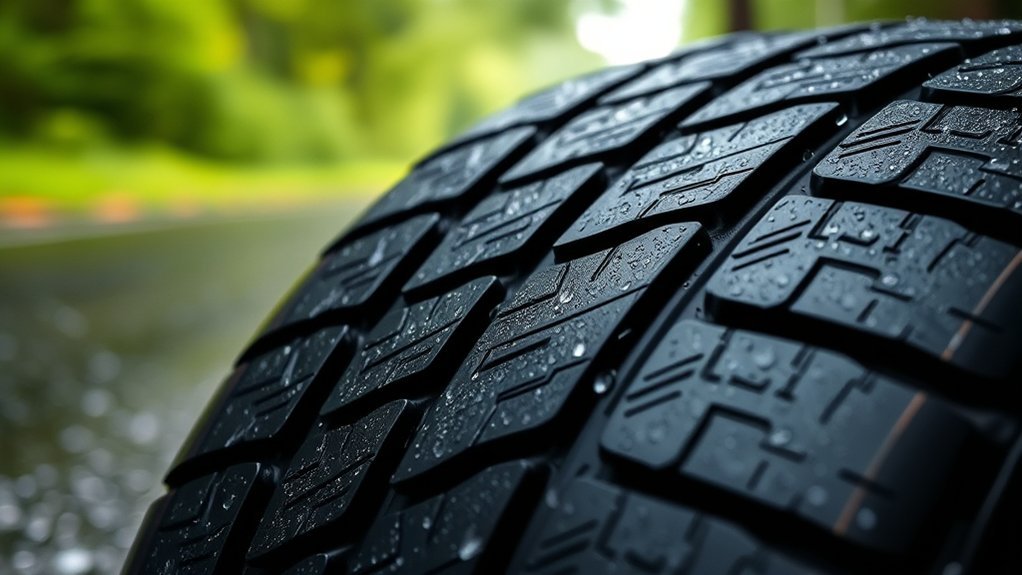
Driving on bald tires turns a light rainstorm into a dangerous slide. Your car needs deep grooves to channel water away from the rubber. Read on to learn the exact legal limits for tire wear and how to measure your tread accurately to stay safe on the road.
Quick Answer
The legal minimum tire tread depth in most U.S. states is 2/32 of an inch. Driving on tires below this limit violates the law and drastically increases your risk of hydroplaning. Safety experts strongly recommend replacing your tires at 4/32 of an inch to maintain safe stopping distances on wet roads.
Key Takeaways
- The legal minimum tread depth for passenger cars in most U.S. states is 2/32 of an inch.
- Some states enforce stricter laws for commercial trucks and winter driving conditions.
- You should replace tires at 4/32 of an inch for rain and 5/32 of an inch for snow.
- Checking your tires every month helps you catch dangerous wear before a blowout happens.
- Driving on bald tires brings costly legal fines and heavily increases your crash risk.
Why Tire Tread Depth Matters for Safety
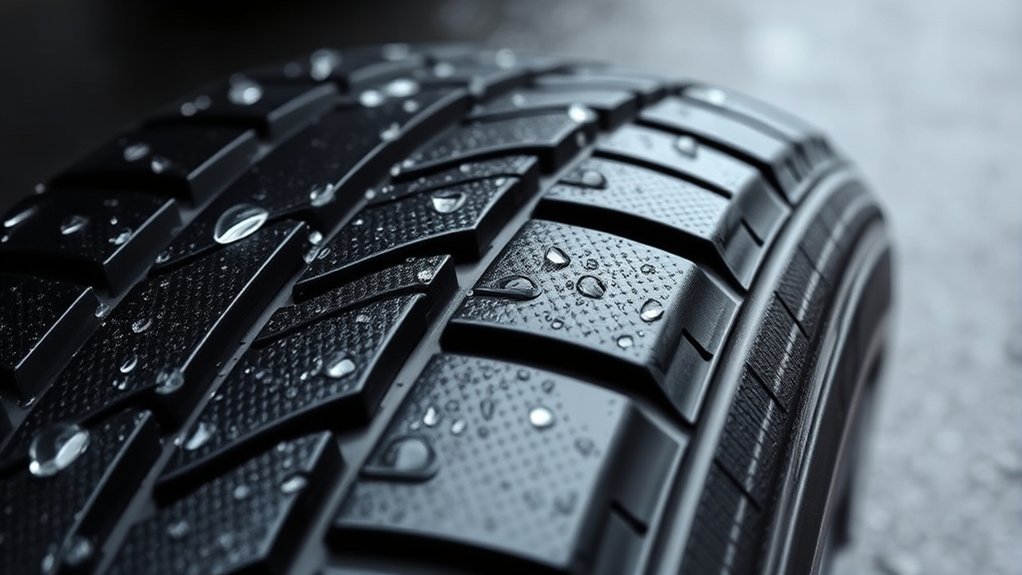
Tire tread depth measures the vertical distance from the top of the rubber down to the bottom of the grooves. Deep grooves grab the road and push water out of the way. You lose control of your vehicle when you lose this critical depth.
Deep tire grooves determine how well your vehicle grips the pavement and stops during a sudden emergency.
National Highway Traffic Safety Administration (NHTSA) guidelines show that worn tires drastically increase your stopping distance. Most states enforce a strict minimum limit of 2/32 of an inch. Experts advise replacing tires even earlier at 5/32 of an inch for winter driving.
Many modern tires feature built-in wear indicator bars. Manufacturers place these raised rubber bars deep inside the grooves to warn you when the tread runs low. Checking these indicators protects you from sudden tire failure.
How to Measure Your Tire Tread Depth
You need a dedicated tread depth gauge to get the most accurate reading. Push the gauge straight down into the lowest groove of the tire. Read the exact measurement on the sliding scale or digital screen.
You can also use a standard penny for a fast check. Place a penny upside down into the tire groove. You need new tires immediately if you can see the top of Abraham Lincoln’s head.
Always measure the tread in several different spots around the entire tire. Uneven wear points directly to hidden alignment or suspension problems. You must fix these mechanical issues quickly to prevent a high-speed blowout.
The Quarter Test for Wet Weather
The standard penny test only checks for the bare legal minimum. Safety experts prefer the quarter test to check for safe wet-weather driving. Place a quarter upside down in the main groove of your tire.
Your tread is at least 4/32 of an inch deep if the rubber covers the top of George Washington’s head. This deeper measurement guarantees you have enough grip to stop safely on rain-slicked roads.
State Legal Tread Depth Requirements
Most U.S. states mandate a minimum passenger car tire tread depth of 2/32 of an inch. This local rule matches federal safety guidelines. A few states require different minimums, while a handful do not enforce a specific limit at all.
Check your local Department of Transportation laws to avoid traffic fines. Failing a state vehicle inspection often forces you to buy new tires on the spot before you can renew your registration.
| State Rule | Minimum Tread Depth | Safety Recommendation |
|---|---|---|
| Standard Law | 2/32 inch | Replace at 4/32 inch |
| Commercial Trucks | 4/32 inch (steer tires) | Replace at 6/32 inch |
| No State Limit | None enforced | Replace before 2/32 inch |
Knowing your local laws keeps you out of trouble with highway patrols. More importantly, maintaining deeper tread keeps your family safe on daily commutes.
How Worn Tires Impact Vehicle Safety
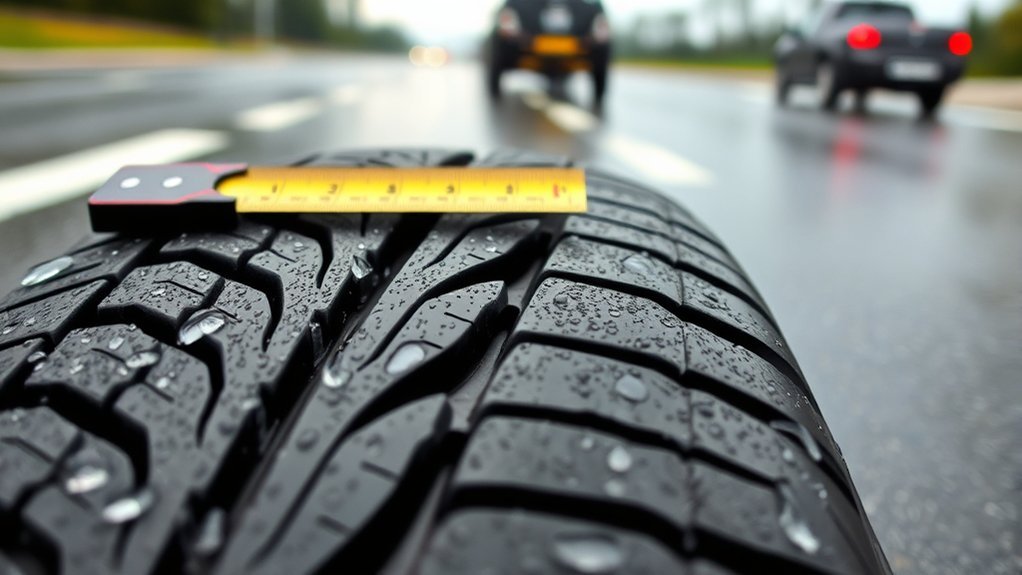
Bald tires destroy your ability to steer and stop. The legal limit of 2/32 of an inch barely provides enough grip on dry roads. Your stopping power drops sharply the moment your tread falls below 4/32 of an inch.
Water builds up quickly under the tire when shallow grooves cannot push it away. This causes hydroplaning, which means your car literally floats on the water and ignores your steering wheel. Snow and ice multiply this danger significantly.
Low tread also leaves your thin tires highly vulnerable to punctures from sharp road debris. A sudden blowout at highway speeds easily causes a catastrophic rollover crash. Inspect your tires often to protect yourself and your passengers.
How to Maintain Safe Tire Tread Depth
You can easily extend the life of your tires through routine monthly maintenance. Proper care keeps the rubber wearing evenly across the entire surface. Follow a simple schedule to protect your expensive investment.
| Action | Frequency | Purpose |
|---|---|---|
| Check Tire Pressure | Every month | Stops uneven wear |
| Rotate Tires | Every 5,000 miles | Spreads wear evenly |
| Measure Tread | Every month | Tracks usable lifespan |
| Inspect for Damage | Every month | Catches hidden hazards |
Keep your tires inflated to the exact pressure listed inside your driver-side door jamb. Underinflated tires wear out the outer edges quickly. Overinflated tires wear down the center strip prematurely.
Common Myths About Tire Wear Limits
Many drivers wrongly think the legal limit guarantees a safe trip. Relying purely on minimum standards puts you at massive risk during a rainstorm.
You need much more than the bare minimum to drive safely on wet highways.
Understanding the reality of tire wear helps you maintain peak grip and stop accidents before they happen.
The Truth About the Legal Limit
Drivers wildly underestimate the dangers of worn rubber. They view the 2/32 of an inch limit as a target rather than a worst-case threshold.
Here are the facts you need to know:
- Legal limits ignore rain: Minimum tread provides almost zero hydroplaning resistance in heavy downpours.
- Truck rules differ: Commercial trucks must maintain 4/32 of an inch on their front steer tires.
- Stopping distance doubles: Bald tires need significantly more room to stop on wet pavement.
- Wear bars mean danger: Reaching the built-in wear indicators means your tire has already lost its safest handling traits.
Why Minimum Standards Fail in Bad Weather
The 2/32 of an inch rule exists just to keep the most dangerous vehicles off the road. It does not certify that your car will handle well in bad weather.
According to safety tests, tires with less than 4/32 of an inch of tread lose half of their wet road grip. The shallow grooves simply cannot clear standing water fast enough. You will slide forward even with your anti-lock brakes fully engaged.
Winter tires need even deeper grooves to pack and grip loose snow. Most all-season tires lose their winter rating completely once they hit 5/32 of an inch. Replace your tires early if you live in a rainy or snowy climate.
Hidden Risks of Uneven Tread Wear
Your tires might measure perfectly fine on the outside edge but sit completely bald on the inside. Uneven wear tricks drivers into thinking their tires remain completely safe.
- Alignment issues: Poor wheel alignment scrubs rubber rapidly off one side of the tire.
- Suspension wear: Bad shocks create dangerous cupping patterns across the tire surface.
- Inflation errors: Wrong air pressure ruins the center or outer edges over time.
- Fleet violations: Uneven wear causes commercial vehicles to fail mandatory DOT safety inspections.
Check the tread depth across the entire width of the tire to catch these hidden mechanical problems early.
Steps to Take When Your Tires Are Bald
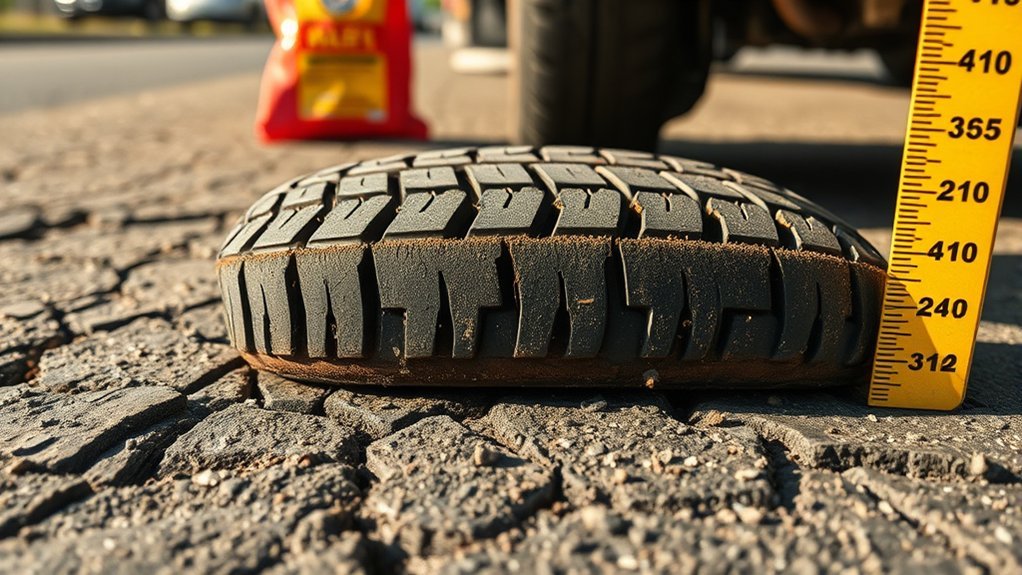
You must buy new tires right away if your tread hits the 2/32 of an inch mark. Driving on bald rubber risks your life and invites costly traffic tickets.
Park the car until you can safely drive it straight to a local tire shop.
Taking fast action protects your passengers and restores your car’s true handling abilities.
Buy Replacements Quickly
Shop for new tires the exact day you fail the penny test.
Do not wait for the next season or your next scheduled oil change.
Follow these quick steps to get back on the road:
- Check the exact tire size listed on your driver-side door placard.
- Compare replacement prices online at major tire retailers.
- Schedule an installation appointment with a local mechanic or tire shop.
- Ask the technician to check your wheel alignment during the install.
Inspect the Remaining Tires
Tires rarely wear out at the exact same rate. Front tires handle most of the heavy steering and braking friction. They often degrade much faster than rear tires on front-wheel-drive cars.
Check all four tires and the spare hidden in your trunk. Replacing all four tires at once gives you the safest, most balanced handling.
If you can only afford to buy two new tires, always put the fresh rubber on the rear axle. This placement prevents dangerous rear-end spin-outs on wet roads.
Set a Routine Checking Schedule
Create a simple habit to check your tires once a month. Keep a cheap tread depth gauge inside your glovebox for instant access.
Check the air pressure and the tread depth on the same day every month.
- Use the quarter test: Check for 4/32 of an inch to ensure wet weather safety.
- Check the wear bars: Look inside the grooves to see if the tread sits flush with the indicator bars.
- Inspect the sidewalls: Look for dangerous cracks, bulges, or missing chunks of rubber.
- Monitor the spare: Make sure your spare tire holds air and retains deep tread.
Always consult a certified mechanic to accurately assess the safety of your current tires.
Frequently Asked Questions
Is a 2/32 Tire Tread Legal?
Yes, a 2/32 of an inch tread meets the bare legal requirement in most states. But this extreme depth heavily compromises your safety on wet roads. Experts recommend swapping them out much sooner to maintain total control of your car.
Should I Replace My Tires at 2/32 or 4/32?
You should replace your tires at 4/32 of an inch for maximum safety. This deeper tread prevents hydroplaning and cuts down your emergency stopping distance. Waiting until 2/32 of an inch greatly increases your risk of a severe accident.
Is 1/4 Inch Tire Tread Good?
Yes, 1/4 of an inch equals 8/32 of an inch, which indicates a relatively new tire. This deep tread provides excellent traction in heavy rain and light snow. Brand new passenger tires usually start with 10/32 or 11/32 of an inch of tread.
Is 6/32 Good for Tires?
Yes, 6/32 of an inch means your tires still have plenty of safe life left. This depth handles rainy conditions easily and provides acceptable grip in winter weather. Start planning your budget for a replacement once they drop down to 4/32 of an inch.
Final Steps for Tire Safety
Your tires act as the only physical connection between your heavy car and the road. Monitoring your tread depth takes just a few minutes a month but easily prevents catastrophic accidents. Grab a penny or a dedicated tire gauge today and check all four wheels in your driveway. Staying ahead of tire wear keeps you and your family safe on every trip.







Leave a Reply