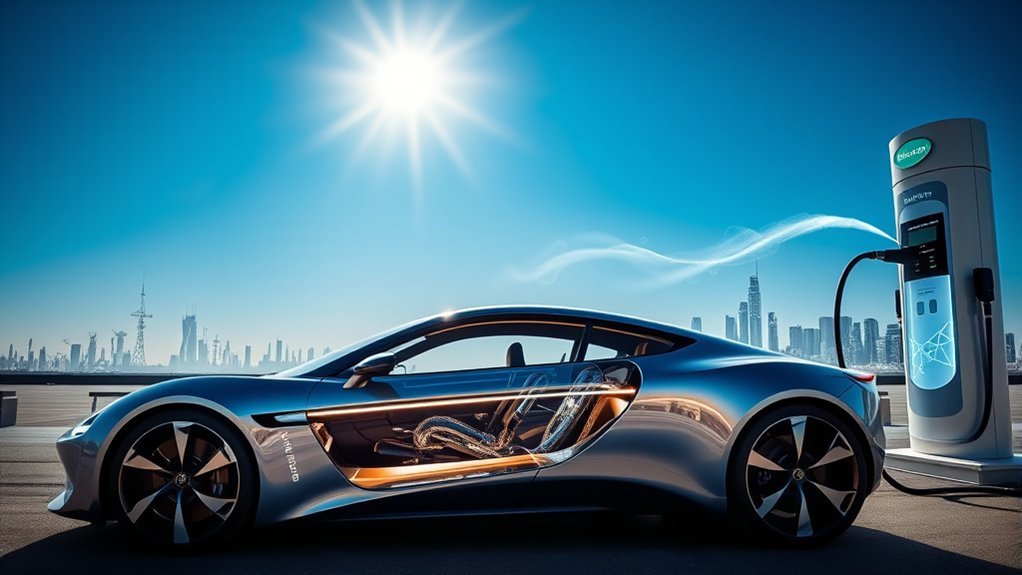
Battery electric cars take hours to charge fully. Gas engines pump heavy pollution into the air during every trip. Hydrogen fuel cell cars offer a strong alternative to both options. They generate their own electricity on the move and leave behind nothing but water vapor.
Quick Answer
A hydrogen fuel cell car creates electricity by mixing stored hydrogen gas with outside oxygen inside a special stack. This chemical reaction powers the electric motor and drives the wheels. The vehicle emits no pollution, leaving behind only pure water.
Key Takeaways
- Fuel cell stacks mix hydrogen and oxygen to create electricity on demand.
- These vehicles release zero harmful emissions, producing only warm air and water.
- High-pressure tanks safely store compressed hydrogen gas for fast refueling.
- An electric motor drives the wheels, and a small battery catches braking energy.
- High fuel costs and missing refueling stations slow down mainstream adoption.
How a Hydrogen Fuel Cell Works
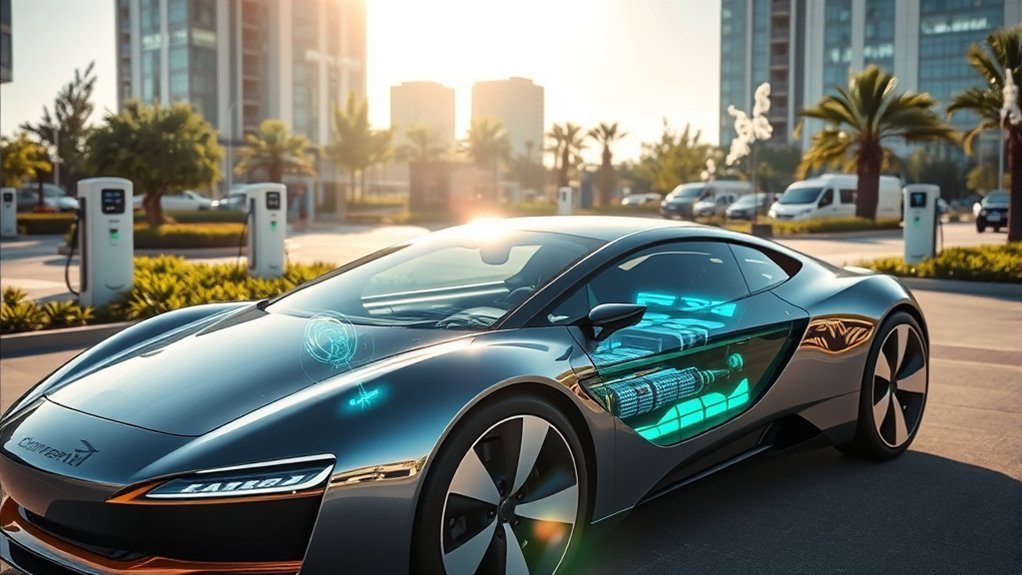
A hydrogen fuel cell acts as a miniature power plant inside the car. It mixes hydrogen gas with oxygen to create electrical power. This electrochemical reaction happens inside a durable unit called the fuel cell stack.
The stack contains hundreds of individual cells. Compressed hydrogen enters these cells and meets oxygen drawn from the outside air. The resulting chemical reaction generates the exact amount of electricity needed to run the electric motor.
This motor delivers instant power to the wheels for quick acceleration. A specialized management system controls the energy flow at all times. It routes power to the motor and sends leftover energy to a small battery during braking.
Core Components of a Hydrogen Vehicle
Hydrogen cars rely on several distinct parts working together to keep drivers moving safely and efficiently.
| Component | Description |
|---|---|
| Fuel Cell Stack | Combines hydrogen and oxygen to generate electrical energy while emitting only water vapor. |
| Hydrogen Storage Tanks | Safely hold compressed hydrogen gas at extreme pressures to fuel the vehicle. |
| Electric Motor | Uses the electrical energy to turn the wheels and provide instant acceleration. |
A control unit constantly adjusts how power moves between these components. An auxiliary battery captures kinetic energy when you apply the brakes. This extra stored power helps the car accelerate faster and climb steep hills easily.
How Hydrogen Cars Generate Electricity
The real power generation happens deep inside the fuel cell stack. The system feeds compressed hydrogen into the negative side of the fuel cell. At the same time, it pulls ambient air into the positive side.
A chemical catalyst separates the hydrogen molecules into electrons and protons. The protons pass easily through a membrane, but the electrons must take a longer route. This forced detour creates an electrical current that powers the car.
Eventually, the electrons and protons reunite with oxygen on the far side of the cell. They form water molecules and exit the tailpipe as harmless vapor. This process provides enough steady electricity to drive up to 400 miles on a single fill-up.
How Hydrogen Cars Store Fuel Safely
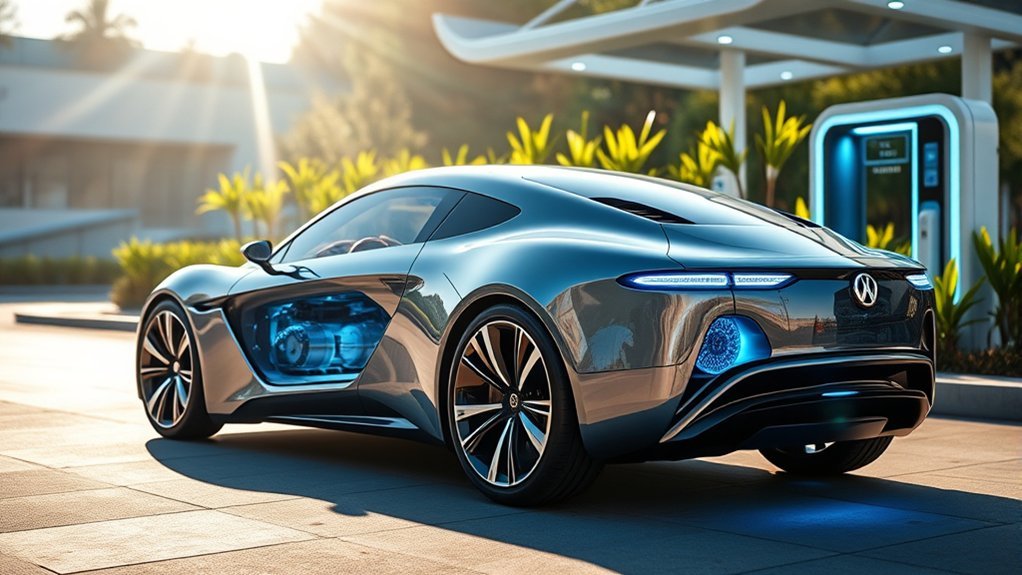
Drivers need a reliable way to carry this extremely lightweight gas. Automakers use thick, carbon-fiber reinforced tanks to hold the fuel safely. Most systems pressurize the gas to 10,000 psi to squeeze enough energy into a small space.
These advanced storage tanks endure rigorous crash testing before hitting the road. They feature specific pressure relief valves that safely vent the gas if a fire occurs. Because hydrogen floats easily, escaping gas rises and disperses instantly instead of pooling on the ground.
The size of these tanks determines how far a driver can travel. Most modern hydrogen cars hold about 5 to 6 kilograms of fuel at capacity. A sophisticated computer monitors tank pressure and temperature to keep the system running safely in all weather.
Hydrogen Cars Available to Buy Today
Shoppers will not find many hydrogen cars on local dealer lots right now. Automakers only sell a few specific models in regions with active fueling networks. The Toyota Mirai stands out as the most common hydrogen sedan available to consumers.
Hyundai also produces the Nexo, a compact SUV designed entirely around a fuel cell system. Honda recently introduced a hydrogen plug-in hybrid version of its popular CR-V. These options remain limited mostly to California, where most US public stations operate.
Pros and Cons of Fuel Cell Vehicles
Hydrogen power offers incredible benefits for drivers looking to drop fossil fuels. Buyers must weigh these unique factors before switching from traditional gas or battery-electric cars.
Environmental Benefits
Fuel cell cars provide an incredibly clean way to travel long distances. They produce zero tailpipe emissions, which directly improves local air quality in busy cities.
- They emit nothing but warm air and pure water vapor.
- Drivers enjoy a 300 to 400-mile range on a single fuel tank.
- Refueling takes about five minutes, mimicking the speed of gas pumps.
- Wind and solar farms can produce green hydrogen to slash carbon footprints.
The Lack of Refueling Stations
Missing hydrogen stations limit where these clean cars can actually travel. The United States operates fewer than 60 public hydrogen stations, mostly located in California. Europe faces similar hurdles, expanding networks slowly due to high construction costs.
Investors hesitate to build expensive stations when few hydrogen cars drive on local roads. At the same time, drivers refuse to buy the cars until stations become reliable. Experts call this a classic supply and demand problem that hurts market growth.
High Production and Fuel Costs
Hydrogen gas costs significantly more at the pump than electricity or gasoline. Recent market data shows pump prices in California spiking well over $30 per kilogram. At that rate, filling a standard Mirai tank costs nearly $150.
Energy companies still extract most commercial hydrogen from natural gas processing plants. This method creates carbon emissions, which cancels out some environmental benefits. Transitioning to clean green hydrogen remains a vital but expensive goal for the industry.
Always consult local fuel availability maps and current pricing data before buying a hydrogen vehicle.
Maintenance and Lifespan of Fuel Cells
Hydrogen cars require less routine maintenance than standard gas vehicles. They lack spark plugs, oil filters, and timing belts that normally break down. Owners primarily rotate the tires, fill windshield fluid, and replace cabin air filters.
However, the internal fuel cell stack does degrade slowly over years of driving. Automakers expect these power units to last about 150,000 miles before needing replacement. Mechanics must also inspect the high-pressure tanks periodically to ensure continued safety.
Frequently Asked Questions
Is Hydrogen Fuel Flammable?
Hydrogen burns easily, but automakers design these vehicles to prevent dangerous explosions. The lightweight gas escapes upward and dissipates quickly if a tank leaks. Gas tanks, by contrast, leak heavy liquid fuel that pools directly under the car and burns longer.
Are Hydrogen Cars Safe to Drive?
Yes, hydrogen cars prove incredibly safe for daily driving. Automakers build high-pressure hydrogen tanks using thick, bullet-resistant carbon fiber. In a crash, safety valves release the gas straight up into the air to prevent pressure buildup.
How Expensive Is It to Refill a Hydrogen Car?
Fuel prices change frequently based on local supply and current production costs. Public stations currently charge between $25 and $36 per kilogram of hydrogen. Filling a typical 5.6-kilogram tank often costs well over $150.
Can I Charge a Hydrogen Car at Home?
You cannot refill a standard hydrogen tank at home using your own equipment. You must visit a specialized commercial station that pumps high-pressure compressed gas. A few rare models, like the Honda CR-V e:FCEV, do include a tiny battery you can plug in for short trips.
Next Steps for Hydrogen Drivers
Hydrogen fuel cell cars prove drivers can travel long distances without burning fossil fuels. They combine the fast refueling speeds of gas cars with the clean drive of electric vehicles. High fuel prices and missing public stations keep them out of reach for most mainstream buyers today. Test-drive a Toyota Mirai if you live near an active hydrogen network, or wait for station availability to improve nationwide.






Leave a Reply