Does your car battery keep dying? You likely face a battery reaching the end of its life, a faulty alternator, or a hidden electrical drain. These issues often cause frustration, but simple diagnostic steps can help you find and fix the problem before you get stranded.
Quick Answer
If your battery keeps dying, first check for left-on lights or aftermarket devices causing a parasitic drain. If those aren’t the issue, test your alternator with a multimeter to ensure it provides a charge between 13.7V and 14.7V. If your battery is over three years old and continues to fail after a full charge, it likely needs replacement.
Key Takeaways
- Leaving interior or exterior lights on drains your battery within hours.
- Parasitic draws from phone chargers or aftermarket electronics sap power while the engine is off.
- A failing alternator prevents the battery from recharging while you drive.
- Extreme heat causes fluid evaporation, while cold weather slows chemical reactions.
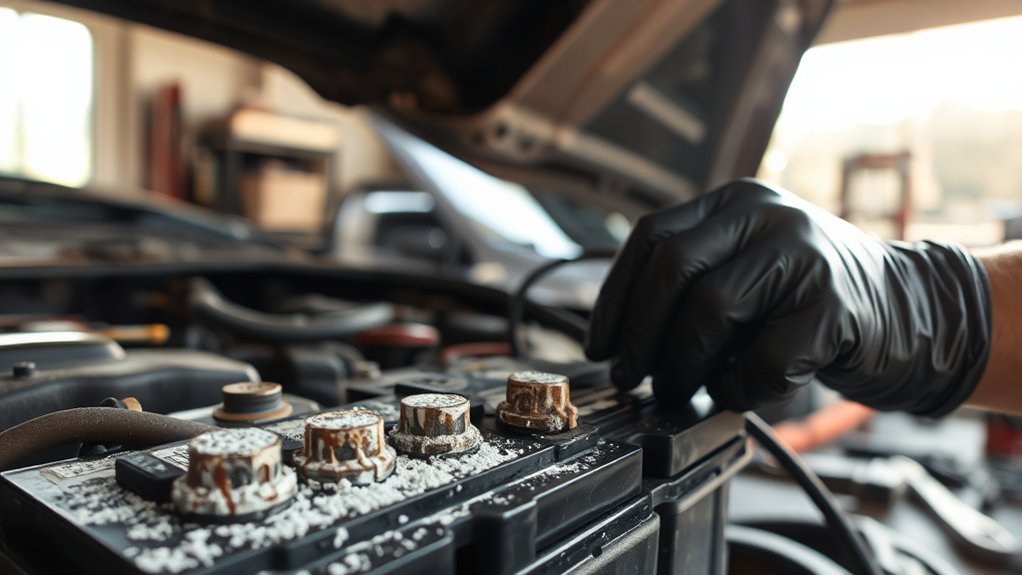
- Corroded battery terminals often block the flow of electricity, causing start-up failures.
Environmental Factors Impacting Battery Life

Your driving environment dictates how long your battery lasts. Cold temperatures freeze battery fluid and reduce power output, making engines harder to start during winter.
High heat causes internal battery fluid to evaporate. This process damages the internal structure and shortens the component’s life significantly. Humidity and temperature shifts also promote terminal corrosion, which acts as a barrier to your electrical system.
Batteries older than three years struggle the most with these stressors. Monitoring their condition each season helps you avoid sudden, inconvenient failures.
Common Reasons Your Car Battery Keeps Dying
If your car won’t start, focus on the most frequent culprits. These usually involve user error, hidden power consumers, or a faulty charging component.
Lights Left On
Leaving headlights, trunk lights, or dome lights on drains a battery completely in a few hours. Glove box and vanity mirror lights often stay on without you noticing.
Check your vehicle for these small lights whenever you park. If your car has automatic headlights, ensure they shut off correctly when you lock the doors.
Parasitic Electrical Draw
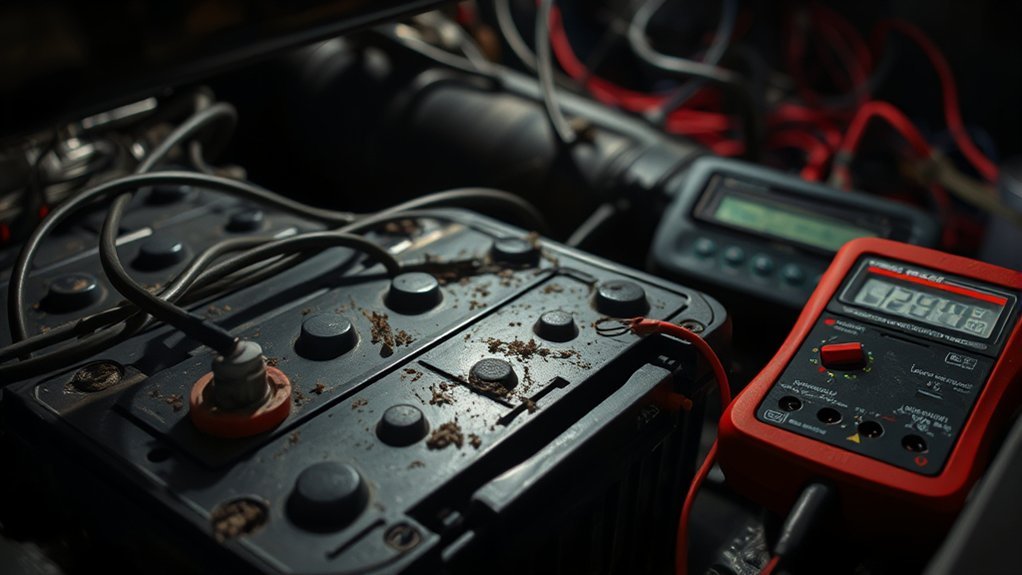
Parasitic draw occurs when electrical parts keep pulling power after you turn the key. Stereos, dash cams, and phone chargers are common sources of this “hidden” drain.
Malfunctioning fuses or stuck relays also keep circuits active. Use a multimeter to measure the current flowing from the battery while the car is off. This identifies which circuit pulls too much power.
Faulty Alternator Issues
The alternator acts as your car’s power plant. It keeps the battery charged while the engine runs. If it fails, your car runs off the battery alone until the power runs out.
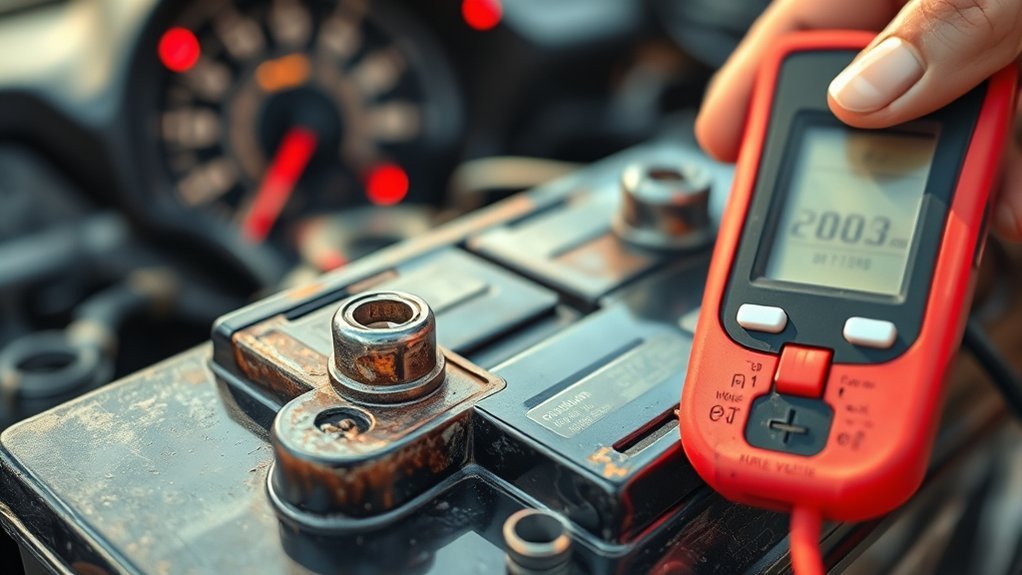
Watch for dimming headlights or strange engine noises. Test the alternator output with a multimeter while the engine runs. A healthy unit should show between 13.7V and 14.7V.
Key Signs Your Battery Is Failing
Your car usually provides warnings before a complete failure occurs. Slow engine cranking and clicking sounds are the most reliable indicators of a dying unit.
Difficulty Starting Engine
A battery with a charge below 12.4 volts often struggles to turn the engine over. You may hear a sluggish, slow crank or a rapid clicking noise when you turn the key.
If your dashboard lights flicker or go dim during the start attempt, the battery lacks enough power for the starter motor. This confirms the unit is likely near the end of its lifespan.
Dim Headlights Observed
Headlights serve as a visual gauge for your battery. When the voltage drops below 12.4V, the lights look dim or flicker during idle. A battery that cannot maintain consistent voltage often causes this problem.
If the headlights brighten significantly when you press the gas pedal, the alternator might be struggling to keep up. Always consult a professional if your vehicle shows these electrical inconsistencies. Always consult a qualified professional before making decisions based on this information.
Warning Lights Illuminate Dashboard
Your dashboard provides data on your charging system through specific icons. Do not ignore these alerts when they appear while driving.
- Battery warning light: This indicates a charging issue, often linked to the alternator.
- Check engine light: Sometimes illuminates due to electrical voltage issues.
- Clicking noise: Indicates the battery lacks the amperage to engage the starter.
- Erratic electrical behavior: Suggests the system has unstable voltage.
Fixing Electrical System Problems
Inspect your wiring for corrosion or loose connections. A loose terminal prevents the battery from receiving a full charge while you drive.
Test your fuses and relays if you suspect a parasitic drain. If you added aftermarket electronics, verify that they turn off when the ignition is off. Improper wiring of these devices causes most unexpected drains.
Quick Fixes for Battery Drain
You can perform several quick tasks to improve your battery’s reliability. Start by cleaning the terminals with a wire brush to ensure a clean connection.
- Unplug all USB chargers and accessories before leaving the car.
- Drive for at least 20 minutes once a week to maintain a full charge.
- Test the battery with a multimeter to ensure it holds at least 12.4V.
- Use a trickle charger if you leave the car parked for long periods.
Preventative Measures
Consistent care prevents many premature failures. Use this schedule to keep your battery in good shape.
| Action | Frequency | Benefit |
|---|---|---|
| Unplug accessories | Every park | Stops parasitic draw |
| Drive vehicle | Weekly | Maintains charge |
| Clean terminals | Monthly | Ensures connection |
| Trickle charge | During storage | Prevents deep discharge |
When to Call a Professional
If you perform these checks and the battery still fails, contact a mechanic. Professional diagnostics can find internal shorts that a standard multimeter might miss. If your battery exceeds five years of age, experts typically recommend a proactive replacement.
Understanding Battery Lifespan
Most car batteries serve you well for three to five years. Factors like high heat, short trips, and neglect shorten this window significantly. Taking care of your battery terminals and driving long enough to recharge the battery helps you reach the maximum possible lifespan for your specific unit.
Frequently Asked Questions
Can extreme temperatures affect my battery?
Yes. High heat damages internal components through fluid evaporation. Cold weather slows down the chemical reactions required to start your engine.
How often should I replace my battery?
Plan for a new battery every three to five years. Monitor your start-up speed and electrical performance as the battery nears the three-year mark.
What are the signs of a failing alternator?
Look for flickering headlights, a dashboard battery light, and strange grinding noises. A bad alternator often causes the battery to die repeatedly.
Does a weak battery affect fuel efficiency?
A weak battery forces the alternator to work harder than necessary. This increased load on the engine can slightly lower your fuel economy.
Can I jump-start a battery that keeps dying?
You can jump-start it, but this only addresses the symptom. You must find the root cause of the drain or the battery will continue to fail.
Conclusion
Solving a persistent battery problem requires consistent maintenance and accurate testing. By following these steps, you ensure your vehicle starts reliably regardless of the weather. Start by cleaning your terminals today to keep your car running smoothly for years to come.







Leave a Reply