To use a public EV charger in the UK, start by locating a charger using apps like Zapmap or Google Maps. Make sure your vehicle has the right connector. For destination chargers, check for attached cables, plug in, and pay via contactless or app. With rapid chargers, expect quicker sessions. Keep an eye on your battery level and avoid peak charging hours to save money. Explore more tips and tricks to enhance your charging experience!
How to Find Public EV Chargers Near You
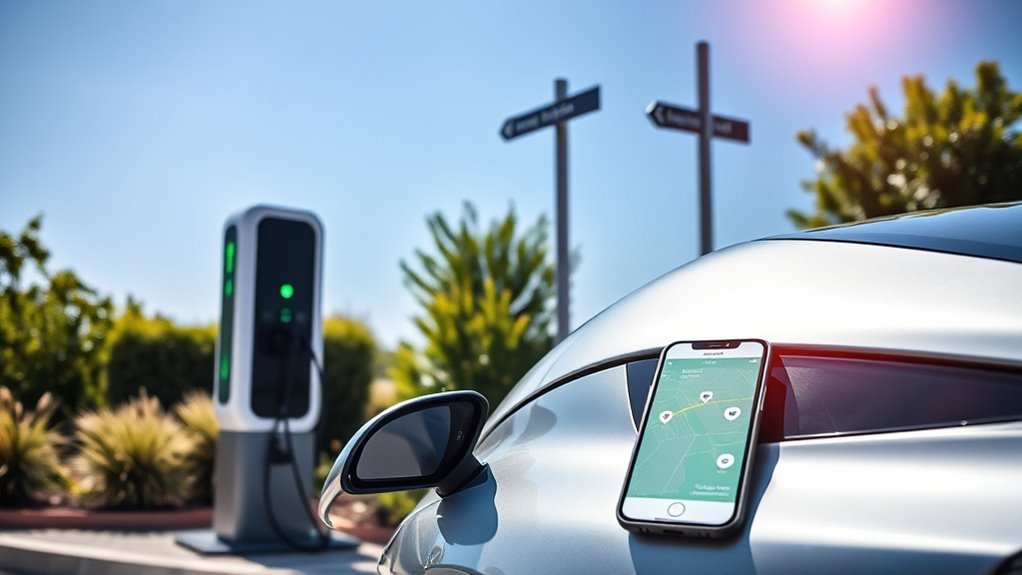
Wondering how to locate public EV chargers near you? You’ve got plenty of options to tap into the charging network. Start with roaming apps like Zapmap and Electroverse, which provide real-time charger locations and pricing details.
Looking for public EV chargers? Use apps like Zapmap and Electroverse for real-time locations and pricing.
If you prefer a familiar interface, Google Maps showcases numerous public charging stations, complete with user ratings and directions. The Connected Kerb app is another handy tool, allowing you to check charger availability before you arrive.
In the UK, over 80,000 public chargers are scattered across various sites like motorway service stations, supermarkets, and car parks.
If you own an electric vehicle with built-in navigation, it can guide you to charging stops along your route, making trip planning a breeze. With these resources at your fingertips, you’re empowered to charge your vehicle effortlessly, ensuring you’re never far from the power you need.
Get to Know the Different Types of Public EV Chargers
When it comes to charging your electric vehicle, understanding the different types of public EV chargers is essential for optimizing your charging experience.
There are three primary charger types: slow, fast, and rapid. Slow chargers, offering up to 7kW, are perfect for overnight stays. Fast chargers, ranging from 7-22kW, are ideal for a quick top-up while you’re shopping or dining.
For those long journeys, rapid chargers deliver impressive speeds of 50-149kW, allowing most modern EVs to gain up to 80% charge in just 20-30 minutes at ultra-rapid stations, which exceed 150kW.
Most rapid chargers come with attached cables, while slow chargers typically use Type 2 connectors, meaning you might need your own cable.
Familiarizing yourself with these charger types and their charging speeds will greatly enhance your electric vehicle experience, giving you the freedom to charge confidently wherever you go.
Preparing Your Vehicle for Charging
Before you head to a public EV charger, make certain your vehicle has the right connector type, like Type 2 for AC or CCS for DC.
Download a charging app such as Zest or Zapmap to find nearby chargers and check their availability.
This preparation guarantees a smoother charging experience when you arrive at the station.
Check Connector Compatibility
How do you guarantee your electric vehicle (EV) is ready to charge at a public station? It all starts with checking connector compatibility. Understanding your vehicle’s connector type can save you time and frustration.
Here’s what you need to do:
- Identify Connector Types: Know if your EV uses a Type 2 connector for AC charging or a CCS connector for rapid charging.
- Inspect Charging Cables: For untethered chargers, make certain you have the compatible charging cable. Some stations may not provide one.
- Consult Your Manual: Always refer to your EV’s manual or the manufacturer’s website for specific connector requirements.
Download Charging Apps
To guarantee a smooth charging experience, downloading charging apps like Zest or Zapmap is essential for any EV driver in the UK. These apps give you access to over 1,300 charging locations, real-time availability, and pricing. Before you hit the road, confirm you complete user registration to streamline your charging process and avoid delays.
Here’s a quick overview of their key features:
| App Name | Key Features |
|---|---|
| Zest | Monitor sessions, VAT receipts |
| Zapmap | Filter charger types & locations |
| Both | Real-time availability updates |
| Both | User-friendly interface |
Familiarizing yourself with these app features can enhance your charging experience, making it stress-free and liberating.
How to Use a Destination Charger
When you arrive at a destination charger, typically found at places like supermarkets or leisure centers, the process is straightforward. Here’s how to make the most of it:
- Locate the Charger: Find the charging station and check if it has a cable attached. If not, use your own.
- Plug In: Open your electric vehicle’s charging port and connect the charger. Most destination chargers accept contactless payments, making transactions easy.
- Unplug and Go: After charging (which usually takes 5-6 hours), confirm you unplug the charger and adhere to any time limits to avoid fines.
Destination charger benefits include convenient access while you’re parked and the ability to support charging etiquette by freeing up space for others when you’re done.
How to Use a Rapid Charger
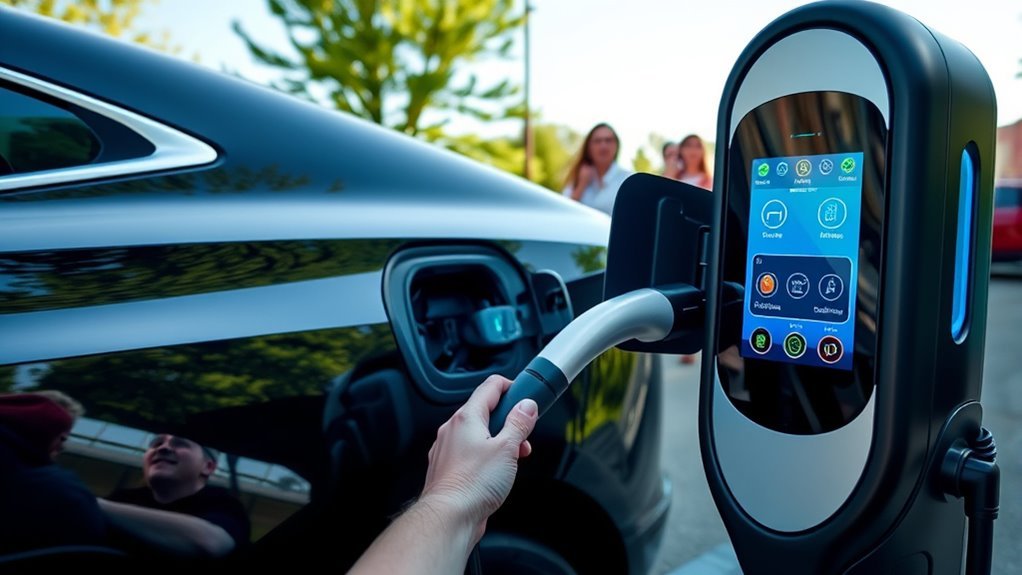
Using a rapid charger can be a game changer for your electric vehicle experience, especially when you’re short on time. Here’s how to power up efficiently while practicing rapid charger safety and charging etiquette.
- Park your EV next to the charging point, ensuring the charging port’s accessible.
- Unlatch the charging cable from the holster and securely insert it into your vehicle’s charging port.
- Check for specific instructions on the charger or app to avoid any hiccups.
- Payment can usually be made through contactless methods or an app—don’t forget that some networks require prior account registration.
| Step | Action |
|---|---|
| 1. Park | Position your EV near the charger |
| 2. Connect | Insert charging cable securely |
| 3. Follow Guidance | Look for displayed instructions |
| 4. Pay | Use contactless or app-based payment methods |
Charging typically takes about 30 minutes for up to 80% battery replenishment. Enjoy the freedom!
Payment Options and Costs for Charging Your EV
When charging your EV at a public station, you’ll encounter various payment options and costs that can vary widely.
Typically, rapid chargers charge between 60p to 80p per kWh, while standard public chargers average around £0.50 per kWh.
Understanding these costs and payment methods, such as contactless payments or app registrations, will help you budget effectively for your charging needs.
Payment Methods Available
As you navigate the landscape of public EV charging in the UK, understanding the available payment methods is essential for a seamless experience. Here are the primary options you can utilize:
- Contactless Payments: Many chargers accept contactless debit or credit cards, allowing for quick and easy transactions.
- App Registrations: Registering with specific charging networks like Electric Universe or Zap-Pay lets you access multiple stations using one payment method.
- Charging Cards: These services streamline your charging experience, often providing access to discounts or promotions.
Remember that some networks may also place a temporary hold of £25-40 on your card, which is refunded after charging.
Choose the method that suits your needs and enjoy the freedom of electric driving!
Charging Costs Explained
Understanding charging costs is essential for making the most of your electric vehicle experience in the UK.
Charging at public stations typically ranges from 60p to 80p per kWh for rapid chargers, depending on the network. You can pay via contactless methods, app registrations, or credit/debit cards, but be aware of a pre-authorisation hold of £30 to £50 that adjusts to your actual usage.
For savvy EV drivers, a charging cost comparison can reveal significant savings. Many networks offer subscription services that lower your rates, making regular charging more economical.
Additionally, you can optimize costs by taking advantage of smart charging options and off-peak rates, enhancing your freedom and budget while driving electric.
Essential Tips for Hassle-Free EV Charging and Avoiding Common Pitfalls
To guarantee a smooth experience at public EV chargers, it’s vital to prepare ahead of time. Here are three essential tips to keep in mind:
- Check Compatibility: Verify your vehicle’s charging connector type (Type 2 for AC or CCS for DC) matches the station you’re using to avoid delays.
- Use Charging Apps: Download apps like Zest or Zapmap before your trip. They provide real-time information about charger availability, pricing, and payment methods, helping you avoid common misconceptions about charging locations.
- Mind Your Battery: Keep your EV’s battery charge between 20% and 80%. This not only promotes ideal battery health but also speeds up charging times.
Frequently Asked Questions
How to Use a Public EV Charging Station in the UK?
To use a public EV charging station in the UK, find an accessible charger, park properly, and connect securely. Follow charging etiquette by ensuring your vehicle’s charged, allowing others to use the station efficiently.
How to Pay at EV Charging Stations in the UK?
To pay at EV charging stations in the UK, use contactless payment, credit/debit cards, or apps linked to charging networks. Simplify your experience by utilizing services like Electric Universe or Zap-Pay for seamless access.
How to Pay at Public EV Charging Stations?
When you’re ready to fuel up, you can tap into various payment methods at public EV charging stations. Utilize charging apps for seamless transactions or swipe your card for a liberating charging experience.
How Do Electric Car Charging Stations Work in the UK?
Electric car charging stations in the UK utilize a charging network with three station types: slow, fast, and rapid. Each type offers varying power levels to meet your charging needs, ensuring convenience during your travels.
Conclusion
Now that you’re equipped with the knowledge to navigate public EV chargers, imagine pulling up to a sleek charging station, the anticipation building as you plug in your vehicle. Will it be a smooth experience, or will you encounter a hiccup? Armed with tips and insights, you’re ready to tackle any challenges that come your way. So, charge up, take a deep breath, and hit the road—adventure awaits with every electric mile!







Leave a Reply