Public EV charging in the UK is pricier than home charging mainly due to a higher VAT rate of 20% compared to 5%, plus extra fees from charge point operators. Additionally, fluctuating wholesale electricity costs tied to gas prices lead to increased public charging rates. To save, consider off-peak discounts and EV-specific tariffs at home. Utilizing these strategies can greatly reduce your expenses. You’ll discover even more savings tips and insights as you explore further.
Why Are Public Charging Costs Higher Than Home Charging?
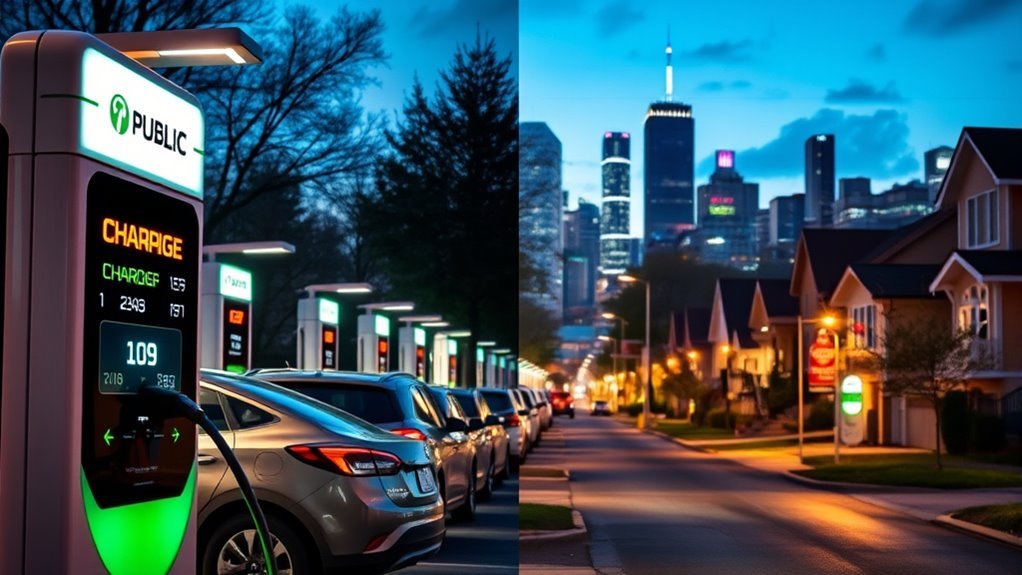
While you might expect public electric vehicle (EV) charging to be more affordable, several factors contribute to noticeably higher costs compared to home charging.
First, public perception plays a role; people often assume convenience justifies premium pricing. Charge Point Operators (CPOs) set these prices based on location, with high-traffic areas commanding more.
Public perception influences pricing, as convenience often leads to higher costs, especially in high-traffic areas set by Charge Point Operators.
Additionally, faster charging speeds at public stations often lead to increased fees, making them considerably more costly than slower home options.
The charging infrastructure is also influenced by the wholesale energy market, where fluctuations in procurement costs can directly affect CPO rates.
Furthermore, many public charging stations impose connection or standing fees, further driving up costs.
Together, these elements create a landscape where public charging remains expensive, challenging your perception of affordable EV options and urging a reevaluation of the true costs associated with charging on-the-go.
How Does VAT Affect Public Charging Prices?
When you consider the VAT rates, the stark contrast between home and public charging becomes evident.
With home charging enjoying a reduced rate of 5% compared to the hefty 20% on public stations, you can see how this affects your wallet.
This financial disparity not only raises costs for you but also limits accessibility for those who depend on public infrastructure for their electric vehicle needs.
Home Charging VAT Rate
Although many electric vehicle (EV) drivers rely on public charging stations, the higher VAT rate of 20% on these services considerably impacts their overall costs. In contrast, home charging benefits from a reduced VAT rate of just 5%. This significant difference results in public charging being less economical, especially for those who cannot charge at home.
| Charging Type | VAT Rate | Cost Impact |
|---|---|---|
| Home Charging | 5% | Lower overall costs |
| Public Charging | 20% | Higher overall costs |
| Installation Costs | Varies | Additional expense |
| Accessibility | Limited | Dependence on public |
| Long-term Savings | Yes | Favorable for home |
Advocates highlight the need to adjust this VAT structure to promote broader EV adoption.
Public Charging VAT Rate
The impact of the UK’s 20% VAT on public EV charging is substantial, making it a critical factor in the overall cost for electric vehicle drivers.
This high VAT rate, compared to the 5% on home charging, creates a significant disparity, resulting in public charging prices that can reach four times higher than home rates.
Charge Point Operators (CPOs) must pass this tax burden to consumers, directly affecting affordability.
Given the current public policy, advocacy efforts are gaining traction, with CPO CEOs urging the government to reconsider these tax implications.
Reducing VAT on public charging could promote wider EV adoption and alleviate financial pressure on those without home charging options, ultimately fostering a more equitable charging landscape.
Impact on EV Drivers
Public charging prices are heavily influenced by the 20% VAT, creating a financial burden for EV drivers that can’t be overlooked.
This significant tax disparity makes public charging up to 690% more expensive than home charging, directly impacting your driver experiences.
If you don’t have access to home charging, this inequity becomes even more pronounced, discouraging potential EV drivers from adopting electric vehicles altogether.
The ongoing advocacy for reducing VAT on public charging highlights the urgent need for charging equity.
By addressing these discrepancies, policymakers could foster a more inclusive environment for all EV users.
Ultimately, lowering public charging costs wouldn’t only enhance affordability but also empower you and others to embrace electric mobility without financial constraints.
How Gas Prices Influence Your EV Charging Expenses?
Gas prices play a vital role in determining your EV charging expenses, as fluctuations in these prices directly influence wholesale electricity costs.
When gas prices rise, charge point operators often increase their rates to cover higher operational costs, making public charging more expensive than home charging.
Even though renewable energy generation remains stable, the overall market’s sensitivity to gas prices can greatly impact what you pay at the charging station.
Gas Price Fluctuations Impact
While you might think of electric vehicle (EV) charging costs as largely independent of traditional fuel prices, the reality is that fluctuations in gas prices can greatly impact your expenses at the charging station.
Gas price trends markedly influence the wholesale electricity market, where the costs of generating electricity—whether from renewables or fossil fuels—are affected.
When gas prices rise, charge point operators (CPOs) often adjust their public charging fees, reflecting increased costs in the electricity they procure.
This volatility means that your charging rates can vary widely based on market conditions.
Understanding this link between gas prices and electricity costs empowers you to anticipate potential changes in public charging expenses, allowing you to make more informed decisions about your EV usage.
Wholesale Electricity Pricing Effects
As wholesale electricity prices fluctuate, they directly affect the costs you encounter at public EV charging stations.
The connection between gas prices and these wholesale price fluctuations means that when gas prices rise, it often leads to increased electricity costs. Charge Point Operators (CPOs) must adapt their pricing to reflect the electricity market dynamics, resulting in higher public charging rates.
Even renewable energy sources, while generally stable, can’t completely escape the influence of wholesale pricing changes. Consequently, the costs you face at public stations can exceed those of home charging, as CPOs align their fees with energy procurement costs to guarantee profitability.
Understanding this interplay helps you navigate your EV charging expenses more effectively.
Renewable Energy Cost Variability
Although renewable energy sources like wind and solar are often viewed as stable alternatives, their costs can still be influenced by fluctuations in the energy market, particularly gas prices. As gas prices rise, wholesale electricity prices can follow suit, causing charge point operators (CPOs) to increase public charging rates. This variability in renewable energy pricing impacts your expenses notably.
| Factor | Influence on Charging Costs | Example Impact |
|---|---|---|
| Gas Price Fluctuations | Increases wholesale rates | Public charging costs rise |
| Renewable Energy Prices | Subject to market changes | Potentially higher EV costs |
| VAT Rates | Amplifies overall expenses | Public charging > home charging |
Understanding these dynamics can empower you to make informed charging decisions.
Public Charging Discounts and Savings You Should Know
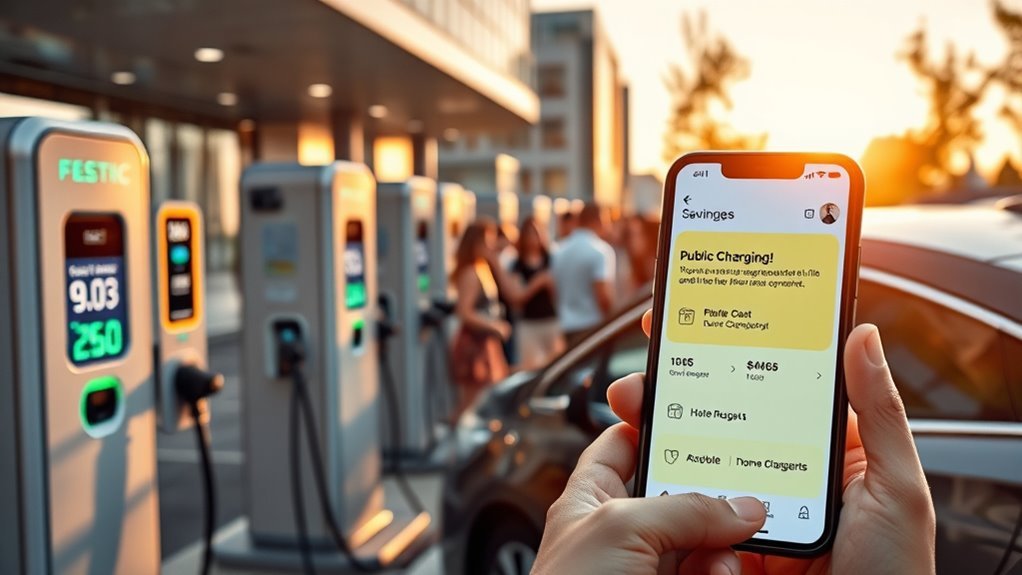
Understanding public charging discounts can greatly impact your electric vehicle (EV) running costs. By leveraging discount strategies like Plunge Pricing, you can enjoy reduced rates during high energy supply periods, effectively lowering your charging expenses.
The Electroverse app is a valuable tool, alerting you to price plunge events and offering exclusive discounts such as 5% off IONITY and 20% off Osprey chargers during designated hours.
Additionally, many charge point operators (CPOs) provide off-peak discounts, mirroring home charging savings. Being aware of these public charging discounts allows you to drastically cut costs, especially since standard rates can peak at £0.85 per kWh.
How to Maximize Your Home Charging Savings
Maximizing your home charging savings can greatly reduce your overall electric vehicle (EV) running costs. By taking advantage of dedicated tariffs and smart meter benefits, you can enhance home charging efficiency. Here’s how you can optimize your savings:
| Strategy | Savings Potential |
|---|---|
| Use off-peak charging rates | £0.075 per kWh |
| Switch to an EV-specific tariff | Save over £6,449 in 3 years |
| Install a smart meter | Efficient charging management |
Charging overnight allows you to capitalize on lower rates, while smart meters help you schedule charges when electricity is cheapest. Even without a driveway, home charging solutions like charging gullies provide cost-effective options. By implementing these strategies, you can enjoy significant savings, liberating yourself from high public charging costs.
Essential Charging Costs: Tariffs and Providers
How do public charging costs stack up against home charging options? The disparity is stark, primarily due to VAT rates and tariff differences. Public chargers face a hefty 20% VAT, while home charging enjoys a reduced 5%, making public costs considerably higher.
Tariffs from various charging providers can vary dramatically; for instance, rapid chargers may charge up to £0.85 per kWh, whereas home rates can be as low as £0.075 per kWh. Additionally, connection fees imposed by some public networks further inflate costs, unlike home setups.
It’s important to recognize that charging providers adjust their pricing based on fluctuating wholesale electricity costs, which can also impact your wallet. While discounts may be available during off-peak times, such as 5% off IONITY, being aware of these tariff differences can empower you to make informed choices and optimize your charging expenses.
Frequently Asked Questions
Why Are Public EV Chargers so Expensive in the UK?
Public EV chargers are so expensive in the UK due to high operational costs, complex pricing models, and the need for robust charging infrastructure. These factors lead to inflated fees, especially at rapid charging stations.
Is It Cheaper to Charge EV at Home or Public?
Charging your EV at home’s typically cheaper than using public stations. Home charging offers lower rates and significant savings annually. Public charging, while convenient, often comes with higher costs that can quickly add up.
How to Get Cheaper Public EV Charging?
To get cheaper public EV charging, use charging apps for discounts and join loyalty programs. Monitor pricing trends, charge during off-peak hours, and choose networks offering savings to maximize your charging budget effectively.
Is It Cheaper to Charge an Electric Car at Home in the UK?
Yes, it’s cheaper to charge an electric car at home in the UK. A cost comparison reveals home charging rates can be considerably lower, especially with dedicated tariffs, making it a more economical option overall.
Conclusion
To sum up, understanding the factors that drive up public EV charging costs compared to home charging can help you save considerably. Did you know that, on average, public charging can cost up to 40% more than charging at home? This stark difference highlights the importance of choosing the right charging solution for your needs. By being aware of tariffs, discounts, and smart charging habits, you can maximize your savings and make your EV ownership more economical and enjoyable.







Leave a Reply