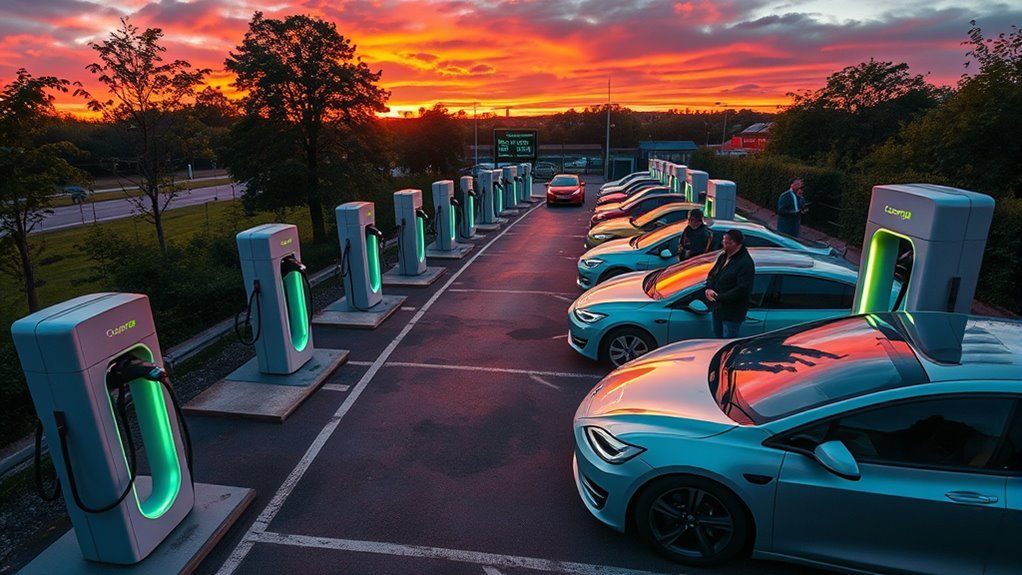
In 2026, charging an electric car in the UK will vary widely based on your habits and location. Home charging at off-peak hours could cost you as little as 8p per kWh, while public stations might charge up to 80p per kWh or more. Utilizing EV tariffs and smart meters can greatly lower your expenses. You’ll also benefit from reduced maintenance and insurance costs. There’s much more to discover about managing your EV expenses effectively.
What Will It Cost to Charge an Electric Car in 2026?
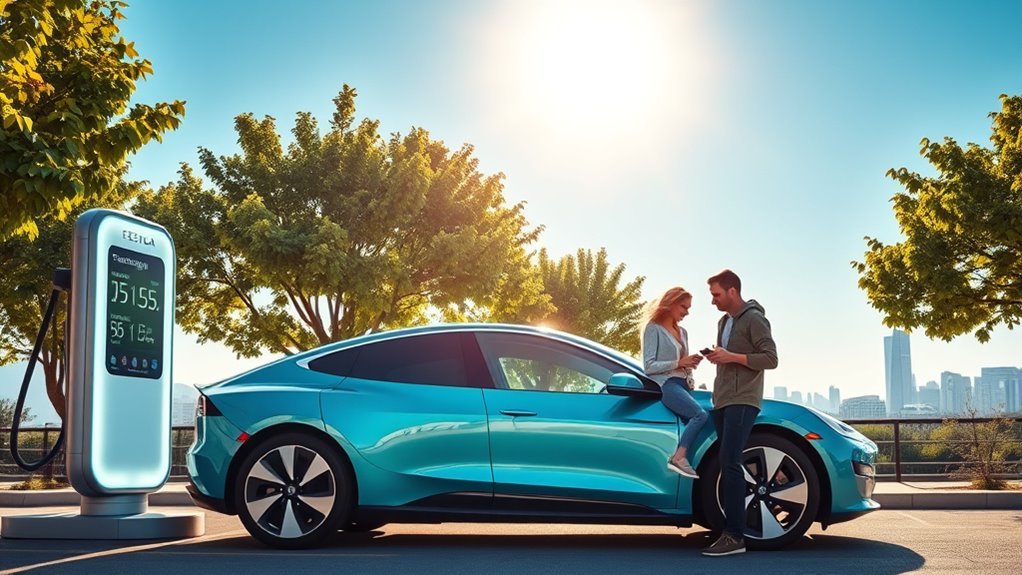
What can you expect to pay for charging your electric car in 2026? If you charge at home during off-peak hours, you might only pay around 8p per kWh, depending on your EV tariff and energy suppliers. This pricing reflects advancements in charging technology that are making home charging more accessible and affordable.
However, when you rely on public charging stations, expect costs to rise considerably, with many charging around 80p per kWh.
It’s important to factor in additional costs, like the annual Vehicle Excise Duty of £195 for EVs registered from 2017 onward. While insurance premiums average about £654, they can fluctuate based on your vehicle’s model and coverage.
Despite these expenses, electric vehicles still promise substantial savings over traditional petrol and diesel options, particularly in maintenance and overall running costs. Embrace the change; the future of driving is electric, and it’s economically liberating.
How Charging Station Prices Compare to Petrol Costs
When you compare charging station prices to petrol costs, the savings can be quite striking.
In 2026, you’ll find that charging at public stations can remain below £1.49 per liter, while petrol prices hover over £1.50.
This means that if you plan your charging wisely, especially during off-peak hours, you could considerably lower your fuel expenses.
Current Charging Station Rates
As electric vehicle (EV) adoption grows, understanding charging station rates in the UK becomes essential for drivers looking to manage costs effectively.
Charging networks offer varying pricing models, with rates ranging from 41 p to 89 p per kilowatt hour. If you find a station charging 41 p, that’s about £0.99 per liter of petrol—quite a steal!
Conversely, some stations can reach up to 89 p, equating to £2.50 per liter, making them less appealing. Mid-range prices hover between 65 p and 79 p, which may exceed supermarket petrol prices.
Fortunately, membership programs can help lower costs even further, with off-peak rates dipping to 39 p. With careful planning, you can navigate these options and save markedly.
Petrol Price Equivalency
Steering through the costs of charging an electric vehicle (EV) in the UK can seem intimidating, especially when you want to compare it to traditional petrol prices.
As of December 2025, high-priced charging stations like BP Pulse and Shell Recharge can cost around £2.50 per liter equivalent. However, mid-range options such as Ionity and MFG bring it down to about £1.99.
The best deals come from affordable options, like Tesla superchargers, averaging £0.99 per liter. You’ll also find free or low-cost charging at destination chargers, offering pricing transparency that helps you make informed decisions.
Cost Savings Analysis
While many might assume that charging an electric vehicle (EV) is always more expensive than filling up with petrol, a thorough cost savings analysis reveals a different story.
In 2026, charging at home can cost as low as 8p per kWh during off-peak hours, translating to about 2p per mile. In contrast, petrol prices hover between £1.50 and £1.90 per liter.
Public charging stations may charge up to 89p per kWh, making home charging a more economical choice. Additionally, leveraging membership programs can cut costs to 39p per kWh.
With free charging options available at select destinations, you can capitalize on evolving charging technology and cost trends, ultimately liberating your wallet from traditional fuel expenses.
How Mileage and Charging Habits Affect Your Expenses
Understanding how your mileage and charging habits impact your expenses is essential for maximizing the cost-effectiveness of owning an electric vehicle (EV). Your mileage impact directly influences how much you spend on charging.
Maximizing the cost-effectiveness of your electric vehicle hinges on understanding how your mileage and charging habits affect your expenses.
For high-mileage drivers, charging at home during off-peak hours can cost as low as 8p per kWh, translating to just 2p per mile. This method offers significant savings compared to traditional petrol prices.
On the flip side, if you frequently rely on public charging stations, you might face higher costs, averaging around 80p per kWh. This makes your charging frequency important to contemplate.
If you don’t have access to home charging, EV tariffs may not benefit you, potentially leading to higher expenses. By understanding these dynamics, you can tailor your charging habits to guarantee you’re getting the best value from your EV ownership experience.
How Home Charging Can Lower Your EV Costs
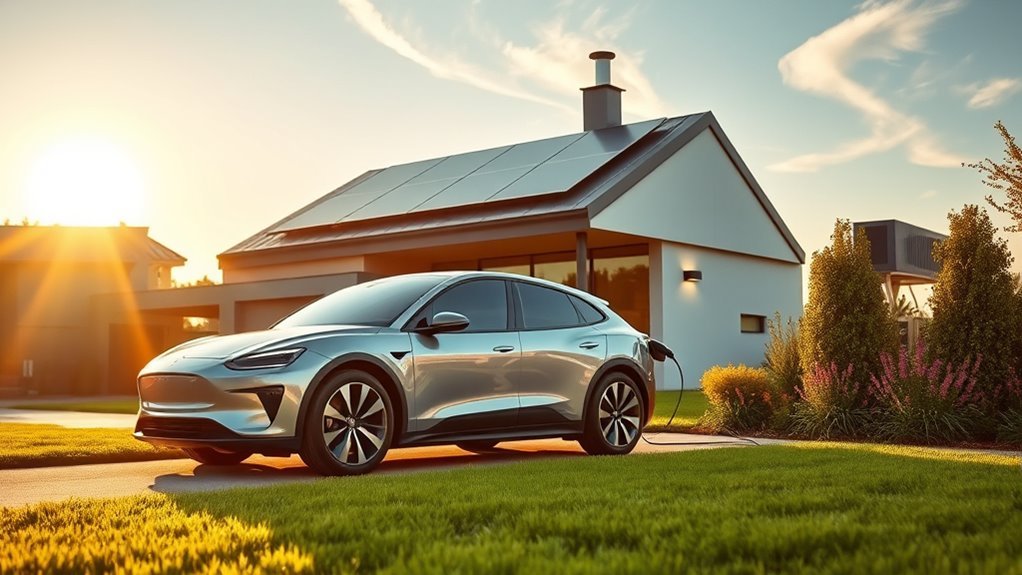
Charging your electric vehicle at home can be a game changer for your wallet.
With off-peak rates as low as 8p per kWh, you can greatly cut your charging costs, especially if you charge overnight.
Plus, by taking advantage of government grants for home charger installation, you can maximize your savings even more.
Off-Peak Charging Rates
By taking advantage of off-peak charging rates, you can greatly lower the costs associated with powering your electric vehicle (EV) at home.
Here are some off-peak advantages to evaluate:
- Cost Efficiency: Charging can drop to as low as 8p per kWh, markedly reducing your overall expenses.
- Savings: Utilizing an EV tariff, like British Gas’s 9p per kWh, can save you around £334 annually.
- Mileage Cost: Charging off-peak can equal about 2p per mile, making it far cheaper than petrol or diesel.
- Maximize Savings: Regular overnight charging lets high-mileage drivers leverage these lower rates effectively.
Employing smart charging strategies can empower you to cut costs and enjoy the freedom of electric driving.
Government Grants Availability
Taking advantage of government grants can make a significant difference in the costs of owning an electric vehicle. With government funding covering up to 75% of home charging point installation costs, your initial investment shrinks considerably.
By installing a home charger, you can enjoy charging rates as low as 8p per kWh during off-peak hours, leading to savings of around £334 annually compared to standard rates. This convenience eliminates frequent trips to public charging stations, further cutting your overall expenses.
Plus, for high-mileage drivers, efficient energy use maximizes savings. Don’t hesitate to submit your grant application; it’s a step toward liberating yourself from high costs and embracing sustainable driving.
What to Expect From Public Charging Costs?
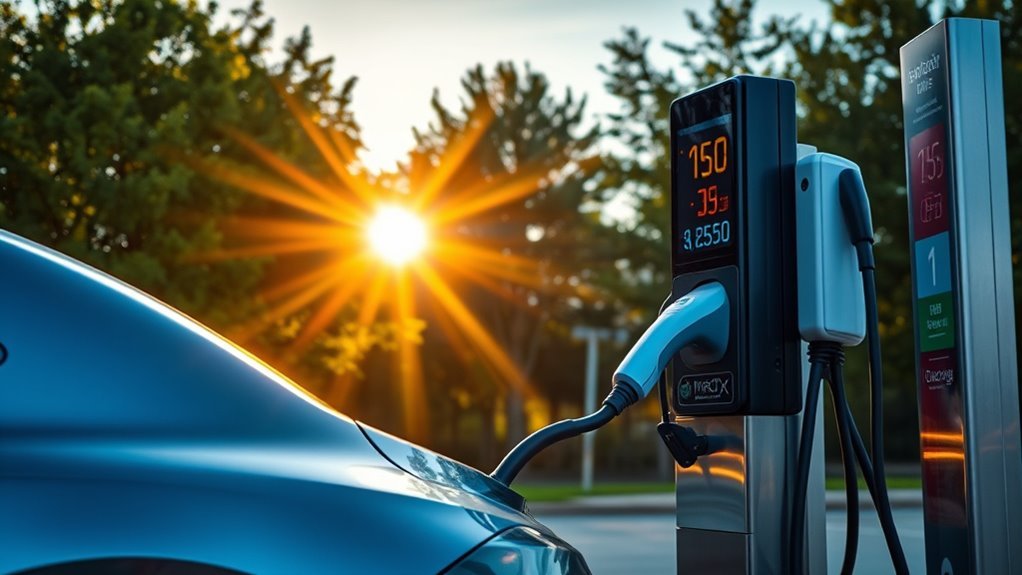
As public charging for electric vehicles (EVs) continues to evolve, you can expect a wide range of costs in the coming years. The charging network will be diverse, with price fluctuations reflecting market dynamics. Here’s what you can anticipate:
- Rapid chargers may exceed 80p per kilowatt hour, akin to £2.50 per liter for petrol.
- Affordable options could drop below £1.49 per liter equivalent, with Tesco superchargers potentially offering rates as low as 57p per kilowatt hour.
- Free and low-cost charging at destination chargers in restaurants and shopping centers might become commonplace.
- Membership programs and apps may emerge, providing reduced rates during peak and off-peak hours.
While public charging costs could rise, you can still find substantial savings by seeking out affordable and free options.
Despite potential increases in public charging costs, significant savings await those who explore affordable and complimentary charging options.
Embracing these alternatives liberates you from traditional petrol prices, making EV ownership more accessible.
How Can EV Tariffs Help You Save?
While the prospect of owning an electric vehicle (EV) can feel intimidating due to charging costs, EV tariffs provide a practical solution to help you save considerably on your electricity bills. By charging your EV during off-peak hours, you can take advantage of lower rates, guaranteeing your journey to sustainability doesn’t break the bank.
Here’s a quick cost comparison:
| Charging Method | Cost per kWh | Annual Savings |
|---|---|---|
| Standard Rate | 80p | – |
| Off-Peak Home Charging | 8p-9p | Up to £334 |
| British Gas EV Tariff | 9p | £334 compared to standard |
With EV tariff benefits, especially for high mileage drivers, the savings can be substantial. Installing a smart meter guarantees you’re charged accurately, maximizing your cost efficiency while embracing a greener future.
How Do Smart Meters Affect EV Charging Costs?
Smart meters play a significant role in enhancing the cost-effectiveness of charging your electric vehicle. By providing real-time tracking of your electricity usage, they enable you to enjoy significant smart meter benefits, leading to more efficient charging optimization.
Here’s how:
- Differentiated Rates: Smart meters help identify peak and off-peak hours, allowing you to charge when rates are lowest.
- Lower Off-Peak Rates: For example, British Gas offers just 9 p/kWh during nighttime hours, saving you money.
- Free Installation: Many energy suppliers provide smart meters at no cost, easing your shift to cost-effective EV charging.
- Monitoring Habits: Regularly tracking your charging habits lets you refine your usage further, reducing overall expenses.
Understanding Insurance, Maintenance, and Road Tax Costs
When you’re considering the total cost of owning an electric vehicle (EV), it’s essential to factor in insurance, maintenance, and road tax expenses.
The average insurance premiums for EVs hover around £654, with costs varying based on the model and value. While these premiums might seem high, you’ll benefit from substantial maintenance savings—EVs typically have 30% lower maintenance costs compared to petrol vehicles. This is due to their simpler mechanics and fewer parts, which means less likelihood of mechanical failure.
Insurance for EVs averages £654, but their 30% lower maintenance costs offer significant savings over petrol vehicles.
Starting April 2025, all EVs will incur an annual road tax of £195, although you’ll only pay £10 for the first year.
Regular servicing can cost around £70, but many lease agreements, like those from Octopus, cover these costs.
Despite rising energy and insurance costs, the overall financial advantages of EV ownership remain compelling, thanks to lower maintenance and road tax expenses.
Tips for Reducing Your Overall EV Ownership Costs
As you plunge into the world of electric vehicle (EV) ownership, finding ways to cut costs is essential. Here are some effective tips to help you reduce your overall expenses:
- Install a home charger: Home charging can cost as low as 8p per kWh during off-peak hours, a stark contrast to commercial rates of around 80p.
- Utilize EV tariffs: Consider options like the British Gas EV Power V2 tariff, which offers night rates as low as 9p per kWh, potentially saving you around £334 annually.
- Incorporate regular servicing: If you’re leasing, regular maintenance is often included, keeping your EV in prime shape without unexpected costs.
- Avoid public charging stations: These are typically pricier, with rapid chargers averaging 76p per kWh.
Frequently Asked Questions
How Much Will Electric Car Tax Be in 2025 in the UK?
In 2025, you’ll face a £195 annual tax on your electric vehicle, reflecting future tax implications. While electric vehicle incentives decline, it’s essential to factor this into your overall EV ownership costs moving forward.
How Expensive Is It to Charge an Electric Car in the UK?
Charging an electric car in the UK can be pricey at public stations, especially with rising energy prices. You’ll find costs between 31 p and over 89 p per kWh, influencing your overall expenses considerably.
How Much Does It Cost to Charge an Electric Car in 2025?
In 2025, charging costs for electric cars could be as low as 8p per kWh off-peak, despite rising energy prices. Embracing home charging can considerably lower your expenses and enhance your EV ownership experience.
Is a British Gas EV Tariff Worth It?
Yes, the British Gas EV tariff’s worth it for high-mileage drivers. Customer reviews highlight significant savings through tariff comparison, especially charging overnight. By optimizing off-peak rates, you liberate your budget while enjoying flexible charging options.
Conclusion
In 2026, charging an electric car in the UK could cost you around 15 pence per kWh, which translates to roughly £5 for a full charge on a 40 kWh battery. That’s considerably cheaper than filling a petrol car, where you might spend £75 for the same mileage. By maximizing home charging and exploring EV tariffs, you can further reduce expenses. With the right strategies, owning an EV can be not just eco-friendly, but also wallet-friendly.







Leave a Reply