Respraying a car can cost anywhere from $1,000 for a basic job to over $10,000 for high-quality, custom finishes. Factors like your vehicle’s size, chosen paint quality, and regional labor rates greatly influence the total cost. Proper prep work is also essential, so don’t underestimate it. If you’re curious about the options for paint jobs, common repairs that may arise, or how long the process takes, there’s more to discover.
Key Takeaways
- Full car respray costs range from $1,000 for basic jobs to over $10,000 for high-quality custom work.
- Vehicle size and regional labor rates significantly affect overall respray costs, with larger vehicles typically costing more.
- Paint quality impacts pricing; basic jobs may start at $1,000 while high-quality jobs can exceed $10,000.
- Proper preparation work is crucial, with minor repairs adding $50 to $500 to the final cost.
- Respray timelines vary; basic jobs take 1-2 days, while high-quality jobs may require up to two weeks.
How Much Does a Full Respray Cost?
Have you ever wondered how much a full car respray could set you back? The cost can vary greatly, starting around $1,000 for basic jobs and soaring over $10,000 for high-quality or custom work.
The cost of a full car respray can start at $1,000 and exceed $10,000 for custom jobs.
If you’re eyeing a mid-tier sedan repaint, expect to pay about $4,000. Basic resprays often use single-stage synthetic enamel and require little prep, while a professional paint job at the mid-tier level demands thorough preparation and multiple coats, costing between $2,000 and $5,000.
When opting for high-quality resprays, which may exceed $5,000, you’re looking at extensive prep, premium paint, and custom designs—a process that could take one to two weeks.
Additional costs could arise for features like two-tone designs and prepaint repairs for rust or dents. Ultimately, understanding these factors can help you make informed choices at the body shop that align with your vision and budget.
Key Factors That Impact Car Respray Costs
When considering a car respray, several key factors can affect your costs.
The size of your vehicle, the quality of the paint you choose, and the extent of preparation work needed all play significant roles in determining your final bill.
Understanding these elements can help you make informed decisions and potentially save you money.
Vehicle Size Considerations
Vehicle size plays an essential role in determining car respray costs, and understanding this factor can help you budget more effectively.
Larger vehicles require more materials and labor, which naturally drives up costs. Here are some key points to take into account:
- Full respray for mid-tier sedans averages around $4,000.
- Larger SUVs or trucks can exceed $5,000.
- Compact cars might cost as little as $1,000, while high-quality finishes for larger vehicles can exceed $10,000.
- Regional labor rates can also impact overall expenses.
When planning your respray, keep in mind that smaller vehicles typically incur lower costs due to less material needed and quicker labor times, giving you more freedom to choose your budget wisely.
Paint Quality Selection
How much are you willing to invest in the quality of your car’s paint? Your paint quality selection can greatly impact your respray costs.
Choosing synthetic enamels may save you money, but high-quality paints can elevate your vehicle’s aesthetic appeal, potentially adding thousands to your expenses.
Specialized paint finishes, like metallic or pearlescent, can increase costs by $200-$500 over standard colors. Additionally, matte finishes demand unique application techniques, driving up prices further.
Remember, the quality of labor and material matters; experienced technicians at reputable body shops often utilize premium materials and provide warranties that justify their higher rates.
Ultimately, your choices regarding paint type and finish will shape both your budget and the longevity of your vehicle’s new look.
Preparation Work Requirements
The quality of your car’s paint job doesn’t just hinge on the type of paint you choose; it also heavily relies on the preparation work carried out beforehand. Proper prep is essential for guaranteeing a durable finish and avoiding costly long-term issues.
- Sanding: Smooths out imperfections and old paint.
- Taping: Protects areas from overspray and guarantees clean lines.
- Cleaning: Removes dirt and grease, preventing contamination.
- Minor Repairs: Fixes dents or rust, which can cost between $50 to $500.
Investing in professional repairs and thorough preparation work can dramatically enhance the quality of your final paint job.
Skipping these steps may lead to paint damage, peeling, or chipping, ultimately costing you more down the road.
Why Prep Work Matters for Respraying
When you consider respraying your car, you might overlook the importance of prep work, but it’s an essential step that can make or break the quality of the finish. Proper prep work, including sanding and cleaning, guarantees that the paint adheres well and lasts longer.
If you skip this step, you risk paint failure, leading to issues like chipping or peeling.
Keep in mind that extensive prep work can greatly increase labor costs, often accounting for 30-50% of the total expenses. If your vehicle has imperfections like rust or dents, you might face additional repair costs ranging from $50 to $500, depending on the damage’s severity.
Controlled environments, such as downdraft paint booths, enhance the quality of prep work, preventing contamination. Investing in thorough prep work ultimately elevates your paint job, enhancing its longevity and aesthetic appeal.
Types of Car Paint Jobs: What Are Your Options?
When considering a car paint job, you’ve got several options that cater to different budgets and aesthetics.
A basic paint job offers an affordable way to freshen up your vehicle, while a high-quality finish not only enhances its appearance but also provides lasting protection.
Understanding these choices will help you make an informed decision that suits your needs and style.
Basic Paint Jobs Overview
Exploring your options for a car paint job is essential to achieving the look you want without breaking the bank. A basic paint job typically costs between $1,000 to $1,500 and includes a single-stage synthetic enamel with minimal preparation.
Here are some key points to evaluate:
- Cost-effective: A basic paint job is budget-friendly.
- Quick turnaround: Minimal preparation means faster service.
- Standard finish: Ideal for rejuvenating a car’s appearance without frills.
- Limited customization: Usually offers fewer options for color or design.
If you’re looking to get your car painted without extensive work or high costs, a basic paint job might be the way to go.
Just remember that add-ons can quickly increase your total expenses!
High-Quality Paint Job Benefits
While a basic paint job can refresh your vehicle’s appearance on a budget, investing in a high-quality paint job offers significant advantages that enhance both aesthetics and durability.
| Feature | High-Quality Paint Job | Mid-Tier Paint Job |
|---|---|---|
| Cost | $5,000 – $10,000 | $2,000 – $5,000 |
| Warranty | Multi-year warranties | Limited warranty |
| Lifespan | Longer-lasting results | Moderate durability |
The benefits of a high-quality paint job include extensive preparation, premium materials, and custom designs, ensuring your car not only looks stunning but stands the test of time. With multi-year warranties covering issues like chipping and fading, you gain peace of mind and a lasting investment in your vehicle’s appearance.
Should You Choose Professional or DIY Respraying?
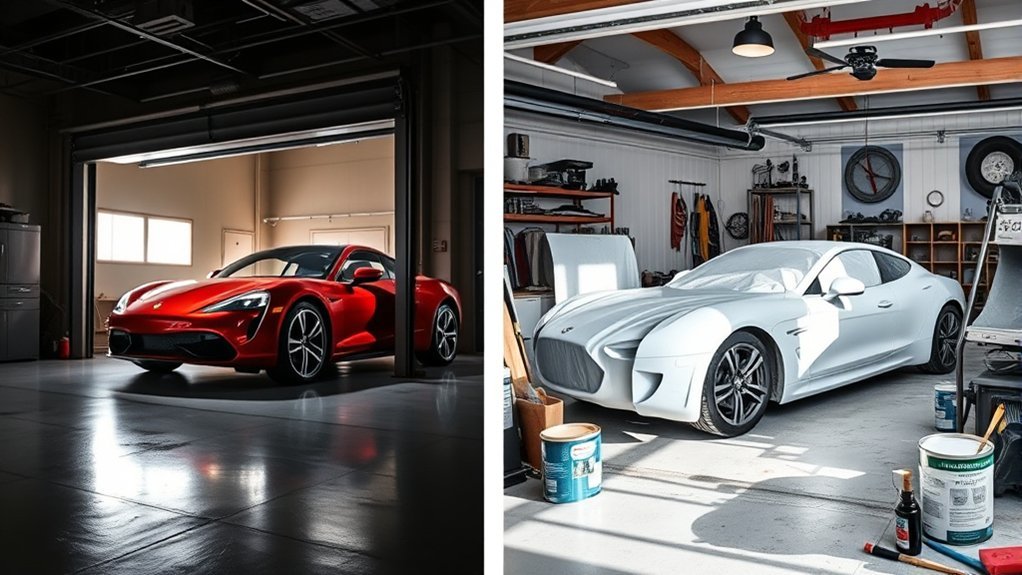
How do you decide between professional and DIY respraying for your vehicle? The choice hinges on your budget, skills, and desired quality.
- Cost: Professional jobs range from $1,000 to over $10,000, while DIY can be as low as $100.
- Quality: Body shops use high-quality materials and controlled environments for a flawless finish.
- Time: DIY requires significant preparation, like sanding and priming, which can be time-consuming.
- Warranty: Many professionals offer warranties, protecting you against chipping and fading.
While DIY respraying might save you money upfront, consider the potential for subpar results that could lead to additional costs.
If you’re aiming for a durable, high-quality paint job, it’s often worth investing in professional help. Your vehicle deserves the best, and sometimes, that means leaving it to the experts.
Common Repairs and Add-Ons That Affect Respray Costs
When planning a car respray, it’s essential to take into account the common repairs and add-ons that can influence the overall cost.
Minor dent repairs typically range from $50 to $150 each, and if your car has multiple dents, those costs can add up quickly. Rust repair is another significant factor; it can set you back anywhere from $150 to $500, depending on severity, and it affects the prep work needed for a quality paint job.
Add-ons can also impact your budget. For instance, adding metallic flakes can increase costs by $200 to $500, while custom designs may skyrocket your expenses by $500 to $2,000 or more.
Don’t forget the significance of addressing prepaint imperfections—localized touch-ups cost about $60 to $250 per area, and extensive prep work is crucial for achieving that flawless finish you desire.
How Long Will the Respray Take?
Understanding the timeline for a car respray is essential, as it directly impacts your plans and expectations.
The duration of a respray can vary notably based on several factors:
- A basic job typically takes one to two days.
- Mid-tier jobs often require three to five days.
- High-quality or custom jobs may extend to one to two weeks, depending on the complexity.
Additional time may be necessary for paint curing and adjustments, especially with modern vehicles.
Your vehicle’s size, the extent of prepaint repairs, and the shop’s workload all play a role in determining the exact time.
If you opt for advanced techniques or specialized materials, you might experience longer wait times due to meticulous preparation and application processes.
Knowing these timelines can help you plan accordingly and guarantee your vehicle gets the care it deserves.
What Paint Warranties Should You Know About?
Have you considered the importance of paint warranties when planning your car respray? Understanding warranty coverage can save you headaches down the road. Many professional auto body shops offer multi-year warranties for their paint jobs, covering issues like chipping and fading. However, warranty details can differ greatly, so it’s essential to review them closely.
Here’s a quick table to help you navigate paint warranty options:
| Warranty Duration | Coverage Type |
|---|---|
| 1 Year | Materials only |
| 3 Years | Materials + limited labor |
| 5 Years | Extensive coverage |
| Lifetime | Full coverage |
Inquire about specifics before committing to a shop. A robust warranty indicates quality of the paint and the shop’s confidence in their work, giving you peace of mind in your investment in repainting your vehicle.
Alternatives to Respraying Your Car
If you’re looking to refresh your car’s appearance without committing to a full respray, several effective alternatives can save you both time and money. Consider these options:
- Vinyl wrapping: Change your car’s color or design without altering the original paint, typically costing between $2,000 and $5,000.
- Paintless dent repair (PDR): Fix minor dents and dings for $50 to $150 per dent while preserving the original finish.
- Touch-up paint kits: Perfect for small scratches and chips, these kits allow you to handle minor repairs yourself for $15 to $50.
- Custom decals: Add a unique look with graphics starting at $200, protecting your paint while showcasing your style.
You can also explore eco-friendly options like water-based paints for touch-ups, striking a balance between appearance and environmental care.
Embrace these alternatives to refresh your ride without the hefty cost of a complete respray.
Frequently Asked Questions
How Much Does a Full Respray on a Car Cost?
A full respray costs between $1,000 and $20,000, depending on paint quality, labor costs, respray techniques, and vehicle types. Custom color options and additional features can further influence the final price you’ll pay.
Is It Worth Respraying a Car?
Yes, respraying your car’s worth it. A fresh coat boosts car value and resale potential, enhances paint durability, and offers protection benefits. Plus, you can choose a color that truly reflects your style.
How Much Does a Full Body Paint Job Cost for a Car?
A full car paint job can cost anywhere from $1,000 to over $10,000! Factors like paint quality, respray types, and DIY options impact your budget—so choose wisely if you’re ready to release that new shine!
Is a Full Car Respray Worth It?
Yes, a full car respray’s worth it. You’ll enjoy respray benefits like enhanced vehicle value, a stunning color change, and improved paint quality. While DIY options exist, professional jobs guarantee long-lasting results and greater satisfaction.
Conclusion
In summary, understanding the costs and factors behind a car respray can help you make informed decisions. Whether you opt for a professional job or tackle it as a DIY project, remember that quality prep work is essential for a lasting finish. Are you really willing to compromise on the aesthetics and longevity of your vehicle just to save a few bucks? Investing in a good paint job could enhance your car’s value and appearance considerably.







Leave a Reply