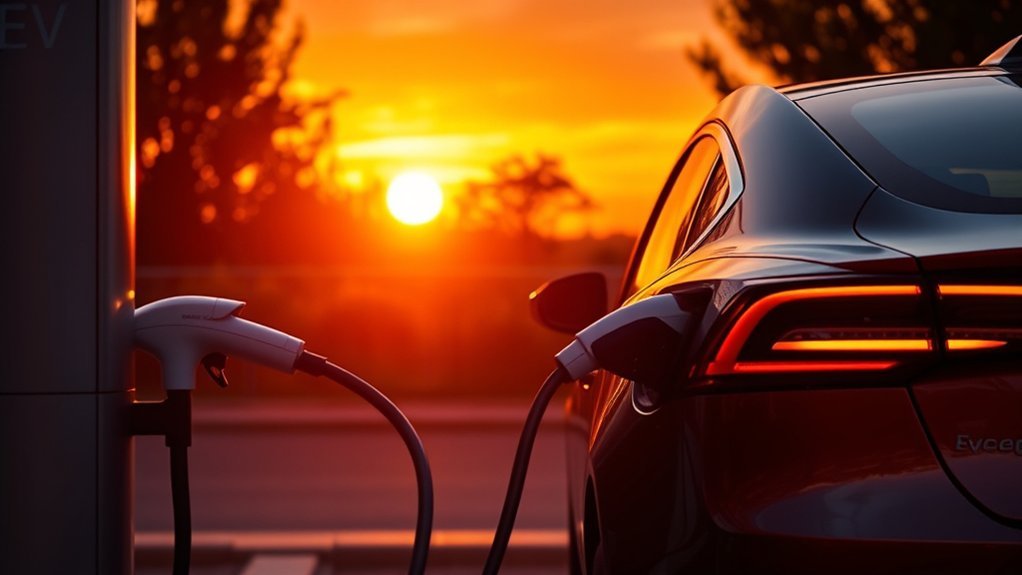
Charging an electric car can take anywhere from a few hours to several days, depending on your method and battery size. Level 1 charging is the slowest, often taking up to 50 hours for a full charge, while Level 2 can take 4 to 10 hours. For quick boosts, DC fast charging can recharge your battery to 80% in just 20 minutes to an hour. Curious about how different factors influence these times? There’s plenty more to discover.
Key Takeaways
- Level 1 charging takes 40-50 hours for a full charge, while Level 2 charging can restore 80% in 4 to 10 hours.
- DC Fast Charging can charge a vehicle to 80% in as little as 20 minutes, depending on the vehicle and charger output.
- Charging times vary based on battery size; for example, a 60 kWh battery takes about 8 hours with a Level 2 charger.
- Environmental factors, like temperature, can significantly affect charging efficiency and times, particularly in cold weather.
- Regular top-up charging helps maintain battery health and promotes efficiency, optimizing the overall EV ownership experience.
Understanding Charging Methods: Level 1, Level 2, and DC Fast Charging
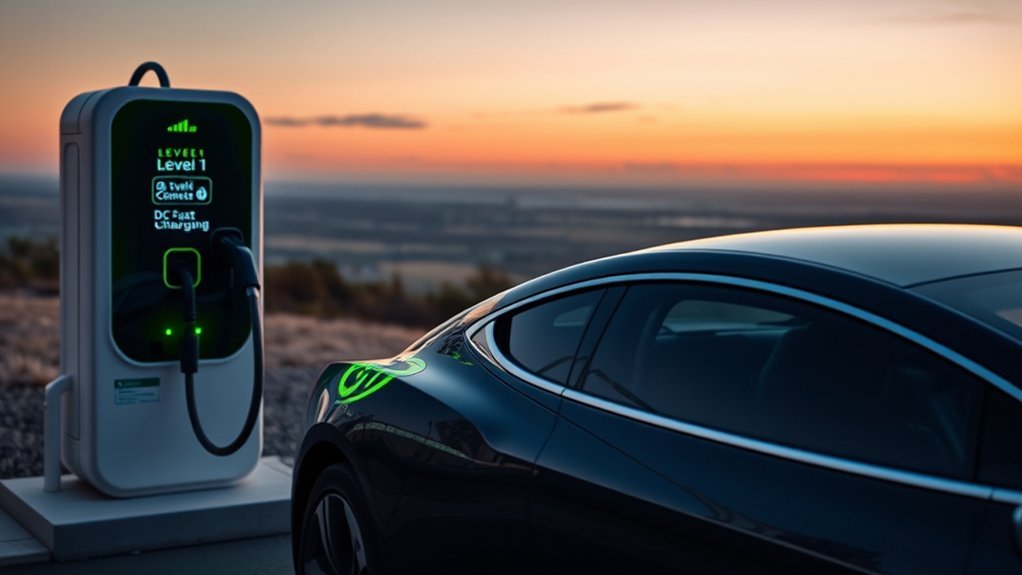
When it comes to charging your electric vehicle, understanding the different methods available is crucial for maximizing convenience and efficiency.
Level 1 charging, utilizing a standard 120-volt outlet, is the slowest option, taking up to 40-50 hours to fully charge your battery electric vehicle (BEV) from empty.
If you’re looking for a balance, Level 2 charging operates on a 240-volt connection, restoring 80% of your BEV’s battery in just 4 to 10 hours and is widely used at home and public charging stations.
For those who need speed, DC fast charging shines, charging your vehicle to 80% in as little as 20 minutes to 1 hour, depending on the vehicle and station output.
How Long Does It Take to Fully Charge an Electric Car?
How long does it actually take to fully charge an electric car? The time to charge varies widely based on factors like battery size and charger type.
With DC fast chargers, you can achieve a full charge in as little as 30 minutes, while a Level 1 charger might take up to 40 hours from empty.
For a typical 60kWh battery, using a 7.4kW Level 2 charger, you’re looking at around 8 hours.
It’s important to take into account that charging times can change due to environmental factors, such as temperature and the battery’s state.
As you approach a full charge, the charge rate slows down, affecting the overall time to charge.
Understanding these dynamics helps you plan your charging sessions, ensuring your electric vehicle (EV) is ready when you need it, all while embracing a more liberated, eco-friendly lifestyle.
How Does Battery Size Affect Charging Times?
When you consider the size of an electric vehicle’s battery, you’ll notice a clear link to charging times.
Larger batteries, like the 60 kWh variety, often take much longer to charge than smaller ones, such as the 13.8 kWh found in some plug-in hybrids.
This difference in capacity can greatly affect your charging strategy, depending on the charging method you choose.
Battery Capacity Impact
Battery size plays an essential role in determining charging times for electric vehicles. Larger batteries, with greater energy storage capacity, typically take longer to charge.
For instance, a 60kWh battery may require almost 8 hours with a 7kW charger, while a smaller 13.8kWh battery, like in the Volkswagen ID.5, charges in about 4 hours.
Plug-in hybrids often complete charging in just 2 hours, thanks to their smaller batteries. The maximum charging rate also affects how quickly power is received, with larger batteries needing more time to reach full capacity.
Environmental factors, particularly temperature, can further impact charging times, causing larger batteries to charge slower in colder conditions.
Understanding these dynamics helps you make informed choices as you embrace electric vehicle freedom.
Charging Method Variations
As electric vehicles (EVs) become more popular, understanding how charging methods vary with battery size is essential for maximizing your driving experience.
The size of your EV battery directly affects charging times. Smaller batteries can charge quickly; for instance, a plug-in hybrid may take just 2 hours with a Level 2 charger.
In contrast, larger batteries, like an 80 kWh pack, might take over 5 hours to reach full capacity, especially when considering the tapering effect that slows charging speeds as they fill up.
Charger type matters too—while a Nissan LEAF can utilize fast charging to replenish its smaller battery in under an hour, larger batteries often don’t enjoy the same rapid charging rates, affecting overall charging time.
Top-Up Charging: Benefits and How It Works
Top-up charging is a game changer for electric vehicle (EV) owners, allowing you to easily extend your driving range during everyday activities.
Top-up charging revolutionizes the driving experience for EV owners, effortlessly extending range while going about daily tasks.
This practice of partially charging your EV at public charging stations can be incredibly efficient, especially when you’re running errands or commuting.
- Quick range boosts: Fast chargers can provide up to 100 miles of range in just 35 minutes.
- Battery health benefits: Frequent top-up charging helps prevent deep discharges, promoting longer battery longevity.
- Reduced downtime: Utilizing Level 2 chargers can add 10-60 miles of range per hour, minimizing interruptions to your day.
How Do Temperature and Charger Type Affect Charging Speed?
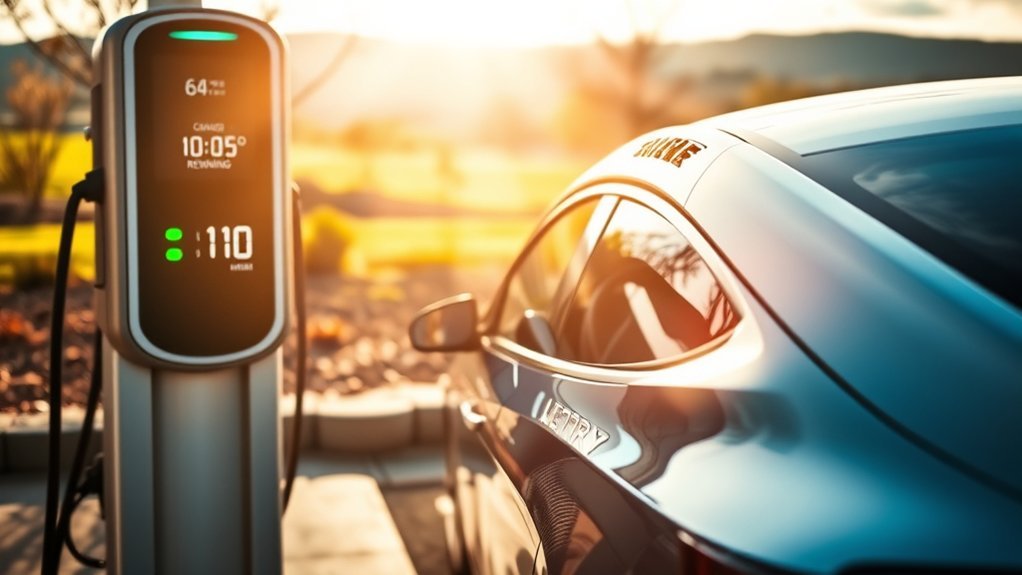
When it comes to charging your electric vehicle (EV), both temperature and charger type play essential roles in determining how quickly you can power up. Cold temperatures can slow chemical reactions in the battery, resulting in reduced charging efficiency and longer charging times.
On the other hand, DC fast chargers can deliver considerably higher power outputs compared to Level 1 chargers, which can take up to 40 hours for a full charge.
Your EV’s maximum charging rate also matters; a vehicle with a 50 kW acceptance rate will charge much faster at a DC fast charger than at a Level 2 charger providing only 7.4 kW.
Environmental factors, like extreme heat, may trigger battery thermal management systems to throttle charging speed, further impacting charging time.
Real-World Charging Times for Popular Electric Vehicle Models
When you’re considering charging times for popular electric vehicles, the Tesla Model S and Nissan LEAF stand out.
The Model S can gain an impressive 200 miles of range in just 15 minutes with a DC fast charger, while the Nissan LEAF offers a quick top-up, charging in under an hour.
Understanding these real-world charging times can help you make informed decisions about which EV fits your lifestyle.
Tesla Model S Charging
Although charging times for electric vehicles can vary widely, the Tesla Model S stands out for its efficiency and practicality.
With a rapid charger, you can fully charge the Model S in under 2 hours, perfect for long trips. When using a Supercharger, you can gain about 200 miles of range in just 15 minutes.
Here’s what you need to know about the charging experience:
- Using a 7.4kW home charger, expect around 8 hours for a full charge.
- Charging speed improves when the battery state is low.
- Tesla’s extensive Supercharger network minimizes downtime, letting you travel further with fewer stops.
Embrace the freedom of electric driving with the Tesla Model S, where convenience meets performance!
Nissan LEAF Charging Time
The Nissan LEAF is a practical choice for those seeking efficient electric vehicle charging options. With a maximum charging rate of 50kW, it thrives on rapid charging, reaching 80% in just 40 minutes using a public fast charger.
For everyday driving, a Level 2 charger works best, providing around 30-40 miles of range per hour, perfect for quick top-up charging. If you’re using a 7.4kW home charger, expect about 7.5 hours to fully charge from empty, making it ideal for overnight charging.
However, a Level 1 charger can take up to 20 hours for a complete charge, which may not suit your daily routine. Understanding Nissan LEAF charging time helps you plan effectively for your journeys.
Home vs. Public Charging Stations: What You Need to Know
Charging your electric vehicle (EV) presents two primary options: home charging and public charging stations, each with its distinct advantages. Most EV owners prefer home charging for its convenience, using Level 2 chargers that can fully charge a vehicle in 4 to 10 hours.
However, public charging stations offer quick solutions when you’re on the go or lack home charging options.
- Level 2 chargers provide a balance between speed and accessibility.
- DC fast charging gets you back on the road quickly, reaching 80% in just 20 minutes to 1 hour.
- Tesla’s Supercharger network is ideal for long-distance travel, ensuring efficient charging along your route.
The availability of public charging infrastructure can markedly enhance your EV ownership experience, offering essential support when home charging isn’t feasible.
Tips for Optimizing Your Electric Vehicle Charging Experience
To make the most of your electric vehicle charging experience, it’s vital to adopt strategies that enhance efficiency and battery health.
Start by installing a Level 2 charger at home, allowing you to charge a typical 60kWh battery overnight in under 8 hours. When on long trips, utilize DC fast chargers; they can boost your charge to 80% in just 20 minutes, minimizing downtime.
Regular top-up charging is essential—keeping your battery’s state of charge between 20% and 80% optimizes battery health and charging efficiency.
Maintaining your battery’s charge between 20% and 80% is crucial for optimal health and efficiency.
Don’t forget to monitor environmental conditions; cold weather can slow charging speeds, so plan your charging sessions accordingly.
Frequently Asked Questions
How Long Does It Take to Charge an Electric Car at a Public Charging Station?
Charging an electric car at public stations varies; Level 2 chargers take 4-8 hours, while DC fast charging can deliver 80% in 20-60 minutes. Consider charging etiquette to enhance accessibility and reduce range anxiety.
How Long Does It Take to Charge an Electric Car at a Filling Station?
Charging an electric car at a filling station usually takes 20 minutes to an hour, depending on charging speeds, battery capacity, and charger compatibility. Peak hours may extend your average wait, affecting the overall customer experience.
How Much Does It Cost to Charge an Electric Car at a Power Station?
Charging an electric car at a power station costs between $6 and $24, depending on charging rates and electricity prices. Explore subscription services and off-peak rates for energy savings while utilizing public infrastructure and charging networks effectively.
How Long Does It Take to Charge an Electric Car at Walmart?
At Walmart, charging your electric car can take anywhere from 30 minutes to 8 hours, depending on your battery capacity and charging speed. Enjoy the convenience of charging stations while enhancing your shopping experience with time efficiency.
Conclusion
In the world of electric vehicles, understanding charging times is essential for your driving experience. You might find it surprising how a simple Level 2 charger can bring your car back to life while you grab a coffee. Or, maybe you’re racing against the clock at a fast charger, where minutes can feel like hours. By knowing how to optimize your charging routine, you can access the freedom of electric driving, turning every journey into an adventure rather than a wait.



Leave a Reply