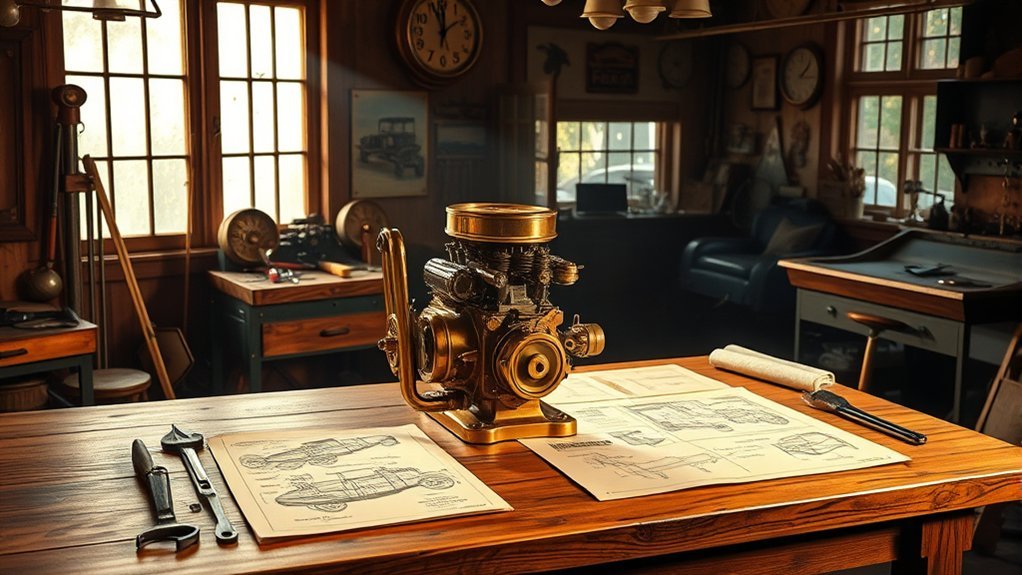
Karl Benz designed the first automobile, known as the Benz Patent Motorwagen, which he patented in 1886. This groundbreaking vehicle introduced a gas engine, establishing the foundation of the modern automotive industry. Benz’s innovations, such as the integration of the engine with the chassis, influenced future vehicle designs. His efforts didn’t stop there; his wife, Bertha, proved its practicality through the first long-distance drive. There’s much more to uncover about how these early advancements shaped today’s cars.
Key Takeaways
- Karl Benz is credited with designing the first automobile, the Benz Patent-Motorwagen, patented in 1886 as a gas-powered vehicle.
- Gottlieb Daimler created the first four-wheeled automobile in 1886, featuring a high-speed gasoline engine.
- The Benz Patent-Motorwagen was a three-wheeled vehicle, marking the birth of the automotive industry.
- Bertha Benz’s historic 1888 long-distance drive showcased the practicality of the automobile, enhancing public acceptance.
- The Benz Velo, launched in 1894, is recognized as the first production car, marking the beginning of mass manufacturing.
How Karl Benz Gave Birth to the Automobile
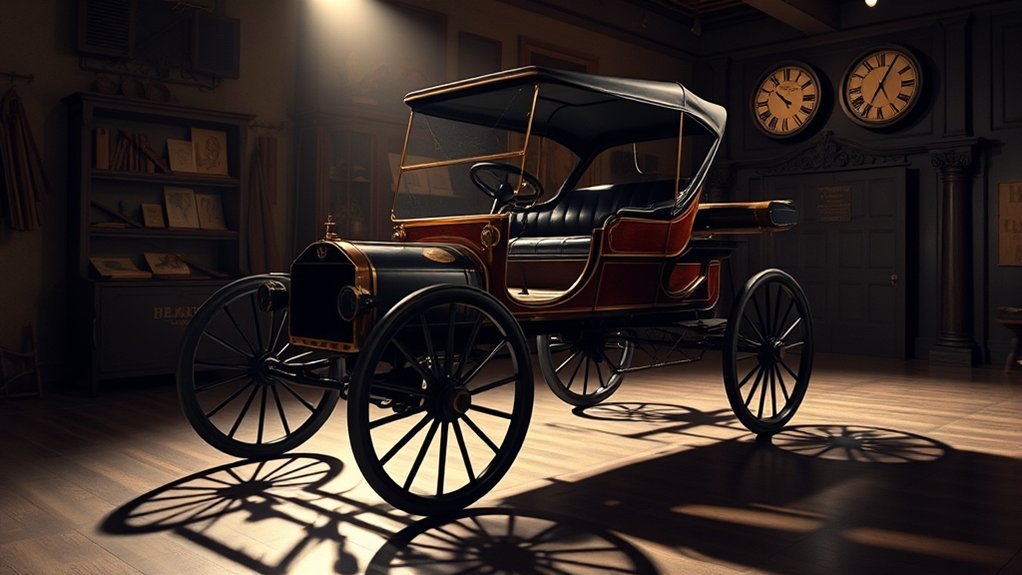
As you explore the origins of the automobile, it’s crucial to understand how Karl Benz‘s pioneering efforts laid the foundation for modern transportation.
On January 29, 1886, Benz filed a patent application for the “vehicle powered by a gas engine,” marking the birth of the first automobile. His creation, the Benz Patent-Motorwagen, debuted publicly in July 1886 as a groundbreaking three-wheeled vehicle. This innovation didn’t just change how people traveled; it revolutionized personal freedom and mobility.
The birth of the automobile began with Benz’s revolutionary Patent-Motorwagen, transforming travel and personal freedom forever.
Benz continued to enhance automotive design with his introduction of the double-pivot steering system in 1893, which greatly improved vehicle handling. The launch of the Benz Velo in 1894 further solidified his legacy as the world’s first production car, with over 1,200 units manufactured.
Karl Benz’s relentless pursuit of innovation not only sparked the automotive industry but also empowered individuals to experience newfound liberation through personal transportation.
Bertha Benz: The Woman Behind the First Long-Distance Drive
In 1888, Bertha Benz made history by initiating the first long-distance journey in an automobile, covering an impressive 180 kilometers from Mannheim to Pforzheim and back. Accompanied by her sons, Eugen and Richard, she boldly demonstrated the practicality and reliability of the Benz Patent Motor Car.
This journey wasn’t just a personal endeavor; it was a strategic move to promote Karl Friedrich Benz’s vision and his automobile plant.
Bertha faced numerous challenges, like refueling at a pharmacy and making roadside repairs, which highlighted the car’s potential and resilience. Her adventurous spirit and determination transformed public perception of the automobile, contributing considerably to the growth of Benz & Cie.
Today, the Bertha Benz Memorial Route commemorates her pioneering drive, celebrating not only her unique contribution to automotive history but also the liberation and empowerment she symbolized in a male-dominated industry.
Daimler’s Four-Wheeled Innovations
When you examine Daimler’s contributions to automotive history, his creation of the first four-wheeled automobile in 1886 stands out as a pivotal moment.
This vehicle, featuring a high-speed gasoline engine and a four-stroke design, marked a significant shift from the three-wheeled models of the past.
Daimler’s innovations not only enhanced stability and performance but also laid the groundwork for the future of the automotive industry.
First Four-Wheeled Automobile
The invention of the world’s first four-wheeled automobile in 1886 by Gottlieb Daimler and Wilhelm Maybach marked a pivotal moment in automotive history.
This innovative vehicle, often recognized as the first true automobile, showcased a high-speed four-stroke engine that revolutionized transportation. Unlike earlier models, Daimler’s design uniquely integrated the engine and chassis, enhancing stability and performance, which was essential for the vehicle’s success.
This development came shortly after Karl Benz’s three-wheeled Patent Motorwagen, emphasizing the competitive spirit that fueled early automotive innovation in Germany.
Daimler’s contributions laid the groundwork for the automotive industry, ultimately paving the way for mass production and making personal mobility a reality for countless individuals.
Innovations in Engine Design
While many early vehicles relied on steam engines, Gottlieb Daimler’s innovations in engine design fundamentally transformed the automotive landscape. His development of the internal combustion engine, particularly the high-speed gasoline engine, marked a pivotal shift.
Daimler’s 1.1 horsepower engine powered the first successful four-wheeled automobile, the Daimler Motor Carriage, in 1886, hitting speeds of 16 km/h (10 mph). This innovation not only demonstrated the feasibility of gasoline over steam but also laid the groundwork for commercial vehicles.
By 1889, Daimler introduced the first four-wheeled vehicle tailored for commercial use, further establishing gasoline-powered transportation’s practicality.
Collaborating with Wilhelm Maybach, they founded Daimler-Motoren-Gesellschaft, which propelled the automotive industry, setting the stage for future advancements, including those by Benz.
Innovations in Early Automobile Design That Shaped the Industry
When you examine early automobile design, you’ll notice two significant innovations that laid the groundwork for the industry: pioneering engine advancements and breakthrough steering mechanisms.
Karl Benz’s introduction of the “twin engine” in 1897 not only increased horsepower but also enhanced performance, while his 1893 double-pivot steering system remarkably improved handling.
These developments were essential in transforming the automobile from a novelty into a viable mode of transportation.
Pioneering Engine Innovations
Innovative engine designs in the early automotive era laid the groundwork for the modern automobile industry, greatly enhancing performance and usability.
Karl Benz’s pioneering work transformed the landscape of automotive engineering, making the following advancements essential:
- First Gasoline-Powered Engine: The Benz Patent-Motorwagen, patented in 1886, integrated an internal combustion engine with a chassis, marking a revolutionary shift.
- Twin and Contra Engine Designs: Benz’s development of the twin engine in 1897 showcased his relentless innovation, leading to more efficient power generation.
- Horizontally-Opposed Piston Engine: This engine produced up to 16 horsepower, considerably boosting the performance of early automobiles.
These innovations not only set the stage for future designs but also symbolized a liberation from traditional transportation methods.
Breakthrough Steering Mechanisms
As the automotive industry began to take shape, breakthroughs in steering mechanisms played an essential role in enhancing vehicle control and maneuverability. The double-pivot steering system, patented by Carl Benz in 1893, marked a significant advancement, allowing the three-hp Victoria to handle better than its predecessors.
This innovation was foundational in the evolution of automotive engineering, leading to the introduction of the Benz Velo in 1894, recognized as the world’s first production car. The Velo integrated improved steering features, further refining driver experience.
Later developments, like the “twin engine” and the efficient “contra engine,” showcased ongoing advancements. These early steering mechanisms not only shaped initial designs but also laid the groundwork for modern steering systems, revolutionizing vehicle dynamics.
The Evolution of the Automobile: From Patent to Production
The evolution of the automobile, from its initial patent to mass production, reflects a remarkable journey of innovation and practicality. It all began with the Benz Patent-Motorwagen, patented by Karl Benz in 1886. Bertha Benz’s 1888 journey showcased its potential, proving that these vehicles could revolutionize transportation.
Key milestones include:
- The introduction of the world’s first production car, the Benz Velo, in 1894, with 1,200 units built, paving the way for mass manufacturing.
- The innovative double-pivot steering system in 1893, enhancing maneuverability.
- The development of the twin engine in 1897, which greatly improved performance.
These breakthroughs not only solidified the foundation of the automotive industry but also highlighted the practicality of the motor vehicle, setting the stage for future advancements and the eventual merger that formed Daimler-Benz in 1926, furthering this legacy.
How the First Automobile Shaped Modern Transportation
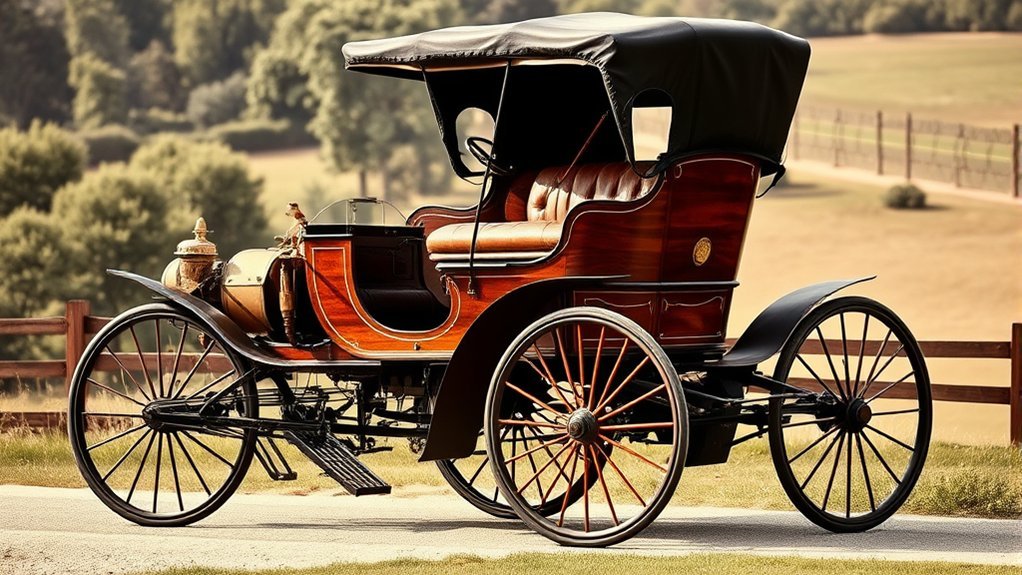
While many may not realize it, the first automobile, the Benz Patent Motorwagen, laid the groundwork for modern transportation by introducing a new paradigm in mobility. This revolutionary vehicle, patented in 1886 by Karl Benz, marked the birth of the automobile industry.
Bertha Benz’s historic journey in 1888 proved that cars could be practical, covering 180 kilometers and securing public acceptance. Innovations like the double-pivot steering system, patented in 1893, markedly enhanced maneuverability, influencing today’s car designs.
The Benz Velo, launched in 1894, became the world’s first production car, leading to mass manufacturing with over 1,200 units produced. The merger of Benz & Cie. with Daimler Motoren Gesellschaft in 1926 further advanced the industry, paving the way for cutting-edge technologies.
Together, these milestones shaped modern transportation, empowering individuals with newfound freedom and transforming societies globally.
Frequently Asked Questions
Who Designed the First Car?
The first car was designed by pioneering engineers like Karl Benz and Gottlieb Daimler. Their early prototypes marked an innovation timeline that sparked automotive evolution, paving the way for modern vehicles and your driving freedom today.
Was Henry Ford the Inventor of the First Car?
No, Ford’s not the inventor of the first car. His innovations transformed the automotive timeline during the Industrial Revolution, making early motorcars accessible. Remember, he built upon the work of earlier pioneers like Benz.
Who Invented the First Car in the 1920S?
In the 1920s, while no single inventor created the first car, automotive pioneers like Ford advanced early car innovations, revolutionizing vintage vehicle designs and mass production, shaping the automotive landscape we recognize today.
What Is the Story of Karl Benz?
You’ll discover Karl Benz’s journey from an inventive youth to facing patent controversies, culminating in groundbreaking innovations. His early life shaped his automotive legacy, paving the way for modern transportation and inspiring future generations.
Conclusion
In understanding the origins of the automobile, you see how Karl Benz’s ingenuity paved the way for modern transportation. His innovative design, combined with Bertha Benz’s historical journey, laid the groundwork for an industry that would eventually lead to today’s electric cars zipping down the road. The collaboration between visionaries like Benz and Daimler not only revolutionized travel but also connected people in ways unimaginable at the time, proving that innovation often springs from a blend of passion and necessity.







Leave a Reply