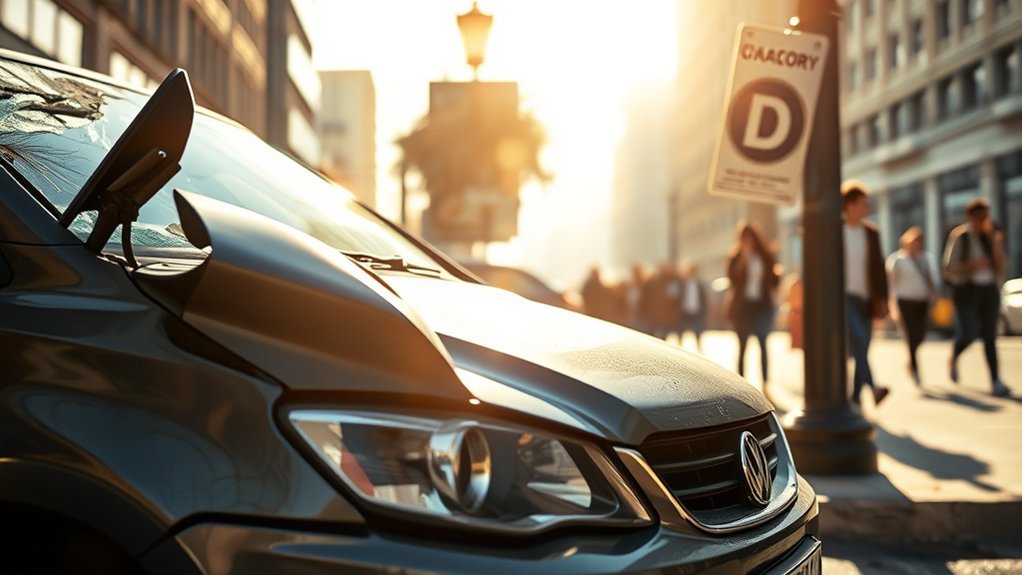
A Category D write-off indicates a vehicle that’s been damaged but is still repairable, with repairs exceeding 50% of its market value. This classification focuses on non-structural issues like minor bodywork or electrical faults. While you can repair and drive a Cat D vehicle again, it can affect your insurance premiums and resale value. If you’re considering a Cat D car, there are important factors to evaluate to guarantee you make an informed decision.
Key Takeaways
- Category D write-offs indicate vehicles with repairable damage where repair costs exceed 50% of their market value, typically involving non-structural issues.
- This classification has been replaced by Category N since October 2017, which clarifies non-structural damage types.
- Ownership of a Category D vehicle usually transfers to the insurance company, affecting future resale value and insurance premiums.
- Repairs can be made to Category D vehicles, but it’s essential to notify the DVSA and ensure repairs meet legal safety standards.
- Conducting a vehicle history check is crucial to verify repair quality and previous incidents before purchasing a Category D vehicle.
What Is a Category D Write-Off?
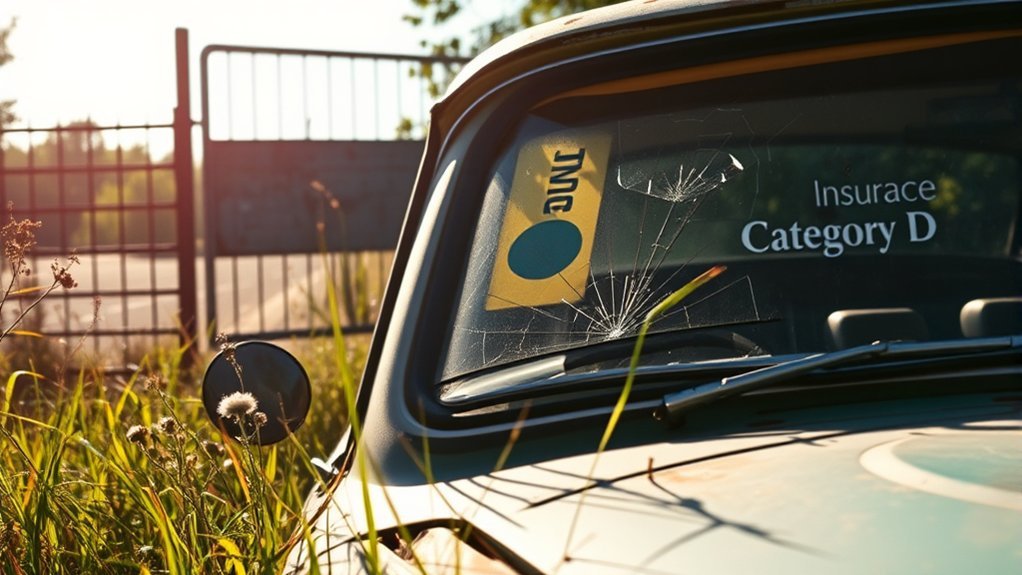
A Category D write-off signifies a vehicle that’s been damaged but remains repairable, with repair costs estimated to exceed 50% of its market value. Insurers categorize these vehicles as Cat D due to the uneconomical nature of repairs versus their resale value.
Typically, a Cat D vehicle suffers from non-structural damage, such as minor bodywork issues or electrical faults, which don’t compromise its structural integrity. While the classification was replaced by Category N in October 2017, many vehicles still carry the Cat D label, reflecting their repairable state.
If you’re considering purchasing a Cat D vehicle, it’s essential to conduct a Vehicle History Check. This guarantees that repairs were executed to a high standard, safeguarding your investment and assuring safety.
Understanding the implications of this classification empowers you to make informed choices about your vehicle’s future, liberating you from potential pitfalls in the automotive market.
How Are Category D Vehicles Classified?
Understanding how vehicles earn the Category D classification is essential for anyone involved in buying or selling used cars.
Insurance companies classify a vehicle as a Category D car when the cost of repairs exceeds 50% of its market value, making it financially impractical to repair. This determination includes a thorough evaluation of total repair costs, encompassing parts, labor, and additional expenses.
The classification specifically indicates non-structural damage, which means the vehicle’s frame or chassis remains intact and can legally be repaired and driven again. After this classification, ownership typically transfers to the insurance company, which may opt to sell the vehicle to garages that specialize in cost-effective repairs.
Although Category D was phased out in 2017, many vehicles still bear this classification, impacting their insurance and resale value.
Understanding these nuances empowers you to make informed decisions in the used car market.
What Are the Differences Between Category D and Category N?
While both Category D and Category N vehicles indicate non-structural damage, they differ markedly in their classification and implications for buyers. Understanding these distinctions is essential for making informed decisions.
- Terminology Change: Category D was phased out in October 2017, replaced by Category N to enhance clarity regarding non-structural damage.
- Consumer Understanding: Category N emphasizes that the vehicle’s frame remains intact, providing better insight into the extent of damage.
- Repair Potential: Both categories allow vehicles to be repaired and returned to the road, yet Category N is viewed as a more straightforward classification by insurance companies.
In essence, while both categories denote vehicles with light or cosmetic damage, the shift from Category D to Category N aims to empower consumers with improved clarity regarding vehicle write-offs and their potential for safe repair and use.
Can You Repair a Cat D Write-Off and Drive It Again?

Can you really repair a Cat D write-off and drive it again? Yes, you can. Once you’ve completed the necessary repairs on your Cat D car, notifying the DVSA is vital.
However, make certain that all repairs meet legal safety and roadworthy standards. It’s wise to have a professional assess the repairs to guarantee quality and safety before hitting the road.
Documentation of your repairs and service history is essential; this not only establishes the vehicle’s reliability but also aids future buyers in understanding its condition.
Keep in mind that even if your Cat D vehicle is roadworthy post-repair, you may face higher insurance premiums and a diminished resale value due to its write-off status.
Being informed about these factors will empower you to make decisions that liberate you from conventional constraints in the automotive market.
Should You Consider Buying a Cat D Car?
Buying a Cat D car, now known as a Cat N vehicle, can be an appealing option for budget-conscious buyers.
However, you should carefully consider the implications before making a purchase. Here are three key points to keep in mind:
Careful consideration is crucial when purchasing a Cat D car; keep these key points in mind.
- Insurance Costs: Insurers may charge higher premiums for Cat D cars, so check coverage options and costs ahead of time.
- Structural Integrity: While these vehicles have non-structural damage, it’s essential to verify the quality of repairs. Confirm they meet safety standards to avoid future issues.
- Resale Value: Cat D cars tend to have lower resale values compared to undamaged vehicles, which could impact your selling potential down the road.
Conducting a thorough vehicle history check and arranging for a professional inspection can help mitigate risks, guaranteeing you’re making a well-informed decision when buying a Cat D car.
How Does Owning a Cat D Vehicle Affect Your Insurance?
How does owning a Cat D vehicle impact your insurance? When you own a Cat D car, expect higher insurance premiums. Insurers perceive these vehicles as higher risk due to their previous damage history, which can complicate your coverage options.
You’ll likely need to disclose the vehicle’s write-off status, affecting availability and terms of insurance policies. Some companies might even refuse coverage or impose stricter conditions.
Additionally, the resale value of a Cat D vehicle is generally lower, influencing how insurers assess its value when calculating your premiums.
To negotiate better insurance terms, maintain thorough documentation of repairs and service history. This not only proves your car’s roadworthiness but may also help you secure more favorable rates.
Ultimately, understanding these factors enables you to make informed decisions about insuring your Cat D vehicle while managing potential challenges.
How Can You Check a Cat D Car’s History Before Buying?

Before buying a Cat D car, you should start by checking its vehicle history report to uncover any previous write-offs and accident details.
Additionally, request the repair documentation from the seller to guarantee all repairs were properly executed.
This thorough approach helps you assess the vehicle’s condition and value accurately.
Check Vehicle History Report
When considering a Cat D car, checking its vehicle history report is essential for making an informed decision. This report provides insight into the vehicle’s condition and past incidents.
Here are three key aspects to focus on:
- Previous Write-Off Status: Confirm if the car has been previously classified as a write-off and understand the implications.
- Repair History: Investigate the quality of repairs done post-write-off, as this directly affects the vehicle’s reliability.
- Outstanding Issues: Look for any signs of severe damage or recurring problems that might compromise safety.
Utilizing services like HPI Check or Experian can help you access detailed information, ensuring you’re fully informed about the Cat D car before you buy.
Inspect Repair Documentation
Inspecting repair documentation is an essential step in evaluating a Cat D car’s reliability and safety. Start by requesting the seller’s records, ensuring they detail all repairs and parts replaced post-classification. Verify these repairs were conducted by a qualified mechanic to maintain safety and resale value. Additionally, use online vehicle history check services for an extensive report on past incidents, including any write-offs.
| Document Type | Importance | Checkpoints |
|---|---|---|
| Repair History | Confirms repairs made | Includes parts replaced |
| MOT Test Certificate | Validates roadworthiness | Check date and validity |
| Warranties/Guarantees | Assures quality | Look for coverage details |
Ensure documentation includes a valid MOT test post-repair for peace of mind.
Pros and Cons of Purchasing a Cat D Vehicle
Purchasing a Cat D vehicle can be an enticing option for budget-conscious buyers looking for a reliable car at a fraction of the cost. However, you must consider several factors before buying:
- Structural Damage: Cat D vehicles typically have non-structural damage, making repairs feasible. Yet, verify the repairs are of high quality for safety.
- Cost of Repair: While buying price is lower, repairs might still be costly. Factor in potential expenses when budgeting.
- Resale Value: Expect a lower resale value compared to non-written-off vehicles, which can limit future selling opportunities.
Always conduct a thorough vehicle history check to uncover hidden issues and verify repair documentation.
This diligence provides peace of mind, guaranteeing you make an informed decision. While Cat D vehicles can be a smart buy, understanding these pros and cons is vital for successful ownership.
Frequently Asked Questions
What Is a Cat D Classification?
A Cat D classification explains a vehicle’s damage, where repair costs exceed 50% of its value. This impacts resale value, insurance implications, and raises safety concerns post-repair, necessitating thorough assessment before purchase.
What Is Coverage D in Insurance?
When your car’s in the shop after an accident, Coverage D kicks in, covering rental costs. Review your insurance policies for coverage types, limits, and premium costs to understand the claims process and associated risk assessment.
Is a Car With Cat D History Safe?
A car with a Cat D history can be safe if repairs are done properly. However, be aware of potential insurance implications, lower resale value, and verify you check the repair history for safety concerns.
What Is Category C or D?
Category C refers to vehicles with significant damage, while Category D indicates non-structural damage. Both require repairs but affect resale value and insurance costs. Understanding these classifications helps you make informed decisions about potential purchases.
Conclusion
In summary, buying a Category D write-off can be like maneuvering through a maze—you need to tread carefully. While these vehicles often come at a lower price, their history and potential hidden issues require thorough consideration. Weighing the pros and cons is essential before making a decision. Remember, the savings upfront could lead to unexpected costs later on, so make sure you’re well-informed and prepared for any surprises that may arise down the road.






Leave a Reply