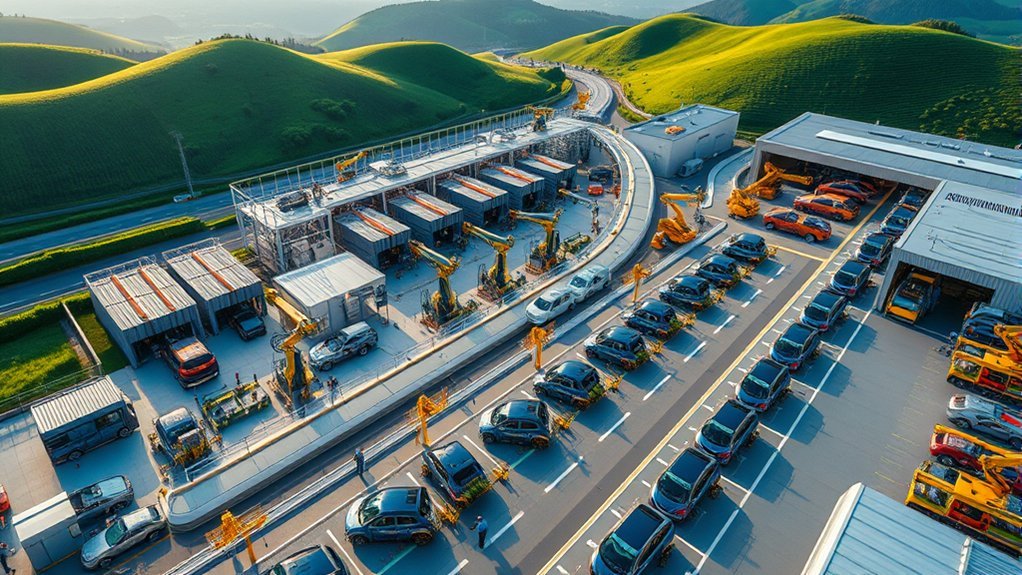
Dacia cars are primarily manufactured at two key plants: the Mioveni plant in Romania and the Tangiers plant in Morocco. The Mioveni facility boasts a production capacity of 350,000 vehicles annually and produces one vehicle every 55 seconds. Meanwhile, the Tangiers plant focuses on UK versions of the Dacia Sandero with a capacity of up to 200,000 vehicles per year. By understanding these facilities’ roles, you’ll gain insight into Dacia’s efficient manufacturing practices.
Key Takeaways
- Dacia cars are primarily manufactured at the Mioveni plant in Romania, with a production capacity of 350,000 vehicles per year.
- The Tangiers plant in Morocco focuses on producing UK versions of the Dacia Sandero and Sandero Stepway.
- The Mioveni plant has produced over 8 million vehicles since its inception in 1968.
- Dacia’s manufacturing operations are supported by the largest International Logistic Network in the automotive industry.
- Future expansions at the Mioveni plant include the launch of the All-New Duster and the Bigster model.
The Two Main Manufacturing Plants for Dacia Cars
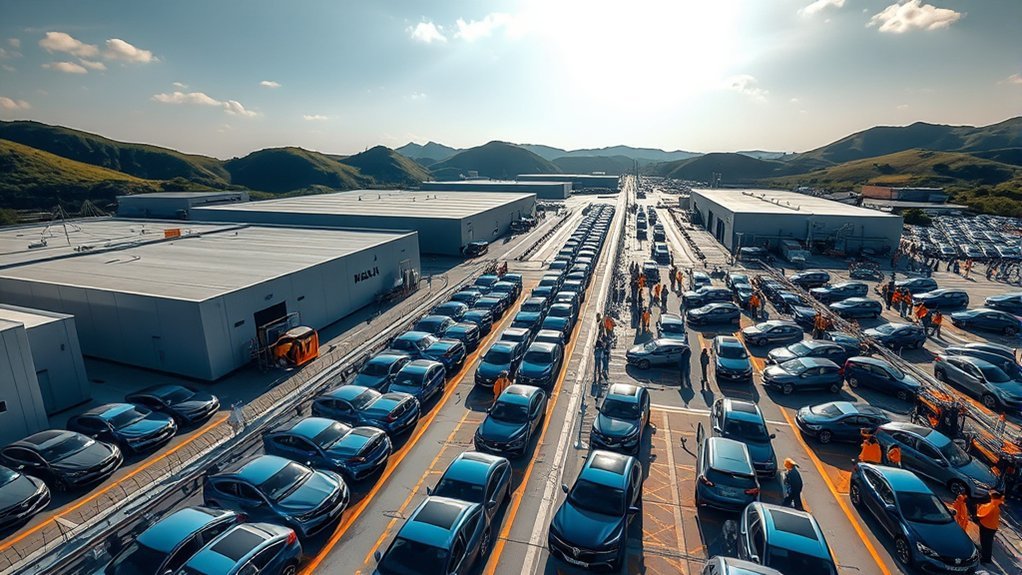
When it comes to the manufacturing of Dacia cars, you’ll find that the two main plants play essential roles in the production process.
The Mioveni plant in Romania stands out with a production capacity of 350,000 vehicles per year. Since its opening in 1968, it has manufactured over 8 million vehicles, including the popular Dacia Duster and Logan. This facility benefits from the engineering expertise of Groupe Renault, ensuring high-quality standards throughout the manufacturing process.
The Mioveni plant in Romania boasts a capacity of 350,000 vehicles annually and has produced over 8 million cars since 1968.
Additionally, there’s a secondary plant in Tangiers, Morocco, which focuses on producing UK versions of the Dacia Sandero and Sandero Stepway.
Both plants operate within an International Logistic Network recognized as the largest in the global automotive industry, enhancing efficiency and streamlining operations. These strategic locations reflect Dacia’s commitment to innovation and quality, making their vehicles accessible and reliable for consumers worldwide.
Quality Control Measures in Dacia Manufacturing
To guarantee Dacia cars meet the highest standards, the company implements rigorous quality control measures throughout the manufacturing process. At the Mioveni plant, every vehicle undergoes thorough inspections and testing at various stages. This guarantees that each car adheres to rigorous performance and safety standards before it leaves the production line.
Dacia’s quality policy underscores a commitment to meeting global quality standards and customer expectations, reinforcing the importance of quality assurance.
Moreover, the plant specializes in producing CKD (Completely Knocked Down) kits that are exported worldwide, maintaining high quality in assembly. By establishing itself as the mother-plant for Global Access plants, Dacia enhances its competitiveness and product reliability.
This unwavering focus on quality control measures not only elevates the brand but also empowers you, the consumer, to trust in the safety and reliability of every Dacia vehicle you choose.
How Mioveni Plant Enhances Production Efficiency
Building on its commitment to quality, the Mioveni plant employs advanced techniques to enhance production efficiency. With a staggering production capacity of 350,000 vehicles per year, this facility operates at an impressive rate of one vehicle every 55 seconds.
This efficiency greatly boosts overall productivity, allowing the Dacia brand to meet the high demand for models like the Duster SUV, with approximately 1,000 units produced daily.
A key factor in maximizing efficiency is the International Logistic Network established near Mioveni in 2005, recognized as the largest of its kind in the automotive industry. This network streamlines supply chain operations, ensuring that materials flow seamlessly to the assembly line.
Additionally, the collaboration with the Renault Technologie Roumanie engineering center in Bucharest reinforces high production standards and fosters continuous innovation.
What Does the Tangiers Plant Do for Dacia’s Manufacturing?
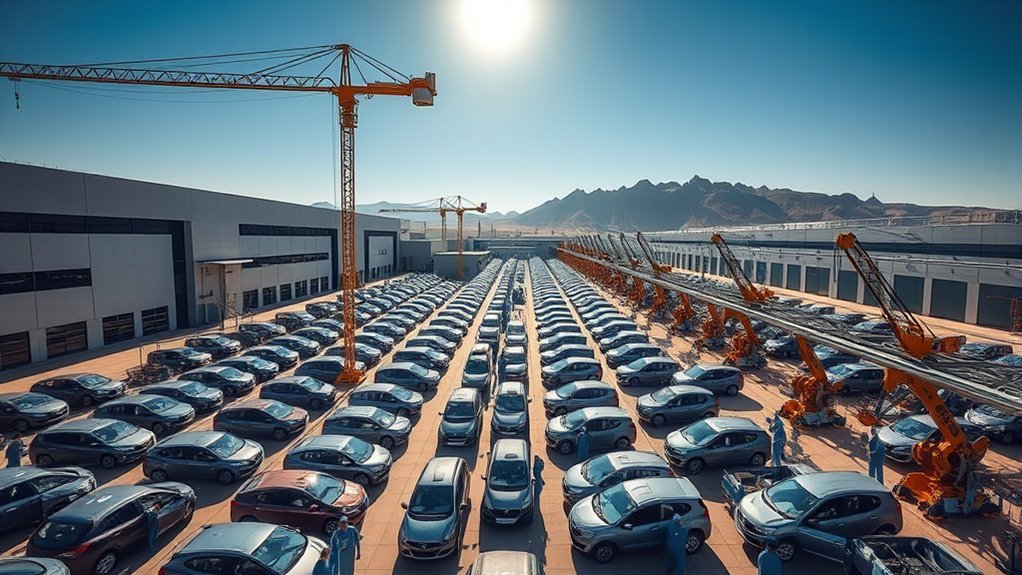
The Tangiers plant plays an essential role in Dacia’s manufacturing by considerably boosting production capacity and efficiency.
Here, you’ll find key models like the Sandero and Sandero Stepway being assembled, ready for export to various international markets.
This facility not only enhances Dacia’s distribution network but also supports the brand’s commitment to affordability and accessibility.
Production Capacity Overview
While Dacia’s manufacturing strategy relies on various facilities, the Tangiers plant stands out as an essential component, primarily producing the popular Sandero and Sandero Stepway models.
With a production capacity of up to 200,000 vehicles annually, this facility greatly boosts Dacia’s overall output, catering to markets like the UK. The plant employs advanced manufacturing techniques, ensuring efficiency while upholding Dacia’s commitment to affordability.
Since its inception, the Tangiers plant has been instrumental in expanding Dacia’s international presence, meeting the rising demand in emerging markets. Its strategic location enhances logistics and distribution throughout Europe and beyond, solidifying Dacia’s competitiveness in the automotive market and empowering you to access quality vehicles at reasonable prices.
Key Models Assembled
At the heart of Dacia’s manufacturing efforts, the Tangiers plant excels in assembling key models like the Sandero and Sandero Stepway. This facility is pivotal for Dacia’s production strategy, allowing for efficient assembly while maintaining high-quality standards.
By focusing on budget-friendly vehicles, the Tangiers plant caters not only to local customers but also to the European market, greatly boosting Dacia’s sales. It also has the capacity to produce a substantial number of cars annually, meeting the rising demand for models such as the Dacia Duster.
The synergy between the Tangiers and Mioveni plants guarantees a streamlined production process, capitalizing on Renault’s engineering expertise to enhance adaptability and efficiency in Dacia’s offerings.
Export and Distribution Network
With the Tangiers plant efficiently assembling key models like the Sandero, its role in Dacia’s export and distribution network becomes apparent.
This facility enables Dacia to enhance production capacity while ensuring a steady supply of vehicles to international markets, particularly Western Europe.
Strategically located, Tangiers takes advantage of major shipping routes and trade networks, streamlining the distribution process.
The plant’s focus on affordability and efficiency aligns perfectly with Dacia’s commitment to cost-effective offerings, allowing for competitive pricing without compromising quality.
By leveraging Renault’s engineering expertise, Dacia maintains high-quality standards throughout the manufacturing process.
Ultimately, the Tangiers plant is integral to Dacia’s strategy, ensuring that vehicles reach customers swiftly and economically.
How Renault Transformed Dacia’s Manufacturing Processes
When Renault took over Dacia, it implemented enhanced production techniques that revolutionized the Mioveni plant’s efficiency.
You’ll notice that the streamlined supply chain management, bolstered by an international network, plays an essential role in meeting the high demand for Dacia vehicles.
This transformation not only increased output but also improved the overall quality and reliability of the cars produced.
Enhanced Production Techniques
Renault’s acquisition of Dacia in 1999 marked a turning point, driving substantial investments that revitalized the Mioveni plant and greatly boosted production capabilities.
The integration of enhanced production techniques has transformed operations, allowing for impressive output rates.
- Production capacity increased to 350,000 vehicles annually.
- A vehicle rolls off the assembly line every 55 seconds.
- Advanced manufacturing methods and Renault’s engineering expertise launched models like the Dacia Logan.
- Continuous adaptation to market demands keeps Dacia aligned with consumer preferences, as seen with the Bigster and All-New Duster.
This strategic focus on innovation and efficiency guarantees that Dacia remains competitive in the automotive landscape, fostering growth and sustainability for the brand.
Streamlined Supply Chain Management
As Dacia sought to enhance its manufacturing processes, the integration of a streamlined supply chain management system played a crucial role in boosting efficiency and cutting production costs at the Mioveni plant.
Renault’s establishment of an International Logistic Network in 2005 optimized logistics, marking it as the largest in the global automotive industry. This initiative considerably increased Dacia’s production capacity to 350,000 vehicles annually.
By exporting CKD kits, Dacia demonstrated a flexible manufacturing approach, adapting to international market demands. Continuous improvement initiatives led by Renault emphasized product quality and competitiveness, solidifying Dacia’s position as a key player in the automotive market.
Through these strategic transformations, Dacia’s manufacturing processes achieved remarkable advancements, empowering the brand’s growth and sustainability.
Future Manufacturing Developments for Dacia Vehicles
While the automotive landscape continues to evolve, Dacia is poised to enhance its manufacturing capabilities considerably. The Mioveni plant is gearing up for exciting developments, aiming to meet growing consumer demand while maintaining quality.
- Launching the All-New Duster in 2024, built on the CMF-B platform for improved performance.
- Introducing the Bigster, catering to the C-SUV market with over 13,000 pre-orders.
- Focusing on family-friendly vehicles to expand the product lineup.
- Collaborating with the engineering center in Bucharest to guarantee global quality standards.
These efforts reflect Dacia’s commitment to efficiency and innovation in production.
As you look forward to new models, you can expect Dacia to continue adapting and evolving, guaranteeing that it meets and exceeds your expectations in the ever-changing automotive industry.
Frequently Asked Questions
Who Makes the Engines for Dacia?
Dacia’s engines are produced by Groupe Renault, ensuring high engine specifications and reliability. The manufacturing process integrates advanced engineering, with Renault as the primary engine supplier, allowing Dacia to maintain competitive pricing while delivering dependable performance.
Where Are Dacia Cars Made in the World?
Dacia cars are made primarily at manufacturing locations in Romania and Morocco. These production facilities, including assembly plants in Mioveni and Tangiers, enhance Dacia’s global presence, ensuring quality vehicles reach diverse markets worldwide.
Is Dacia a Good Car Brand?
Yes, Dacia’s a good car brand. You’ll find Dacia reliability and affordability appealing. Their models receive positive customer reviews for practicality and low costs, making them a smart choice for budget-conscious drivers like you.
Is Dacia Owned by Nissan?
Isn’t it fascinating how Dacia’s history reveals its true ownership? Dacia isn’t owned by Nissan; it’s part of Renault. This partnership shapes Dacia’s future, combining resources for innovative, affordable vehicles that empower drivers.
Conclusion
To sum up, Dacia’s manufacturing prowess is largely defined by its Mioveni and Tangiers plants, which together produce over 500,000 vehicles annually. This impressive output showcases Dacia’s commitment to efficiency and quality. With Renault’s innovative processes enhancing production, the future looks bright for Dacia. As the brand continues to grow, it’s fascinating to note that Dacia has become one of Europe’s fastest-growing car manufacturers, reflecting the increasing demand for affordable and reliable vehicles.







Leave a Reply