
The new car registration plates for 2025 will be released on 1 March 2025, starting with the ’25’ plate, which will be valid until 31 August 2025. Following that, the ’75’ plate will launch on 1 September 2025 and be valid until 28 February 2026. Understanding these timing details can help you make informed decisions about buying or selling vehicles around these dates. There’s more to uncover about the impact of these plates on vehicle value and market trends.
Key Takeaways
- The new 25 registration plates will be released on 1 March 2025.
- The 25 plate’s validity period lasts from 1 March 2025 to 31 August 2025.
- The 75 registration plates will be available starting 1 September 2025.
- The 75 plate is valid from 1 September 2025 to 28 February 2026.
- Both plates follow the new format of two letters, two numbers, a space, and three letters.
Key Dates for 2025 Registration Plates

When you’re planning to register a new car in 2025, it’s essential to mark your calendar for the key dates.
The exciting 25 plate will be released on 1 March 2025, and you’ll want to act fast, as it’ll be valid only until 31 August 2025. This new registration format features two letters, two numbers, a space, and three letters (e.g., AB25 CDE), making it easy to identify.
Each new registration plate reflects the vehicle’s age, so the two numbers serve as the key identifier.
After the 25 plate, the 75 plate will roll out on 1 September 2025 and stick around until 28 February 2026.
The DVLA oversees this process, releasing new plates biannually in March and September. Keeping these dates in mind helps you secure your ideal vehicle and stay ahead of the curve in the ever-evolving world of car registrations.
Understanding the Impact of the ’75’ Plate Identifier
As the ’75’ plate identifier rolls out on 1 September 2025, it’s essential to understand its implications for both buyers and sellers in the automotive market.
The introduction of the ’75 plate’ marks a significant moment in vehicle registration, indicating that a car was registered in the latter half of 2025. This timeframe can help you assess a vehicle’s age and value, providing insights into the used car market.
The ’75 plate’ signifies vehicles registered in late 2025, crucial for evaluating age and value in the used car market.
With new registrations occurring until 28 February 2026, the ’75 plate’ will play a pivotal role in determining vehicle desirability.
The biannual release schedule coincides with increased purchases, which may lead to fluctuations in the market. As a potential buyer or seller, understanding the ’75 plate’ can empower you to make informed decisions, ensuring you navigate the automotive landscape with confidence as the shift to the next ’26 plate’ approaches.
How New Plates Influence Vehicle Prices
The release of new registration plates greatly impacts vehicle prices, driving changes in consumer behavior and market dynamics.
When new plates hit the market, you’ll notice a dip in used vehicle prices as buyers flock to the latest models. This shift can affect your vehicle’s value if you’re not careful.
Here are some key points to reflect upon:
- Many owners sell their cars before the March and September releases to get better prices.
- Dealerships often offer discounts on older stock during these periods, which can drive down used vehicle prices.
- For instance, the 73 plate release in September 2023 led to a noticeable drop in value for older plates.
Best Times to Sell Your Vehicle Before New Plate Releases

If you’re considering selling your vehicle, timing is everything.
Aim to list your car in the months leading up to new plate releases on 1 March and 1 September, as demand tends to dip afterward.
Optimal Selling Timing
Timing your vehicle sale can greatly impact the price you receive, especially when you consider the upcoming release of new registration plates.
To maximize your profit, aim to sell your used car about a month before these releases. Here are some ideal selling timing tips:
- Sell before March and September: Prices often drop with new number plates, so listing in late January or early August can help.
- Capitalize on reduced competition: Fewer sellers before plate changes mean better prices for you.
- Watch for dealership discounts: Dealerships often lower prices on outgoing stock, affecting your car’s resale value.
Market Value Considerations
Understanding market value is essential when selling your vehicle, especially as new registration plates approach.
As the March 1, 2026 release date nears, keep in mind that car prices typically drop with increased turnover in used cars. To secure a better price, consider selling your vehicle before the registration plate change. By doing this, you’ll face less competition from newly registered cars, enhancing your chances of maximizing market value.
Additionally, dealerships often provide discounts on outgoing stock during plate releases, which can further diminish the perceived worth of older vehicles. Timing your sale effectively can truly liberate your finances, allowing you to capitalize on a higher price before the influx of new registrations impacts the market.
What You Need to Know About Legal Requirements for 2025 Registration Plates
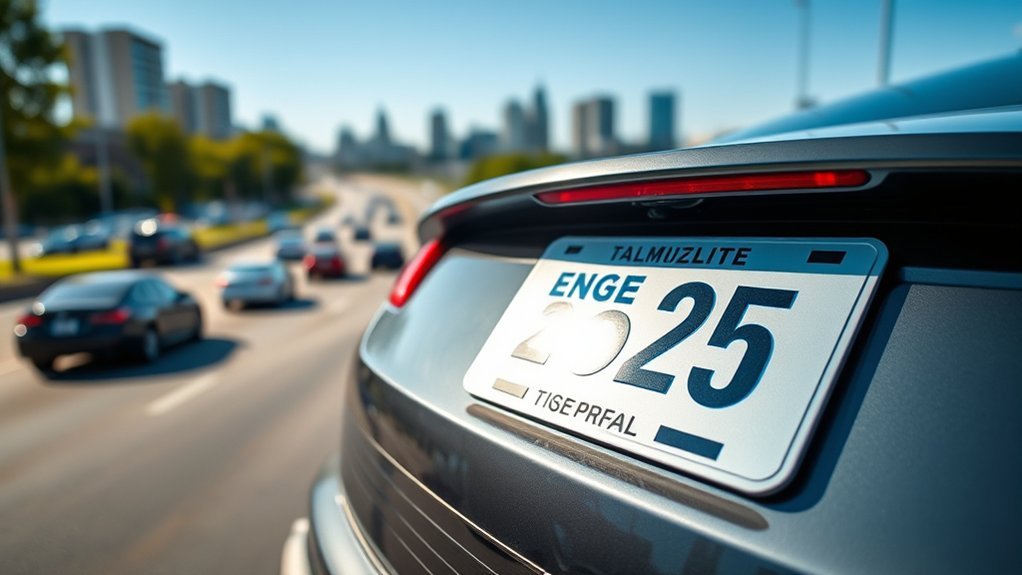
As you prepare for the 2025 registration plates, it’s essential to understand the legal requirements that come with them.
You’ll need to guarantee your plates meet specifications for materials, character sizes, and spacing, or risk facing fines.
If you’re considering a personalised plate, remember it must still comply with standard regulations to be legally displayed on your vehicle.
Plate Material Specifications
When you’re preparing for your 2025 car registration, it’s essential to know that registration plates must meet specific material specifications to comply with legal requirements.
Here’s what you need to keep in mind:
- Plates must be made from reflective material for visibility and to meet legal standards.
- Front plates display black characters on a white background, while rear plates have them on a yellow background.
- Each plate should include the supplier’s details and a British Standard number for compliance verification.
Character Size Regulations
For 2025 car registration, you must pay close attention to character size regulations on your registration plates.
The front plate characters should measure 79mm in height and 50mm in width, while the rear plate characters must also be 79mm tall but only 44mm wide. Additionally, maintain an 11mm space between each character to comply with legal standards, guaranteeing clear visibility.
Your plates need to be made from reflective material, enhancing nighttime visibility and distinguishing characters under various lighting.
Don’t forget to include the supplier’s name and a British Standard number on each plate to confirm compliance.
Ignoring these character size regulations can lead to fines and even MOT failures, so stay aware and verify your plates are up to code.
Personalised Plate Compliance
Steering through the world of personalised plates can be tricky, especially with the new regulations for 2025 registration.
To guarantee your plate complies with DVLA regulations, keep these key points in mind:
- Plates must be made from reflective material with the correct color scheme: black on white for the front and black on yellow for the rear.
- Each plate must display the supplier’s details and a British Standard number; failure to do so can lead to fines or MOT issues.
- Avoid combinations that could be seen as offensive or misleading, as the DVLA strictly regulates these.
Key Regulations for Personalised Number Plates
Personalised number plates are a fun way to express your individuality, but they come with strict regulations you need to follow. The DVLA regulations guarantee that your plates don’t misrepresent age and adhere to specific size and spacing rules.
For front plates, use reflective material with black characters on a white background, while rear plates require yellow. Each personalised plate must also display the supplier’s details and a British Standard number, guaranteeing legal compliance.
Be aware that the DVLA blocks certain combinations deemed offensive or misleading, so check their annual banned list before finalizing your plate.
Additionally, you’re responsible for paying the appropriate Vehicle Excise Duty (car tax) and guaranteeing your plates are properly registered. Ignoring these regulations can lead to fines and penalties, so stay informed to enjoy the freedom that comes with your unique car registration plates!
Frequently Asked Questions About 2025 Registration Plates?
Wondering about the details of the 2025 registration plates? You’re not alone! Here’s what you need to know about your new car number:
- The 25 registration plate is valid from 1 March 2025 to 31 August 2025, indicating vehicles registered in the first half of the year.
- The 75 plate follows, valid from 1 September 2025 to 28 February 2026, marking registrations for the latter half.
- Keep in mind that these plates are essential for determining your vehicle age and can impact its value and insurance coverage.
The DVLA oversees the release of these plates, which follow the standard format: two letters, two numbers, and three letters (e.g., AB25 CDE).
Frequently Asked Questions
What Month Do New Car Models Come Out?
New car models typically come out in March and September. These new model releases align with seasonal trends and consumer preferences, creating excitement as you explore the latest offerings from dealerships during these peak times.
How to Get the New Pennsylvania License Plate?
To grab your new Pennsylvania license plate, visit PennDOT’s website. Explore license plate options, like personalized plates, while ensuring your registration renewal is current. Submit your application, and soon, your plate will arrive!
Do Dealerships Give Out License Plates?
Yes, dealerships typically provide license plates as part of their dealer policies. They handle the registration processes, ensuring plate availability before you drive off, often offering temporary plates while your permanent registration is being processed.
How Often Are License Plates Changed?
License plates change biannually, reflecting fresh designs. You’ll need to stay updated on state regulations for registration renewal. Embracing these changes keeps your vehicle current and enhances its appeal in the market.
Conclusion
As the clock ticks toward the 2025 registration plate release, staying informed can feel like maneuvering a bustling marketplace. By understanding key dates and regulations, you can make savvy decisions about selling or purchasing a vehicle. Just as the seasons change, so do the trends in car values and legal requirements. Embrace this shift, and you’ll be well-prepared to ride the wave of new opportunities that come with the arrival of the latest plates.







Leave a Reply