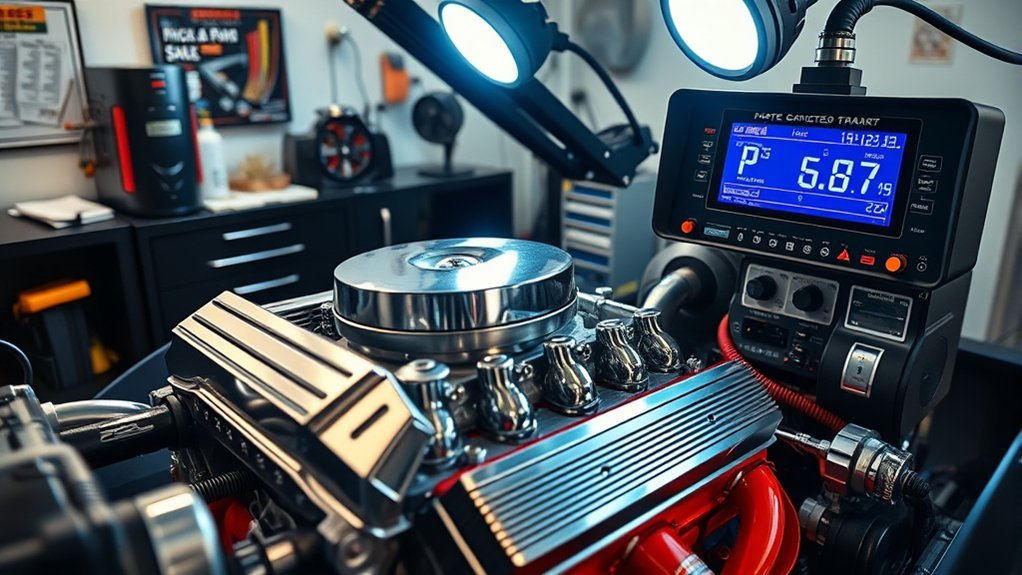
To find your car’s brake horsepower (BHP), check the owner’s manual or the manufacturer’s website for specifications. For a more accurate measurement, use a dynamometer, which assesses real-time power output based on torque and engine speed. Online BHP checkers can provide estimates, but they may lack precision. Regular BHP checks are essential for monitoring performance and planning modifications. Understanding BHP’s impact on your vehicle could enhance your driving experience and performance metrics.
Key Takeaways
- Check the owner’s manual for specific engine power specifications related to your vehicle’s BHP.
- Visit the manufacturer’s website for detailed performance specifications and downloadable data.
- Use dynamometers at professional garages for accurate real-time BHP testing.
- Look for online BHP calculators for moderate estimates based on vehicle specifications.
- Regularly conduct dyno tests after modifications to evaluate changes in power output.
What Is Brake Horsepower (BHP) and Why Does It Matter?
Brake Horsepower (BHP) represents the engine’s power output before accounting for losses like friction, making it an essential metric for understanding your vehicle’s performance.
BHP is calculated by multiplying torque by engine speed, providing a clear picture of how effectively your engine operates in various conditions. Knowing your car’s BHP matters because it serves as a benchmark for evaluating potential modifications. By reviewing BHP, you can determine how changes will impact acceleration and overall performance.
Furthermore, BHP figures allow for meaningful comparisons between different vehicles, enabling you to gauge power metrics accurately.
Whether you’re an enthusiast or simply want to enhance your driving experience, understanding BHP can inform safer and more strategic driving decisions. When you grasp the capabilities and limitations of your car based on its BHP, you empower yourself to make informed choices that elevate your driving experience.
How to Accurately Measure Your Car’s BHP
Understanding how to accurately measure your car’s BHP is vital for evaluating its performance and potential upgrades. A dynamometer is the most effective tool for this task, as it assesses torque and rotational speed to calculate power output in real-time. For a precise measurement, consider visiting a professional garage equipped with specialized dynamometers.
| Method | Precision Level | Notes |
|---|---|---|
| Dynamometer Testing | High | Real-time power output |
| Online BHP Checkers | Moderate | Estimates based on specifications |
| Manufacturer’s Specs | Low | Baseline for comparison |
Regular dyno testing is important, especially after modifications, to guarantee your vehicle maintains peak performance. Additionally, you can review the owner’s manual or manufacturer’s website for the stated BHP, providing a reference point for your measurements.
Understanding the Differences Between BHP, HP, and Torque
Understanding the distinctions between Brake Horsepower (BHP), Horsepower (HP), and torque is essential for evaluating your car’s performance.
While BHP measures the engine’s power output before losses, HP can refer to various power metrics, including engine crankshaft output.
Torque plays a critical role in acceleration and pulling power, influencing how your vehicle responds in real-world driving conditions.
BHP Versus HP Explained
When comparing BHP and HP, it’s important to recognize that while both terms are often used interchangeably, they represent different facets of engine performance. A BHP check gives a clearer understanding of your engine’s actual power output at the shaft, excluding losses. Conversely, HP encompasses a broader range of measurements, which can include factors beyond the engine’s output.
| Metric | Definition | Purpose |
|---|---|---|
| BHP | Power output before losses | Assess acceleration capabilities |
| HP | General power measurement | Illustrate overall engine potential |
| Torque | Rotational force produced | Indicates pulling power and responsiveness |
Understanding these distinctions is significant when evaluating vehicle performance and considering modifications. Each metric reveals unique insights into engine efficiency and output.
Torque’s Role In Performance
Torque plays a critical role in a vehicle’s performance, particularly in how it accelerates and responds to driving conditions. Understanding torque is essential for vehicle enthusiasts:
- Acceleration: Higher torque enables quicker starts, allowing you to gain speed rapidly.
- Pulling Power: Torque is crucial for towing and climbing steep grades, making it a key factor in utility vehicles.
- Engine Performance: Torque operates at various RPMs, providing flexibility in how the vehicle responds under different conditions.
- BHP Relationship: Torque contributes to brake horsepower (BHP) calculations, influencing overall performance metrics.
Real-World Applications Of BHP
While many drivers focus on horsepower as the ultimate measure of a vehicle’s performance, Brake Horsepower (BHP) plays a significant role in determining how well your car accelerates and maintains speed under various conditions.
BHP specifically quantifies the engine’s power output at the wheels, making it a critical metric for evaluating driving performance. Unlike general horsepower, which can be misleading, BHP gives you a clearer understanding of how modifications like forced induction impact your vehicle’s capabilities.
Torque complements this by providing essential data for acceleration and low-end power delivery. By grasping the distinctions between BHP, horsepower, and torque, you can make informed choices about enhancements, ensuring a more liberated and exhilarating driving experience.
Why Regularly Checking Your Car’s BHP and Horsepower Is Important
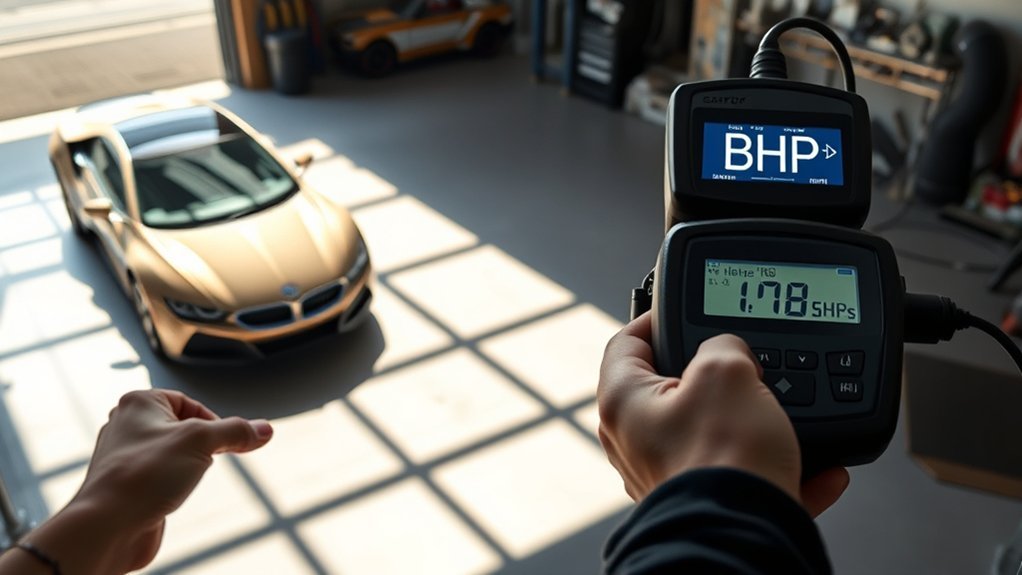
Regularly checking your car’s brake horsepower (BHP) is essential for maintaining ideal engine performance and reliability, as it allows you to pinpoint potential issues before they escalate.
Here’s why you should stay vigilant:
- Identify Engine Issues: Regular BHP checks can detect performance drops, signaling engine problems early.
- Plan Upgrades: Understanding your car’s horsepower helps you make informed decisions for effective performance modifications.
- Gauge Changes: Monitoring BHP lets you evaluate the effectiveness of modifications, ensuring they deliver the desired power output.
- Fuel Economy Insights: Knowing your BHP aids in anticipating fuel consumption, helping you balance performance with efficiency.
How to Find Your Car’s BHP in Manufacturer Specifications
To find your car’s brake horsepower (BHP), start by checking the owner’s manual, as it typically outlines the engine’s power specifications.
You can also visit the manufacturer’s website, where detailed specifications for your vehicle model are readily available.
Make certain you verify the model year to obtain accurate performance figures, as they may change with updates.
Owner’s Manual Insights
When you want to understand your car’s performance, the owner’s manual is your best resource for finding the brake horsepower (BHP). Here’s how to locate this essential information:
- Engine Specifications Section: Look for the specific area detailing engine specs; BHP is often listed here.
- Torque Information: This section usually accompanies BHP, providing a fuller picture of performance.
- Power Output Context: Understand that BHP reflects engine power before losses due to friction or accessories.
- Potential Upgrades Insight: Knowing your BHP can help you assess performance capabilities and identify possible enhancements.
Manufacturer’s Website Resources
How can you efficiently uncover your car’s brake horsepower (BHP) using the manufacturer’s website?
Start by visiting the official site of your car’s manufacturer. Navigate to sections typically labeled “Specifications,” “Technical Details,” or “Performance.”
Here, you’ll find BHP listed alongside other essential metrics like torque and fuel efficiency. Many manufacturers also offer downloadable owner’s manuals that contain valuable performance data, including BHP.
If you’re having trouble locating the information directly, try searching online by entering your car’s model name and year along with “BHP.” This approach will lead you to specific performance data, empowering you with knowledge about your vehicle’s capabilities.
Accessing the manufacturer’s website is a straightforward way to gain insight into your car’s performance specs.
Measuring BHP With a Dynamometer
Measuring brake horsepower (BHP) with a dynamometer provides an accurate assessment of your vehicle’s engine performance by evaluating torque and rotational speed. This method is essential for achieving peak performance and understanding your engine’s capabilities. Here’s what you need to know:
- Types of Dynamometers: You can choose between engine dynamometers, which test the engine alone, or chassis dynamometers, which measure the entire vehicle’s performance.
- Testing Process: The vehicle is placed on rollers to simulate real-world conditions while the engine runs at various speeds and loads.
- Real-Time Data: Dynamometers offer real-time feedback, allowing for precise tuning based on torque and power output.
- Cost Considerations: While using a dynamometer can be costly, it’s often considered the most reliable method for determining your vehicle’s true BHP output.
Utilizing this equipment empowers you to maximize your vehicle’s performance.
Simple Upgrades to Boost Your Vehicle’s BHP
If you’re looking to enhance your vehicle’s brake horsepower (BHP), several upgrades can make a significant difference without extensive modifications. Here’s a concise overview of effective enhancements you can consider:
| Upgrade | Potential BHP Gain | Notes |
|---|---|---|
| Performance Air Filter | Up to 10% | Increases airflow for better combustion. |
| Engine Remapping | 20-30 BHP | Optimizes ECU settings for power. |
| Turbocharger/Supercharger | 50 BHP or more | Forces more air into the engine. |
| High-Performance Exhaust | 10-15% | Reduces back pressure, boosting efficiency. |
Regular maintenance, including using high-quality fuels and ensuring your engine is well-tuned, is essential to maintain your BHP over time. Each of these upgrades can liberate your vehicle’s potential, offering a thrilling boost in performance with relatively simple changes.
How BHP Affects Your Driving Experience and Performance

While many factors contribute to your vehicle’s overall performance, brake horsepower (BHP) plays an essential role in shaping your driving experience. Understanding BHP can transform how you perceive your vehicle’s capabilities. Here’s how it affects your performance:
- Acceleration: Higher BHP allows for quicker speed increases, making overtaking and merging smoother.
- Handling: A vehicle’s BHP rating informs you about its power under various conditions, enhancing stability and control.
- Towing Capacity: Knowing BHP helps you gauge your car’s pulling power, especially when towing or carrying heavy loads.
- Fuel Economy: More powerful engines may consume more fuel, particularly during aggressive driving, impacting overall efficiency.
In essence, a higher BHP not only enhances your driving enjoyment but also dictates how responsive and engaging the experience can be.
Embracing this knowledge empowers you to make informed choices behind the wheel.
Frequently Asked Questions
How Do I Find Out What Brake Horsepower My Car Is?
To find your car’s Brake Horsepower, check the owner’s manual, visit the manufacturer’s website, or use online databases. Alternatively, a dynamometer test can deliver precise BHP measurements tailored to your vehicle’s performance.
How Do You Find Brake Horsepower?
You find brake horsepower by checking your owner’s manual, visiting manufacturer websites, or using online databases. For precise horsepower measurement, consider dynamometer testing at a tuning shop to assess your car’s performance accurately.
What Tools Check Car BHP?
You can use a dynamometer for precise horsepower measurement, or opt for online BHP checkers for quicker estimates. Each method reveals your car’s performance potential, empowering you to understand its true capabilities and make informed decisions.
How Can I Tell How Much HP My Car Has?
You can determine your car’s horsepower by checking the owner’s manual, visiting manufacturer websites, or using online databases. Engine modifications might affect the output, so consider dyno testing for precise measurements tailored to your specific vehicle.
Conclusion
In conclusion, discovering your car’s brake horsepower (BHP) deepens your understanding of its dynamics and driving delight. By measuring BHP accurately, you can make informed decisions about upgrades and performance improvements. Regularly checking BHP not only enhances your vehicle’s vigor but also guarantees a smoother, safer ride. So, whether you’re seeking specifications from the manufacturer or measuring with a dynamometer, staying savvy about your car’s BHP can greatly sharpen your driving experience.





Leave a Reply