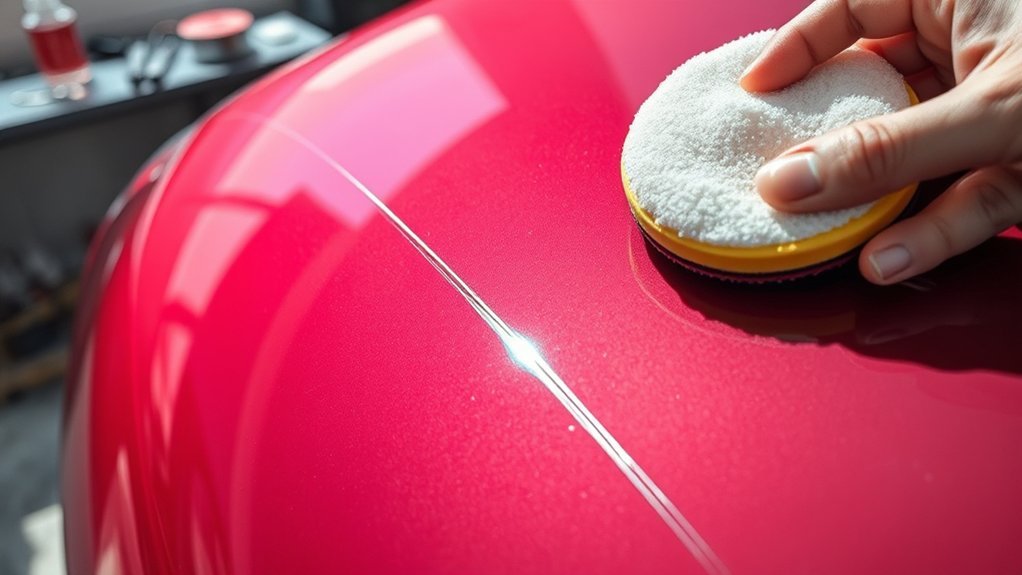
To correct paint scratches on your car, first identify the scratch type: clear coat, paint, or deep scratches. For clear coat scratches, use polish to restore shine. Paint scratches require touch-up paint and sanding for a smooth finish. Deep scratches need thorough cleaning, sanding with various grits, and paint application to blend in. It’s essential not to overlook the difference in repair methods, which can affect the outcome. Learn more about specific repair techniques to achieve the best results.
Key Takeaways
- Identify the type of scratch: clear coat, paint, or primer, as each requires different repair methods.
- Clean the scratched area thoroughly to remove dirt and debris before applying any products.
- For minor paint scratches, use touch-up paint and a microfiber cloth to blend with the surrounding area.
- For deeper scratches, sand the area, apply primer if necessary, then touch up with matching paint and buff for a smooth finish.
- Consider professional help for complex damage or if color matching poses a challenge to ensure a cohesive repair.
Types of Car Scratches Explained
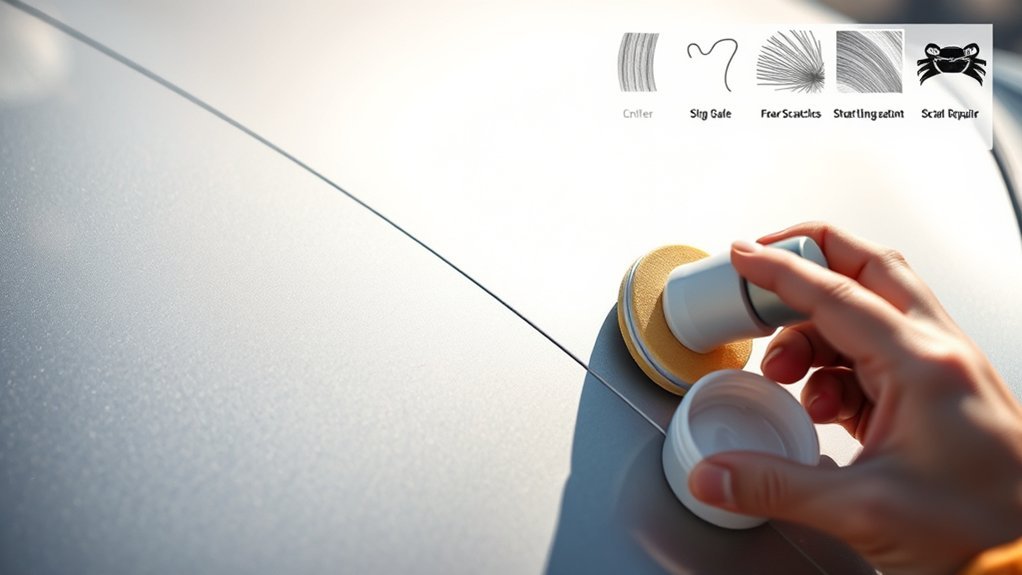
When it comes to car scratches, understanding their types is essential for effective repair. You’ll encounter three main types of scratches: clear coat scratches, paint scratches, and primer scratches.
Clear coat scratches are surface-level, often caused by road debris or aggressive washing techniques, and can be easily repaired with polishing or clear coat pens.
Clear coat scratches are minor blemishes easily fixed with polishing or clear coat pens, often caused by road debris or harsh washing methods.
Paint scratches penetrate the color layer but don’t expose the metal, making them more visible. Fixing these requires touch-up paint, followed by sanding and buffing for a smooth finish.
Lastly, primer scratches are the most severe, exposing bare metal and necessitating immediate attention to prevent rusting. Repairing these typically involves sanding down the affected area and applying touch-up paint.
Must-Have Supplies for Car Scratch Repair
Identifying the type of scratch on your vehicle is just the first step in the repair process. To effectively tackle car scratch repair, you’ll need a few vital supplies:
- Cotton Cloth: Use this for applying fillers; avoid terrycloth to prevent lint from affecting the finish.
- Clean Water: Essential for rinsing and cleanup after applying scratch repair products, ensuring a debris-free surface.
- Masking Tape: Protects surrounding paint when applying fillers or during sanding, preventing unintended damage.
- Primer: Important for deeper scratches that reach the primer layer, helping to create a smooth surface for painting.
After you’ve repaired the scratch, remember to finish the job using a microfiber cloth and applying car wax or sealant.
This will provide a protective layer and restore shine to the repaired area, ensuring your vehicle looks its best.
Quick Guide: Fixing Clear Coat Scratches
Identifying clear coat scratches is straightforward; simply run your fingernail over the scratch to see if it catches.
If it doesn’t, you can effectively use various repair techniques to restore your vehicle’s finish.
In this guide, you’ll explore several methods, including using a clear coat pen, spray, or polishing with a microfiber towel.
Identify Clear Coat Scratches
Clear coat scratches are a common issue for car owners, often resulting from everyday wear and tear.
To identify these scratches, look for the following signs:
- Surface-Level: If your fingernail doesn’t catch on the scratch, it’s likely a clear coat scratch.
- Common Causes: Improper washing techniques, road debris, and contact with hard objects can lead to these scratches.
- Minor Appearance: Clear coat scratches typically don’t penetrate deeper layers of paint, making them less severe.
- Timely Action: Addressing clear coat scratches quickly can help maintain your vehicle’s aesthetic and resale value.
Using car polish and scratch removers, you can effectively diminish the appearance of these scratches and keep your car looking pristine.
Repair Techniques Overview
Repairing clear coat scratches is a straightforward process that can greatly enhance your vehicle’s appearance and value.
Start by cleaning the scratched area to eliminate any dirt or debris. Use a polish or scratch remover with a microfiber towel to buff out the scratch effectively.
If the scratch is more pronounced, a clear coat pen can fill it in, followed by a final polish to restore the car paint’s shine.
For deeper clear coat scratches, apply a clear coat spray, ensuring it dries completely before buffing for a smooth finish.
Regular maintenance and timely repairs not only improve your car’s look but also help maintain its resale value by preventing further damage to the paint.
Repair Methods for Paint Scratches
When dealing with paint scratches, the first step is identifying the severity of the damage.
You can choose from DIY repair techniques for minor scratches or opt for professional services for more significant issues.
Understanding these options will help you effectively restore your vehicle’s appearance and protect its value.
Identifying Scratch Severity
Identifying the severity of paint scratches is essential for determining the appropriate repair method.
Start by evaluating the scratch with these key indicators:
- Visibility: If the scratch is easily seen but doesn’t catch your fingernail, it likely extends into the enamel but not to the metal.
- Tactile Feedback: If your fingernail catches on the scratch, it signifies a deep scratch that requires more extensive repair.
- Depth: Deep scratches disrupt the paint layer, making them more severe than clear coat scratches.
- Repair Urgency: Promptly addressing paint scratches prevents further damage, maintaining your vehicle’s aesthetic and resale value.
Understanding these factors will help you choose the right repair technique for your vehicle’s paint.
DIY Repair Techniques
Once you’ve assessed the severity of your car’s paint scratches, it’s time to tackle the repair process yourself.
Start by thoroughly cleaning the scratched area to remove dirt and debris. For minor scratches, apply touch-up paint that matches your vehicle’s color, ensuring it fills the scratch completely.
If you’re dealing with deeper scratches, gently sand the area with 1000-grit sandpaper, then follow up with 2000-grit sandpaper for a smooth finish before applying touch-up paint.
Once dry, buff the area with a rubbing compound to blend it seamlessly.
Finally, enhance protection and appearance by applying a clear coat spray or pen over the repair. Regular maintenance will help prevent further damage and keep your car looking great.
Professional Repair Options
While some car owners may opt for DIY repairs, professional repair options often provide a more reliable and efficient solution for paint scratches.
Here are some methods you might consider:
- Body Shop Services: Skilled technicians clean, sand, and apply touch-up paint to match your vehicle’s color.
- Sanding Techniques: For deeper scratches, professionals use 1000-grit sandpaper followed by 2000-grit to guarantee a smooth finish.
- Rubbing Compounds: After sanding, a rubbing compound blends the repair seamlessly into your car’s surface.
- Professional Detailing: These services can buff out minor scratches, using specialized tools and products to restore your car’s appearance.
Addressing scratches promptly is vital to prevent rust, especially if they expose metal or primer.
Fixing Deep Scratches: What You Need to Know
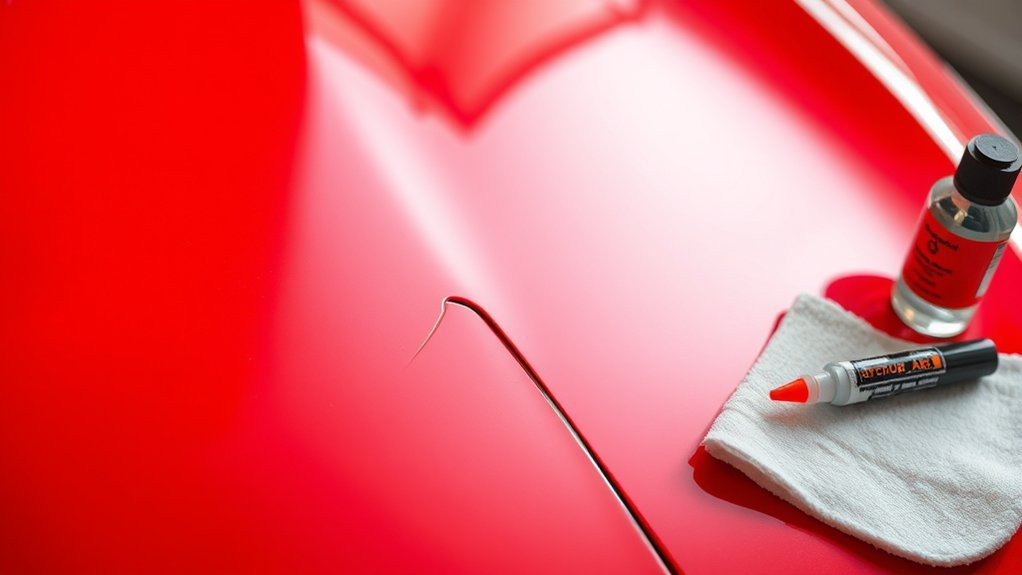
Deep scratches, often referred to as primer scratches, can expose the metal beneath your vehicle’s paint, making prompt repair essential to prevent rust.
To fix these scratches, start by thoroughly cleaning the area to remove dirt and debris. Next, sand the scratch with 1000-grit sandpaper to smoothen the surface, followed by 2000-grit sandpaper for a finer finish. This process guarantees that the paint adheres properly.
Start by cleaning the area, then sand with 1000-grit and 2000-grit sandpaper for optimal paint adhesion.
After sanding, apply a matching touch-up paint using a small brush to fill the scratch, allowing it to dry completely. Once dry, lightly sand the area again to achieve a seamless surface.
Finally, buff the repaired section with a rubbing compound to blend the repair with the surrounding paint, ensuring the scratch is no longer visible.
While DIY is possible, keep in mind that extensive repairs may require professional assistance for peak results.
When to Seek Professional Help for Scratch Repairs?
How do you know when it’s time to call in the professionals for scratch repairs? Recognizing the right moments can save you from further damage. Here are four key indicators:
- Primer Scratch: If it penetrates to the metal, seek immediate professional help to prevent rust.
- Deep Scratch: If it’s deep enough to feel with your fingernail, consult a pro for proper repair techniques.
- Large Area Damage: Multiple scratches or extensive damage often require professional services for a cohesive and appealing repair.
- Color Matching Concerns: When in doubt about matching your car’s paint accurately, professionals can guarantee the touch-up blends seamlessly.
Frequently Asked Questions
How to Fix Scratched Paint on Car?
To fix scratched paint on your car, use effective scratch removal techniques. For DIY scratch repair, identify the scratch type, clean the area, apply appropriate products, then polish and protect with wax for a flawless finish.
Does WD-40 Really Remove Scratches?
WD-40’s minimal might masks minor scratches, but it’s not a miracle worker for scratch repair. For effective results, you’ll need dedicated products that truly restore your car’s paint and protect its finish long-term.
Does T-Cut Get Rid of Scratches?
Yes, T-Cut effectively removes light scratches by leveling the clear coat, enhancing scratch removal. For best results, apply it with a soft cloth in circular motions, ensuring a smooth, glossy finish on your vehicle’s paint.
How Deep of a Scratch Can Paint Correction Fix?
Paint correction effectively fixes clear coat scratches and shallow paint scratches. However, for deeper scratches that reach the primer, you’ll need advanced scratch repair techniques, often requiring professional help to guarantee a seamless finish.
Conclusion
To sum up, tackling paint scratches on your car doesn’t have to feel like a Herculean task. With the right supplies and techniques, you can transform your vehicle from a blemished beauty to a dazzling masterpiece. Whether you’re dealing with mere clear coat scratches or deep gouges that seem to threaten your car’s very existence, remember that you’re armed with the knowledge to restore its glory. So roll up your sleeves and release your inner automotive artist!






Leave a Reply