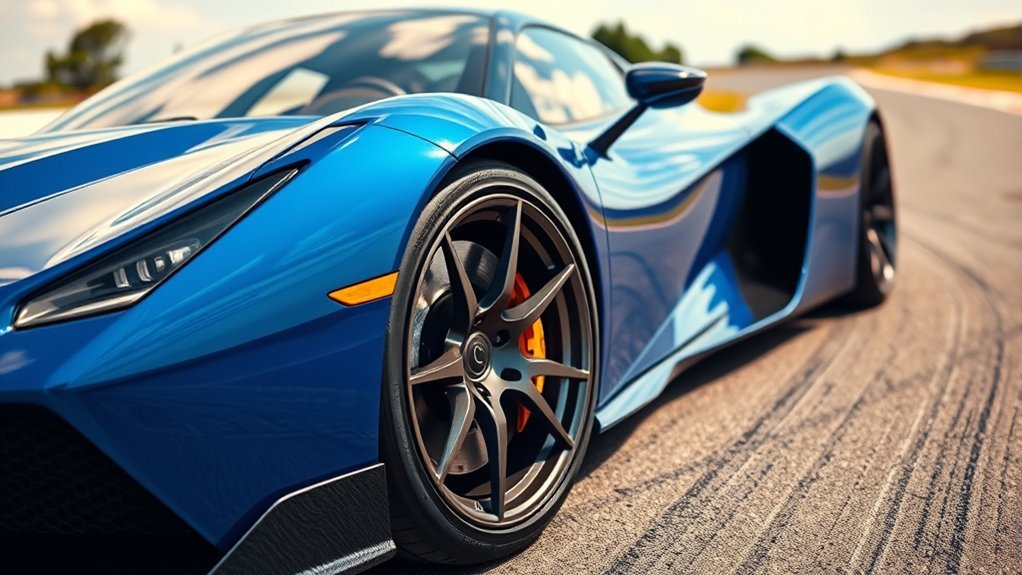
The fastest production car in the world is the Yangwang U9 Xtreme, which recently hit a staggering top speed of 308.4 mph. With an impressive 2,978 bhp powered by four electric motors, it’s a remarkable blend of performance and efficiency. This hypercar uses a groundbreaking 1,200V ultra high voltage platform, making it a standout in automotive history. Curious about how this compares to other speed records and the technology behind it? There’s much more to discover!
Key Takeaways
- The fastest production car in the world is the Yangwang U9 Xtreme, achieving a top speed of 308.4 mph.
- It features a power output of 2,978 bhp from four electric motors, enhancing its performance.
- The U9 Xtreme is the first to use a 1,200V ultra high voltage platform, improving efficiency.
- Only 30 units of the Yangwang U9 Xtreme will be produced globally, making it extremely limited.
- Speed records must be independently verified through two-way runs and require street-legal status in multiple markets.
The Current Fastest Production Car: Yangwang U9 Xtreme
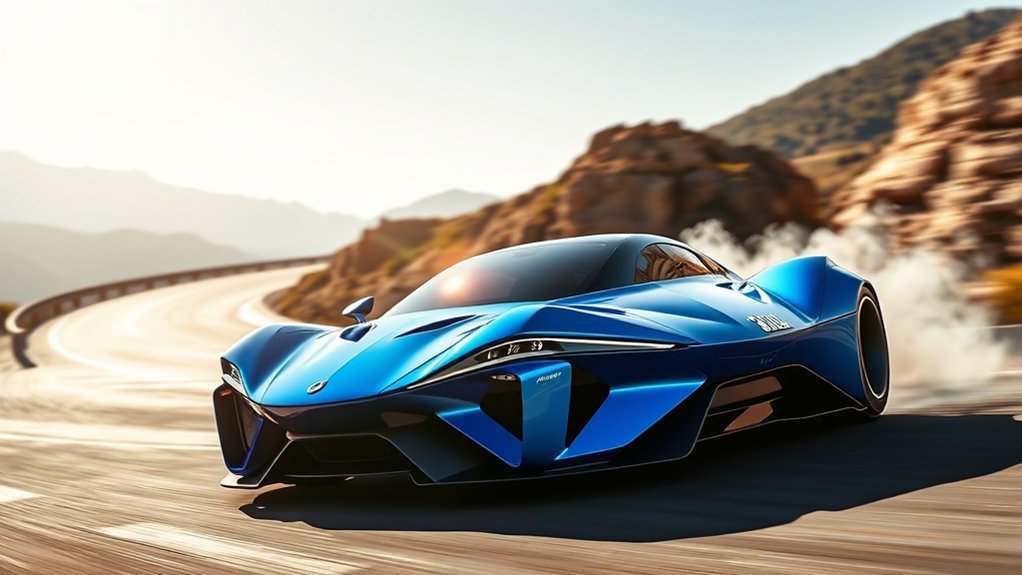
In the domain of automotive excellence, the Yangwang U9 Xtreme has claimed the crown as the fastest production car in the world, reaching an astonishing speed of 308.4 mph at ATP Papenburg, Germany.
This electric hypercar redefines what’s possible, boasting a jaw-dropping power output of 2,978 bhp thanks to its four electric motors.
The U9 Xtreme is groundbreaking, being the first production car to utilize a 1,200V ultra high voltage platform, which enhances efficiency by reducing heat generation by up to 67% compared to conventional systems.
Weighing in at just 2,480 kg, it maintains a competitive edge, only slightly heavier than its standard counterpart.
With a limited production run of just 30 units globally, the Yangwang U9 Xtreme embodies extreme performance and cutting-edge technology, pushing the boundaries of speed and innovation in the electric hypercar segment.
The Evolution of Speed Records
The Yangwang U9 Xtreme‘s remarkable achievement isn’t just a standalone event; it’s the latest chapter in a long history of speed records that have captivated automotive enthusiasts.
From the Napier L48 breaking the 100 mph barrier in 1904 to today’s contenders, the evolution of speed is fascinating.
The Bugatti Veyron 16.4 set a new benchmark in 2005 with a top speed of 253.81 mph, only to be surpassed by the SSC Ultimate Aero in 2007 at 256.14 mph.
Fast forward to 2017, and the Koenigsegg Agera RS raised the stakes with a verified speed of 277.87 mph.
The Bugatti Chiron Super Sport 300+ broke the 300 mph barrier in 2019, claiming a remarkable 304 mph.
As of 2023, the Koenigsegg Jesko Absolut holds a theoretical top speed of over 310 mph, keeping the world’s fastest production car race alive and thrilling.
How Do We Verify Speed Records for Production Cars?
When it comes to verifying speed records for production cars, the testing methodology is essential.
You’ll find that independent verification processes, including two-way runs, guarantee accuracy and fairness in measuring top speeds.
Understanding these standards helps clarify how manufacturers and enthusiasts alike navigate the often contentious world of speed claims.
Testing Methodology Standards
While verifying speed records for production cars may seem straightforward, it involves a complex set of standards designed to confirm accuracy and fairness.
To guarantee that top speeds are verified correctly, the following criteria are essential:
- Two-way runs: Each speed record is determined by averaging speeds from two runs in opposite directions to account for environmental factors.
- Street-legal status: Cars must be street-legal in their intended markets and sold in multiple national markets to be eligible for this list.
- WMI compliance: Vehicles need a valid WMI number on the VIN and must be manufactured for retail sale in the same specification as the record-setting model.
These standards help maintain integrity, minimizing disputes and confirming that claims are credible, such as those recognized by Guinness World Records.
Independent Verification Processes
Independent verification processes play an essential role in confirming the top speed records of production cars. These processes often involve two-way runs, where the average speed of both runs becomes the official record. For a car to be considered a production vehicle, it must be available for public purchase and sold without significant modifications.
| Criteria | Requirements | Notes |
|---|---|---|
| Public Availability | Must be sold in multiple markets | Guarantees accessibility |
| Speed Limiters | Removal is allowed in limited production forms | Allows higher speeds |
| Verification Authority | No central authority exists | Leads to disputes in claims |
| Testing Methodologies | Must adhere to standardized methods | Essential for legitimacy |
Such rigorous verification guarantees that records like those in the Guinness Book are credible, fostering trust within the automotive community.
Comparing the Fastest Production Cars
When you compare the fastest production cars, it’s crucial to take into account how speed records are verified and the remarkable vehicles that claim these titles.
You’ll find that each contender, from the Yangwang U9 Xtreme to the SSC Tuatara, boasts unique performance specs that highlight their engineering prowess.
Let’s break down these record-breaking machines and see how they stack up against one another.
Top Speed Verification Methods
To truly understand the top speed of production cars, you need to grasp the verification methods used in these high-stakes contests.
Top speed verification typically involves independent road tests with two-way runs to calculate an average speed, ensuring accuracy. Remember, for a car to qualify as a production vehicle, it must be street-legal and adhere to specific manufacturing standards.
- Speed records are often contested due to varying claims.
- Notable examples like the Bugatti Chiron Super Sport 300+ and Koenigsegg Agera RS achieved verified speeds over 270 mph.
- Some manufacturers claim theoretical top speeds that lack independent verification, sparking debates in the automotive community.
Understanding these methods helps you appreciate the legitimacy behind these incredible speed records.
Notable Record-Breaking Vehicles
As you explore the world of record-breaking production cars, you’ll discover a fierce competition that pushes the boundaries of engineering and performance.
The Bugatti Chiron Super Sport 300+ currently holds the title for the fastest production car, boasting a verified top speed of 304 mph. Close behind, the SSC Tuatara reached 282.9 mph, solidifying its place among the fastest production cars.
The Koenigsegg Agera RS previously held the record with a two-way average speed of 277.9 mph. Meanwhile, the Rimac Nevera, an electric production car, showcases an impressive top speed of 258 mph, proving that electric vehicles can compete fiercely.
Together, these record-breaking vehicles redefine what it means to chase the title of the world’s fastest car.
Performance Specs Comparison
The competition among the fastest production cars intensifies as we compare their performance specs.
You’ll find that each contender brings unique strengths to the table:
- Yangwang U9 Xtreme: Reigning with a top speed of 308.4 mph, it boasts a staggering 2,978 bhp from its four electric motors.
- Bugatti Chiron Super Sport 300+: Close behind, it features a verified speed of 304 mph, powered by an 8.0-liter quad-turbo W16 engine producing 1,600 hp.
- Koenigsegg Jesko Absolut: Although claiming a theoretical top speed of 330 mph, this beast’s 5.0-liter twin-turbo V8 still awaits verification.
With the SSC Tuatara and Rimac Nevera also in the mix, these performance specs showcase the exhilarating race for the title of the fastest production car.
Key Technologies Enhancing Hypercar Speed and Efficiency
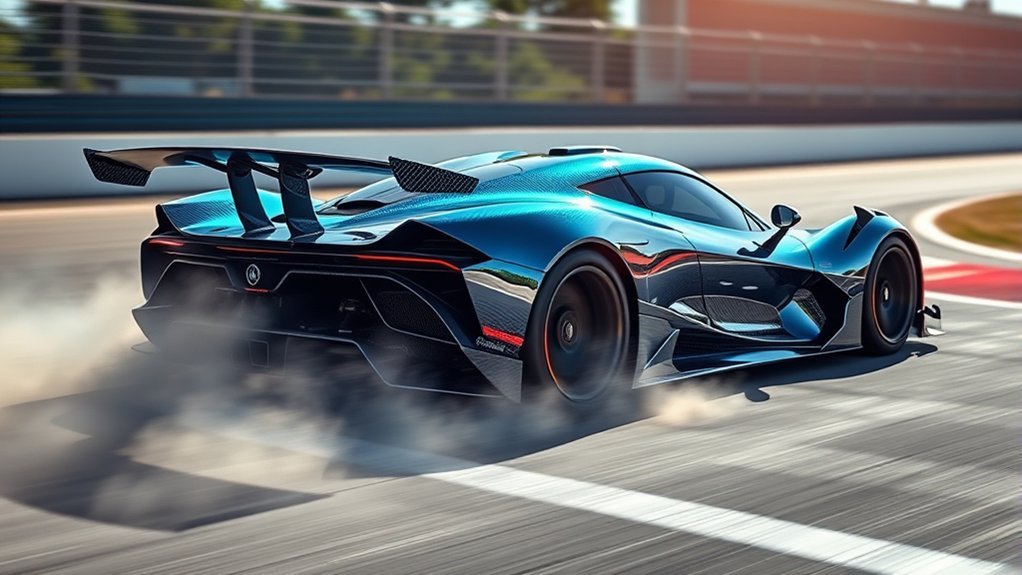
While many factors contribute to the astonishing speeds and efficiency of hypercars, key technologies stand at the forefront of this automotive revolution.
Lightweight materials like carbon fiber minimize mass, enabling incredible acceleration and top speeds that push the boundaries of what’s possible. Take the Koenigsegg Jesko Absolut, for instance; its 5.0-liter twin-turbo V8 engine churns out 1,600 hp, harmonizing aerodynamics and construction for theoretical speeds exceeding 330 mph.
On the electric side, hypercars like the Rimac Nevera demonstrate how electric powertrains can achieve mind-blowing acceleration—0-60 mph in just 1.85 seconds—thanks to advanced battery tech like BYD’s Blade Battery. This innovation enhances performance while reducing heat generation.
Additionally, the Yangwang U9 Xtreme, with its four electric motors and 2,978 bhp, showcases the cutting-edge technologies that define the fastest production cars today, merging speed with astonishing efficiency.
Future Trends in High-Speed Production Cars
With the rapid evolution of automotive technology, future trends in high-speed production cars are poised to redefine performance standards.
You can expect the following developments as we move forward:
- Electric hypercars will dominate the market, leveraging groundbreaking battery technology for unparalleled speed.
- Innovations in lightweight materials and aerodynamic designs will optimize performance, allowing cars to cut through the air with ease.
- The Yangwang U9 Xtreme recently set a new benchmark, achieving a staggering top speed of 308.4 mph, showcasing what’s possible with advanced engineering.
As the competition heats up, these trends won’t only push the limits of the fastest cars but also challenge existing speed records.
The automotive landscape is shifting towards a future where high-speed production cars blend performance with sustainability, ensuring that the thrill of driving remains exhilarating and liberating.
Get ready for the next generation of speed!
Frequently Asked Questions
Has Any Production Car Hit 300 Mph?
Yes, some production cars have hit the 300 mph milestone, maneuvering engineering challenges like aerodynamic design and tire technology. As manufacturers push boundaries, speed records evolve, influenced by performance testing and future predictions in automotive innovation.
Has Any Car Hit 400 Mph?
No car’s hit 400 mph yet. Record attempts face engineering challenges like tire technology and aerodynamic design, alongside safety regulations. Powertrain advancements and fierce manufacturer competition fuel future predictions for this thrilling milestone.
What Are the Top 10 Fastest Production Cars in the World?
The top 10 fastest production cars blend electric hypercars with advanced aerodynamic design, exceptional engine performance, and innovative tire technology. They prioritize weight reduction, fuel efficiency, luxury features, safety innovations, and appeal to global markets.
Which Is the No. 1 Fastest Car in the World?
The Yangwang U9 Xtreme reigns supreme as the fastest car, blending electric supercars with cutting-edge hypercar technology. Its aerodynamic design, exhilarating engine performance, and racing heritage redefine speed records, paving the way for future innovations.
Conclusion
In the race for the fastest production car, the Yangwang U9 Xtreme is like a comet blazing through the night sky, leaving competitors in its dust. As technology advances, we can expect even more thrilling innovations that push the boundaries of speed and efficiency. By understanding the evolution of these records and the key technologies involved, you’re well-equipped to appreciate the incredible feats of engineering that define the future of high-speed production cars. Buckle up!





Leave a Reply